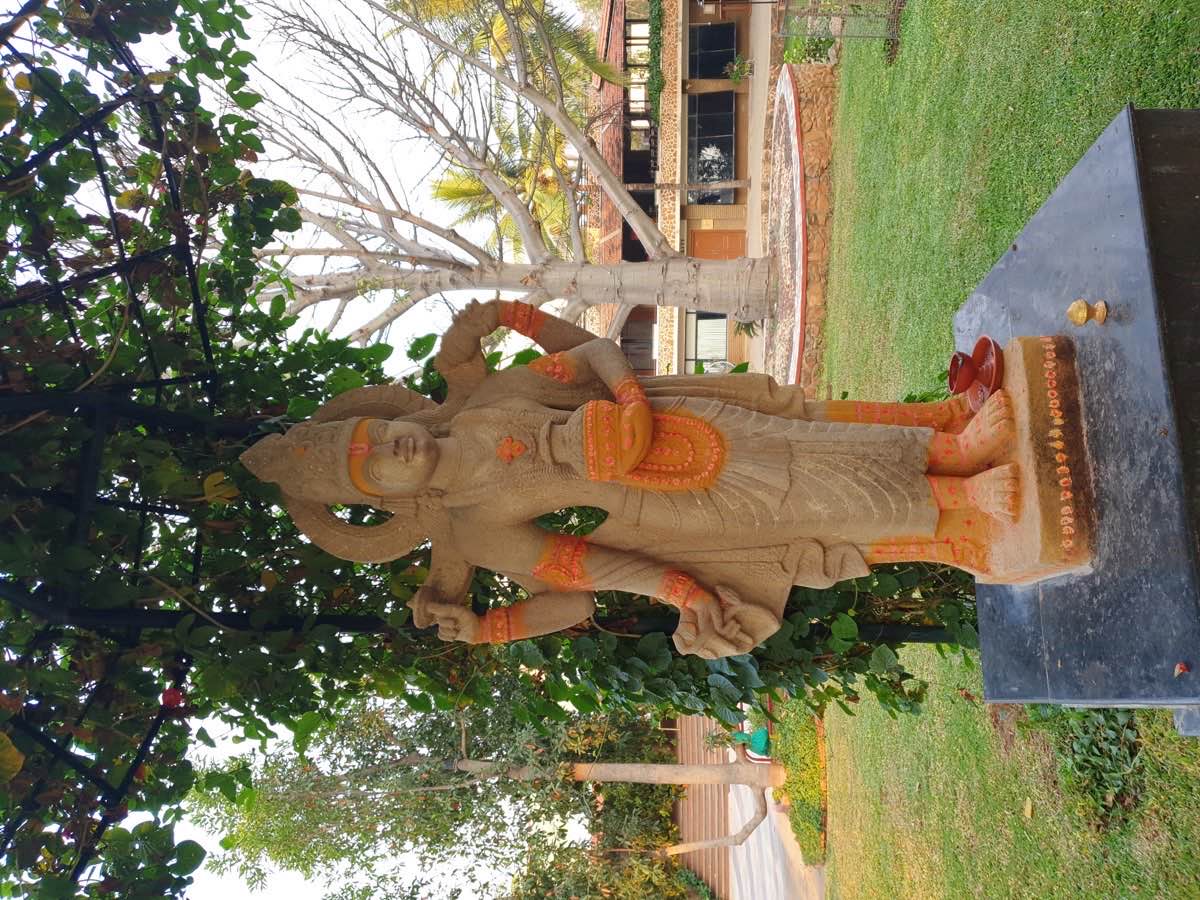
Āyurveda (आयुर्वेद, “the science of life” or “the knowledge of longevity”) is the world’s oldest continuously practised system of medicine, rooted in the sacred literature of Hinduism and inseparable from the philosophical, spiritual, and ethical worldview of the Vedic tradition. More than a collection of remedies and procedures, Āyurveda is a comprehensive science of human existence — encompassing the body, mind, senses, and soul — that has guided health and healing on the Indian subcontinent for over three thousand years.
Etymology and Definition
The word Āyurveda is a compound of two Sanskrit terms: āyus (आयुस्, “life, longevity, vitality”) and veda (वेद, “knowledge, science, sacred wisdom”). The Caraka Saṃhitā, the most authoritative Āyurvedic text, defines it thus:
hitāhitaṃ sukhaṃ duḥkham āyus tasya hitāhitam / mānaṃ ca tac ca yatroktam āyurvedaḥ sa ucyate — “That science is designated as Āyurveda which describes what is beneficial and harmful, what is happy and unhappy for life, and what is conducive and non-conducive to longevity, along with the measure of life itself.” (Caraka Saṃhitā, Sūtrasthāna 1.41)
This definition reveals the fundamental scope of Āyurveda: it is concerned not merely with curing disease but with the totality of human well-being — physical health (ārogya), mental happiness (sukha), ethical living (hita), and the fullest possible span of life (āyus).
Divine Origins: From Brahmā to Dhanvantari
According to Hindu tradition, Āyurveda has a divine origin. The Caraka Saṃhitā (Sūtrasthāna 1.4-28) and Suśruta Saṃhitā (Sūtrasthāna 1.3-8) both narrate the sacred lineage through which this knowledge descended from the celestial to the human realm.
Lord Brahmā, the creator deity, first conceived Āyurveda as part of the cosmic knowledge of the Atharva Veda. He taught it to Dakṣa Prajāpati, who transmitted it to the Aśvinī Kumāra (the twin physician-gods of the Vedas, divine horsemen who heal the sick among both gods and humans). The Aśvinīs passed the knowledge to Indra, king of the gods.
When disease and suffering began to afflict human beings, the great sages assembled on the slopes of the Himalayas. According to the Caraka Saṃhitā, the sage Bharadvāja volunteered to approach Indra and learn Āyurveda for the benefit of humanity. Indra taught him the complete science, which Bharadvāja then transmitted to Ātreya Punarvasu, who in turn taught it to his six disciples — Agniveśa, Bhela, Jatūkarṇa, Parāśara, Hārīta, and Kṣārapāṇi. Agniveśa’s treatise, later revised and expanded by Caraka (c. 2nd century CE), became the Caraka Saṃhitā.
The surgical tradition follows a parallel lineage through Dhanvantari, the divine physician who emerged from the cosmic ocean during the samudra manthana (churning of the ocean) described in the Bhāgavata Purāṇa (8.8). Dhanvantari, an avatāra of Lord Viṣṇu, appeared bearing a pot of amṛta (the nectar of immortality) and is worshipped as the presiding deity of Āyurveda. He taught the science of surgery to Suśruta, whose treatise — the Suśruta Saṃhitā — became the foundation of surgical medicine.
Vedic Roots: Medicine in the Four Vedas
Āyurveda is traditionally classified as an Upaveda (उपवेद, “supplementary Veda”) of the Atharva Veda, though some authorities associate it with the Ṛg Veda. Medical knowledge appears throughout the Vedic literature:
-
The Ṛg Veda contains 67 hymns referencing medicinal plants and healing practices. The celebrated Oṣadhi Sūkta (Ṛg Veda 10.97) praises plants as divine healers: yāḥ phalinīr yā aphalā apuṣpā yāś ca puṣpiṇīḥ — “Those that bear fruit and those without fruit, those without flowers and those that flower…”
-
The Atharva Veda is the primary Vedic source of medical knowledge, containing extensive material on disease causation, herbal remedies, surgical procedures, and healing incantations. Over 114 hymns deal with specific diseases, and the text identifies over 289 medicinal plants.
-
The Yajur Veda and Sāma Veda contain references to anatomy, physiology, and the ritual use of healing substances.
The transition from Vedic medical hymns to the systematic science of Āyurveda occurred during the period of the Saṃhitās (compilations), approximately between 800 BCE and 200 CE, when scattered medical knowledge was organized into comprehensive treatises.
The Bṛhat Trayī: Three Great Treatises
The classical Āyurvedic literature centres on three foundational texts collectively known as the Bṛhat Trayī (बृहत् त्रयी, “Great Triad”):
1. Caraka Saṃhitā (चरक संहिता)
The Caraka Saṃhitā is the most comprehensive and philosophically rich Āyurvedic text, focusing primarily on kāyacikitsā (internal medicine). Originally compiled by Agniveśa, it was revised by Caraka (c. 2nd century CE) and later supplemented by Dṛḍhabala (c. 4th century CE). The text is organized into eight sections (sthāna) containing 120 chapters.
The Caraka Saṃhitā emphasizes the holistic nature of healing: śarīra-indriya-sattva-ātma-saṃyogo dhāri jīvitam — “Life is the union of body, senses, mind, and soul” (Sūtrasthāna 1.42). It insists that a physician must understand not only the disease but the entire person — their constitution, habits, environment, mental state, and spiritual condition.
2. Suśruta Saṃhitā (सुश्रुत संहिता)
The Suśruta Saṃhitā, attributed to the sage Suśruta (c. 6th century BCE, with later redactions), is the world’s earliest systematic treatise on surgery. It describes over 300 surgical procedures, 120 surgical instruments, and 1,120 diseases. Suśruta’s detailed descriptions of rhinoplasty (nose reconstruction), cataract surgery (liṅganāśa cikitsā), lithotomy (stone removal), and caesarean section are considered pioneering achievements in the history of medicine.
Suśruta classifies surgical instruments into two categories: yantra (blunt instruments, 101 types) and śastra (sharp instruments, 20 types). He recommended practising surgical techniques on dead animals, melons, leather bags, and wax models before operating on human patients — an approach that prefigures modern surgical simulation training.
3. Aṣṭāṅga Hṛdaya (अष्टाङ्ग हृदय)
Composed by Vāgbhaṭa (c. 7th century CE), the Aṣṭāṅga Hṛdaya (“Heart of the Eight Branches”) is a masterful synthesis of the Caraka and Suśruta traditions. Written in elegant verse, it became the most widely studied Āyurvedic text throughout India and Southeast Asia. Its clarity and systematic organization made it the standard teaching text in Āyurvedic education for over a millennium.
The Tridoṣa: Three Fundamental Energies
The theoretical foundation of Āyurvedic medicine rests on the concept of the tridoṣa (त्रिदोष) — three fundamental bio-energies that govern all physiological and psychological processes in the human body. Disease arises from the imbalance of these doṣas; health is their equilibrium.
Vāta (वात) — The Principle of Movement
Composed of the elements Air (Vāyu) and Space (Ākāśa), Vāta governs all movement in the body: nerve impulses, blood circulation, breathing, excretion, speech, and the movement of thoughts. The Caraka Saṃhitā (Sūtrasthāna 12.8) describes Vāta as the most important doṣa, calling it tantra-yantra-dhara — “that which holds the body’s machinery together.”
Qualities: dry, light, cold, rough, subtle, mobile Seat: colon, pelvis, bones, joints, skin, ears, thighs When balanced: creativity, enthusiasm, flexibility, clear communication When imbalanced: anxiety, insomnia, constipation, joint pain, tremors
Pitta (पित्त) — The Principle of Transformation
Composed of Fire (Agni) and Water (Jala), Pitta governs all transformative processes: digestion, metabolism, body temperature, vision, intellect, and skin complexion. The concept of Agni (digestive fire) — central to Āyurvedic pathology — is intimately connected to Pitta.
Qualities: hot, sharp, light, liquid, oily, spreading Seat: small intestine, stomach, sweat glands, blood, eyes, skin When balanced: intelligence, courage, good digestion, radiant complexion When imbalanced: inflammation, acidity, skin rashes, anger, jealousy
Kapha (कफ) — The Principle of Cohesion
Composed of Water (Jala) and Earth (Pṛthvī), Kapha provides structure, lubrication, and stability to the body. It governs the formation of tissues, joint lubrication, moisture balance, memory retention, and emotional stability.
Qualities: heavy, slow, cool, oily, smooth, dense, soft, stable Seat: chest, throat, lungs, head, lymph, fatty tissues, joints When balanced: strength, stamina, calmness, love, forgiveness, immunity When imbalanced: lethargy, obesity, congestion, attachment, depression
Every individual possesses a unique constitutional type (prakṛti, प्रकृति), determined at conception by the predominant doṣa or combination of doṣas. The Caraka Saṃhitā (Vimānasthāna 8.95-100) describes seven constitutional types: Vāta, Pitta, Kapha, Vāta-Pitta, Pitta-Kapha, Vāta-Kapha, and the rare balanced type (sama prakṛti).
Aṣṭāṅga Āyurveda: The Eight Branches
Āyurveda is traditionally divided into eight specialized branches, collectively known as Aṣṭāṅga Āyurveda (अष्टाङ्ग आयुर्वेद):
- Kāyacikitsā (काय चिकित्सा) — Internal medicine; the treatment of diseases affecting the entire body
- Śālyatantra (शल्यतन्त्र) — Surgery; the art of removing foreign bodies and performing surgical procedures
- Śālākyatantra (शालाक्यतन्त्र) — Treatment of diseases of the eyes, ears, nose, throat, and head
- Kaumārabhṛtya (कौमारभृत्य) — Paediatrics and obstetrics; the care of children and pregnant women
- Bhūtavidyā (भूतविद्या) — Psychiatry and demonology; treatment of mental and psycho-spiritual disorders
- Agadatantra (अगदतन्त्र) — Toxicology; the study and treatment of poisons, venoms, and environmental toxins
- Rasāyanatantra (रसायनतन्त्र) — Rejuvenation therapy; the science of longevity, anti-ageing, and immunity enhancement
- Vājīkaraṇatantra (वाजीकरणतन्त्र) — Aphrodisiac therapy; the restoration and enhancement of reproductive vitality
Pañcakarma: The Five Purificatory Actions
Pañcakarma (पञ्चकर्म, “five actions”) is the signature therapeutic protocol of Āyurveda — a comprehensive detoxification and rejuvenation programme designed to eliminate accumulated toxins (āma) from the body and restore doṣa balance. The five procedures are:
- Vamana (वमन) — Therapeutic emesis (induced vomiting) to expel excess Kapha from the upper body
- Virecana (विरेचन) — Therapeutic purgation to eliminate excess Pitta from the digestive tract
- Basti (बस्ति) — Medicated enema therapy, considered the most important procedure for Vāta disorders
- Nasya (नस्य) — Nasal administration of medicinal oils and herbal preparations for diseases above the clavicle
- Raktamokṣaṇa (रक्तमोक्षण) — Bloodletting for conditions involving impure blood (duṣṭa rakta)
Pañcakarma is preceded by preparatory procedures (pūrvakarma) including oleation (snehana — internal and external oil application) and sudation (svedana — steam therapy), and is followed by a graduated dietary regimen (saṃsarjana krama) to gently restore digestive capacity.
Diet, Lifestyle, and the Rhythms of Nature
Āyurveda places extraordinary emphasis on āhāra (diet) and vihāra (lifestyle) as the primary determinants of health. The Caraka Saṃhitā (Sūtrasthāna 25.31) declares: āhāra-sambhavaṃ vastu rogāś cāhāra-sambhavāḥ — “The body is the product of food, and diseases too arise from food.”
Āyurvedic dietetics classifies foods according to their taste (rasa), post-digestive effect (vipāka), potency (vīrya), and specific action (prabhāva). Six tastes are recognized — sweet (madhura), sour (amla), salty (lavaṇa), pungent (kaṭu), bitter (tikta), and astringent (kaṣāya) — each with specific effects on the doṣas.
The concept of ṛtucaryā (ऋतुचर्या, “seasonal regimen”) prescribes dietary and lifestyle modifications aligned with the six Hindu seasons, recognizing that the doṣas naturally fluctuate with environmental changes. Similarly, dinacaryā (दिनचर्या, “daily routine”) outlines an ideal daily schedule — from pre-dawn rising through oil pulling, self-massage, yoga, and meditation — designed to maintain optimal health through alignment with the body’s circadian rhythms.
Āyurveda and Hindu Philosophy
Āyurveda is deeply interwoven with the philosophical systems of Hinduism. Its theoretical foundations draw from:
- Sāṅkhya philosophy — The doṣa theory is based on the Sāṅkhya model of Prakṛti (primal nature) manifesting through the guṇas (qualities) and the Pañca Mahābhūta (five elements)
- Yoga — The Caraka Saṃhitā explicitly integrates yogic practices as therapeutic tools, and the Yoga Sūtras’ concept of kleśa (afflictions) parallels Āyurvedic pathology
- Vedānta — The understanding of the Ātman (Self) as the foundation of all healing, and the recognition that ultimate health is spiritual liberation (mokṣa)
- Dharma — The physician’s duty is framed as a dharmic obligation; the Caraka Saṃhitā (Sūtrasthāna 1.15) states that the purpose of Āyurveda is to protect the health of the healthy and cure the diseases of the sick (svasthasya svāsthya rakṣaṇam āturasya vikāra praśamanam)
Contemporary Relevance and Global Impact
Today, Āyurveda is practised by over 400,000 registered physicians in India and has gained significant international recognition. The World Health Organization has acknowledged Āyurveda as a traditional system of medicine, and the Indian government supports its practice through the Ministry of AYUSH (Āyurveda, Yoga and Naturopathy, Ūnānī, Siddha, and Homeopathy).
Modern research has validated several Āyurvedic principles. The concept of prakṛti (constitutional type) has been correlated with genomic variations in pharmacogenomics studies. Turmeric (haridrā), a staple Āyurvedic herb, has been extensively studied for its anti-inflammatory compound curcumin. The ashwagandha (aśvagandhā, Withania somnifera) of Āyurvedic rasāyana therapy has demonstrated adaptogenic properties in clinical trials.
At the same time, critical evaluation continues. Not all traditional claims have been substantiated by modern research methods, and concerns about heavy metal contamination in some Āyurvedic preparations have prompted calls for better quality control and regulation. The integration of Āyurvedic insights with evidence-based medicine represents one of the most promising frontiers in contemporary healthcare.
The Eternal Science of Life
From the divine emergence of Dhanvantari bearing the nectar of immortality to the clinical consultations in modern Āyurvedic hospitals, this ancient science has maintained an unbroken tradition of healing for over three millennia. Its fundamental insight — that health is not merely the absence of disease but a state of complete physical, mental, and spiritual harmony — has never been more relevant than in an age of chronic lifestyle diseases and mental health challenges.
As the Caraka Saṃhitā (Sūtrasthāna 30.26) beautifully declares: śarīram ādyaṃ khalu dharmasādhanam — “The body is indeed the primary instrument for fulfilling dharma.” In the Āyurvedic vision, caring for health is not a secular or material concern but a sacred duty — the preservation of the living temple in which the divine Self resides.