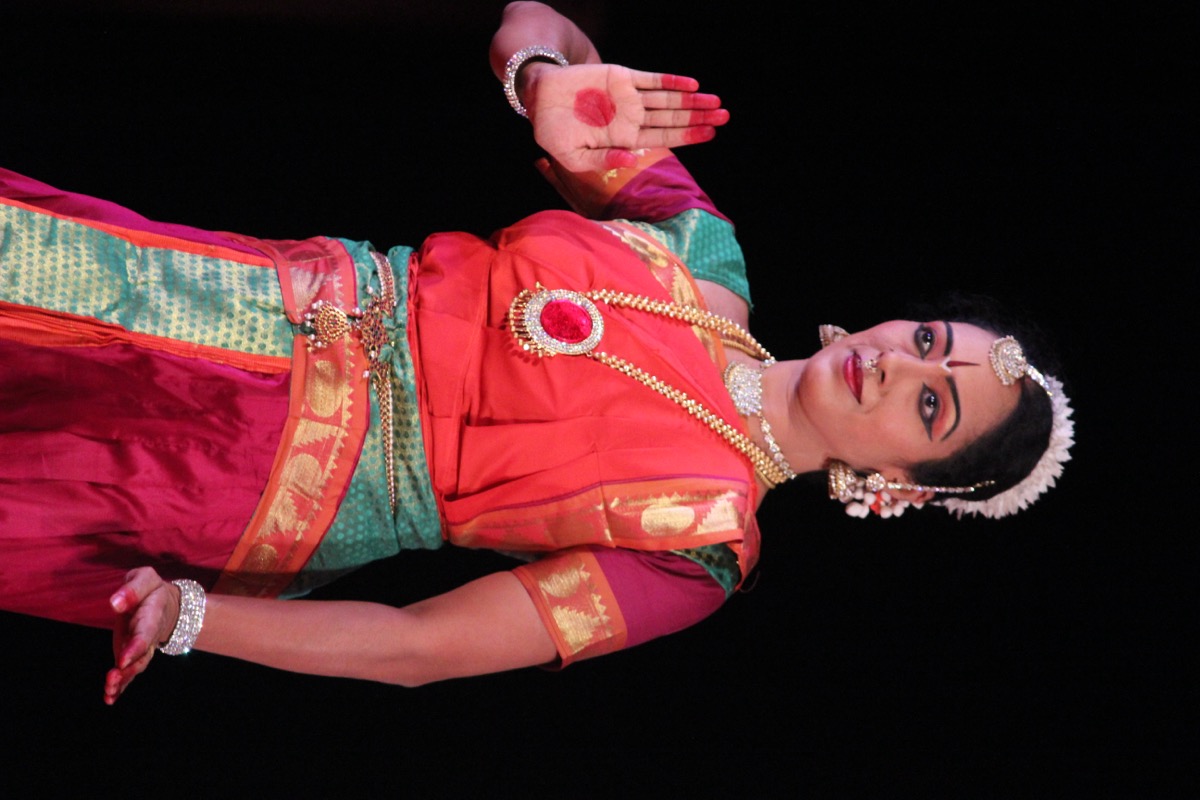
In the Hindu worldview, dance is not mere entertainment — it is a path to the Divine, a form of worship as potent as any mantra or yajña. The Sanskrit word nṛtya (dance) shares its etymological root with nṛ (man), suggesting that movement is intrinsic to human nature itself. When Śiva performs the Tāṇḍava as Naṭarāja, he dances the universe into and out of existence; when Pārvatī responds with the Lāsya, she infuses creation with grace and tenderness. Dance, in the Hindu tradition, is nothing less than a mirror of cosmic activity — sṛṣṭi (creation), sthiti (preservation), saṃhāra (dissolution), tirobhāva (concealment), and anugraha (liberation).
This sacred understanding was codified approximately two thousand years ago in the Nāṭya Śāstra, attributed to the sage Bharata Muni, and continues to animate India’s eight recognized classical dance forms to this day. From the granite corridors of Chidambaram’s Naṭarāja Temple to the global stages of the twenty-first century, Hindu classical dance remains a living testament to the idea that the body itself can be an instrument of prayer.
The Nāṭya Śāstra: Fifth Veda of the Performing Arts
The Nāṭya Śāstra (nāṭyaśāstra, “Treatise on Drama”) is the foundational text of Indian performing arts, traditionally attributed to the sage Bharata Muni and dated between the 2nd century BCE and the 2nd century CE. Comprising approximately 6,000 verse-stanzas organized into 36 chapters, it covers not only dance but also drama, music, poetics, stagecraft, and aesthetic theory.
According to the text’s own origin myth (Chapter 1), Brahmā created the Nāṭya Veda — a “fifth Veda” — by drawing speech from the Ṛg Veda, music from the Sāma Veda, gesture (abhinaya) from the Yajur Veda, and aesthetic emotion (rasa) from the Atharva Veda. This synthesis was then entrusted to Bharata and his hundred sons for the delight and instruction of all beings, regardless of caste or education. The text declares:
na tajjñānaṃ na tacchilpaṃ na sā vidyā na sā kalā | na sa yogo na tatkarma nāṭye ‘smin yanna dṛśyate ||
“There is no knowledge, no craft, no learning, no art, no discipline, no action that is not found in nāṭya.” — Nāṭya Śāstra 1.116
The Nāṭya Śāstra thus positions performing art as the most comprehensive of all human endeavors — a total art form (Gesamtkunstwerk, as Wagner would call it nearly two millennia later) that embraces every dimension of human experience.
Śiva Naṭarāja: The Cosmic Dancer
No discussion of Hindu dance is complete without the figure of Śiva Naṭarāja — “Lord of Dance” — whose iconic bronze image, perfected by Chola artisans in the 10th-11th centuries CE, has become one of the most recognized symbols of Indian civilization.
Śiva’s Ānanda Tāṇḍava (Dance of Bliss) encodes a complete cosmology in sculptural form. His upper-right hand holds the ḍamaru (hourglass drum), whose rhythmic beats create the universe and the syllables of Sanskrit grammar. His upper-left hand bears agni (fire), the force of dissolution. His lower-right hand displays the abhaya mudrā (gesture of fearlessness), granting protection. His lower-left hand points downward in the gajahasta (elephant-trunk gesture) toward his raised left foot, signaling liberation (mokṣa). His right foot crushes the dwarf Apasmāra (ignorance/forgetfulness), while the ring of fire (prabhāmaṇḍala) surrounding him represents the cycle of saṃsāra.
The 7th-century Tamil Śaiva saint Tirumūlar captures this theology in the Tirumantiram:
“He dances with Water, Fire, Wind, and Ether — the Creator dances, the Destroyer dances; all-pervading Sadāśiva dances.” — Tirumantiram 2799
The Naṭarāja Temple at Chidambaram in Tamil Nadu, known as the Ākāśa Liṅga (Ether-Liṅga), is the supreme pilgrimage site for dance as worship. Its famous Hall of Dance (Nṛtta Sabhā) contains 108 sculptural panels depicting the karaṇas — fundamental dance units described in the Nāṭya Śāstra — carved between the 12th and 13th centuries.
The Three Dimensions: Nṛtta, Nṛtya, and Nāṭya
The Nāṭya Śāstra establishes a tripartite framework that underlies all classical Indian dance:
Nṛtta (pure dance) is abstract, rhythmic movement with no narrative content. It showcases footwork (pāda-bhedas), body positions, and the mathematical interplay between the dancer and the rhythmic cycle (tāla). In Bharatanatyam, the jātisvaram and tillānā items are predominantly nṛtta.
Nṛtya (expressive dance) combines rhythmic movement with abhinaya — the art of expression — to convey specific meanings, emotions, and stories. Here the dancer becomes a storyteller, using hand gestures (mudrās), facial expressions (mukha-abhinaya), and body language to narrate episodes from the Rāmāyaṇa, Mahābhārata, or Purāṇas. The varṇam — the central piece of a Bharatanatyam recital — exemplifies nṛtya at its most demanding.
Nāṭya (dramatic art) is full-scale theatrical performance involving multiple characters, dialogue, costumes, and stage design. Kūṭiyāṭṭam (the ancient Sanskrit theatre of Kerala) and Kathakali are the forms closest to nāṭya in the classical sense.
Abhinaya: The Art of Expression
The Nāṭya Śāstra devotes extensive chapters to abhinaya (literally “carrying toward” the audience), which it divides into four components:
- Āṅgika abhinaya: Expression through the body — limb movements, karaṇas (108 fundamental movement units), aṅga-hāras (sequences of karaṇas), and cārīs (leg movements)
- Vācika abhinaya: Expression through speech — song lyrics, dialogue, literary quality
- Āhārya abhinaya: Expression through costume, makeup, ornaments, and stage design
- Sāttvika abhinaya: Expression through inner emotional states — tears, trembling, perspiration, changes of color — considered the subtlest and most challenging form of abhinaya
The Abhinaya Darpaṇa (“Mirror of Gesture”), attributed to Nandikeśvara (likely 5th-13th century CE), supplements the Nāṭya Śāstra with detailed classification of hasta mudrās (hand gestures). It enumerates 28 asamyuta hastas (single-hand gestures) and 23 samyuta hastas (combined-hand gestures), each with multiple meanings depending on context. For example, the patāka hasta (flat palm, fingers extended) can represent a cloud, a forest, the ocean, forbidding, or a river — depending on how and where it is held.
The Eight Classical Dance Forms
India’s Sangeet Natak Akademi (National Academy of Music, Dance, and Drama) recognizes eight dance forms as “classical,” each rooted in the Nāṭya Śāstra tradition but developed within distinct regional, linguistic, and devotional contexts:
1. Bharatanatyam (Tamil Nadu)
The oldest and most widely practiced classical form, Bharatanatyam traces its lineage to the sādir tradition of the Devadāsī temple dancers of Tamil Nadu. Its technique emphasizes the araimaṇḍi (half-sitting position), percussive footwork, geometric lines (ārūḍi), and intricate hand gestures. A traditional recital follows the mārgam (prescribed sequence): alarippu (invocation), jātisvaram (pure rhythmic dance), śabdam (narrative piece), varṇam (central composition blending nṛtta and nṛtya), padams (lyrical devotional pieces), javali (lighter love songs), and tillānā (exuberant finale). The Karanas carved on the gopurams of the Bṛhadīśvara Temple at Thanjavur (11th century) and the Naṭarāja Temple at Chidambaram serve as sculptural evidence of this tradition’s antiquity.
2. Kathak (North India)
Kathak derives its name from kathā (story) and kathika (storyteller). Originating in the narrative traditions of the Rāsa Līlā of Mathura-Vṛndāvana, it evolved significantly under Mughal court patronage, absorbing Persian elements such as ghungrū-laden footwork and rapid spins (chakkars). Kathak is distinguished by its upright posture, explosive rhythmic improvisation (tatkār), and the interplay between dancer and percussionist (tabla or pakhāvaj). Its three gharānās (schools) — Lucknow (emphasizing grace and expression), Jaipur (emphasizing footwork and rhythm), and Banaras (emphasizing the devotional bhāva) — represent distinct aesthetic lineages.
3. Odissi (Odisha)
Odissi is considered one of the oldest surviving dance forms, with sculptural evidence dating to the 2nd century BCE at the Udayagiri-Khandagiri caves. It was preserved by the Mahāri (temple dancers) and Goṭipuā (young boy dancers) traditions of Odisha, particularly at the Jagannātha Temple in Purī. Odissi is characterized by the tribhaṅga (triple-bend) posture — a sensuous S-curve of head, torso, and hips — fluid torso movements (bhaṅgī), and sculptural stillness that mirrors the temple carvings of Koṇārka and Bhuvaneśvara. Its repertoire draws heavily on the Gīta Govinda of the 12th-century poet Jayadeva.
4. Kuchipudi (Andhra Pradesh)
Named after the village of Kuchipudi in Krishna district, this tradition began as an all-male Brahmin dance-drama honoring Kṛṣṇa. It combines the rigor of nṛtta with dramatic storytelling (nāṭya), often featuring unique feats such as dancing on the rim of a brass plate (tarangam) or balancing a pot of water on the head while performing complex footwork. Kuchipudi shares technical vocabulary with Bharatanatyam but is distinguished by its faster pace, greater use of dramatic dialogue, and theatrical exuberance.
5. Mohiniyattam (Kerala)
The “Dance of Mohinī” — named after Viṣṇu’s enchantress form — is a graceful, lyrical solo tradition from Kerala. It emphasizes lāsya (gentle, feminine movements), swaying body motions (sopāna-style), and subtle facial expression. The white-and-gold costume and side-swept hair bun are its visual signatures. Suppressed during British colonial rule, it was revived in the 20th century by the poet Vallathol Narayana Menon, founder of the Kerala Kalamandalam academy.
6. Kathakali (Kerala)
Kathakali is a spectacular theatrical form rather than a solo dance, combining dance, drama, music, and elaborate costume-makeup (vesham). Performers undergo years of physical training to master the codified facial expressions (navarasa) and hand gestures, while the distinctive green, red, and black face-paint categorizes characters as heroic, villainous, or demonic. Stories are drawn primarily from the Mahābhārata, Rāmāyaṇa, and Bhāgavata Purāṇa. A single character’s makeup may take four or five hours to apply.
7. Manipuri (Manipur)
Manipuri dance is inseparable from the Vaiṣṇava devotional culture of Manipur in northeast India. Its signature form is the Rāsa Līlā — a group performance depicting Kṛṣṇa’s divine play with the gopīs, performed in the maṇḍapa of temples. Manipuri is characterized by gentle, undulating movements, a cylindrical barrel-shaped skirt (potloi), and an avoidance of sharp or percussive footwork — the devotional sentiment (bhāva) takes precedence over rhythmic virtuosity. The 18th-century king Bhāgyacandra is credited with codifying the Manipuri Rāsa form.
8. Sattriya (Assam)
The most recently recognized classical form (2000), Sattriya originated in the Sattras (Vaiṣṇava monasteries) of Assam, founded by the 15th-century saint-reformer Śaṅkaradeva. Originally performed only by male monks as part of the Aṅkīyā Nāṭ (one-act devotional plays), it has since been opened to women performers. Sattriya is marked by dignified, flowing movements and a devotional repertoire centered on Kṛṣṇa and Viṣṇu.
Rasa Theory: The Science of Aesthetic Experience
Central to all classical dance is the rasa theory first articulated in the Nāṭya Śāstra (Chapter 6). Bharata identifies eight primary rasas (aesthetic emotions/flavors):
- Śṛṅgāra (love/beauty) — the “king of rasas”
- Hāsya (humor/laughter)
- Karuṇa (compassion/sorrow)
- Raudra (fury/wrath)
- Vīra (heroism/valor)
- Bhayānaka (terror/fear)
- Bībhatsa (disgust/revulsion)
- Adbhuta (wonder/amazement)
The philosopher Abhinavagupta (10th-11th century CE, Kashmir) added a ninth rasa — Śānta (tranquility/peace) — and elevated the entire theory in his Abhinavabhāratī commentary, arguing that rasa experience is ultimately a form of ānanda (bliss) akin to the direct experience of Brahman. For Abhinavagupta, the ideal spectator (sahṛdaya, “one whose heart is with”) transcends ordinary emotion and touches the universal — making aesthetic experience a genuine spiritual practice.
Each rasa arises from a corresponding sthāyibhāva (permanent emotional state) through the combination of vibhāvas (causes), anubhāvas (physical reactions), and vyabhicāribhāvas (transient supporting emotions). The dancer’s task is to embody the bhāva so completely that rasa is spontaneously generated in the audience.
The Devadāsī Tradition and Temple Dance
For over a millennium, classical dance was primarily preserved and transmitted by the Devadāsīs — women ritually dedicated to temple deities. The term derives from deva (god) and dāsī (female servant). These women were highly trained artists, literate in Sanskrit and regional languages, and held significant social status in medieval South Indian society. Their daily ritual offerings of dance (nityasumangalī) were considered essential to temple worship.
The Devadāsī system’s roots extend at least to the Chola period (9th-13th centuries CE), when inscriptions at the Bṛhadīśvara Temple in Thanjavur record hundreds of dancers attached to the temple. However, under British colonial morality and Indian social reform movements of the 19th-20th centuries, the tradition was stigmatized and ultimately outlawed (Madras Devadasis Prevention of Dedication Act, 1947). This legislation, while addressing genuine social concerns, also severed the institutional link between temple and dance that had sustained the art for centuries.
Revival and Reconstruction: The Modern Era
The 20th-century revival of Indian classical dance is one of the most remarkable cultural reclamation projects in world history. Key figures include:
Rukmini Devi Arundale (1904-1986) was the single most influential figure in the Bharatanatyam revival. A Brahmin woman who studied ballet with Anna Pavlova, she recast the Devadāsī repertoire for the concert stage, founding Kalakshetra in Madras (1936) — a dance academy that trained generations of artists. Her contribution was not without controversy: critics argue that her reconstruction sanitized the tradition, removing its erotic elements and imposing upper-caste respectability norms on an art that had belonged to a distinct social community.
E. Krishna Iyer, a lawyer and freedom fighter, boldly performed Bharatanatyam in public to demonstrate its artistic merit — he danced in a sari — and founded the Music Academy’s annual dance festival in Madras (1930s).
Kelucharan Mohapatra (1926-2004) almost single-handedly reconstructed Odissi from fragmentary temple traditions, Mahāri practices, and the sculptural evidence of Odishan temples.
Vallathol Narayana Menon founded the Kerala Kalamandalam (1930) to preserve Kathakali and Mohiniyattam from extinction.
These revival figures operated within the broader cultural nationalism of the Indian independence movement, where reclaiming classical arts was a deliberate act of civilizational assertion against colonial narratives of Indian cultural inferiority.
Temple Sculptures: Dance Frozen in Stone
Indian temple sculpture provides an extraordinary visual archive of dance history. The most significant examples include:
- Chidambaram Naṭarāja Temple (Tamil Nadu): 108 karaṇa panels in the four gopurams, directly illustrating Nāṭya Śāstra descriptions
- Bṛhadīśvara Temple, Thanjavur (Tamil Nadu, 11th century): 81 dance poses in the temple walls, with inscriptional evidence of Devadāsī organization
- Koṇārka Sun Temple (Odisha, 13th century): Hundreds of dance figures in the nāṭya maṇḍapa, depicting poses recognizable in modern Odissi
- Belur-Halebid (Karnataka, 12th century): Hoysala sculptors created bracket figures (madanikā) of dancers and musicians of astonishing technical finesse
- Khajuraho (Madhya Pradesh, 10th-11th century): Apsarā (celestial dancer) figures in sensuous poses displaying tribhaṅga, atibbhaṅga, and other stances
These sculptures are not decorative — they are didactic, serving as visual textbooks for the positions and expressions prescribed in the śāstras. Scholars like Padma Subrahmanyam have systematically correlated the Chidambaram karaṇa sculptures with Nāṭya Śāstra descriptions, demonstrating remarkable continuity across nearly two millennia.
Mudras: The Language of the Hands
The hasta mudrā system constitutes a sophisticated gestural vocabulary capable of conveying complex narratives without spoken words. The Abhinaya Darpaṇa’s opening verse declares:
yato hastastato dṛṣṭir yato dṛṣṭistato manaḥ | yato manastato bhāvo yato bhāvastato rasaḥ ||
“Where the hand goes, the eye follows; where the eye goes, the mind follows; where the mind goes, emotion arises; where emotion arises, rasa is born.”
This verse encapsulates the psychophysical chain that connects physical gesture to aesthetic experience. The 28 single-hand gestures include patāka (flag), tripatāka (three-part flag), kartarīmukha (scissors), ardhacandra (half-moon), arāla (bent), mayūra (peacock), siṃhamukha (lion face), and kapittha (wood-apple) — each with multiple contextual meanings.
Beyond storytelling, mudrās in classical dance carry the same spiritual significance as mudrās in yoga and pūjā — they are considered energy seals that channel prāṇa and connect the practitioner to specific deities and cosmic forces.
Global Spread and Contemporary Practice
In the 21st century, Indian classical dance has become a truly global art form. Major dance academies exist in the United States, United Kingdom, Canada, Australia, Singapore, Malaysia, and across Europe. The Arangetram — the formal solo debut of a Bharatanatyam student, equivalent to a graduation recital — is now performed in cities from Houston to Hamburg.
Contemporary choreographers push the boundaries of tradition while remaining rooted in śāstric foundations. Cross-cultural collaborations have produced works blending Bharatanatyam with flamenco, Kathak with contemporary dance, and Odissi with ballet. At the same time, a strong purist movement insists on fidelity to paramparā (lineage-based transmission) and warns against dilution.
The Indian government has supported classical dance through institutions such as the Sangeet Natak Akademi (founded 1952), the Centre for Cultural Resources and Training, and festival circuits like the Khajuraho Dance Festival, Konark Dance Festival, and the Mamallapuram Dance Festival — where performances unfold against ancient temple backdrops, reconnecting contemporary practice with its sacred architectural origins.
The Spiritual Dimension: Dance as Yoga
Ultimately, Hindu classical dance is a sādhana — a spiritual discipline. The dancer’s years of rigorous training cultivate the same qualities emphasized in yoga: concentration (dhāraṇā), self-discipline (tapas), and surrender (prapatti). The Nāṭya Śāstra itself concludes with the promise that the practice of nāṭya leads to dharma, artha, kāma, and ultimately mokṣa — liberation.
The great Bharatanatyam dancer Balasaraswati (1918-1984) articulated this most eloquently: “When the meaning of the word is expressed through gesture, when the melody of the music takes shape through movement, when rhythm is realized through footwork — that is when the human body becomes a vehicle for divine expression.” In this understanding, every ādavu (basic step), every mudrā, every abhinaya-charged glance is an offering at the feet of the Lord of Dance — Naṭarāja himself.