Introduction
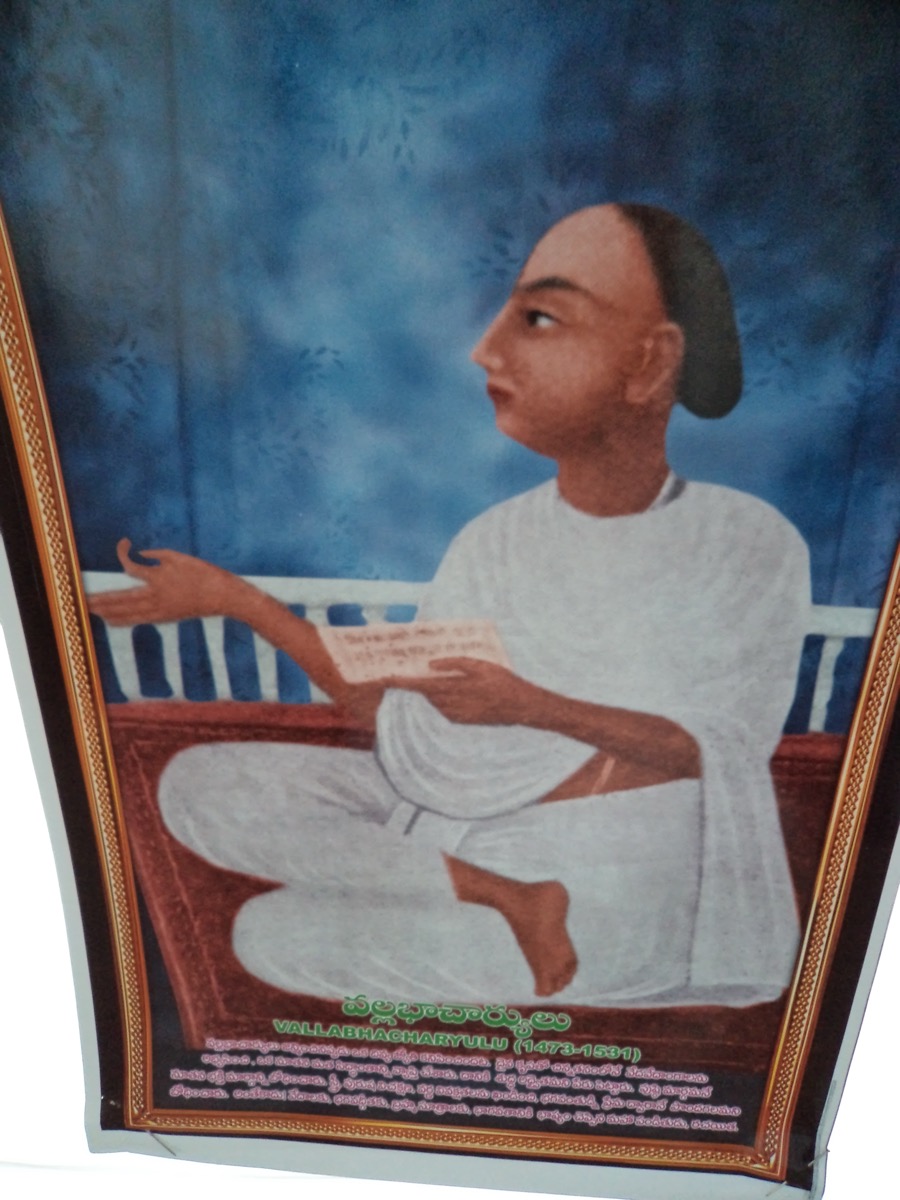
Vallabhāchārya (1479–1531 CE; Sanskrit: वल्लभाचार्य; also known as Vallabha Dīkṣita, Mahāprabhujī, or Vallabha Bhaṭṭa) is one of the most important philosopher-saints of the Hindu tradition — the founder of the Puṣṭimārga (“Path of Grace” or “Path of Nourishment”), the proponent of the philosophical system known as Śuddhādvaita (“Pure Non-Dualism”), and the establisher of a Kṛṣṇa-centred devotional tradition that remains one of the most vibrant and culturally rich in India today. His influence extends across western and northern India, from the Śrīnāthjī temple at Nathdwara in Rajasthan to the Vaiṣṇava communities of Gujarat, Madhya Pradesh, and Uttar Pradesh (Wikipedia, “Vallabha”; Britannica, “Vallabhācārya”).
Vallabha occupies a unique position in the history of Vedānta philosophy. Along with Śaṅkarāchārya (Advaita), Rāmānujāchārya (Viśiṣṭādvaita), and Madhvāchārya (Dvaita), Vallabha is counted among the great ācāryas who founded distinct schools of Vedānta — the philosophical tradition that interprets the Upaniṣads, the Brahmasūtras, and the Bhagavad Gītā. His commentary on the Brahmasūtras, the Aṇubhāṣya, and his independent treatise Tattvārthadīpa-nibandha constitute the foundational philosophical texts of Śuddhādvaita Vedānta. But Vallabha was far more than a philosopher — he was a charismatic spiritual guide whose personal magnetism attracted devotees from all walks of life, creating a community of 84 exemplary Vaiṣṇavas (Chaurāsī Vaiṣṇava) whose stories are immortalized in the Vartā literature (Wikipedia, “Vallabha”; Stanford Encyclopedia of Philosophy).
Birth and Early Life
According to traditional accounts preserved in the Vallabhākhyāna and the Nibandha literature, Vallabha was born on the eleventh day (ekādaśī) of the bright half of the month of Vaiśākha (April–May) in 1479 CE (Vikram Saṃvat 1535), in Campāraṇya (modern Champaranya, near Raipur, Chhattisgarh). His parents were Lakṣmaṇa Bhaṭṭa and Illamagāru (also called Yallamagāru), Telugu Brahmins of the Tailaṅga community who had migrated from Andhra Pradesh. They belonged to the Kṛṣṇa Yajurveda tradition and were devotees of Viṣṇu.
A miraculous legend surrounds Vallabha’s birth. According to the Vallabhākhyāna, his mother went into premature labour during the family’s journey, and the child was born apparently stillborn. The parents, grief-stricken, placed the infant under a tree and continued their journey. A divine fire (agni) is said to have surrounded and protected the child, and when the parents returned, they found the infant alive and radiant. This “fire-protected birth” became a foundational narrative of the Puṣṭimārga tradition, symbolizing divine grace (puṣṭi) that sustains life even in seemingly hopeless circumstances.
Vallabha displayed extraordinary intellectual gifts from childhood. He mastered the Vedas, the Upaniṣads, Sanskrit grammar, and the six schools of Hindu philosophy (ṣaḍ-darśana) at an early age. By the time he was eleven, he had earned the title Bāla-Sarasvatī (“child Sarasvatī”) for his learning. His intellectual accomplishments would form the foundation for his later philosophical career, but it was his encounter with the divine image of Śrīnāthjī that would define his life’s mission (Wikipedia, “Vallabha”; Britannica, “Vallabhācārya”).
The Digvijaya: Victory Tour Across India
In the tradition of earlier ācāryas like Śaṅkarāchārya, Vallabha undertook three great digvijayas (victory tours) across the Indian subcontinent, during which he engaged scholars and religious leaders in philosophical debate and established the supremacy of his Śuddhādvaita interpretation. These tours took him through virtually the entire subcontinent — from Kāśī (Varanasi) and Prayāga to Dvārakā and Rāmeśvaram, from the temples of South India to the tīrthas of the Himalayas.
At Vijayanagara, the capital of the great South Indian empire, Vallabha is said to have participated in a grand philosophical assembly (śāstrārtha) at the court of Kṛṣṇadevarāya (r. 1509–1529 CE) and emerged victorious against scholars of rival Vedānta schools. The king is said to have honoured Vallabha with the title Ācārya and gifted him golden ornaments. While the historical details of these debates are difficult to verify independently, the tradition of the digvijaya established Vallabha’s reputation across India and attracted followers from diverse regions and communities.
During his travels, Vallabha established 84 baithaks (literally “seats”) — sacred sites marking places where he sat, taught, and performed his devotional discourses. These baithaks, scattered across India from Gujarat to Mathurā to Kāśī, remain active pilgrimage sites for Puṣṭimārga devotees and form a sacred geography that maps the path of Vallabha’s spiritual journey across the subcontinent (Wikipedia, “Vallabha”).
Philosophy: Śuddhādvaita (Pure Non-Dualism)
Vallabha’s philosophical system, Śuddhādvaita, is one of the four major schools of Vedānta. The term śuddha (“pure”) signifies that Vallabha’s non-dualism is “purified” of the māyāvāda (doctrine of illusion) that he saw as the central error of Śaṅkara’s Advaita Vedānta. According to Vallabha, the world is not an illusion (māyā) superimposed upon Brahman — rather, the world is a real transformation (pariṇāma) of Brahman and therefore fully real, fully divine.
The core tenets of Śuddhādvaita are:
-
Brahman is Śrī Kṛṣṇa: The ultimate reality is not an impersonal, attributeless Brahman (as Śaṅkara taught) but the personal God Śrī Kṛṣṇa, who possesses infinite auspicious qualities (saguṇa Brahman).
-
The World is Real: Creation is a genuine emanation (āvirbhāva) of Brahman, not an illusion. Matter (jagat) is Brahman’s own body, proceeding from Him through His divine will (saṅkalpa).
-
The Soul is a Part of God: Individual souls (jīvas) are real, eternal parts (aṃśas) of Kṛṣṇa, not separate entities (as in Dvaita) nor identical with Brahman (as in Advaita) but genuine parts of the divine whole.
-
Grace is Supreme: Liberation (mukti) cannot be achieved through human effort alone — whether through jñāna (knowledge), karma (works), or even bhakti (devotion) understood as a human activity. True liberation comes only through puṣṭi — the nourishing grace of God, freely bestowed upon the devotee.
-
Devotion is Joy, Not Renunciation: Unlike traditions that emphasize vairāgya (detachment), Vallabha teaches that the devotee should engage joyfully with the world, seeing all things as divine. The ideal devotee is not the ascetic but the gṛhastha (householder) who offers every aspect of daily life — food, clothing, family, music — to Kṛṣṇa.
This last point is perhaps the most distinctive feature of Puṣṭimārga and gives the tradition its characteristic atmosphere of joyful abundance, artistic creativity, and aesthetic refinement — in stark contrast to the more austere forms of Hindu renunciation (Aṇubhāṣya; Stanford Encyclopedia of Philosophy; Wikipedia, “Shuddhadvaita”).
Śrīnāthjī: The Discovery and Worship of the Divine Image
The most celebrated event in Vallabha’s life — and the cornerstone of Puṣṭimārga worship — is his encounter with the svarūpa (self-manifested divine image) of Śrīnāthjī, a form of Kṛṣṇa as the child who lifted Govardhana Hill. According to tradition, the image emerged from Govardhana Hill near Mathurā and was revealed to Vallabha, who recognized it as a direct manifestation of the deity and established its worship.
Vallabha composed the Madhurasādhana and performed the first sevā (ritual service) of Śrīnāthjī, establishing the elaborate system of daily worship that continues to this day. This worship involves eight daily darśanas (viewings) of the deity, each corresponding to a different episode in the daily life of the child Kṛṣṇa at Vṛndāvana — from maṅgala (early morning awakening) to śayana (bedtime). Each darśana involves specific music (kīrtana), food offerings (bhoga), and decoration (śṛṅgāra) appropriate to the time of day and the season.
In 1672 CE, during the Mughal persecution under Aurangzeb, the Śrīnāthjī image was moved from Mathurā to Nathdwara in Rajasthan, where the Mahārāṇā of Mewar provided protection. The Śrīnāthjī temple at Nathdwara remains the supreme pilgrimage site of the Puṣṭimārga tradition and one of the wealthiest and most visited temples in India, drawing millions of devotees annually (Wikipedia, “Shrinathji”; Wikipedia, “Vallabha”).
The Chaurāsī Vaiṣṇava: The 84 Devotees
One of the most distinctive features of the Puṣṭimārga tradition is the collection of stories known as the Chaurāsī Vaiṣṇav nī Vārtā (“Narratives of the 84 Vaishnavas”), composed by Gokulnāthji (Vallabha’s great-grandson) in the seventeenth century. This text preserves the hagiographies of 84 exemplary devotees of Vallabha, drawn from every caste and profession — Brahmins and Rajputs, merchants and artisans, farmers and poets, men and women.
The Vārtā literature is remarkable for its social breadth. Among the 84 Vaishnavas are figures like:
- Sūrdāsa: The blind poet of Āgrā, one of the greatest Hindi poets of all time, whose Sūrsāgar is a masterpiece of Kṛṣṇa devotional poetry
- Kumbhandāsa: A simple farmer who composed devotional songs while working his fields
- Padmanābhadāsa: A low-caste devotee whose profound love for Kṛṣṇa earned him Vallabha’s acceptance despite social prejudice
- Kṛṣṇadāsa Adhikārī: A wealthy merchant who offered his entire fortune to the service of Śrīnāthjī
The stories of the Chaurāsī Vaiṣṇava illustrate the central Puṣṭimārga teaching that puṣṭi (divine grace) is not contingent on caste, wealth, learning, or social status — it descends freely upon whomever God chooses (Wikipedia, “Chaurasi Vaishnav ni Varta”).
Haveli Saṅgīt: The Music of Divine Service
One of the most enduring cultural legacies of Vallabha and the Puṣṭimārga tradition is haveli saṅgīt — the distinctive tradition of sacred music performed in the havelis (temple-mansions) of Puṣṭimārga. This musical tradition, which developed over centuries within the liturgical context of Śrīnāthjī worship, constitutes one of the richest classical music traditions of North India.
Haveli saṅgīt is organized according to the eight daily darśanas of Śrīnāthjī and the seasonal calendar of festivals. Each rāga (melodic mode) is assigned to a specific time of day and season, and the lyrics are drawn from the compositions of the aṣṭachāp (eight seal) poets — eight poets officially recognized by Vallabha and his son Viṭṭhalanātha as the authoritative voices of Puṣṭimārga devotional music. The aṣṭachāp poets are: Sūrdāsa, Kumbhandāsa, Paramānandadāsa, and Kṛṣṇadāsa (disciples of Vallabha), and Govindsvāmī, Chaṭurbhujadāsa, Nandadāsa, and Chhīṭasvāmī (disciples of Viṭṭhalanātha).
The haveli saṅgīt tradition preserves musical forms and rāga applications that predate and sometimes differ from the mainstream Hindustani classical tradition, making it an invaluable repository of medieval North Indian musical practice (Wikipedia, “Pushtimarg”).
The Puṣṭimārga Community Today
The Puṣṭimārga tradition remains a living, thriving community, primarily concentrated among the Gujarati, Rajasthani, and Marwari merchant communities of western and northern India, though adherents are found throughout the Indian diaspora. The tradition is led by the descendants of Vallabha, known as the Mahārājas or Gosvāmīs, who serve as spiritual leaders and administrators of the major Puṣṭimārga temples.
Key features of contemporary Puṣṭimārga practice include:
- Temple Worship: The elaborate eight-darśana worship of Śrīnāthjī and other svarūpas (divine images), with seasonal decorations, food offerings, and music
- Brahma-Sambandha: The initiation ceremony in which a devotee formally dedicates their body, possessions, and soul to Kṛṣṇa
- Festival Calendar: An extraordinarily rich liturgical calendar featuring dozens of festivals, including Annakūṭa (mountain of food), Holī, Jhulan Yātrā (swing festival), and the elaborate seasonal celebrations at Nathdwara
- Artistic Patronage: Puṣṭimārga has historically been one of the greatest patrons of Indian art, music, and poetry. The tradition’s emphasis on sevā (service) through beauty has produced distinctive schools of painting (the Nathdwara pichwai tradition), textile art, and culinary arts
Cultural Impact
Vallabha’s influence on Indian culture, particularly in Gujarat, Rajasthan, and the Hindi heartland, is profound:
- Philosophy: Śuddhādvaita provides a philosophical framework for engaging joyfully with the material world while maintaining spiritual focus — an approach that resonated deeply with merchant communities and continues to appeal to modern Hindus seeking a devotional path compatible with worldly engagement.
- Literature: Through the aṣṭachāp poets, particularly Sūrdāsa, Vallabha’s tradition contributed some of the greatest works of Hindi literature. Sūrdāsa’s Sūrsāgar, with its exquisite depictions of the child Kṛṣṇa, is considered one of the pinnacles of devotional poetry in any language.
- Art: The Nathdwara school of painting, centred on the depiction of Śrīnāthjī and the seasonal darśanas, is a distinctive and highly valued tradition of Indian art.
- Social Philosophy: Vallabha’s emphasis on gṛhastha (householder) life as the ideal arena for devotion — rather than renunciation — influenced the development of a distinctively lay-oriented Hinduism that celebrated family, commerce, and artistic culture as paths to the divine.
Conclusion
Vallabhāchārya stands as one of the great synthesizers of the Hindu tradition — a philosopher of the first rank who was simultaneously a warm-hearted spiritual guide, a patron of the arts, and a social reformer who opened the gates of Kṛṣṇa’s temple to devotees of every station. His Śuddhādvaita philosophy affirmed the ultimate reality and divinity of the manifest world; his Puṣṭimārga tradition declared that the most natural and joyful expression of devotion is not austere renunciation but the loving offering of one’s entire life — food, music, art, family, and labour — to the service of the divine child Kṛṣṇa.
As Vallabha taught in his foundational work Ṣoḍaśa-grantha:
Sarvadā sarva-bhāvena bhajanaṃ śreṣṭham ucyate — “To worship God at all times, with every aspect of one’s being, is declared to be the highest devotion.”
In this teaching lies the enduring appeal of Puṣṭimārga: a path where the kitchen is a temple, the lullaby is a hymn, the painting is a prayer, and every moment of ordinary human life becomes an offering to the Lord of Govardhana.