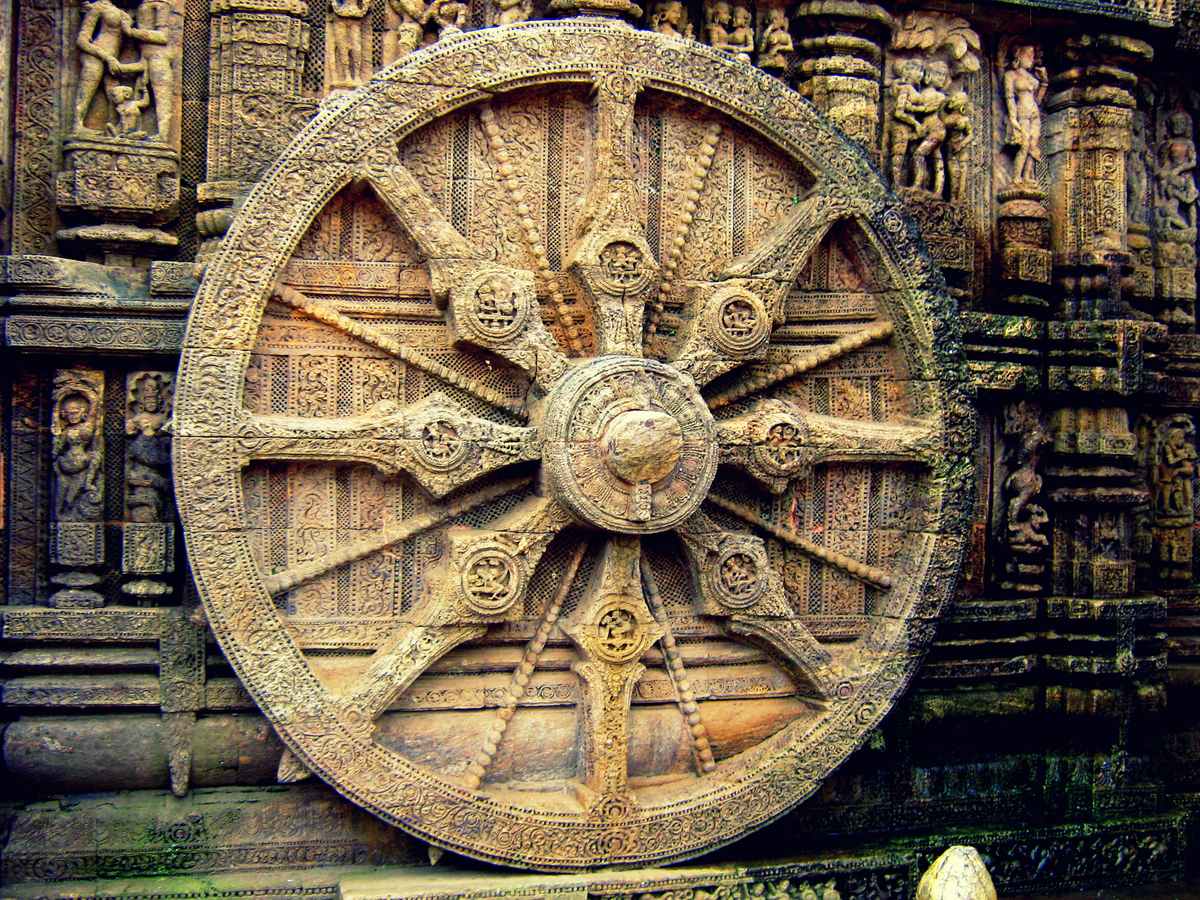
Karma (कर्म) and Dharma (धर्म) are two of the most fundamental concepts in Hindu philosophy. Together, they form the twin pillars upon which the entire edifice of Hindu ethical, social, and spiritual life rests. Karma explains the universal law of cause and effect — how every action generates consequences that shape our destiny across lifetimes — while dharma provides the moral compass that guides us toward right action. Understanding these two concepts in their full depth requires tracing their origins through the Vedas and Upaniṣads, their philosophical elaboration in the Bhagavad Gītā, and their codification in the Dharmaśāstras.
The Origins of Karma: From Ritual to Moral Law
Vedic Beginnings
The word karma derives from the Sanskrit root kṛ, meaning “to do, to make, to act.” In the earliest Vedic literature, karma referred primarily to ritual action — the correct performance of yajña (sacrifice) that sustained the cosmic order (ṛta). The Ṛg Veda emphasizes the power of ritual karma: offerings made properly to the gods ensured rain, fertility, and prosperity. At this stage, karma was largely a communal and priestly concept, centred on external ritual performance.
The Upaniṣadic Revolution
The concept underwent a profound transformation in the Upaniṣads (c. 800-300 BCE), where karma was internalized from external ritual to moral and intentional action. The sage Yājñavalkya, in the Bṛhadāraṇyaka Upaniṣad (4.4.5), articulated perhaps the most concise statement of the karma-rebirth nexus:
yathākārī yathācārī tathā bhavati — sādhukārī sādhur bhavati, pāpakārī pāpo bhavati; puṇyaḥ puṇyena karmaṇā bhavati, pāpaḥ pāpena — “As a person acts, so does he become. One who does good becomes good; one who does evil becomes evil. One becomes virtuous by virtuous action, sinful by sinful action.”
This verse establishes the foundational insight: karma is not fate imposed from outside but the self-created trajectory of the soul through its own choices. The Chāndogya Upaniṣad (5.10.7) reinforces this teaching: “Those whose conduct here has been good will quickly attain a good birth… those whose conduct has been evil will quickly attain an evil birth.”
How Karma Works: The Mechanics of Action
Intention as the Seed
The key insight of the karma doctrine is that intention (cetanā) determines the quality of karma, not merely the outward action. Two people may perform the same deed, but the karma generated differs based on the motivation, attachment, and ego involvement behind it. The Bhagavad Gītā (18.23-25) classifies action according to the three guṇas:
- Sāttvika karma — action performed without attachment, without desire for reward, with a sense of duty (18.23)
- Rājasika karma — action performed with ego, with desire for results, and with great effort (18.24)
- Tāmasika karma — action performed through delusion, without regard for consequences, harm, or one’s own capacity (18.25)
The Chain of Impressions
Every action we take creates an impression (saṃskāra) in the subtle mind. These impressions accumulate and shape our tendencies (vāsanā), which in turn influence our desires, choices, and future actions. This creates a self-reinforcing cycle: actions produce impressions, impressions generate tendencies, tendencies drive desires, and desires impel further actions. The entire cycle of birth and rebirth (saṃsāra) is sustained by this chain of karmic impressions.
The Three Types of Karma
Hindu philosophy classifies karma into three categories, often illustrated by the analogy of an archer:
Saṃchita Karma (Accumulated Karma)
Saṃchita (संचित, “accumulated”) is the vast storehouse of all karma accumulated across countless past lives — both meritorious and demeritorious. Like the bundle of arrows in the archer’s quiver, this reservoir of unresolved karma awaits the right conditions to manifest. The Vivekacūḍāmaṇi of Śaṅkarācārya teaches that saṃchita karma is destroyed entirely by the dawn of self-knowledge (jñāna), just as a heap of cotton is consumed by a single spark of fire.
Prārabdha Karma (Manifesting Karma)
Prārabdha (प्रारब्ध, “commenced”) is the portion of saṃchita karma that has begun to bear fruit in the present life. Like the arrow already released from the bow, prārabdha cannot be recalled — it must run its course. It determines the circumstances of one’s birth, physical body, family, basic temperament, and the broad outlines of life experience. Even the self-realized sage, according to Advaita Vedānta, continues to experience prārabdha karma until the body falls away at death, though it no longer creates new bondage. Śrī Ramaṇa Maharṣi compared prārabdha to a fan that continues spinning after the power is switched off.
Āgāmi Karma (Forthcoming Karma)
Āgāmi (आगामी, “coming, arriving”), also called kriyamāṇa (“being made”), is the new karma created by present thoughts, words, and actions. Like the arrow the archer is about to release, this is the karma over which we have the most direct control. Āgāmi karma may yield results in the current life or be added to the saṃchita storehouse for future manifestation.
Karma in the Bhagavad Gītā: Three Paths
The Bhagavad Gītā provides the most systematic treatment of karma in Hindu scripture. In the dialogue between Śrī Kṛṣṇa and Arjuna on the battlefield of Kurukṣetra, three categories of action are distinguished:
- Karma — elevating actions in accordance with dharma
- Vikarma — degrading actions that violate dharma
- Akarma — action that transcends karmic consequence entirely
Kṛṣṇa’s central teaching on karma yoga (Gītā 2.47) is among the most quoted verses in Hindu scripture:
karmaṇy evādhikāras te mā phaleṣu kadācana / mā karmaphalaheturbhūr mā te saṅgo ‘stv akarmaṇi — “You have a right to action alone, never to its fruits. Do not let the fruit of action be your motive, nor let your attachment be to inaction.”
This does not counsel indifference but rather engaged detachment — performing one’s duty with full effort and skill while surrendering the results to the divine. Kṛṣṇa further teaches (Gītā 3.19) that Janaka and other great kings attained perfection through selfless action alone (lokasaṅgraham evāpi sampaśyan kartum arhasi).
Liberation from Karma
The ultimate goal is not merely to accumulate good karma but to transcend karma altogether — to break free from the cycle of saṃsāra and attain mokṣa (liberation). The Hindu traditions prescribe multiple paths:
- Jñāna Yoga (Path of Knowledge) — through discernment between the eternal Self (ātman) and the transient world, one realizes that the Self was never the doer, and all karma dissolves
- Karma Yoga (Path of Selfless Action) — by performing actions without attachment to results, dedicating all work to the divine, new karmic bonds are not created
- Bhakti Yoga (Path of Devotion) — through complete surrender to God, the devotee’s karma is taken up by divine grace; the Gītā (18.66) declares: sarvadharmān parityajya mām ekaṃ śaraṇaṃ vraja / ahaṃ tvā sarvapāpebhyo mokṣayiṣyāmi mā śucaḥ — “Abandoning all dharmas, take refuge in Me alone; I shall liberate you from all sins — do not grieve”
What is Dharma? Etymology and Core Meaning
The Sanskrit word dharma derives from the root dhṛ, meaning “to hold, to support, to sustain.” Dharma is thus, at its most fundamental, that which upholds — the principle that sustains the individual, society, and the cosmos. It is cognate with the Latin firmus (firm) and shares the sense of foundational stability.
Unlike Western concepts of “religion” or “morality,” dharma is not a fixed set of commandments but a dynamic, contextual principle that responds to time, place, circumstance, and the nature of the individual. The Mahābhārata (Śānti Parva 109.9-11) captures this complexity: dharmasya tattvaṃ nihitaṃ guhāyām — “The essence of dharma is hidden in a cave” — meaning its true nature is subtle and requires deep discernment.
The Ten Characteristics of Dharma
The Manusmṛti (6.92) provides a celebrated enumeration of the ten marks (lakṣaṇa) of dharma:
dhṛtiḥ kṣamā damo’steyaṃ śaucam indriyanigrahaḥ / dhīr vidyā satyam akrodho daśakaṃ dharmalakṣaṇam
The ten characteristics are:
- Dhṛti (धृति) — Patience, fortitude, steadfastness
- Kṣamā (क्षमा) — Forgiveness, tolerance
- Dama (दम) — Self-control, restraint of the mind
- Asteya (अस्तेय) — Non-stealing, honesty
- Śauca (शौच) — Purity, cleanliness (both physical and mental)
- Indriyanigraha (इन्द्रियनिग्रह) — Control of the senses
- Dhī (धी) — Intellect, wisdom, discernment
- Vidyā (विद्या) — Knowledge, learning
- Satya (सत्य) — Truthfulness
- Akrodha (अक्रोध) — Non-anger, equanimity
These ten principles are not merely personal virtues but the very structural supports of a well-ordered society and a well-ordered mind. They represent the universal moral foundation upon which all specific duties rest.
Types of Dharma
Sanātana Dharma (Eternal Dharma)
Sanātana Dharma (सनातन धर्म, “eternal order”) refers to the timeless, universal principles that govern existence itself — the laws of truth, non-violence, and righteousness that transcend time, place, and individual circumstance. In its broadest sense, this is the term Hindus use to describe their tradition as a whole: not a religion founded at a particular moment in history, but an eternal cosmic order to be discovered and lived.
Sāmānya Dharma (Universal Dharma)
Sāmānya Dharma encompasses the moral duties common to all human beings regardless of their social position or stage of life: non-violence (ahiṃsā), truthfulness (satya), non-stealing (asteya), compassion (dayā), and self-restraint (dama). These universal principles provide the ethical foundation upon which all specific duties rest.
Svadharma (Personal Dharma)
Svadharma (स्वधर्म, “one’s own dharma”) is the specific duty arising from one’s unique nature (svabhāva), stage of life (āśrama), and social responsibilities. The Gītā (3.35) teaches: śreyān svadharmo viguṇaḥ paradharmāt svanuṣṭhitāt / svadharme nidhanaṃ śreyaḥ paradharmo bhayāvahaḥ — “Better is one’s own dharma, though imperfectly performed, than the dharma of another well performed. Better is death in one’s own dharma; the dharma of another is fraught with danger.”
Āpad Dharma (Emergency Dharma)
The Dharmaśāstras recognize that in times of crisis (āpad), the normal rules of dharma may be suspended or modified. The Mahābhārata and Manusmṛti both discuss situations where a brāhmaṇa may take up arms or a householder may adopt extraordinary means of livelihood when survival is threatened — illustrating the contextual, pragmatic nature of dharmic reasoning.
Dharma in the Mahābhārata: The Great Dilemma
The Mahābhārata is, in many ways, an extended meditation on the meaning of dharma. The epic repeatedly presents situations where dharma appears to conflict with itself — where duty to family clashes with duty to truth, where the dharma of a warrior confronts the dharma of compassion. Arjuna’s crisis on the battlefield of Kurukṣetra is the supreme example: his dharma as a kṣatriya (warrior) demands that he fight, but his dharma as a kinsman and student recoils from killing his own teachers and relatives.
Bhīṣma, lying on his bed of arrows, delivers the famous teaching: dharma eva hato hanti dharmo rakṣati rakṣitaḥ — “Dharma, when violated, destroys; dharma, when protected, protects” (Mahābhārata, Vana Parva 313.128). This verse encapsulates the reciprocal relationship between the individual and dharma: those who uphold dharma are upheld by it in return.
Karma and Dharma Together: The Four Goals of Life
Karma and dharma find their ultimate context within the Hindu framework of Puruṣārtha — the four goals of human life:
- Dharma (धर्म) — Righteous living, moral duty
- Artha (अर्थ) — Prosperity, material well-being
- Kāma (काम) — Pleasure, aesthetic and emotional fulfilment
- Mokṣa (मोक्ष) — Liberation from the cycle of birth and death
Dharma is placed first because it governs how the other three goals are pursued. Wealth (artha) and pleasure (kāma) are legitimate goals when pursued within the boundaries of dharma; pursued without dharmic restraint, they lead to adharma and suffering. Mokṣa, the ultimate liberation, is achieved when karma is exhausted or transcended through knowledge, devotion, or selfless action.
Practical Applications for Daily Life
For Decision-Making
The karma-dharma framework provides a powerful ethical compass:
- Ask: “What is the right action here?” (Dharma)
- Examine: “What is my true intention?” (Karma)
- Surrender: “Am I attached to the outcome?” (Karma Yoga)
For Self-Responsibility
Karma teaches radical self-responsibility: our present circumstances are shaped by our past choices, and our future is being created by our present actions. This is not fatalism — it is empowerment. As the Bṛhadāraṇyaka Upaniṣad declares, “As is his desire, so is his intention; as is his intention, so is his action; as is his action, so is his attainment” (4.4.5).
For Compassion Toward Others
Understanding karma does not mean judging others for their suffering. The Mahābhārata teaches that the workings of karma are subtle (gahana karmaṇo gatiḥ, Gītā 4.17) and ultimately beyond human calculation. True dharmic understanding leads not to judgment but to compassion — recognizing that all beings are navigating the same ocean of saṃsāra.
The Eternal Message
Karma and dharma together offer a profound and practical philosophy of life. Karma reveals that we are the architects of our own destiny — not through blind fate but through the accumulated momentum of our choices, intentions, and actions across lifetimes. Dharma provides the guiding light by which those choices are made: not a rigid code but a living, breathing principle that calls us to act with integrity, wisdom, and compassion in each moment.
As the Gītā (3.14-15) teaches, the universe itself is sustained by a cycle of action: annād bhavanti bhūtāni parjanyād annasambhavaḥ / yajñād bhavati parjanyo yajñaḥ karmasamudbhavaḥ — “All beings arise from food; food arises from rain; rain arises from sacrifice; sacrifice arises from action.” In this vision, every act of dharmic karma is a contribution to the cosmic order — a thread in the great fabric of existence that binds all beings together in a web of mutual responsibility and sacred purpose.