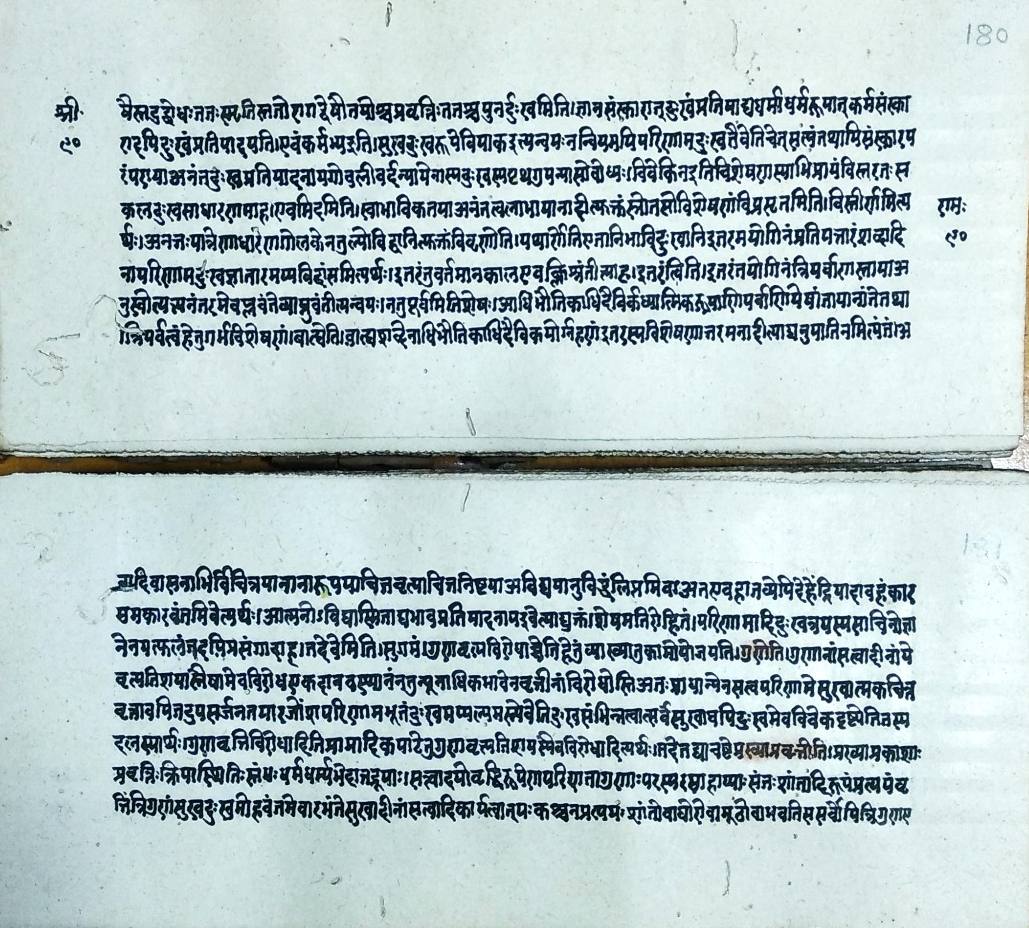
The Yoga Sūtras of Patañjali (पतञ्जलि योगसूत्र) is the foundational text of classical yoga — one of the six orthodox (āstika) schools of Hindu philosophy. Compiled by the sage Patañjali, the work consists of 196 terse aphorisms (sūtras) organized into four chapters (pādas) that systematically present the philosophy, psychology, and practice of yoga as a science of consciousness. For over two millennia, this slender text has served as the authoritative guide to Rāja Yoga — the “royal path” of meditation and inner mastery — and its influence extends far beyond Hinduism into Buddhist meditation, Jain contemplative practice, and modern psychology.
The Author: Patañjali
The historical identity of Patañjali remains one of the enduring mysteries of Indian intellectual history. Traditional accounts identify him as an incarnation of Ādiśeṣa (the primordial serpent upon whom Lord Viṣṇu reclines), who descended to earth to teach yoga to humanity. The iconographic tradition depicts him in a half-human, half-serpent form with a multi-hooded cobra canopy — symbolizing the power of kuṇḍalinī and the protective awareness of meditation.
Scholarly consensus places the composition of the Yoga Sūtras between the 2nd century BCE and the 4th century CE, with most scholars favouring the early centuries of the Common Era. There is significant debate about whether the Patañjali who authored the Yoga Sūtras is the same Patañjali who composed the Mahābhāṣya (the great commentary on Pāṇini’s grammar), as Indian tradition often claims. What is certain is that Patañjali did not invent yoga but rather systematized pre-existing practices and philosophical insights — drawing upon the Sāṅkhya metaphysical framework, older contemplative traditions preserved in the Upaniṣads, and possibly Buddhist meditative techniques — into a coherent and rigorous system.
Relationship to Sāṅkhya Philosophy
The Yoga Sūtras stand in close relation to the Sāṅkhya system of philosophy, so much so that the two are traditionally regarded as complementary: Sāṅkhya provides the theoretical framework, and Yoga provides the practical methodology. Sāṅkhya posits 25 fundamental principles (tattvas) of existence, beginning with Puruṣa (pure consciousness, the witness) and Prakṛti (primordial matter, nature). All suffering arises from the confusion (avidyā) between these two — the mistaken identification of consciousness with the fluctuations of the material mind.
Yoga adds a 26th principle: Īśvara (ईश्वर), the supreme consciousness, described in the Sūtras (1.24) as kleśa-karma-vipākāśayair aparāmṛṣṭaḥ puruṣaviśeṣa — “a special Puruṣa untouched by afflictions, actions, results, or latent impressions.” This addition earned Yoga the designation Seśvara Sāṅkhya (“Sāṅkhya with God”), in contrast to the classical atheistic Sāṅkhya of Kapila. Devotion to Īśvara (Īśvara praṇidhāna) is presented as one of the most direct means to samādhi.
Structure: The Four Pādas
The 196 sūtras are divided into four chapters, each addressing a distinct dimension of the yogic path:
1. Samādhi Pāda (51 sūtras) — On Absorption
The first chapter defines yoga, describes the nature of consciousness, and outlines the various levels of meditative absorption. It opens with the foundational definition:
yogaś citta-vṛtti-nirodhaḥ — “Yoga is the cessation of the fluctuations of consciousness.” (1.2)
tadā draṣṭuḥ svarūpe ‘vasthānam — “Then the seer abides in its own true nature.” (1.3)
This chapter classifies the five types of mental fluctuation (vṛtti): right knowledge (pramāṇa), error (viparyaya), conceptualization (vikalpa), sleep (nidrā), and memory (smṛti). It presents two essential means of practice — abhyāsa (sustained effort) and vairāgya (non-attachment) — and describes the progressive stages of samādhi, from savitarka (absorption with conceptual thought) to nirbīja (seedless absorption without any mental content).
2. Sādhana Pāda (55 sūtras) — On Practice
The second chapter addresses the practical methodology of yoga. It introduces Kriyā Yoga — the yoga of action, consisting of tapas (austerity), svādhyāya (self-study and scriptural study), and Īśvara praṇidhāna (surrender to God). This chapter also presents the five kleśas (afflictions) that cause suffering, and the celebrated Aṣṭāṅga Yoga (eight-limbed path) that forms the practical core of the entire system.
3. Vibhūti Pāda (56 sūtras) — On Accomplishments
The third chapter describes the inner disciplines of concentration (dhāraṇā), meditation (dhyāna), and absorption (samādhi), which together constitute saṃyama — the integrated practice of focused awareness. When saṃyama is directed toward various objects, extraordinary powers (siddhis or vibhūtis) may arise: knowledge of past lives, perception of others’ mental states, mastery over the elements, and others. Crucially, Patañjali warns (3.38) that these powers are obstacles (upasarga) to liberation when pursued for their own sake — they are signs of progress but not the goal.
4. Kaivalya Pāda (34 sūtras) — On Liberation
The final chapter discusses the nature of kaivalya — the absolute freedom of pure consciousness, disentangled from all identification with the mind and its contents. Kaivalya is not a state to be attained but the natural condition of Puruṣa when the veil of ignorance is removed. The chapter addresses subtle philosophical questions: the nature of action and its fruits, the difference between the liberated and the bound consciousness, and the ultimate dissolution of the guṇas back into Prakṛti once they have served their purpose of liberating the Puruṣa.
The Eight Limbs of Aṣṭāṅga Yoga
The heart of the Yoga Sūtras’ practical teaching is the Aṣṭāṅga Yoga (अष्टाङ्ग योग, “eight-limbed yoga”), presented in Sūtras 2.29-3.3. Each limb builds upon the previous, progressing from external conduct to internal mastery:
1. Yama (यम) — Ethical Restraints
The five yamas govern our relationship with the external world:
- Ahiṃsā (अहिंसा) — Non-violence in thought, word, and deed. Patañjali accords it primacy: when ahiṃsā is perfected, all hostility ceases in the yogi’s presence (2.35).
- Satya (सत्य) — Truthfulness. When established in satya, the yogi’s words become unfailingly effective (2.36).
- Asteya (अस्तेय) — Non-stealing. When asteya is firm, all treasures present themselves (2.37).
- Brahmacarya (ब्रह्मचर्य) — Moderation, continence. Its mastery yields great vitality (vīrya) (2.38).
- Aparigraha (अपरिग्रह) — Non-possessiveness. When established, knowledge of past and future births arises (2.39).
2. Niyama (नियम) — Self-Disciplines
The five niyamas govern our relationship with ourselves:
- Śauca (शौच) — Purity, both physical and mental
- Santoṣa (सन्तोष) — Contentment. From santoṣa, supreme happiness is obtained (2.42).
- Tapas (तपस्) — Austerity, disciplined effort. Tapas destroys impurities and perfects the body and senses (2.43).
- Svādhyāya (स्वाध्याय) — Study of sacred texts and self-inquiry. Through svādhyāya, communion with one’s chosen deity is achieved (2.44).
- Īśvara praṇidhāna (ईश्वर प्रणिधान) — Surrender to God. Through this practice, samādhi is attained (2.45).
3. Āsana (आसन) — Posture
Patañjali’s treatment of āsana is remarkably concise: sthira-sukham āsanam — “Posture should be steady and comfortable” (2.46). The vast proliferation of physical postures that characterizes modern Haṭha Yoga and contemporary yoga studios was a much later development. For Patañjali, āsana serves a single purpose: to provide a stable, comfortable seat for prolonged meditation, where the body becomes an aid rather than a distraction.
4. Prāṇāyāma (प्राणायाम) — Breath Regulation
Prāṇāyāma involves the regulation of the breath — specifically the inhalation (śvāsa), exhalation (praśvāsa), and retention (kumbhaka) — as a means of refining prāṇa (vital energy) and calming the mind. Patañjali notes (2.52-53) that through prāṇāyāma, the covering over the inner light is diminished and the mind becomes fit for concentration.
5. Pratyāhāra (प्रत्याहार) — Sense Withdrawal
Pratyāhāra is the pivotal transition from external to internal practice. It involves withdrawing the senses from their habitual engagement with external objects, turning awareness inward. Patañjali compares it (2.54) to the way a turtle withdraws its limbs — the senses are not suppressed but redirected.
6. Dhāraṇā (धारणा) — Concentration
Dhāraṇā is the practice of binding the mind to a single point — a mantra, a deity, a candle flame, the breath, or a specific location in the body (such as the heart centre or the point between the eyebrows). Sūtra 3.1 defines it as deśa-bandhaś cittasya dhāraṇā — “Concentration is the binding of consciousness to a single place.”
7. Dhyāna (ध्यान) — Meditation
When concentration becomes sustained and uninterrupted, it becomes dhyāna — a continuous flow of attention toward the object of meditation, like “the unbroken flow of oil” (taila-dhāra-vat, a classical simile). In dhyāna, the distinction between the meditator and the object of meditation begins to dissolve.
8. Samādhi (समाधि) — Absorption
Samādhi is the culmination of the meditative process: the mind becomes so absorbed in the object that self-awareness of the act of meditation disappears entirely. Only the essence of the object shines forth (3.3). Patañjali describes two broad categories:
- Samprajñāta Samādhi (cognitive absorption) — with a subtle object of awareness, passing through stages of vitarka (thought), vicāra (reflection), ānanda (bliss), and asmitā (pure I-am-ness)
- Asamprajñāta Samādhi (non-cognitive absorption) — beyond all mental content, where only latent impressions (saṃskāras) remain, and ultimately nirbīja samādhi (seedless absorption) where even these are dissolved
The Five Kleśas: The Root Causes of Suffering
According to the Yoga Sūtras (2.3-9), all suffering arises from five afflictions (kleśas):
-
Avidyā (अविद्या, ignorance) — The fundamental misidentification of the non-eternal as eternal, the impure as pure, the painful as pleasurable, and the non-self as the Self. Avidyā is the root cause from which all other kleśas spring (2.4).
-
Asmitā (अस्मिता, ego) — The confusion of the seer (Puruṣa) with the instrument of seeing (the mind). This is the false identification “I am my thoughts, I am my body.”
-
Rāga (राग, attachment) — The thirst that arises from clinging to pleasurable experiences, creating the desire for their repetition.
-
Dveṣa (द्वेष, aversion) — The reactive pushing away of painful experiences, which binds consciousness as surely as attachment does.
-
Abhiniveśa (अभिनिवेश, clinging to life) — The deep, instinctive fear of death and dissolution that pervades all sentient beings, described by Patañjali (2.9) as persisting even in the learned (viduṣo ‘pi).
The path of yoga systematically weakens these afflictions through discriminative knowledge (viveka-khyāti) until they are “burned like roasted seeds” — present in latent form but no longer capable of sprouting into suffering.
The Commentarial Tradition
The Yoga Sūtras generated one of the richest commentarial traditions in Indian philosophy:
-
Vyāsa Bhāṣya (c. 4th-5th century CE) — The earliest extant commentary, traditionally attributed to the legendary sage Vyāsa, though some scholars argue it may have been composed by Patañjali himself as a unified work (Pātañjalayogaśāstra). The Vyāsa Bhāṣya is so foundational that, as scholars note, “when we speak of the philosophy of Patañjali, what we really mean is the understanding of Patañjali according to Vyāsa.”
-
Tattvavaiśāradī by Vācaspati Miśra (9th century) — A sub-commentary on the Vyāsa Bhāṣya that became the standard reference for later scholars.
-
Rājamārtaṇḍa by King Bhoja (11th century) — An independent commentary reflecting the perspective of a royal practitioner.
-
Yogavārttika by Vijñānabhikṣu (16th century) — A detailed commentary that interprets the Sūtras through a Vedāntic lens, arguing for the compatibility of Yoga and Advaita.
In the modern period, Svāmī Vivekānanda’s Rāja Yoga (1896) introduced the Yoga Sūtras to Western audiences, while the commentaries of B.K.S. Iyengar, T.K.V. Desikachar, and Svāmī Satcidānandā have made the text accessible to contemporary practitioners worldwide.
Key Sūtras
Several sūtras have become touchstones of Hindu spiritual literature:
yogaś citta-vṛtti-nirodhaḥ — “Yoga is the cessation of the fluctuations of consciousness.” (1.2)
tadā draṣṭuḥ svarūpe ‘vasthānam — “Then the seer abides in its own true nature.” (1.3)
abhyāsa-vairāgyābhyāṃ tan-nirodhaḥ — “That cessation is achieved through practice and non-attachment.” (1.12)
īśvara praṇidhānād vā — “Or [samādhi is attained] through devotion to Īśvara.” (1.23)
sthira-sukham āsanam — “Posture should be steady and comfortable.” (2.46)
yogāṅgānuṣṭhānād aśuddhi-kṣaye jñāna-dīptir āviveka-khyāteḥ — “Through the practice of the limbs of yoga, impurity is destroyed, and the light of knowledge shines forth unto discriminative discernment.” (2.28)
Impact and Legacy
The Yoga Sūtras has profoundly shaped both Indian and global culture:
- It established yoga as a systematic science of consciousness — not merely a set of physical exercises but a comprehensive methodology for understanding and transforming the mind
- Its eight-limbed framework provided the structural foundation for virtually all subsequent schools of yoga, including Haṭha Yoga, Kuṇḍalinī Yoga, and modern postural yoga
- Its analysis of the kleśas and the mechanisms of suffering anticipates key insights of modern cognitive-behavioural psychology by nearly two millennia
- Its influence extends into Buddhist meditation traditions, particularly the Theravāda vipassanā and Mahāyāna śamatha practices that share structural parallels with Patañjali’s system
- The text was recognized by UNESCO when International Yoga Day was established on June 21, 2015, acknowledging the Yoga Sūtras’ role in shaping the world’s understanding of yoga
- Modern neuroscience research on meditation has begun to empirically validate several of Patañjali’s claims about the effects of sustained contemplative practice on attention, emotional regulation, and neural plasticity
The Living Tradition
The Yoga Sūtras offers a timeless map of inner territory — a systematic guide to the landscape of consciousness that remains as precise and relevant as when it was first composed. Its genius lies in its universality: Patañjali prescribes no particular deity, no specific ritual, no cultural allegiance. The path is open to anyone willing to undertake the disciplined work of self-observation, ethical refinement, and meditative practice.
Whether approached as a spiritual scripture, a philosophical treatise, or a practical manual for mental well-being, the Yoga Sūtras stands as one of humanity’s most extraordinary achievements — a text that compressed an entire science of the mind into 196 threads of concentrated wisdom, each sūtra a seed containing, as the tradition says, a forest of meaning. As Patañjali declares in the very first sūtra: atha yogānuśāsanam — “Now begins the teaching of yoga.” The invitation stands open, timeless and undiminished, to all who would accept it.