Death in Hinduism is not an end but a transition — a passage of the eternal soul (ātman) from one bodily existence to another, or, for the liberated soul, the final return to the Divine. The rituals that accompany this transition are known as Antyeṣṭi (अन्त्येष्टि, from antya “last” + iṣṭi “sacrifice”), the last of the sixteen saṁskāras (sacraments) that sanctify a Hindu’s life from conception to death. These rites, codified in the Gṛhyasūtras, the Dharmaśāstras, and elaborated in texts like the Garuḍa Purāṇa, serve a dual purpose: to release the soul from its attachment to the physical body and to guide it safely on its journey to the realm of the ancestors (pitṛloka).
The Sixteenth Saṁskāra: Context and Significance
The Hindu tradition prescribes sixteen saṁskāras (ṣoḍaśa saṁskāra) — sacramental rites that mark and sanctify the major transitions of human life. These are enumerated in the Gṛhyasūtras of Āśvalāyana, Gobhila, and others, and codified by later texts such as the Saṁskāra Prakāśa. They begin with Garbhādhāna (conception) and conclude with Antyeṣṭi (funeral rites).
The Manusmṛti (2.16) declares that the saṁskāras purify the body and prepare the soul for its spiritual journey. Antyeṣṭi is unique among the sixteen because it is the only saṁskāra performed after death — and it is the only one that the individual cannot perform for themselves. It must be carried out by the living, ideally by the eldest son or nearest male relative, making it simultaneously an act of filial duty (pitṛ dharma) and a final act of love.
Preparation of the Body
When death occurs or is imminent, the traditional observances begin:
At the Moment of Death
The dying person is ideally placed on the ground — symbolizing return to the Earth Mother (Bhūmi Devī) — with the head facing north or east. Family members recite sacred texts: the Bhagavad Gītā (especially Chapter 8, on the process of dying), the Viṣṇu Sahasranāma, or the Mahāmṛtyuñjaya Mantra (oṁ tryambakaṁ yajāmahe…). Drops of Gaṅgā jala (Ganges water) and tulasī (holy basil) leaves are placed in the mouth of the dying person — a practice described in the Garuḍa Purāṇa (Pretakhaṇḍa, chapters 2-3).
The Gītā (8.5-6) teaches that the state of consciousness at the moment of death determines the soul’s destination: “yaṁ yaṁ vāpi smaran bhāvaṁ tyajaty ante kalevaram / taṁ tam evaiti kaunteya sadā tadbhāvabhāvitaḥ” — “Whatever state of being one remembers when leaving the body at death, that state one will attain, O son of Kuntī.”
Bathing and Shrouding
After death is confirmed, the body is bathed (snāna) with water mixed with sandalwood paste, turmeric, and sacred substances. The Āśvalāyana Gṛhyasūtra (4.1) prescribes this ritual bathing in detail. The body is then dressed in new, clean white cloth (white being the colour of mourning in Hindu tradition — contrasting with Western black). For married women whose husbands survive them, the body may be dressed in red or the wedding sāṛī; for married men, the sacred thread (yajñopavīta) is retained.
The body is adorned with sandalwood paste (candana), vermilion (sindūra) on the forehead, and garlands of flowers — particularly marigold and jasmine. Rice grains may be placed in the mouth, and coins on the eyes, symbolizing provision for the journey ahead.
The Funeral Procession
The body is placed on a bamboo bier (arṭhī) and carried to the cremation ground (śmaśāna) in a procession. The procession is led by the eldest son (or the person who will light the pyre), who carries a clay pot of fire (agni) from the home hearth. Participants chant: “Rāma nāma satya hai” (“The name of Rāma is truth”) — a proclamation that only the Divine Name endures, while all else is transient.
The Garuḍa Purāṇa (Pretakhaṇḍa 10.41-43) prescribes that the procession should proceed without turning back, as looking backward symbolizes the soul’s attachment to the world of the living.
Dāha-saṁskāra: The Cremation
Cremation (dāha-saṁskāra or agni-saṁskāra) is the primary method of disposing of the body in Hindu tradition. The Ṛg Veda (10.16), one of the oldest funeral hymns in any literature, addresses Agni (the fire god) directly:
“mā cakṣuṣā pra vṛha mā śarīraṁ… śṛtaṁ yadā karasi jātavedaḥ” — “Do not burn the eye, do not burn the body… when you have cooked [the body], O Jātavedas (knower of all that is born), carry [this person] to the world of the righteous.”
This hymn reveals that Vedic cremation was understood not as destruction but as a sacred offering — the body is offered into Agni, who serves as the divine messenger carrying the soul to the realm of the ancestors.
The Pyre and Its Construction
The cremation pyre (citā) is traditionally constructed from specific types of wood. The Gṛhyasūtras prescribe sandalwood (candana), mango wood (āmra), or palāśa wood, depending on regional availability and the family’s means. The pyre is arranged in a specific pattern, with the body placed atop it with the head facing north (toward the realm of the ancestors).
Mukhāgni: Lighting the Pyre
The most solemn moment of the ceremony is mukhāgni — the lighting of the fire at the mouth of the deceased. This is performed by the eldest son (or, in his absence, the nearest male relative). Before lighting, the son circumambulates the pyre three times (counter-clockwise, reversing the normal pradakṣiṇā direction — symbolizing the reversal of the life cycle). He carries a clay pot of water on his shoulder, which is cracked (not broken) at each circuit — symbolizing the release of the soul from the body.
The son then applies fire to the mouth of the deceased with a torch, reciting mantras from the Yajur Veda. In some traditions, the skull is ceremonially cracked (kapāla kriyā) during the cremation to release the soul through the brahmarandhra (the crown of the skull, considered the ideal exit point for the departing soul — as described in the Chāndogya Upaniṣad 8.6.6).
Who Lights the Pyre?
Traditionally, the eldest son lights the pyre — reflecting the Hindu concept that the son liberates the father from the hell called “Put” (hence the word putra, “son,” is etymologized as “pum narakāt trāyate iti putraḥ” — “he who rescues from the hell called Put”). In contemporary practice, however, many communities now permit daughters, wives, or other family members to perform this sacred duty, recognizing that the essence of the rite lies in love and devotion rather than gender.
The Thirteen-Day Mourning Period (Trayodaśa)
After cremation, the family observes a structured thirteen-day mourning period (sūtaka or aśauca), during which ritual impurity (aśuddhi) is understood to affect the bereaved household.
Days 1-3: Immediate Observances
The family maintains a state of ritual mourning: sitting on the floor, abstaining from cooking (food is brought by neighbours and extended family), refraining from religious ceremonies, and avoiding social engagements. A lamp (dīpa) is kept burning continuously near a photograph of the deceased, symbolizing the lingering presence of the soul.
Asthi Saṁcaya: Collecting the Ashes
On the third day (or sometimes the second day) after cremation, the family returns to the cremation site for asthi saṁcaya — the collection of the bones and ashes (asthi). These are gathered reverently in a clay pot or urn.
Asthi Visarjana: Immersion of Ashes
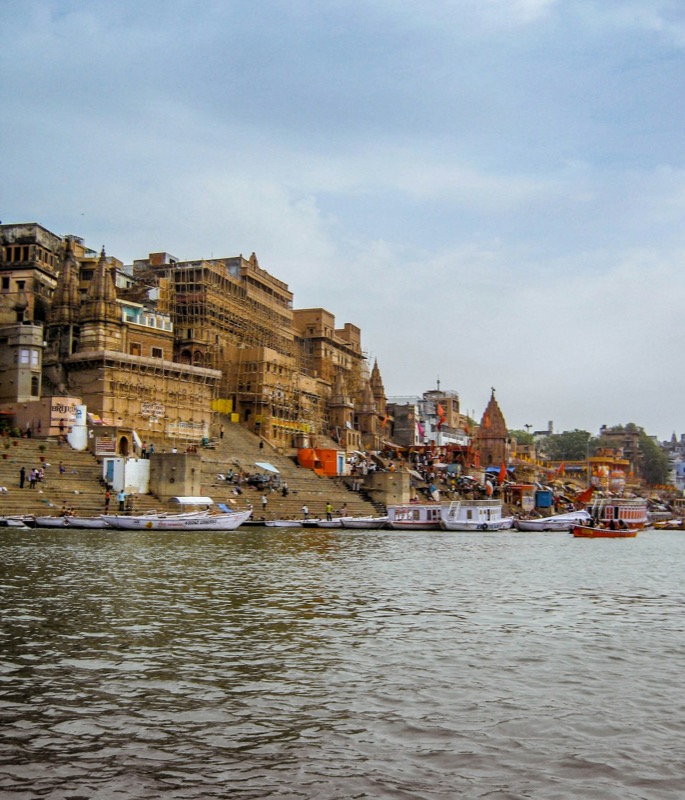
The ashes are immersed (visarjana) in a sacred river, ideally the Gaṅgā at one of the holy cities — Vārāṇasī, Haridvāra, Prayāgrāja (the Trivēṇī Saṅgama), or Gayā. The Garuḍa Purāṇa (Pretakhaṇḍa, chapter 13) states that immersion in the Ganges liberates the soul from all sins. If the Ganges is inaccessible, any sacred river (tīrtha) or the ocean may serve this purpose.
Piṇḍa Dāna: Offerings to the Departed
During the thirteen days, piṇḍa dāna (offering of rice balls) is performed daily. The piṇḍa — a ball of cooked rice mixed with sesame, ghee, and other ingredients — represents the nourishment of the disembodied soul (preta) as it transitions through the intermediate state between death and its final destination.
According to the Garuḍa Purāṇa (Pretakhaṇḍa, chapters 5-10), the soul in the preta state requires these offerings to build a new subtle body (ativāhika śarīra). Each day’s piṇḍa is said to constitute a different part of this body: the first day the head, the second the neck, the third the chest, and so on — until on the tenth day the complete subtle body is formed.
Garuḍa Purāṇa Readings
Throughout the mourning period, portions of the Garuḍa Purāṇa — specifically the Pretakhaṇḍa (Section on the Departed) — are read aloud by a priest or family member. This text describes in vivid detail the soul’s journey after death, the consequences of virtuous and sinful lives, the topography of the afterworld, and the path to liberation. While some of its descriptions are frightening (the punishments of various hells), its purpose is didactic: to inspire the living to lead righteous lives and to comfort the bereaved with the assurance that proper rites will ensure the soul’s safe passage.
Sapinḍīkaraṇa and Śrāddha
Sapinḍīkaraṇa: Joining the Ancestors
On the twelfth or thirteenth day, the crucial rite of sapinḍīkaraṇa is performed. This ceremony marks the formal transition of the deceased from the status of preta (newly departed spirit) to pitṛ (ancestor). A piṇḍa representing the deceased is merged with three piṇḍas representing the three preceding generations of ancestors — the father, grandfather, and great-grandfather. This ritual “joining” (sapinḍīkaraṇa — literally “making into a co-piṇḍa-sharer”) signifies that the soul has been incorporated into the lineage of honoured ancestors and will henceforth receive offerings through the regular śrāddha ceremonies.
The Āśvalāyana Gṛhyasūtra (4.7) and the Viṣṇu Smṛti (chapter 21) provide detailed procedures for sapinḍīkaraṇa. In some communities, this rite is performed one year after death rather than on the thirteenth day.
Śrāddha: Annual Ancestral Rites
After the mourning period concludes, the deceased is honoured through śrāddha ceremonies — annual rites of remembrance and offering performed on the death anniversary (tithi) according to the Hindu lunar calendar. The Pitṛ Pakṣa (the fortnight of the ancestors, typically in the month of Āśvina / September-October) is a particularly important period when all Hindus perform śrāddha for their departed ancestors.
Śrāddha involves feeding Brāhmaṇas (who represent the ancestors), making piṇḍa offerings, and performing charitable acts (dāna) in the name of the deceased. The Manusmṛti (3.122) states: “The offerings made to ancestors in accordance with the prescribed rites nourish the Sun, the Moon, and the Gods, and satisfy all beings.”
The Concept of Pitṛs (Ancestors)
The pitṛs (पितृ, “fathers” or “ancestors”) occupy a distinctive position in Hindu cosmology. They are not merely deceased relatives but beings who inhabit a specific cosmic realm — Pitṛloka — and who maintain an active, reciprocal relationship with their living descendants.
The Ṛg Veda (10.15) contains hymns directly addressed to the pitṛs, invoking their blessings and offering them soma. The Bhagavad Gītā (9.25) teaches: “pitṝn yānti pitṛvratāḥ” — “Those who worship the ancestors go to the ancestors.” The Manusmṛti (3.81-82) describes three classes of pitṛs: the Vasu (paternal), the Rudra (maternal), and the Āditya (great-grandfathers).
The reciprocal relationship is essential: the living nourish the pitṛs through śrāddha offerings, and the pitṛs in turn bless the living with progeny, prosperity, and spiritual merit. This mutual dependence creates an unbroken chain linking the living, the dead, and the yet-to-be-born — a vision of intergenerational solidarity that is one of Hinduism’s most distinctive contributions to human thought.
Regional Variations
Burial Traditions
While cremation is the norm for most adult Hindus, several important exceptions exist:
- Children: Young children (typically under the age of two or three) are buried rather than cremated, as they are considered too pure to require the purification of fire. The Āśvalāyana Gṛhyasūtra (4.4) specifies this practice.
- Sannyāsīs (renunciants): Those who have taken formal sannyāsa (renunciation) may be buried in a seated meditation posture (samādhi), as they are considered to have already undergone the “fire” of spiritual knowledge. Their burial sites often become shrines (samādhi sthala).
- Nāga Sādhus and certain Śaiva ascetics: Buried in a seated posture with salt placed around the body.
- Vīraśaiva (Liṅgāyat) tradition: Practitioners of this Karnataka-based tradition bury their dead rather than cremating them, a practice called samaraśaṇa.
South Indian Practices
In Tamil Nadu, the karumaḍi (thirteenth-day ceremony) involves elaborate rituals including feeding crows (representing the ancestors) and communal feasting. In Kerala, the pula (mourning impurity) period and associated rituals reflect the region’s unique matrilineal traditions among Nāyar communities.
Bengali Practices
In Bengal, the funeral procession to the śmaśāna (cremation ground) is accompanied by chanting of “Bolo Hari, Hari bol” (“Say the name of Hari”). The śrāddha ceremony often includes offering piṇḍa at Gayā (Bihar), considered the most sacred site for ancestral rites. The adyaśrāddha (first śrāddha, performed on the day of death) is distinctive to Bengali practice.
North Indian Plains
In the Hindi heartland, the tehrāvīṃ (thirteenth-day ceremony) is a major social and religious event involving community feasting and charitable distribution. The practice of immersing ashes at the Trivēṇī Saṅgama in Prayāgrāja is particularly valued.
Death, Karma, and the Afterlife
Hindu beliefs about what happens after death are diverse and layered:
- The Vedic view emphasizes the journey to Pitṛloka (the realm of the fathers) or, for the exceptionally righteous, to Svarga (heaven).
- The Upaniṣadic teaching introduces the doctrine of punarjanma (rebirth): the soul transmigrates according to its karma, taking birth in a new body suited to its accumulated merit and demerit. The Bṛhadāraṇyaka Upaniṣad (4.4.5-6) describes two paths: the Devayāna (path of the gods, leading to liberation) and the Pitṛyāna (path of the ancestors, leading to rebirth).
- The Purāṇic literature, especially the Garuḍa Purāṇa, elaborates a detailed cosmography of heavens (svarga), hells (naraka), and intermediate states, presided over by Yama (the lord of death) and his record-keeper Citragupta.
- The Vedāntic view, particularly in Advaita, teaches that the ātman is never truly born and never truly dies — death is merely the shedding of a garment (Gītā 2.22: “vāsāṁsi jīrṇāni yathā vihāya navāni gṛhṇāti naro ‘parāṇi” — “As a person puts on new garments, giving up old ones, so the soul accepts new material bodies, giving up the old and useless ones”).
The Living and the Dead: An Unbroken Bond
Hindu funeral rites embody a profound vision of the relationship between the living and the dead. Unlike traditions that emphasize a sharp break between this world and the next, Hinduism maintains that the bond between generations is never severed. Through Antyeṣṭi, piṇḍa dāna, sapinḍīkaraṇa, and annual śrāddha, the living continue to nourish and honour the dead, and the dead continue to bless and guide the living.
This vision is captured in the Ṛg Vedic funeral hymn (10.18.13): “imā nārīr avidhavāḥ supatnīr āñjanena sarpṣā saṁviśantu” — a prayer for the welfare of those who survive, invoking a world where grief is tempered by faith, where loss is softened by the assurance that the soul endures, and where the ritual acts of the living can truly benefit the departed.
In the Hindu understanding, death is not darkness but a doorway — and the funeral rites are the loving hands that guide the soul through that door toward its next destination in the endless journey of the ātman.