The Sanskrit word saṃskāra (संस्कार) carries a layered meaning: “to make perfect,” “to refine,” or “to sanctify.” In Hindu tradition, the ṣoḍaśa saṃskāras (sixteen sacraments) are sacred rites that mark every pivotal transition in a person’s life — from the moment of conception to the final cremation fire. These rituals are not mere social ceremonies; they are acts of spiritual purification, designed to shape the individual’s body, mind, and soul in alignment with ṛta (cosmic order) and dharma.
Etymology and Scriptural Basis
The root sam (well, completely) combined with kṛ (to do, to make) gives saṃskāra its essential meaning: “that which refines or prepares.” The Gṛhya Sūtras — domestic ritual manuals dating from roughly 800–200 BCE — provide the most systematic enumeration of saṃskāras. Key texts include:
- Āśvalāyana Gṛhya Sūtra — one of the earliest and most complete ritual handbooks
- Pāraskara Gṛhya Sūtra — associated with the Śukla Yajurveda
- Gobhila Gṛhya Sūtra — associated with the Sāmaveda
The Manusmṛti (2.26–2.28) declares that saṃskāras destroy the impurities of the body acquired through the seed and the womb, making the individual fit for Vedic study and spiritual life. Sage Gautama (in Gautama Dharmasūtra 8.14–24) was among the earliest to list a definitive set of forty saṃskāras, later condensed by various authorities to the standard sixteen. The definitive modern scholarly treatment is Rajbali Pandey’s Hindu Saṃskāras (1969), which traces the evolution of each rite from Vedic to modern times.
The Sixteen Saṃskāras
The classical list of sixteen saṃskāras, as standardized in the Dharmaśāstra tradition, can be grouped into five stages of life.
Pre-Birth Rites (Garbha Saṃskāras)
1. Garbhādhāna (Conception Rite) The first saṃskāra sanctifies the act of procreation. Husband and wife perform prayers and invoke divine blessings so that the child may be conceived in a spiritually auspicious state. The Bṛhadāraṇyaka Upaniṣad (6.4.21) contains one of the oldest descriptions of this rite, linking the creation of new life to a sacred act (yajña).
2. Puṃsavana (Rite for a Male Child) Performed during the second or third month of pregnancy, this rite originally invoked prayers for a healthy, strong child. The Pāraskara Gṛhya Sūtra (1.14) prescribes specific mantras and offerings. In contemporary understanding, this saṃskāra is reinterpreted as a prayer for the overall health and well-being of the unborn child, regardless of gender.
3. Sīmantonnayana (Hair-Parting Ceremony) Performed during the fourth, sixth, or eighth month of pregnancy, the husband parts the hair of the expectant mother with a porcupine quill or similar instrument while reciting Vedic hymns. The Āśvalāyana Gṛhya Sūtra (1.14.1) prescribes this rite. It serves to protect the mother, ensure a safe delivery, and bless the child in the womb. This ceremony also honours the mother’s role and strengthens the marital bond.
Childhood Rites (Bālya Saṃskāras)
4. Jātakarma (Birth Rite) Performed immediately after birth, the father touches the newborn’s lips with honey and clarified butter (ghṛta) using a golden instrument while whispering sacred mantras — including the Vāk (speech) mantra — into the child’s ear. The Āśvalāyana Gṛhya Sūtra (1.15) describes the father whispering, “Speech, speech!” (vāg vāk), symbolically awakening the child’s intellect.
5. Nāmakaraṇa (Naming Ceremony) On the tenth or twelfth day after birth, the child receives a formal name. The Gṛhya Sūtras prescribe that the name should have an even number of syllables, begin with a sonant, and contain a long vowel. The name often reflects the family’s iṣṭa-devatā (chosen deity), the birth nakṣatra (lunar asterism), or an auspicious quality the parents wish for the child.
6. Niṣkramaṇa (First Outing) In the third or fourth month, the child is taken outdoors for the first time and shown the sun and moon. This saṃskāra introduces the infant to the natural world and the cosmic forces that sustain life.
7. Annaprāśana (First Solid Food) In the sixth month, the child receives its first morsel of solid food — usually rice cooked with ghee and honey. This rite, described in the Pāraskara Gṛhya Sūtra (1.19), marks the transition from exclusive breastfeeding to a broader diet and symbolises the nourishment of both body and spirit.
8. Cūḍākaraṇa (Tonsure / First Haircut) Also called muṇḍana, this ceremony is performed in the first or third year. The child’s head is shaved, leaving a śikhā (tuft) — a mark of Hindu identity. The ritual symbolises removal of impurities from the previous birth and a fresh beginning. Hair is often offered at a temple or sacred river.
9. Karṇavedha (Ear Piercing) Performed in the third or fifth year, this saṃskāra is both hygienic and spiritual. The Suśruta Saṃhitā (a medical text) notes health benefits of ear piercing, while the Dharmaśāstras treat it as a purificatory rite. It is performed on both boys and girls.
Educational Rites (Vidyā Saṃskāras)
10. Vidyāraṃbha (Commencement of Learning) Marking the child’s first lesson in writing, this ceremony is performed around age five. The child traces letters — typically the sacred syllable Oṃ — on a plate of rice or on a slate, guided by the teacher or father. This saṃskāra is particularly important in South Indian traditions, where it is called Vidyāraṃbham or Eḻuthiniruthu.
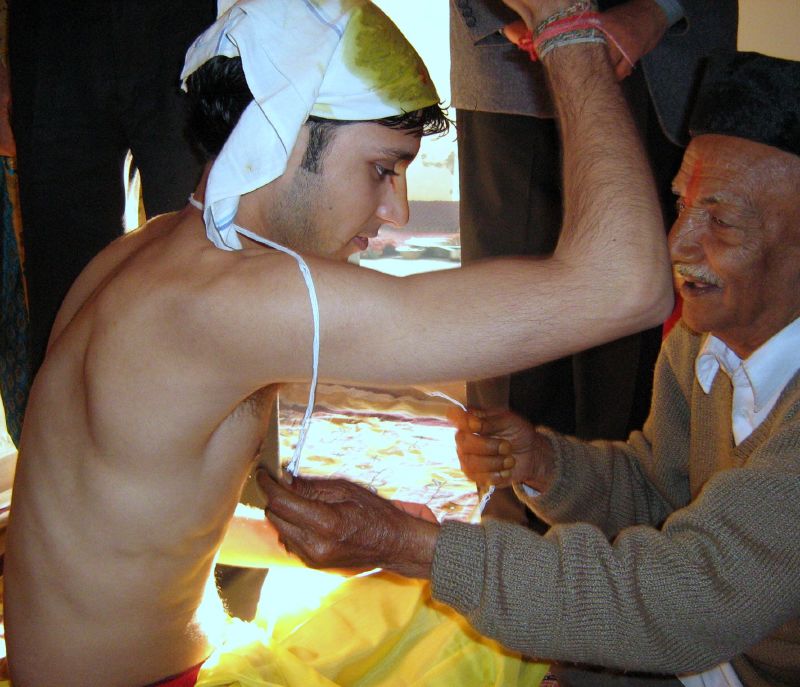
11. Upanayana (Sacred Thread Ceremony) Perhaps the most significant of all saṃskāras, the Upanayana initiates the child into Vedic learning and the brahmacarya (student) stage of life. The child receives the yajñopavīta (sacred thread), is taught the Gāyatrī Mantra (Ṛgveda 3.62.10) by the ācārya (teacher), and begins formal study of the Vedas. The Āśvalāyana Gṛhya Sūtra (1.19–22) and Manusmṛti (2.36–38) prescribe the ceremony in detail.
Traditionally, the Upanayana was performed at age 8 for Brāhmaṇas, 11 for Kṣatriyas, and 12 for Vaiśyas. The ceremony includes investiture with the sacred thread, the first tending of the sacred fire (agni), and begging of alms (bhikṣācarya) — symbolising humility before knowledge.
12. Vedārambha (Beginning of Vedic Study) Closely linked to the Upanayana, this rite formally begins the student’s study of the Vedas under a guru. The student recites the Sāvitrī verse and takes vows of discipline, celibacy, and service to the teacher.
Adulthood Rites (Gṛhastha Saṃskāras)
13. Keśānta / Godāna (First Shaving of the Beard) Performed around age 16, this rite marks the transition from adolescence to adulthood. The first shaving of facial hair is accompanied by rituals similar to the Cūḍākaraṇa. The Pāraskara Gṛhya Sūtra (2.1) describes the ceremony, which also signifies the end of the initial stage of Vedic study.
14. Samāvartana (Graduation / Return Home) This rite marks the formal completion of Vedic education and the student’s return from the guru’s home (gurukula). The student takes a ritual bath (snāna), symbolising purification and the completion of the brahmacarya phase. Henceforth, the individual is called a snātaka (one who has bathed) and is ready to enter household life.
15. Vivāha (Marriage) The most elaborate of all saṃskāras, Vivāha sanctifies the union of husband and wife. The ceremony centres on the saptapadī — seven steps taken together around the sacred fire, each step accompanied by a vow. The Āśvalāyana Gṛhya Sūtra (1.7–8) and Ṛgveda (10.85) contain the oldest marriage hymns. Other key elements include kanyādāna (giving away of the bride), pāṇigrahaṇa (clasping of hands), and agni-pariṇayana (circumambulation of the fire).
Marriage is not merely a social contract but a dharmic partnership for the pursuit of dharma, artha, kāma, and mokṣa — the four goals of human life.
Death Rite (Antyeṣṭi Saṃskāra)
16. Antyeṣṭi (Funeral Rites) The final saṃskāra accompanies the individual from this world to the next. The body is bathed, wrapped in white cloth, garlanded, and carried to the cremation ground on a bamboo bier. The eldest son (or designated family member) lights the funeral pyre while reciting mantras from the Ṛgveda (10.16–18). The ashes are collected on the third day and immersed in a sacred river, ideally the Gaṅgā.
Post-cremation rites include śrāddha (offerings to the departed) and piṇḍadāna (rice-ball offerings to nourish the departed soul during its journey). These are performed on specific days and continued annually, reflecting the Hindu belief in the continuity of the soul and the duty of the living to the ancestors (pitṛ).
Spiritual Significance
The sixteen saṃskāras together form a comprehensive system of spiritual refinement. Each rite serves multiple purposes:
- Purification (śodhana): Removing impurities accumulated from birth, environment, and past actions
- Sanctification (abhiṣeka): Infusing divine blessings at each life transition
- Social integration: Affirming the individual’s place within family, community, and cosmic order
- Spiritual progression: Preparing the soul for its ultimate journey toward mokṣa (liberation)
The Manusmṛti (2.27) states: “By the study of the Veda, by vows, by offerings into the fire, by the triple science, by offspring, by the great sacrifices, and by saṃskāras, this body is made fit for union with Brahman.”
Modern Practice and Adaptation
In contemporary Hindu life, not all sixteen saṃskāras are performed with full Vedic ritual. The most commonly observed today are:
- Nāmakaraṇa (naming) — often combined with a cradle ceremony
- Annaprāśana (first rice) — widely celebrated across India, especially in Bengal and South India
- Cūḍākaraṇa (tonsure) — frequently performed at Tirupati, Varanasi, or family temples
- Upanayana (sacred thread) — still central for Brāhmaṇa families; increasingly adopted by other communities
- Vivāha (marriage) — the most universally observed saṃskāra
- Antyeṣṭi (funeral rites) — performed in virtually all Hindu families
Reform movements have expanded access to saṃskāras beyond traditional caste restrictions. The Ārya Samāj, founded by Svāmī Dayānanda Sarasvatī in 1875, advocates all sixteen saṃskāras for every Hindu, regardless of caste or gender. Many modern families adapt the rituals — performing simplified versions with a priest who explains the significance of each step in the vernacular language.
Regional Variations
Saṃskāras vary significantly across India’s diverse regions:
- Bengal: The Annaprāśana is an especially grand affair, and the child is offered symbolic objects (a book, gold, clay) to predict future inclinations
- South India: Vidyāraṃbham on Vijayādaśamī day is a major cultural event in Kerala and Tamil Nadu
- Maharashtra: The Barśī (first birthday) incorporates elements of multiple saṃskāras
- North India: Muṇḍana (tonsure) pilgrimages to Varanasi or Haridwar remain popular
Despite regional differences, the underlying spiritual intent remains constant: to sanctify human life at every stage and connect the individual to the sacred.
Conclusion
The sixteen saṃskāras represent one of Hinduism’s most profound contributions to the philosophy of human life. They affirm that every phase of existence — from the first stirring in the womb to the final flame of the funeral pyre — is worthy of reverence and ritual. In an age of rapid change, these ancient rites continue to offer a framework for living with intention, gratitude, and spiritual awareness. As the Taittirīya Upaniṣad (1.11) counsels the graduating student: “Treat your mother as a god. Treat your father as a god. Treat your teacher as a god.” The saṃskāras embody this ethos — transforming the ordinary into the sacred, one rite at a time.