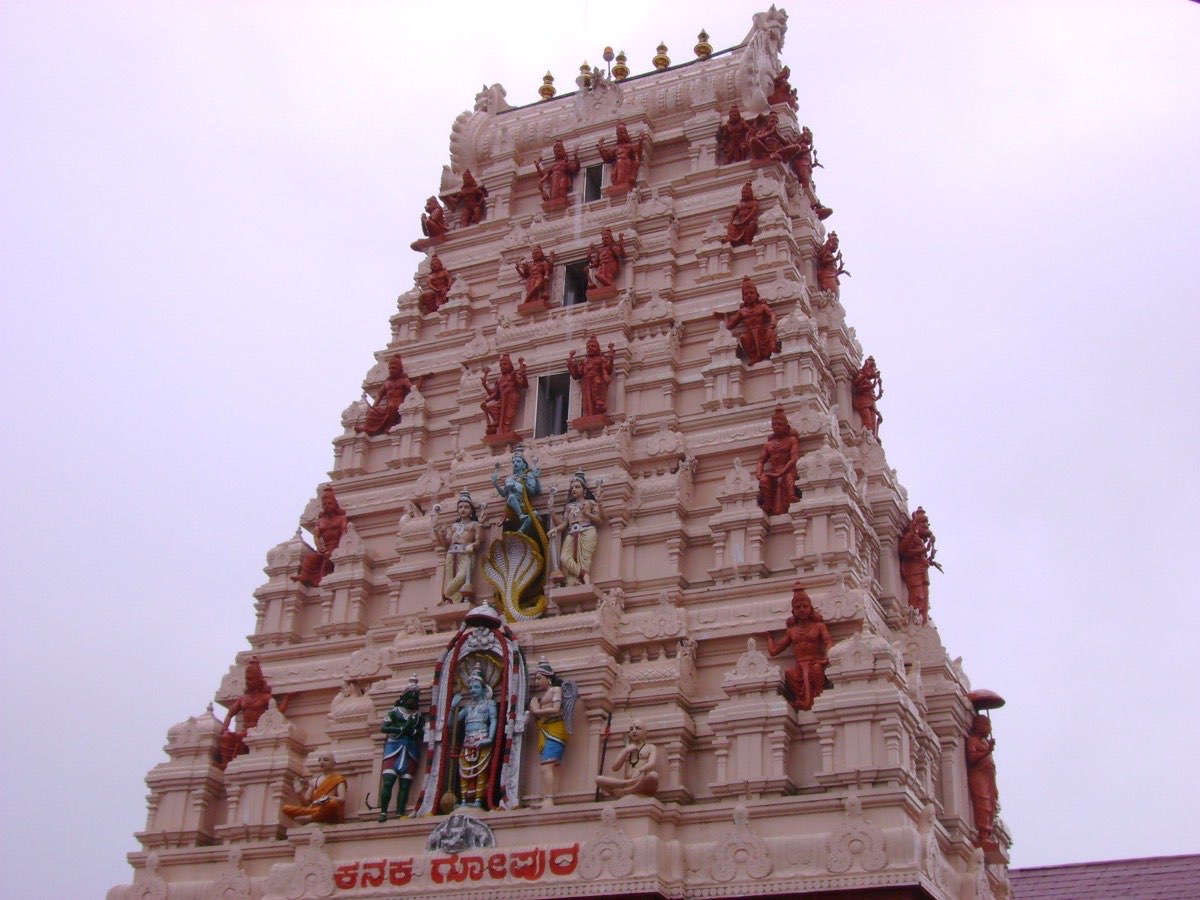
Introduction
Dvaita Vedānta (Sanskrit: द्वैत वेदान्त, literally “dualistic end of the Vedas”) stands as one of the three principal schools of Vedāntic philosophy, alongside Advaita and Viśiṣṭādvaita. Founded and systematised by the towering philosopher-saint Madhvācārya (1238-1317 CE), also known as Pūrṇaprajña and Ānandatīrtha, Dvaita Vedānta proclaims a bold metaphysical thesis: God (Viṣṇu/Brahman), individual souls (jīvas), and the material world (jaḍa) are all eternally real and fundamentally distinct from one another. There is no question of the world being illusory or the soul merging into the Absolute.
Madhva called his system Tattvavāda — the “philosophy of reality” — emphasising that the distinctions perceived in everyday experience are not products of ignorance but reflections of genuine ontological difference. In a philosophical landscape where Śaṅkara’s Advaita had long held intellectual dominance, Madhva’s uncompromising realism offered a revolutionary alternative that placed devotion (bhakti) to a personal God at the very heart of liberation.
Madhvācārya: Life and Mission (1238-1317 CE)
Madhvācārya was born as Vāsudeva in the village of Pājaka, near Uḍupī in present-day Karnataka, into a Tulu-speaking Brāhmaṇa family. Hagiographic accounts in the Madhvavijaya by his disciple Nārāyaṇa Paṇḍitācārya describe extraordinary intellectual gifts from childhood. He is said to have mastered the Vedas and the entire corpus of Hindu philosophical literature at a remarkably young age.
He received sannyāsa (monastic initiation) from Acyutaprekṣa, head of the Advaita monastery at Uḍupī, and was given the name Pūrṇaprajña (“one of complete knowledge”). Strikingly, Madhva soon rejected the non-dualism of his own preceptor, convinced that the scriptures taught an irreducible distinction between God and the soul. He renamed himself Ānandatīrtha and embarked on a life’s mission to establish Dvaita Vedānta on firm scriptural and logical foundations.
Madhva undertook two pilgrimages to Badarīnāth in the Himālayas, where tradition holds he met and received the blessings of Vedavyāsa himself. He engaged in vigorous debates with Advaita scholars across India, composed over thirty-seven works of philosophy, and founded the Kṛṣṇa Maṭha at Uḍupī — an institution that remains the spiritual epicentre of the Dvaita tradition to this day.
Core Doctrines of Dvaita Vedānta
Tattvavāda: The Realist Metaphysics
Madhva divides all reality into two fundamental categories:
- Svatantra (Independent Reality): Viṣṇu/Brahman alone — the sole independent entity, the supreme cause and sustainer of everything.
- Paratantra (Dependent Reality): Everything other than God, including souls and matter, which exist really but depend entirely on God for their existence and function.
Unlike Advaita, where the world is mithyā (neither real nor unreal), Dvaita insists that the world is satyam (genuinely real). The pot, the tree, the human being — all possess real, objective existence, not as independent substances but as entities sustained moment-to-moment by the will of Viṣṇu.
Pañca-bheda: The Five-fold Difference
The philosophical cornerstone of Dvaita Vedānta is the doctrine of pañca-bheda (five fundamental differences), which Madhva holds to be eternal and irreducible:
- Jīva-Īśvara bheda — The difference between the individual soul and God
- Jaḍa-Īśvara bheda — The difference between insentient matter and God
- Jīva-Jīva bheda — The difference between one soul and another
- Jaḍa-Jīva bheda — The difference between matter and the individual soul
- Jaḍa-Jaḍa bheda — The difference between one material entity and another
These five distinctions are not products of ignorance (avidyā) to be overcome, as in Advaita. They are intrinsic features of reality itself, rooted in the very nature (svarūpa) of the entities involved. Even in the state of liberation, the soul remains distinct from God — blissfully aware of God’s infinite superiority but never identical with Him.
Viṣṇu Sarvottama: The Supreme Person
For Madhva, Brahman is not the attributeless Absolute (nirguṇa) of Advaita but the supremely personal Viṣṇu (also called Nārāyaṇa or Hari), endowed with infinite auspicious qualities (ananta-kalyāṇa-guṇa). Viṣṇu is:
- Sarvottama — the highest of all beings
- Sarva-śaktimān — all-powerful
- Sarva-jña — all-knowing
- Sarva-niyantā — the controller of all
- Doṣa-dūra — free from all defects
The Dvaita motto “Hari Sarvottama, Vāyu Jīvottama” (“Hari [Viṣṇu] is supreme among all; Vāyu [the wind-god, identified with Madhva’s spiritual lineage through Hanumān and Bhīma] is the greatest among souls”) encapsulates the tradition’s theological hierarchy.
The Doctrine of Tāratamya: Gradation Among Souls
One of the most distinctive and controversial aspects of Dvaita is its teaching of tāratamya — an intrinsic hierarchy among souls. Souls are not merely different from God; they differ from one another in their inherent capacity (yogyatā) for spiritual realisation and bliss. Madhva identifies a cosmic hierarchy:
- Lakṣmī (Śrī), the consort of Viṣṇu, stands closest to God
- Brahmā (the four-faced creator) and Vāyu occupy the highest rank among individual souls
- Other devas, ṛṣis, and human beings occupy descending levels
Furthermore, Madhva teaches a threefold classification of souls (jīva-traividhya):
- Mukti-yogya — souls destined for liberation
- Nitya-saṃsārin — souls who will cycle eternally through rebirth
- Tamo-yogya — souls destined for eternal damnation (andhantamas)
This doctrine, drawing on passages from the Brahma Sūtras and various Upaniṣads, generated intense debate and criticism from other Vedāntic schools.
Madhva’s Scriptural Hermeneutics
The Brahma Sūtra Bhāṣya
Like Śaṅkara and Rāmānuja before him, Madhva composed a commentary on Bādarāyaṇa’s Brahma Sūtras. However, his interpretation radically diverges from theirs. Where Śaṅkara reads the Sūtras as pointing to a featureless Absolute, Madhva reads them as establishing the supreme personality and sovereignty of Viṣṇu, the real distinctness of the world, and the eternal subordination of souls to God.
Madhva’s hermeneutical method involves a rigorous hierarchy of textual authority: Veda (Śruti) stands supreme, followed by the Mahābhārata (including the Bhagavad Gītā), the Pañcarātra texts, and the Brahma Sūtras as interpretive guides. He insists that no scriptural statement, when properly understood, teaches identity between the soul and Brahman.
Reinterpretation of “Tat Tvam Asi”
The Advaita tradition’s most celebrated proof-text, “Tat Tvam Asi” (“You are That”) from the Chāndogya Upaniṣad (6.8.7), receives a strikingly different reading in Dvaita. Madhva breaks the compound differently, reading it as “a-tat tvam asi” (“you are not that”) or interprets “tat” and “tvam” as referring to different entities connected by a relation of dependence rather than identity. The soul depends on God as its inner controller but is never identical with God.
The Uḍupī Kṛṣṇa Temple and the Aṣṭa Maṭhas
One of Madhva’s most enduring institutional legacies is the Kṛṣṇa Maṭha (Krishna Matha) at Uḍupī, Karnataka. According to tradition, Madhva discovered an icon of Lord Kṛṣṇa in a large lump of gopīcandana (sacred clay) that washed ashore from a shipwreck. He installed this image — depicting Kṛṣṇa as a child holding a churning rod (dadhimanthana) — in the temple at Uḍupī, where it has been worshipped continuously for over seven centuries.
Madhva established eight monasteries (Aṣṭa Maṭhas) at Uḍupī, each headed by a svāmī from his direct lineage of disciples. These eight maṭhas take turns administering the Kṛṣṇa temple in a rotating system called Paryāya, with each maṭha presiding for a period of two years. The eight maṭhas are:
- Palimāru Maṭha
- Adamāru Maṭha
- Kṛṣṇapura Maṭha
- Puttige Maṭha
- Śirūru Maṭha
- Soḍe Maṭha
- Kāṇiyūru Maṭha
- Pejavara Maṭha
The Paryāya system, which Madhva instituted to prevent the concentration of power, remains a living institution and a model of decentralised religious governance.
Comparison with Other Vedānta Schools
The three great Vedānta schools form a philosophical spectrum on the question of the relationship between God, soul, and world:
| Aspect | Advaita (Śaṅkara) | Viśiṣṭādvaita (Rāmānuja) | Dvaita (Madhva) |
|---|---|---|---|
| Reality of world | Mithyā (apparent) | Real (body of Brahman) | Real (dependent on God) |
| Soul-God relation | Identity | Part-whole (aṃśa-aṃśī) | Eternal distinction |
| Brahman | Nirguṇa (attributeless) | Saguṇa (with attributes) | Saguṇa — specifically Viṣṇu |
| Mokṣa | Knowledge of identity | Loving communion | Eternal blissful service |
| Means to mokṣa | Jñāna (knowledge) | Prapatti (surrender) + bhakti | Bhakti through God’s grace |
| Māyā | Cosmic illusion | God’s creative power | Real divine energy |
Where Advaita sees difference as illusion and Viśiṣṭādvaita sees it as qualified unity, Dvaita celebrates difference as the very foundation of a genuine love-relationship between the devotee and God. For Madhva, if the soul were identical with God, devotion would be meaningless — one cannot love oneself in the way a devotee loves the Lord.
Madhva’s Literary Legacy
Madhvācārya composed an extraordinary body of works, traditionally numbered at thirty-seven, known collectively as the Sarvamoola Grantha. These include:
- Brahma Sūtra Bhāṣya and Anuvyākhyāna — his main philosophical commentaries
- Gītā Bhāṣya — commentary on the Bhagavad Gītā
- Upaniṣad Bhāṣyas — commentaries on ten principal Upaniṣads
- Mahābhārata Tātparya Nirṇaya — a monumental work extracting the philosophical essence of the Mahābhārata
- Viṣṇu Tattva Vinirṇaya — establishing Viṣṇu’s supremacy through scripture and reason
- Tattvasaṅkhyāna and Tattvodyota — systematic expositions of Dvaita categories
Later luminaries of the tradition, particularly Jayatīrtha (c. 1345-1388 CE), known as Ṭīkācārya (“master commentator”), and Vyāsatīrtha (c. 1460-1539 CE), author of the celebrated Nyāyāmṛta, further refined and defended Dvaita philosophy against Advaita critiques. Vyāsatīrtha’s Nyāyāmṛta provoked Madhusūdana Sarasvatī’s famous Advaita response, the Advaitasiddhi, generating one of the most sophisticated philosophical exchanges in Indian intellectual history.
The Haridāsa Tradition and Dvaita Devotion
Dvaita Vedānta’s philosophical framework gave rise to one of India’s richest devotional movements: the Haridāsa tradition of Karnataka. Poet-saints like Purandaradāsa (c. 1484-1564 CE), often called the “father of Carnatic music,” Kanakadāsa (c. 1509-1609 CE), and Vijaya Dāsa (1682-1755 CE) composed thousands of devotional songs (kīrtanas) in Kannada that brought Madhva’s theology to the masses.
Purandaradāsa’s compositions, which number over 475,000 according to tradition (though only a fraction survive), established the pedagogical foundations of Carnatic music and infused every musical lesson with Dvaita devotion. Kanakadāsa, born into a lower caste, demonstrated through his life and poetry that Madhva’s God — the supremely independent Viṣṇu — could be approached by anyone through sincere devotion, regardless of social station.
Enduring Legacy
Dvaita Vedānta’s influence extends far beyond its Karnataka heartland. Its rigorous insistence on philosophical realism anticipated many concerns of modern analytic philosophy. Its theological framework provided intellectual foundations for Vaiṣṇava bhakti across South India. The Uḍupī Kṛṣṇa Maṭha remains one of the most visited pilgrimage centres in Karnataka, and the Aṣṭa Maṭhas continue to be vibrant centres of learning and worship.
Madhva’s legacy endures in the daily prayers of millions who recite the invocation: “Hari Sarvottama, Vāyu Jīvottama” — a compact creed affirming that the supreme Lord Viṣṇu stands infinitely above all, and that the path to Him lies through devotion, grace, and the unwavering recognition that the finite soul, though eternally real, finds its highest fulfilment not in claiming identity with God but in loving service to Him.