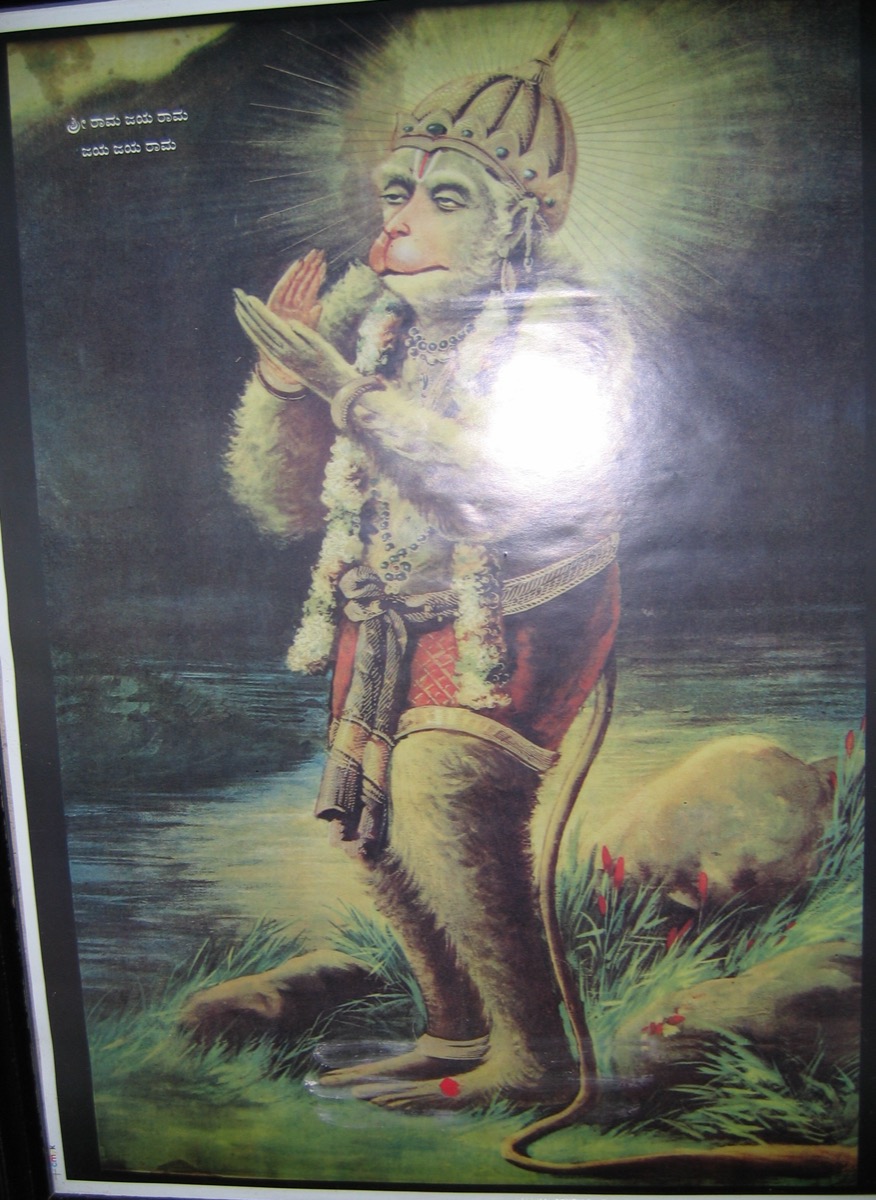
Introduction
Hanumān Jayantī is one of the most widely observed Hindu festivals, celebrating the birth of Lord Hanumān — the mighty vanara warrior, devoted servant of Śrī Rāma, and one of the most beloved deities in the Hindu pantheon. Observed primarily on the full-moon day (pūrṇimā) of the Hindu month of Chaitra (March-April in the Gregorian calendar), the festival draws millions of devotees to temples across India and the world, where they gather to honour the deity who embodies unwavering devotion (bhakti), extraordinary strength (bala), selfless service (sevā), and supreme wisdom (jñāna).
Hanumān occupies a unique position in Hindu worship. Unlike deities who are approached primarily for material blessings, Hanumān is venerated as the supreme exemplar of devotion itself. His life, as narrated in the Rāmāyaṇa, the Mahābhārata, and numerous Purāṇic texts, offers a living model of how a devotee can attain the highest spiritual fulfilment through complete surrender to the divine. Hanumān Jayantī, therefore, is not merely a birthday celebration but a profound spiritual observance that invites devotees to reflect on the transformative power of faith, humility, and selfless action.
The Divine Birth of Hanumān
Parents: Añjanā, Vāyu, and Kesarī
The birth of Hanumān weaves together celestial and terrestrial lineages. According to the Vālmīki Rāmāyaṇa (Kiṣkindhā Kāṇḍa, Sarga 66) and the Śiva Purāṇa, his mother Añjanā was an apsarā (celestial nymph) named Puñjikasthalā who was cursed by Bṛhaspati (the preceptor of the gods) to be born on earth as a female vanara. The curse could only be lifted when she gave birth to an incarnation of Lord Śiva. Añjanā married Kesarī, a powerful vanara chieftain and the son of Bṛhaspati, who ruled over the region around Mount Sumeru.
The circumstances of Hanumān’s conception involve divine intervention. When King Daśaratha of Ayodhyā performed the Putrakāmeṣṭi Yajña (a fire sacrifice for the boon of sons), the sacrificial fire produced a vessel of sacred payasam (consecrated pudding). According to one widely narrated tradition, a kite (śyena) snatched a portion of this divine pudding and, while flying over the forest where Añjanā was deep in prayer to Vāyu Deva (the Wind God), dropped the morsel into her outstretched hands. Vāyu himself is said to have delivered the sacred offering to her. Upon consuming this divinely charged food, Añjanā conceived Hanumān.
The Śiva Purāṇa adds another layer: Vāyu carried the spiritual essence (aṃśa) of Lord Śiva into Añjanā’s womb, making Hanumān simultaneously the son of Vāyu, the biological child of Añjanā and Kesarī, and an incarnation of Śiva. This threefold parentage explains why Hanumān is variously called Āñjaneya (son of Añjanā), Kesarīnandana (son of Kesarī), Mārutī (son of Marut/Vāyu), and Śaṅkarasuvaṇa (born of Śaṅkara/Śiva).
The Time of Birth
Hanumān is traditionally believed to have been born at sunrise on Chaitra Pūrṇimā. This dawn-time birth is significant: just as the rising sun dispels darkness, Hanumān’s arrival heralded the coming of a force that would destroy the darkness of adharma personified by Rāvaṇa. In many temples, spiritual discourses and recitations begin at dawn on Hanumān Jayantī, reaching their climax at the moment corresponding to sunrise — the traditional hour of his birth.
The Childhood Episode: Swallowing the Sun
One of the most beloved episodes from Hanumān’s childhood, narrated in the Vālmīki Rāmāyaṇa and elaborated upon in later texts such as the Hanumān Nāṭaka, reveals both his extraordinary powers and the divine design that shaped his destiny.
As an infant, Hanumān was perpetually hungry. One morning, seeing the rising sun glowing red-gold on the horizon, the child mistook it for a ripe fruit — perhaps a mango or a berry — and leaped into the sky to seize it. The Vālmīki Rāmāyaṇa (Kiṣkindhā Kāṇḍa 66.18-23) describes how the infant soared upward with astonishing speed, crossing vast distances in moments, undeterred by the sun’s blazing heat.
This celestial pursuit alarmed the gods. Rāhu, the shadow planet who periodically eclipses the sun, happened to be approaching for a scheduled eclipse and found his path blocked by the child. Rāhu complained to Indra, the king of the gods, who mounted his elephant Airāvata and hurled his thunderbolt (vajra) at young Hanumān. The weapon struck the child on the jaw (hanu), and Hanumān fell to earth, apparently lifeless.
Vāyu, enraged at the injury to his son, withdrew all air from the universe. As living beings began to suffocate, the gods rushed to appease him. Brahmā revived Hanumān and granted him immunity from death in battle. Each of the other gods then bestowed boons upon the child: Indra granted that his body would be as hard as the thunderbolt; Sūrya gave him a fraction of his brilliance; Varuṇa promised protection from water; Agni granted immunity from fire; and Yama bestowed freedom from disease and death. The name “Hanumān” itself derives from hanu (jaw) — a permanent reminder of the thunderbolt’s strike.
However, the gods also placed a crucial condition: Hanumān would forget his own powers until someone reminded him of them at the right moment. This divine amnesia serves a profound narrative purpose in the Rāmāyaṇa, where Jāmbavān must remind Hanumān of his abilities before the great leap to Laṅkā, illustrating how even the mightiest can be hobbled by self-doubt until inspired by faith and encouragement.
Dating the Festival: Chaitra Pūrṇimā and Regional Variations
While the most widely observed date for Hanumān Jayantī is Chaitra Pūrṇimā (the full moon of Chaitra, typically falling in March or April), the festival demonstrates remarkable regional diversity in its timing, reflecting the varied traditions within Hinduism.
North India (Uttar Pradesh, Madhya Pradesh, Bihar, Rajasthan, Maharashtra): Chaitra Pūrṇimā is the primary date. In most northern states, the festival falls fifteen days after Rāma Navamī (the birthday of Lord Rāma, observed on Chaitra Śukla Navamī), creating a fortnight of devotion linking master and servant, God and devotee.
Andhra Pradesh and Telangana: The celebration begins on Chaitra Pūrṇimā but extends for a remarkable 41 days, concluding on the Daśamī (tenth day) during Kṛṣṇa Pakṣa in the month of Vaiśākha. This extended observance reflects the region’s deep Hanumān devotion traditions.
Karnataka: Hanumān Jayantī is observed on Śukla Pakṣa Trayodaśī (the thirteenth day of the bright fortnight) during the month of Mārgaśīrṣa (November-December). Karnataka holds special significance as Anjanādri Hill in Hampi (ancient Kishkindhā) is traditionally regarded as Hanumān’s birthplace.
Tamil Nadu and Kerala: The festival, known as Hanumath Jayantī, is celebrated during the month of Mārgaḻi (Mārgaśīrṣa, December-January), often on the new-moon day (amāvāsyā). In Tamil tradition, this date commemorates the day Hanumān first met Lord Rāma rather than his physical birth.
Odisha: Hanumān Jayantī is observed on the first day of the month of Vaiśākha (April-May), linking it to the broader spring festival cycle.
These regional variations underscore a fundamental principle of Hindu practice: the devotional impulse takes precedence over calendrical uniformity, and each community has developed its own intimate relationship with the deity.
Connection to Rāma Navamī
The proximity of Hanumān Jayantī to Rāma Navamī in the northern calendar is theologically rich. Rāma Navamī falls on Chaitra Śukla Navamī (the ninth day of the bright fortnight), while Hanumān Jayantī falls on Chaitra Pūrṇimā — just six days later. This calendrical closeness mirrors the inseparable bond between Rāma and Hanumān.
In many communities, the period from Rāma Navamī to Hanumān Jayantī forms a continuous arc of celebration. Devotees who begin their observances by honouring the birth of the Lord complete them by honouring the birth of his greatest devotee. This sequence carries a subtle teaching: the appearance of God (avatāra) is followed by the appearance of the ideal devotee (bhakta), suggesting that divine grace and human devotion are complementary forces in the restoration of dharma.
The Rāmacaritamānasa of Tulasīdāsa beautifully captures this relationship. In the Sundarakāṇḍa, Hanumān tells Sītā: “I am a servant of Rāma, and I have come here to search for you” — a statement that defines his entire identity through his relationship with the Lord.
Regional Celebrations Across India
Maharashtra
Maharashtra’s Hanumān Jayantī celebrations are among the most elaborate in India. The festival holds particular significance because of the strong Mārutī (Hanumān) worship tradition established during the Marāṭhā period. Chatrapati Śivājī Mahārāj himself was a devoted worshipper of Hanumān, and many historic Hanumān temples across Maharashtra date to the Marāṭhā era.
In cities like Pune, Mumbai, and Kolhapur, processions (śobhā yātrā) carry decorated images of Hanumān through the streets, accompanied by the chanting of the Hanumān Chālīsā, bhajana singing, and martial arts demonstrations. Wrestling (kuśtī) tournaments are a distinctive feature of Maharashtra’s celebrations, reflecting Hanumān’s role as the patron deity of wrestlers and physical culture. The famous Shri Hanumān Vyāyām Prasārak Maṇḍal in Amravati, one of India’s oldest gymnasiums, hosts special events on this day.
Karnataka
Karnataka celebrates Hanumān Jayantī with particular fervour at Anjanādri Hill in Hampi, believed to be Hanumān’s birthplace. The ancient temple atop the hill draws thousands of pilgrims who climb the 570 steps to reach the summit shrine. Special abhiṣeka (ritual bathing) ceremonies are performed on the mūrti, and the entire hill is illuminated with oil lamps.
Across Karnataka, Hanumān temples conduct elaborate pūjā with offerings of sindūr (vermilion), sesame oil, and flower garlands. The recitation of the Sundarakāṇḍa from the Rāmāyaṇa — the section describing Hanumān’s leap to Laṅkā and his encounter with Sītā — is a central feature of the day’s observances.
Tamil Nadu
In Tamil Nadu, Hanumath Jayantī temples are decorated with elaborate floral arrangements. The Nanganallur Āñjaneya Temple in Chennai and the Namakkal Āñjaneya Temple are major centres of celebration. Devotees observe strict fasting, chant the Sundarakāṇḍa from the Rāmāyaṇa, and offer vaḍa mālai (garlands made of savoury lentil fritters) to the deity — a unique Tamil tradition believed to be among Hanumān’s favourite offerings.
Uttar Pradesh
In the heartland of Rāma worship, Hanumān Jayantī in Uttar Pradesh centres on the great Hanumān temples of Ayodhyā, Varanasi, Prayāgraj, and Lucknow. The Hanumān Gaṛhī temple in Ayodhyā and the Saṅkaṭ Mochan temple in Varanasi witness enormous gatherings. Mass recitations of the Hanumān Chālīsā continue through the night, and devotees apply sindūr to the mūrti and to their own foreheads. Langūr (monkey) feeding is practiced as a form of worship, as monkeys are considered Hanumān’s companions.
Temple Celebrations and Rituals
The Dawn Pūjā
Since Hanumān is believed to have been born at sunrise, the day’s observances begin before dawn. Temples are cleaned and decorated with mango leaves, marigold garlands, and red cloth. The mūrti of Hanumān is bathed (abhiṣeka) with water, milk, honey, curd, and ghee in a ceremony known as pañcāmṛta snāna. Following this, the image is anointed with sindūr and sesame oil — two substances intimately associated with Hanumān worship.
The offering of sindūr has its own mythology: according to the Rāmacaritamānasa, Hanumān once observed Sītā applying sindūr to her hair parting and asked her why. When she explained that it was for the long life and well-being of her husband Rāma, Hanumān covered his entire body with sindūr, reasoning that if a small amount could benefit his Lord, complete coverage would multiply the blessing. This charming tale explains why Hanumān mūrtis are traditionally coated in vermilion paste.
Hanumān Chālīsā Recitations
The Hanumān Chālīsā, composed by the sixteenth-century saint-poet Tulasīdāsa in Avadhi Hindi, is the centrepiece of Hanumān Jayantī devotion. This forty-verse hymn (chālīsā = forty) encapsulates Hanumān’s life, powers, and divine qualities. On Hanumān Jayantī, mass recitations — often aiming for 108 repetitions — take place in temples, community halls, and homes across India.
The Chālīsā opens with the iconic verse: “Śrī Guru caraṇa saroja raja, nija mana mukura sudhāri” (“Having purified the mirror of my mind with the dust of my Guru’s lotus feet”). It proceeds to narrate Hanumān’s birth, his childhood sun episode, his service to Rāma, the burning of Laṅkā, the fetching of the Sañjīvanī herb, and his cosmic powers. The hymn concludes with the promise that reciting it brings “Tulsīdāsa sadā Hari cherā, kījai nātha hṛdaya maham ḍerā” (“Tulsīdāsa is forever Hari’s servant; O Lord, make your abode in my heart”).
Collective recitations, where hundreds or thousands of devotees chant the Chālīsā in unison, create a powerful atmosphere of communal devotion. Many temples organize 24-hour or 48-hour continuous recitation marathons (akhanda pāṭha) leading up to Hanumān Jayantī.
Offerings and Prasāda
Traditional offerings to Hanumān on his Jayantī include:
- Sindūr (vermilion paste) applied to the mūrti
- Sesame oil (tila taila) for anointing
- Betel leaves (pān) and jaggery (guḍa)
- Laddū (round sweet confections), considered his favourite
- Red flowers, especially hibiscus and red roses
- Banana and other fruits
Devotees often observe a full-day fast, breaking it only after the evening āratī. The prasāda distributed typically includes laddū, pañjīrī, and fruit.
Famous Hanumān Temples Across India
Hanumān Jayantī brings special celebrations to India’s major Hanumān shrines:
- Saṅkaṭ Mochan Temple, Varanasi — Founded by Tulasīdāsa himself, this temple hosts one of the most famous Hanumān Jayantī celebrations, including classical music concerts (Saṅkaṭ Mochan Saṅgīt Samaroh).
- Hanumān Gaṛhī, Ayodhyā — A hilltop temple in Rāma’s birthplace, drawing lakhs of devotees on Jayantī.
- Anjanādri Hill Temple, Hampi — The traditional birthplace, where celebrations have special significance.
- Jakhu Temple, Shimla — Home to one of India’s tallest Hanumān statues (108 feet), with panoramic Himalayan celebrations.
- Hanumān Mandir, Connaught Place, Delhi — One of Delhi’s oldest temples, where Jayantī attracts enormous crowds.
- Mehandipur Bālājī, Rajasthan — Known for exorcism rituals, the temple sees massive gatherings on Jayantī.
- Sālāsar Bālājī, Rajasthan — A major pilgrimage site where Jayantī is celebrated with elaborate rituals.
Hanumān as Patron of Wrestlers and Physical Culture
One of the most distinctive cultural dimensions of Hanumān Jayantī is its association with wrestling (kuśtī / pehlwānī) and physical culture. Across India, traditional wrestling gymnasiums (akhāṛā) regard Hanumān as their presiding deity. Every akhāṛā maintains a shrine dedicated to Hanumān, and wrestlers begin their training with prayers to him.
This association has deep roots. The Mahābhārata describes Hanumān’s tremendous physical prowess, and the Rāmāyaṇa presents his feats — leaping across the ocean to Laṅkā, lifting Mount Droṇāgiri, single-handedly fighting rākṣasa armies — as supreme demonstrations of physical power consecrated to divine service.
On Hanumān Jayantī, akhāṛās across North India and Maharashtra hold special wrestling tournaments (kuśtī daṅgal). Wrestlers, wearing the traditional red laṅgoṭ (loincloth) in honour of Hanumān’s signature colour, compete before assembled devotees. The day is seen as especially auspicious for beginning new training regimens or for young wrestlers to formally enter an akhāṛā.
The wrestler’s body, in this tradition, is not merely an instrument of sport but a living temple — maintained through celibacy (brahmacarya), vegetarian diet, rigorous discipline, and devotion to Hanumān. As Joseph S. Alter documents in The Wrestler’s Body: Identity and Ideology in North India, the wrestler “regards himself as an extension of Hanumān,” cultivating physical, mental, and spiritual purity in emulation of the deity.
Philosophical Significance of Hanumān
The Ideal Devotee (Parama Bhakta)
Hanumān Jayantī invites reflection on Hanumān’s theological significance, which extends far beyond his role as a powerful warrior. In Hindu devotional philosophy, Hanumān represents the perfection of dāsya bhakti — devotion expressed through servitude. His complete identification with Rāma’s will, his total absence of ego, and his joy in selfless service make him the model that all devotees aspire to emulate.
When asked about his relationship to Rāma, Hanumān’s response in the Rāmacaritamānasa is revelatory: “When I identify with the body, I am your servant. When I identify with the individual soul, I am a part of you. When I identify with the Ātman, you and I are one.” This single statement traverses the three major schools of Vedāntic philosophy — Dvaita (dualism), Viśiṣṭādvaita (qualified non-dualism), and Advaita (non-dualism) — positioning Hanumān as a figure who transcends theological boundaries.
The Five Faces (Pañcamukha Hanumān)
The iconographic form of Pañcamukha (five-faced) Hanumān — bearing the faces of Hanumān, Narasiṃha, Garuḍa, Varāha, and Hayagrīva — symbolises mastery over the five directions and the five elements. This form, which emerged during the battle with Ahirāvaṇa in Pātāla (the netherworld), represents the totality of Viṣṇu’s protective power channelled through his greatest devotee.
Cirañjīvī: The Immortal Witness
Hanumān is one of the seven cirañjīvī (immortals) in Hindu tradition, believed to remain alive through all cosmic ages. This belief gives Hanumān Jayantī a unique character: devotees celebrate not a historical birthday but the ongoing presence of a living deity who, according to tradition, is present wherever the Rāmāyaṇa is recited and wherever Rāma’s name is chanted.
Hanumān Jayantī in Contemporary Practice
In modern India, Hanumān Jayantī has grown into a major cultural event. Television channels broadcast special programmes, cities organize public celebrations, and digital platforms see a surge in Hanumān Chālīsā streams. The festival has also become an occasion for community service — blood donation drives, free medical camps, and food distribution (bhaṇḍārā) — reflecting Hanumān’s ethos of selfless service.
Among the diaspora, Hanumān Jayantī has become an important marker of Hindu identity, with temples in North America, Europe, Southeast Asia, and Africa hosting celebrations that blend traditional rituals with local cultural elements.
Conclusion
Hanumān Jayantī is far more than a festival marking the birthday of a mythological figure. It is a celebration of the devotional ideal itself — the possibility that through faith, humility, strength, and selfless service, any being can transcend its limitations and participate in the divine work of sustaining dharma. As Tulasīdāsa wrote in the Hanumān Chālīsā: “Bhūta piśāca nikaṭa nahiṃ āvai, Mahāvīra jaba nāma sunāvai” (“No evil spirit dares approach when the name of the Great Hero is uttered”).
In honouring Hanumān, devotees honour the principle that true power lies not in self-aggrandisement but in self-surrender, not in domination but in service, not in pride but in the humble joy of devotion. This is the enduring message of Hanumān Jayantī — a message as relevant in the modern age as it was when Tulasīdāsa first composed his immortal verses in the streets of Varanasi five centuries ago.