Introduction
Janmāṣṭamī, also known as Kṛṣṇa Janmāṣṭamī, Gokulaṣṭamī, or Śrī Jayantī, is one of the most widely celebrated festivals in Hinduism. It marks the divine birth (avatāra) of Lord Kṛṣṇa, the eighth incarnation of Viṣṇu, who appeared on earth to restore cosmic order (dharma). Observed on the eighth day (aṣṭamī) of the dark fortnight (Kṛṣṇa Pakṣa) in the Hindu month of Bhādrapada (August-September in the Gregorian calendar), the festival draws millions of devotees into a night of fasting, devotion, song, and celebration that culminates at midnight — the hour traditionally believed to be the moment of Kṛṣṇa’s birth.
The festival is rooted in narratives found across multiple ancient texts, primarily the Bhāgavata Purāṇa (Śrīmad Bhāgavatam), the Viṣṇu Purāṇa, and the Harivaṃśa, and carries immense theological, philosophical, and cultural significance across the diverse landscape of Hindu tradition.
The Scriptural Narrative of Kṛṣṇa’s Birth
The Prophecy and Imprisonment
The central narrative, as recounted in the tenth canto (skandha) of the Bhāgavata Purāṇa, begins with the tyrannical king Kaṃsa of Mathurā. At the wedding of his sister Devakī to the nobleman Vasudeva, a celestial voice (ākāśavāṇī) proclaimed that the eighth child of Devakī would be the cause of Kaṃsa’s death. Seized by terror, Kaṃsa imprisoned both Devakī and Vasudeva in his dungeon. He proceeded to murder their first six children as each was born. The seventh child, Balarāma, was miraculously transferred from Devakī’s womb to that of Rohiṇī, Vasudeva’s other wife, through the divine intervention of Yogamāyā (Bhāgavata Purāṇa 10.2).
The Midnight Birth
On the eighth night of the waning moon in the month of Śrāvaṇa (or Bhādrapada, depending on the calendrical tradition), as rain lashed the city and the river Yamunā swelled, the Supreme Lord manifested in the prison cell of Kaṃsa. The Bhāgavata Purāṇa (10.3) describes how the newborn appeared first in his divine four-armed form (caturbhuja), adorned with the Śrīvatsa mark, the Kaustubha gem, and wielding the conch, discus, mace, and lotus. Devakī and Vasudeva beheld their child as the Supreme Viṣṇu himself before he assumed the form of an ordinary infant.
The Harivaṃśa provides additional atmospheric detail: the night was called Jayantī, the nakṣatra was Abhijit, and the muhūrta was Vijaya. At the moment of Kṛṣṇa’s birth, “the oceans were agitated, the pillars of the earth were shaken, the fires that had been extinguished began to burn, auspicious winds began to blow, and the luminous bodies manifested themselves” (Harivaṃśa, Chapter 4).
The Journey to Gokula
Directed by divine command, Vasudeva found the prison doors miraculously unlocked and the guards in deep slumber. Carrying the infant Kṛṣṇa in a basket upon his head, he crossed the flooding Yamunā — which parted to allow his passage — and reached the village of Gokula. There, he exchanged Kṛṣṇa with the newborn daughter of Nanda and Yaśodā. When Kaṃsa later attempted to kill this child, she rose into the sky, revealed herself as the goddess Yogamāyā, and warned Kaṃsa that his destroyer had already been born and was beyond his reach (Bhāgavata Purāṇa 10.4).
Calendar and Astronomical Significance
Janmāṣṭamī falls on the Aṣṭamī Tithi of Kṛṣṇa Pakṣa in the month of Bhādrapada according to the pūrṇimānta system (followed in North India), or in the month of Śrāvaṇa according to the amānta system (followed in parts of South and West India). Both systems refer to the same lunar day.
The conjunction of the Aṣṭamī Tithi with the Rohiṇī Nakṣatra is considered especially auspicious and is the preferred timing for Vaiṣṇava observance. When Rohiṇī Nakṣatra coincides with the midnight hour, it is regarded as the most sacred configuration for worship. The festival is intrinsically linked to the waning moon — symbolically, darkness at its deepest, into which the divine light of Kṛṣṇa enters the world.
Ritual Practices and Observances
Fasting (Upavāsa)
Devotees observe a strict fast on the day of Janmāṣṭamī. The degree of austerity varies: some maintain a complete fast without food or water (nirjala), while others consume fruits, milk, and light preparations (phalāhāra). The fast is broken only after midnight, following the abhiṣeka and āratī of the infant Kṛṣṇa.
Midnight Worship (Niśītha Pūjā)
The heart of Janmāṣṭamī observance is the midnight vigil. Temples and homes are decorated with flowers, lights, and images depicting Kṛṣṇa’s childhood. At the auspicious midnight hour, the deity of baby Kṛṣṇa is bathed (abhiṣeka) in milk, curd, honey, ghee, and sacred water while Vedic hymns and devotional songs (bhajana and kīrtana) are chanted. The conch shell is blown, bells ring, and the community erupts in celebration, enacting the joy of Kṛṣṇa’s appearance.
The Swing Ceremony (Jhūlā Utsava)
A beloved ritual involves placing a small image or doll of baby Kṛṣṇa in a decorated cradle or swing (jhūlā) and gently rocking it. Devotees sing lullabies and songs celebrating the infant Kṛṣṇa, recreating the tender moments of Yaśodā and Nanda with the divine child.
Temple Tableaux (Jhāṅkī)
Elaborate tableaux depicting scenes from Kṛṣṇa’s life — his birth in the prison, Vasudeva’s journey across the Yamunā, childhood pastimes in Vṛndāvana — are staged in temples and community spaces across India.
Regional Celebrations
Mathurā and Vṛndāvana
As the land of Kṛṣṇa’s birth (janmabhūmi) and childhood, the Braj region — encompassing Mathurā, Vṛndāvana, and Gokula — hosts the most elaborate celebrations. At the Kṛṣṇa Janmabhūmi Temple in Mathurā, believed to stand at the very site of Kṛṣṇa’s birth, a grand abhiṣeka is performed at midnight with thousands of devotees in attendance. In Vṛndāvana, the Bāṅke Bihārī Temple, Rādhā Ramaṇa Temple, and ISKCON Temple become centres of continuous kīrtana, rāsa līlā performances, and processions that continue for days.
Dahi Hāṇḍī in Mahārāṣṭra
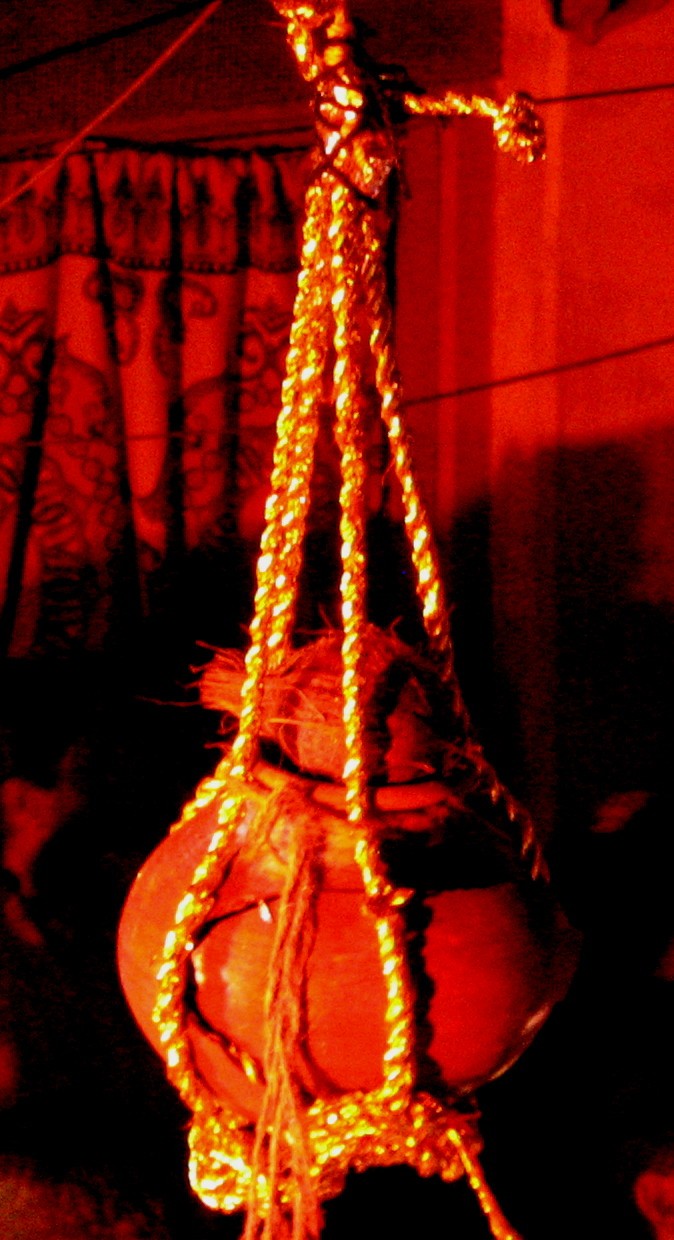
In Mahārāṣṭra, Janmāṣṭamī is synonymous with the Dahi Hāṇḍī (curd-pot) festival, celebrated on the day after Janmāṣṭamī and known as Gopālakālā. Clay pots filled with curd, butter, and milk are suspended high above the ground, and teams of young men (Govinda Paṭhaka) form human pyramids to reach and break them. This spirited tradition recreates the childhood exploits (bāla-līlā) of Kṛṣṇa, who was famously called Mākhancor (butter-thief) for stealing butter with his friends from the homes of the gopīs. The broken pot symbolises the shattering of the ego, allowing divine love to flow forth.
Rāsa Līlā Performances
The Rāsa Līlā, a sacred dramatic reenactment of Kṛṣṇa’s divine dance with the gopīs as described in the Bhāgavata Purāṇa (10.29-33), is performed with particular grandeur during Janmāṣṭamī. In Vṛndāvana, this tradition dates to the early 15th century CE, attributed to Svāmī Śrī Uddhavaghamānda Devācārya. In Manipur, the classical Manipuri dance form incorporates the Rāsa Līlā tradition, originating with Mahārāja Bhāgyacandra in 1779 CE, and is performed annually during Janmāṣṭamī.
Dvārakā and Gujarat
In Dvārakā, the legendary island kingdom of Kṛṣṇa, the Dvārakādhīśa Temple hosts magnificent celebrations featuring elaborate śṛṅgāra (adornment) of the deity, processional chariots, and community feasting.
South India — Gokulaṣṭamī
In Tamil Nadu, Karnataka, and Andhra Pradesh, the festival is widely known as Gokulaṣṭamī or Kṛṣṇāṣṭamī. Homes are decorated with small footprints drawn in rice flour leading from the entrance to the prayer room, symbolising the arrival of Kṛṣṇa. Offerings of butter, seedai (rice-flour balls), and murukku are prepared.
ISKCON and Global Celebrations
The International Society for Krishna Consciousness (ISKCON), founded by A.C. Bhaktivedanta Svāmī Prabhupāda in 1966, has been instrumental in bringing Janmāṣṭamī celebrations to a global audience. ISKCON temples in over 150 countries host elaborate festivals with abhiṣeka, kīrtana, dramatic performances, and distribution of prasāda. The ISKCON headquarters in Māyāpur, West Bengal, draws pilgrims from across the world for its multi-day celebrations.
Philosophical Significance
The Descent of the Divine
Kṛṣṇa’s appearance (prādurbhāva) carries profound philosophical meaning in Hindu thought. Unlike ordinary beings bound by karma, Kṛṣṇa’s birth is a voluntary act of divine grace. As he declares in the Bhagavad Gītā (4.7-8):
yadā yadā hi dharmasya glānir bhavati bhārata | abhyutthānam adharmasya tadātmānaṃ sṛjāmy aham ||
paritrāṇāya sādhūnāṃ vināśāya ca duṣkṛtām | dharma-saṃsthāpanārthāya sambhavāmi yuge yuge ||
“Whenever there is a decline of righteousness and a rise of unrighteousness, O Bhārata, then I manifest Myself. For the protection of the virtuous, for the destruction of the wicked, and for the establishment of dharma, I appear in every age.”
Beyond the Formless Absolute
The Bhāgavata Purāṇa presents a distinctive theological position: Kṛṣṇa’s form is not a temporary material manifestation of an impersonal Brahman, but rather the eternal, personal nature of the Supreme. The tenth canto describes Kṛṣṇa’s form as possessing an “eternal personal element” — challenging the notion that the Absolute is ultimately formless. This is central to the bhakti traditions of Vaiṣṇavism, which hold that loving devotion (bhakti) directed toward the personal God is the highest spiritual path.
Symbolism of the Midnight Birth
Kṛṣṇa’s birth at midnight, in a prison, during a storm, carries layers of symbolic meaning. The darkness represents the ignorance (avidyā) and suffering of the world under tyrannical forces; the prison signifies the bondage of material existence (saṃsāra); and the emergence of the divine child at the darkest hour signals that grace arrives precisely when it is needed most. Janmāṣṭamī thus celebrates not merely a historical event but an ever-present spiritual truth: the perennial possibility of divine light breaking through the darkness of the human condition.
Conclusion
Janmāṣṭamī weaves together mythology, theology, devotional practice, and cultural celebration into one of Hinduism’s most vibrant festivals. From the scholarly recitation of Purāṇic verses in Mathurā’s ancient temples to the exuberant human pyramids of Mumbai, from the graceful Rāsa Līlā of Manipur to the global kīrtana of ISKCON, the festival unites diverse communities in remembrance of Kṛṣṇa’s divine descent. It invites every devotee to relive the wonder of that sacred midnight — when, as the Bhāgavata Purāṇa tells us, the Lord of the universe chose to appear as a helpless infant, transforming a prison cell into the most sacred space in all creation.