Introduction: The Darkest Night, the Brightest Awakening
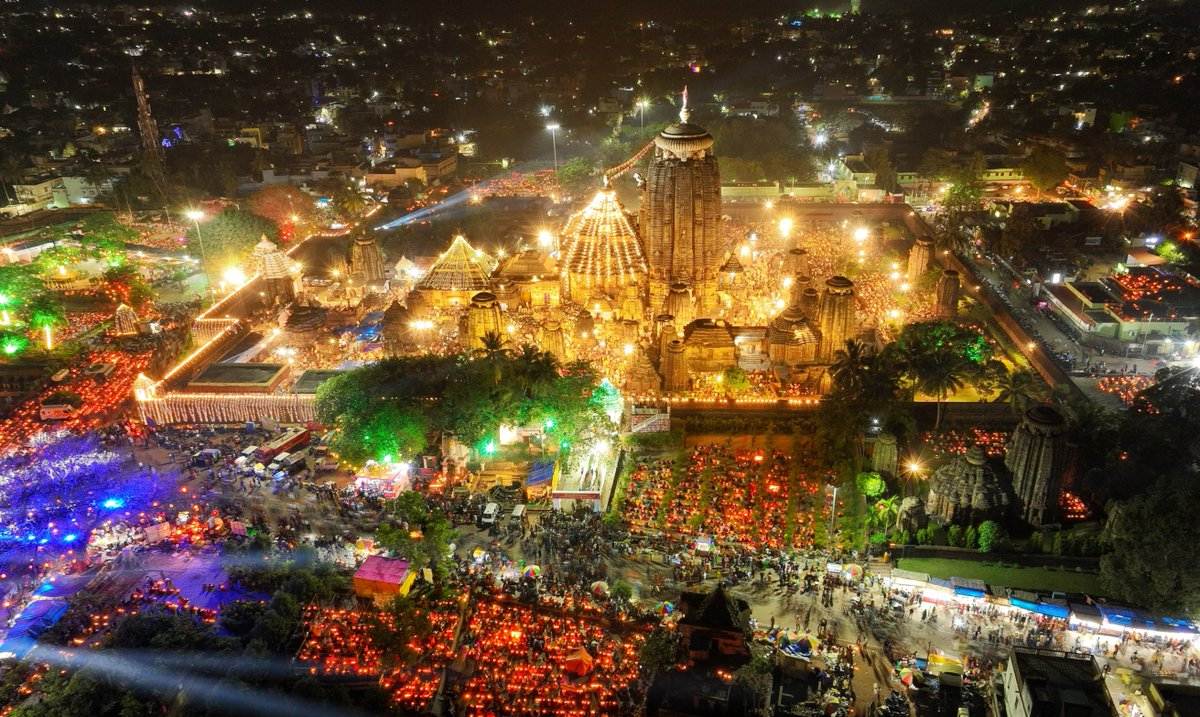
Mahāśivarātri — literally “the Great Night of Śiva” — is the most solemn and spiritually charged festival in the Śaiva calendar. Observed on the Kṛṣṇa Pakṣa (waning moon) Caturdaśī (fourteenth lunar day) of the month of Phālguna or Māgha, this night of near-total lunar darkness is devoted entirely to the worship of Mahādeva, the Great God. Unlike most Hindu festivals that celebrate with colour and feasting, Mahāśivarātri is marked by fasting, silence, night-long vigil (jāgaraṇa), and meditative worship — a festival that turns inward.
The earliest textual references appear in the major Śaivite Purāṇas — the Śiva Purāṇa, Liṅga Purāṇa, and Skanda Purāṇa — composed roughly between the 5th and 10th centuries CE. The Koṭirudra Saṃhitā of the Śiva Purāṇa devotes entire chapters to the Śivarātri Vrata Māhātmya, extolling the merit of this observance and declaring it the most pleasing form of devotion to Śiva.
Mythology and Legends
The Churning of the Ocean: Śiva as Nīlakaṇṭha
One of the most celebrated legends associated with Mahāśivarātri is the Samudra Manthana, the churning of the cosmic ocean, narrated in the Bhāgavata Purāṇa (Canto 8) and the Viṣṇu Purāṇa. When the Devas and Asuras churned the Kṣīra Sāgara (Ocean of Milk) using Mount Mandara as the churning rod and Vāsuki, the king of serpents, as the rope, a series of divine treasures emerged. But before the Amṛta (nectar of immortality) could appear, the deadly Hālāhala poison surfaced, threatening to annihilate creation.
In this moment of cosmic crisis, Lord Śiva stepped forward and consumed the poison. Devī Pārvatī pressed his throat to prevent the Hālāhala from descending further, and the poison remained lodged in his neck, turning it blue. From this act of supreme self-sacrifice, Śiva received the epithet Nīlakaṇṭha — “the Blue-Throated One.” Mahāśivarātri commemorates this night of Śiva’s salvific act, when the Great God drank the world’s poison so that creation could endure.
The Marriage of Śiva and Pārvatī
Another tradition holds that Mahāśivarātri marks the sacred night on which Lord Śiva married Devī Pārvatī. According to the Śiva Purāṇa (Rudra Saṃhitā, Pārvatī Khaṇḍa), after severe penance (tapas) spanning many years, Pārvatī won the favour of the ascetic Śiva. Their divine union on this night symbolises the merging of Puruṣa (cosmic consciousness) and Prakṛti (primordial nature), the two fundamental principles of Sāṅkhya philosophy that together sustain the universe.
Śiva’s Cosmic Dance: The Tāṇḍava
Śaivite tradition also associates this night with Śiva’s performance of the Ānanda Tāṇḍava, the cosmic dance of creation, preservation, and dissolution. As Naṭarāja (“Lord of Dance”), Śiva dances at midnight on Mahāśivarātri, and his rhythmic movements manifest the five acts (pañcakṛtya): creation (sṛṣṭi), sustenance (sthiti), dissolution (saṃhāra), concealment (tirodhāna), and grace (anugraha).
The Liṅgodbhava: The Infinite Pillar of Light
The Liṅga Purāṇa and Śiva Purāṇa (Vidyeśvara Saṃhitā) narrate the Liṅgodbhava — when Brahmā and Viṣṇu quarrelled over supremacy, an infinite pillar of radiant light (Jyotirliṅga) pierced through the three worlds. Neither Brahmā ascending as a swan nor Viṣṇu descending as a boar could find its ends. Śiva revealed himself as that boundless light, establishing the Liṅga as his primary icon. Tradition holds that Śiva first manifested as the Liṅga at midnight on Mahāśivarātri, making this the night the formless became form.
Date and Astronomical Significance
Mahāśivarātri falls on the Caturdaśī Tithi (fourteenth lunar day) of the Kṛṣṇa Pakṣa (dark fortnight) in Phālguna (Pūrṇimānta calendar) or Māgha (Amānta calendar). Despite the difference in month name, the festival is observed on the same lunar night across India, typically in February or March.
The near-total absence of moonlight on this night carries profound symbolism. The Moon, in Hindu cosmology, governs the mind (manas). Its near-disappearance represents the dissolution of mental fluctuations — a state conducive to deep meditation. Yogic traditions teach that on this specific night, planetary positions create a natural upward surge of energy (ūrdhva prāṇa) in the human body, making spiritual practices especially potent.
Mahāśivarātri and Monthly Śivarātri
A Śivarātri occurs every month on the Caturdaśī of the Kṛṣṇa Pakṣa — twelve monthly Śivarātris in a lunar year. Mahāśivarātri is the “great” (mahā) one among these, falling in Phālguna/Māgha and considered the most auspicious. While the monthly Śivarātri is observed with simpler worship, Mahāśivarātri demands the full observance: complete fasting, night-long vigil, and the elaborate four-prahar pūjā.
Ritual Practices
Upavāsa: The Sacred Fast
Devotees observe a strict fast (upavāsa) on Mahāśivarātri, abstaining from food and, in strict observance, even water throughout the day and night. The Śiva Purāṇa declares that the merit of fasting on this night surpasses the accumulated merit of other vratas. The fast is broken only the following morning after the concluding pūjā.
Jāgaraṇa: The Night Vigil
Remaining awake throughout the night (jāgaraṇa) is the defining feature of Mahāśivarātri. The vigil is not merely staying awake but engaging in continuous worship, chanting, and meditation. The Koṭirudra Saṃhitā prescribes that the devotee who remains awake in devoted contemplation of Śiva through the four watches of the night attains liberation (mokṣa).
Śiva Liṅga Abhiṣeka
The central ritual of the night is the abhiṣeka — the ceremonial bathing of the Śiva Liṅga. The Liṅga is bathed with a sequence of sacred substances (dravyas), each carrying symbolic meaning:
- Water (jala) — purification and the flow of grace
- Milk (dugdha) — purity and nourishment
- Curd (dadhi) — strength and prosperity
- Ghee (ghṛta) — knowledge and the light of wisdom
- Honey (madhu) — sweetness of speech and unity
- Sugarcane juice or sugar (śarkarā) — completeness and joy
After the abhiṣeka, the Liṅga is adorned with bilva leaves, flowers, and vibhūti (sacred ash).
The Four Prahar Pūjā: Four Watches of the Night
The night is divided into four prahars (watches of approximately three hours each), and a complete pūjā is performed during each:
First Prahar (approximately 6 PM — 9 PM): The Liṅga is bathed with water. This watch invokes Śiva as Mahāmṛtyuṃjaya — the conqueror of death — focusing on health, longevity, and freedom from fear. Devotees chant the Mahāmṛtyuṃjaya Mantra.
Second Prahar (approximately 9 PM — 12 AM): The Liṅga is bathed with curd (dadhi). This is the period of introspection and surrender of ego. Bhajans and devotional hymns dedicated to Śiva are sung.
Third Prahar (approximately 12 AM — 3 AM): The Liṅga is bathed with ghee (ghṛta). This watch is regarded as the most auspicious, corresponding to the manifestation of the divine. Deep meditation and chanting of “Oṃ Namaḥ Śivāya” characterise this period.
Fourth Prahar (approximately 3 AM — 6 AM): The Liṅga is bathed with honey (madhu). This final watch represents enlightenment and liberation. The devotee who has endured the night in worship receives Śiva’s grace at dawn.
Bilva Leaves: The Sacred Offering
The trifoliate leaf of the bilva tree (Aegle marmelos), also called bael, holds a unique place in Śiva worship. The three leaflets are said to represent the three eyes of Śiva, the three guṇas (sattva, rajas, tamas), or the trimūrti (Brahmā, Viṣṇu, Śiva). The Śiva Purāṇa declares that offering bilva leaves to the Śiva Liṅga is supremely pleasing to the Lord. The practice of Sahasra Bilva Arcana — offering one thousand bilva leaves while chanting Śiva’s names — is performed by devoted worshippers on Mahāśivarātri as an act of complete surrender.
Sacred Mantras of the Night
Oṃ Namaḥ Śivāya
The Pañcākṣarī Mantra — “Oṃ Namaḥ Śivāya” — is the most widely chanted invocation on Mahāśivarātri. Found in the Śrī Rudram of the Kṛṣṇa Yajurveda (Taittirīya Saṃhitā 4.5), this five-syllabled mantra (Na-Maḥ-Śi-Vā-Ya) is considered the essence of all Vedic teaching. Continuous repetition (japa) of this mantra through the night is believed to purify the mind and awaken the devotee to Śiva-consciousness.
Mahāmṛtyuṃjaya Mantra
The Mahāmṛtyuṃjaya Mantra, also known as the Tryambakam Mantra, appears in the Ṛgveda (7.59.12) and is addressed to Tryambaka — “the Three-Eyed One” — an epithet of Rudra-Śiva:
Oṃ Tryambakaṃ yajāmahe sugandhiṃ puṣṭivardhanam | Urvārukam iva bandhanān mṛtyor mukṣīya mā’mṛtāt ||
“We worship the Three-Eyed One who nourishes all and is fragrant. May He liberate us from death, as a ripe cucumber is freed from its vine — not from immortality.” This mantra is chanted throughout Mahāśivarātri for healing, protection, and liberation from the cycle of birth and death (saṃsāra).
The Twelve Jyotirliṅgas: Pilgrimage on the Great Night
The Jyotirliṅga — self-manifested liṅgas of radiant light — are the most sacred Śiva shrines in India. The Śiva Purāṇa (Śatarudra Saṃhitā, Chapter 42) and the Koṭirudra Saṃhitā (Chapters 14—33) enumerate twelve such sites:
- Somanātha — Prabhās Pāṭan, Gujarat
- Mallikārjuna — Śrīśailam, Andhra Pradesh
- Mahākāleśvara — Ujjain, Madhya Pradesh
- Oṃkāreśvara — Māndhātā Island, Madhya Pradesh
- Kedāranātha — Uttarakhand
- Bhīmaśaṅkara — Maharashtra
- Kāśī Viśvanātha — Vārāṇasī, Uttar Pradesh
- Tryambakaśvara — Nāsik, Maharashtra
- Vaidyanātha — Deoghar, Jharkhand
- Nāgeśvara — Dvārakā, Gujarat
- Rāmeśvaram — Tamil Nadu
- Ghṛṣṇeśvara — Ellora, Maharashtra
On Mahāśivarātri, these twelve shrines witness extraordinary congregations. Devotees undertake pilgrimages to perform abhiṣeka and darśana, believing that Śiva’s presence is most palpable at these sites on this night.
Regional Celebrations
Vārāṇasī: The City of Śiva
Vārāṇasī (Kāśī), regarded as Śiva’s eternal abode, witnesses the grandest Mahāśivarātri celebrations in India. Millions converge on the Kāśī Viśvanātha Temple for midnight Rudrābhiṣeka. The ghāṭs along the Gaṅgā are illuminated, and a special Gaṅgā Āratī at Daśāśvamedha Ghāṭ fills the riverfront with chanting and lamplight. The city reverberates with “Har Har Mahādeva” through the night.
Kashmir: Herath
In the Kashmir Valley, Mahāśivarātri is known as Herath (from Hara-rātri, “Night of Hara/Śiva”). Kashmiri Paṇḍits observe this festival with distinctive rituals spanning several days, including the worship of vatuk (a pot symbolising Śiva) and the preparation of special ritual foods. Herath holds deep cultural significance as the most important festival of the Kashmiri Paṇḍit community.
Nepal: Paśupatinātha
The Paśupatinātha Temple in Kathmandu, one of the most sacred Śiva temples outside India, hosts one of the largest Mahāśivarātri gatherings in the world. Thousands of sādhus and devotees from across South Asia assemble for night vigils, ritual bathing in the Bāgmatī River, and elaborate pūjā. The Nepalese government declares the day a public holiday.
South India
In Tamil Nadu and Karnataka, Mahāśivarātri is observed with all-night worship at major Śiva temples, including Chidambaram (Naṭarāja Temple), Thanjavur, and Srisailam. In these regions, the philosophical dimension — Śiva as pure consciousness (cit) — receives particular emphasis in temple discourses.
Philosophical Significance: The Night of Consciousness
Beyond its ritual dimension, Mahāśivarātri carries profound philosophical meaning. From the perspective of Advaita Vedānta, Śiva represents Brahman — the supreme, attributeless consciousness that pervades all existence. The darkness of the night symbolises the dissolution of māyā (illusion) and the ego-mind, creating the conditions for the jīva (individual soul) to recognise its identity with the universal Ātman.
The Kaśmīra Śaiva tradition (Pratyabhijñā school) interprets the night as a metaphor for the state of turīya — the fourth state of consciousness beyond waking, dreaming, and deep sleep. In turīya, the individual recognises the self as Śiva — unbounded awareness. The night-long vigil, then, is not mere wakefulness but a sustained effort to remain in witnessing consciousness.
The fast, silence, and darkness strip away sensory distraction. The chanting of “Oṃ Namaḥ Śivāya” serves as a vehicle of pratyāhāra (sense-withdrawal) and dhāraṇā (concentration). By dawn, the devotee who has passed through the four watches symbolically traverses the journey from ignorance (avidyā) to illumination (jñāna) — the inner meaning of Mahāśivarātri.
Conclusion: The Eternal Night
Mahāśivarātri endures as one of Hinduism’s most powerful observances — a night when the boundary between the devotee and the divine grows thin. Whether understood as the commemoration of Śiva’s sacrifice as Nīlakaṇṭha, the celebration of his union with Pārvatī, the cosmic dance of Naṭarāja, or the manifestation of the infinite Jyotirliṅga, the festival points to a single truth: that in the deepest darkness, the highest light is found.
As the Śiva Purāṇa declares, the devotee who observes Mahāśivarātri with sincerity — through fasting, vigil, and unwavering devotion — is freed from the bonds of saṃsāra and attains the abode of Śiva.
Oṃ Namaḥ Śivāya. Har Har Mahādeva.