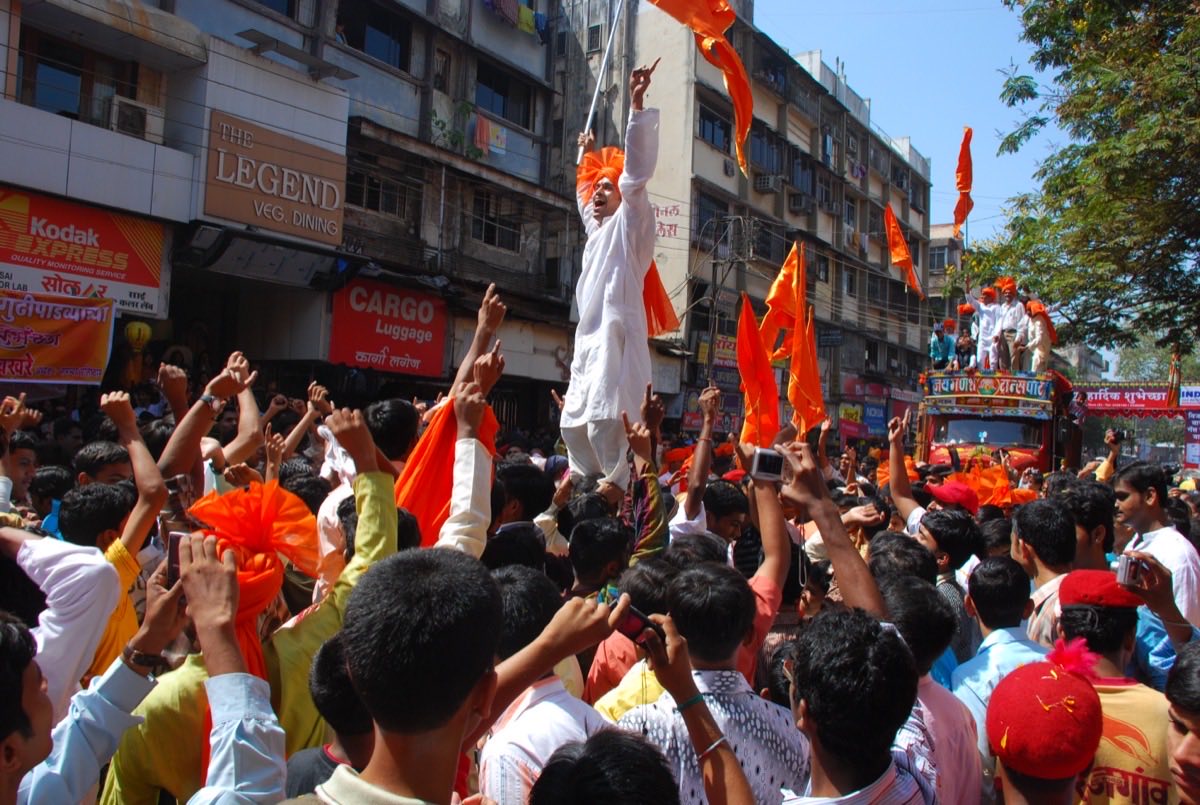
Ugādi (ಯುಗಾದಿ / ఉగాది) and Guḍi Pāḍvā (गुढी पाडवा) are the Hindu New Year celebrations observed on the first day of the month of Chaitra (चैत्र) in the Śālivāhana Śaka calendar — typically falling in March or April. Ugādi is celebrated primarily in Karnataka, Andhra Pradesh, and Telangana, while the same day is observed as Guḍi Pāḍvā in Maharashtra and Goa. Together, these festivals mark one of the most significant temporal transitions in the Hindu liturgical year: the beginning of a new saṃvatsara (year-cycle), the arrival of spring, and the cosmic moment when Brahmā is said to have commenced the creation of the universe.
Etymology and Scriptural Foundations
The word Ugādi derives from the Sanskrit yugādi (युगादि), a compound of yuga (“age, epoch”) and ādi (“beginning”) — literally, “the beginning of a new age.” This etymology connects the New Year not merely to a calendrical transition but to the cosmological concept of time as a series of yugas (cosmic ages) that proceed in cycles of creation, sustenance, and dissolution.
The term Guḍi Pāḍvā combines guḍi (गुढी, “flag, banner, emblem of victory”) with pāḍvā (पाडवा, derived from Sanskrit pratipadā, “the first day of a lunar fortnight”). Thus Guḍi Pāḍvā literally means “the first day of raising the victory flag” — a name that encodes the festival’s most distinctive Maharashtrian ritual.
The scriptural authority for beginning the New Year on Chaitra Śukla Pratipadā comes from multiple Purāṇic sources. The Brahma Purāṇa narrates that on this day, Brahmā began the act of sṛṣṭi (creation) — bringing forth the cosmos from the primordial waters. The Brahma Purāṇa (1.1) states that Brahmā, having awakened from his cosmic sleep at the end of a pralaya (dissolution), created time (kāla), the cardinal directions, and the first units of measurement — the tithi (lunar day), nakṣatra (asterism), and yoga (astronomical conjunction) — thereby establishing the very framework of the Pañchāṅga (Hindu almanac) that would henceforth govern human and cosmic activity.
The Creation Narrative
The theological depth of Ugādi/Guḍi Pāḍvā lies in its connection to the Brahma-Viṣṇu creation cycle. According to the Viṣṇu Purāṇa (1.2–3), at the end of each cosmic night (Brahmā’s night), Lord Viṣṇu reclines upon the cosmic serpent Śeṣa (Ananta) on the primordial ocean (kṣīra-sāgara). A lotus emerges from Viṣṇu’s navel, and upon that lotus is born Brahmā, who then proceeds to create the universe anew. Chaitra Śukla Pratipadā commemorates this moment of cosmic regeneration — the point where divine will manifests as material creation.
The Bhāgavata Purāṇa (3.8.10–15) elaborates this vision with extraordinary poetic detail: the lotus unfurls to reveal Brahmā, who looks in all four directions (creating the four Vedas from his four mouths) and then begins to fashion the elements, the guṇas (qualities of nature), the celestial bodies, and living beings. Ugādi celebrates this primordial creative act as an ever-renewed event — each New Year is not merely a calendrical marker but a re-enactment of the original creation.
The Neem-Jaggery Pachadi: Tasting Life’s Six Flavours
The most symbolically rich ritual of Ugādi is the preparation and consumption of Ugādi Pachadi (ఉగాది పచ్చడి in Telugu) or Bevu-Bella (ಬೇವು-ಬೆಲ್ಲ in Kannada) — a distinctive dish that combines six different tastes (ṣaḍrasa) in a single preparation:
- Neem flowers/leaves (bēvu / vēpa puvvu) — representing bitterness (tikta), symbolizing sorrow, hardship, and the difficulties that inevitably accompany life
- Jaggery (bella / bellam) — representing sweetness (madhura), symbolizing happiness, joy, and the pleasures of life
- Green chili — representing pungency (kaṭu), symbolizing anger and the intensity of strong emotions
- Salt — representing saltiness (lavaṇa), symbolizing fear and the savour of experience
- Tamarind — representing sourness (amla), symbolizing disgust and the unpleasant surprises of life
- Raw mango — representing astringency (kaṣāya), symbolizing wonder, surprise, and the unexpected turns of fate
The philosophical principle behind consuming the pachadi on New Year’s morning is profound: the new year will inevitably bring all six flavours of experience, and the wise person accepts them all with equanimity. This reflects the teaching of the Bhagavad Gītā (2.14): “mātrā-sparśās tu kaunteya śītoṣṇa-sukha-duḥkha-dāḥ / āgamāpāyino ‘nityās tāṃs titikṣasva bhārata” — “The contact of the senses with their objects, O son of Kuntī, gives rise to cold and heat, pleasure and pain; they come and go, they are impermanent — endure them, O Bhārata.”
The pachadi thus serves as an edible meditation on vairāgya (equanimity), training the devotee to receive the new year’s mixed blessings with neither attachment nor aversion.
The Guḍi: Maharashtra’s Victory Flag
The most visually striking tradition of Guḍi Pāḍvā is the raising of the guḍi — a bright silk cloth (often green or yellow) draped over an upturned brass or copper vessel (kalasha), decorated with neem leaves, mango leaves, a garland of flowers, and a garland of sugar crystals (sākhara-gāṇṭhī), all mounted atop a long bamboo staff. The guḍi is placed prominently at the entrance of the home or on the balcony, facing the street.
Multiple layers of symbolism converge in the guḍi:
Victory and triumph: The guḍi is understood as a dhvaja (victory banner). Maharashtrian tradition associates it with the victories of the Marāṭhā empire under Chhatrapati Śivājī Mahārāj, though the tradition predates the Marāṭhā period considerably. More broadly, it symbolizes the victory of dharma over adharma at the cosmic New Year.
Brahmā’s flag: Some scholars connect the guḍi to the Brahma-dhvaja — the banner of Brahmā raised to celebrate the commencement of creation. The inverted kalasha atop the staff represents the amṛta-kumbha (pot of nectar), echoing the cosmic churning of the ocean (samudra-manthana) narrative from the Viṣṇu Purāṇa.
Indra’s standard: The Padma Purāṇa describes Indra’s victory over the demon Vṛtra and the raising of a victory flag — Indra-dhvaja — which some traditions identify with the guḍi.
Domestic auspiciousness: Practically, the guḍi with its neem leaves (medicinal, purifying), mango leaves (auspiciousness, fertility), flowers (beauty), and kalasha (fullness, completeness) creates a composite symbol of well-being that invites Lakṣmī into the home for the new year.
Pañchāṅga Śravaṇa: Hearing the New Year’s Almanac
A uniquely important ritual performed on Ugādi is Pañchāṅga Śravaṇa (पञ्चाङ्ग श्रवणम्) — the ceremonial reading and hearing of the new year’s Pañchāṅga (almanac). The Pañchāṅga (literally “five limbs”) is the traditional Hindu calendar system comprising five elements:
- Tithi — the lunar day (30 tithis per lunar month)
- Vāra — the weekday (named after the navagrahas)
- Nakṣatra — the lunar mansion (27 asterisms)
- Yoga — the astronomical conjunction of Sun and Moon (27 yogas)
- Karaṇa — half a tithi (11 karaṇas)
On Ugādi morning, families gather at temples or in community halls where a learned paṇḍita or jyotiṣī (astrologer) reads aloud the Pañchāṅga for the coming year. This reading includes predictions for rainfall, agricultural yields, political developments, and the general character of the new saṃvatsara. Each year in the sixty-year Jovian cycle carries a specific name — such as Śubhakṛt, Vikāri, Nandana — and the astrologer interprets the significance of the incoming year’s name and planetary alignments.
The Pañchāṅga Śravaṇa ritual reflects the Hindu understanding of jyotiṣa (astronomy-astrology) as a sacred science. The Vedāṅga Jyotiṣa (c. 1200 BCE), the earliest known Indian astronomical text, declares: “vedā hi yajñārtham abhipravṛttāḥ kālānupūrvyā vihitāś ca yajñāḥ” — “The Vedas exist for the performance of yajña, and yajñas are arranged according to time.” By hearing the Pañchāṅga, devotees align themselves with cosmic rhythms, ensuring that their activities throughout the year — festivals, fasts, agricultural operations, life-cycle rituals — are conducted in harmony with celestial movements.
Regional Variations
Karnataka
In Karnataka, Ugādi is celebrated with particular devotion. The Ugādi Pachadi (called Bevu-Bella) is prepared in every household. Temples hold special pūjās to Brahmā and conduct elaborate Pañchāṅga Śravaṇa sessions. The city of Mysuru (Mysore) hosts grand public celebrations with cultural programs, music concerts, and processions. In North Karnataka, Yugādi celebrations include the decoration of homes with mango-leaf toraṇas (festoons) and the preparation of hoḷige (sweet stuffed flatbread).
Andhra Pradesh and Telangana
In the Telugu-speaking states, Ugādi is one of the three most important festivals (alongside Saṅkrānti and Vinayaka Chaviti). The Telugu Ugādi Pachadi is prepared with special attention to the six flavours. Homes are decorated with mango-leaf toraṇams and fresh muggulu (floor art similar to Tamil kōlam). Literary assemblies (kavi-sammelanams) are held, continuing a tradition of New Year literary patronage that dates to the medieval Vijayanagara and Kakatiya courts.
Maharashtra and Goa
Maharashtrian Guḍi Pāḍvā celebrations are distinguished by the guḍi flag tradition and the preparation of śrīkhāṇḍ (a sweet yogurt dish) and pūraṇ polī (sweet stuffed flatbread). In Mumbai and Pune, grand processions with traditional Marāṭhā music, dhol-tasha drumming, and folk dances fill the streets. The Marāṭhā cultural pride associated with the festival was significantly reinforced during the reign of the Peshwa dynasty, who promoted Guḍi Pāḍvā as a marker of Marāṭhā identity.
In Goa, the festival is known as Saṃsar Pāḍvo and incorporates elements of both Konkani and Marāṭhī traditions.
Sindhi and Rajasthani Parallels
The Sindhi community celebrates Cheti Chand on the same day, honouring the birth of their patron deity Jhulelal (the water god). In Rajasthan, the day is observed as Thapna with the raising of ceremonial flags at homes and temples.
The Theology of Cyclical Time
Ugādi and Guḍi Pāḍvā are not merely seasonal celebrations but profound expressions of the Hindu understanding of kāla (time) as cyclical rather than linear. The saṃvatsara (year) is understood as a complete cosmic cycle — a miniature yuga that recapitulates the grand pattern of creation (sṛṣṭi), sustenance (sthiti), and dissolution (pralaya) that governs the entire cosmos.
The Viṣṇu Purāṇa (1.3) teaches that time is the manifestation of Viṣṇu himself: “kālo ‘smi” — “I am Time” (echoed in the Bhagavad Gītā 11.32). Each New Year’s day is thus a fresh manifestation of divine creative power — not a mere repetition but a genuine renewal. The ritual of hearing the Pañchāṅga, tasting the six-flavoured pachadi, and raising the guḍi are all acts of conscious participation in this cosmic renewal.
The sixty-year Jovian cycle (Bṛhaspati saṃvatsara chakra) through which the years rotate before repeating adds another dimension to this cyclical understanding. Each year is unique — with its own name, character, and planetary configuration — yet it participates in a pattern that repeats over sixty years, just as each human life is unique yet participates in the eternal cycle of saṃsāra.
Preparations and Domestic Rituals
The days leading up to Ugādi/Guḍi Pāḍvā involve thorough spring cleaning of homes — sweeping, whitewashing, and decorating with fresh flowers and mango-leaf festoons. New clothes are purchased (ideally in auspicious colours — green, yellow, red), and families rise before dawn on the festival day for an abhyaṅga-snāna (oil bath), which is considered specially purifying when performed on this tithi.
After the ritual bath, families perform pūjā at the home shrine, offering prayers to the family deity and to Brahmā as the creator. The Ugādi Pachadi or Bevu-Bella is prepared and consumed as the first food of the new year. Elders are honoured with prostrations (praṇāma), and gifts of new clothes and sweets are exchanged. The remainder of the day is spent visiting temples, attending Pañchāṅga Śravaṇa, and enjoying festive meals with extended family.
Contemporary Significance
In modern India, Ugādi and Guḍi Pāḍvā continue to serve as powerful markers of regional cultural identity. The festivals reinforce the distinctive traditions of the Kannada, Telugu, Marāṭhī, and Konkani-speaking communities while simultaneously affirming their shared Hindu heritage. For the diaspora communities spread across the globe, these New Year celebrations serve as vital links to ancestral culture.
The pachadi’s teaching of equanimity in the face of life’s mixed flavours — sweet, bitter, sour, pungent, salty, and astringent — remains perennially relevant. In a world of constant change and uncertainty, the ritual reminder that a wise life requires accepting all experiences with grace offers a practical philosophy that transcends its festive context. As the Bhagavad Gītā (2.15) assures: “yaṃ hi na vyathayanty ete puruṣaṃ puruṣarṣabha / sama-duḥkha-sukhaṃ dhīraṃ so ‘mṛtatvāya kalpate” — “The person whom these (sense contacts) do not disturb, O best of men, who is balanced in pleasure and pain — that steadfast one is fit for immortality.”