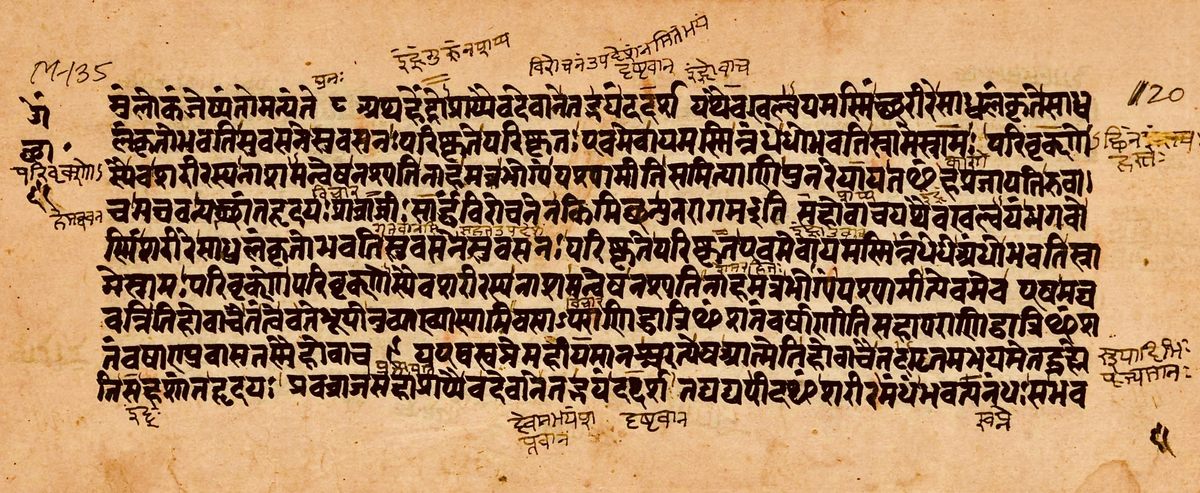
What Are the Upaniṣads?
The Upaniṣads are among the most profound and influential sacred texts of Hinduism. The Sanskrit term Upaniṣad is derived from three roots: upa (near), ni (down), and ṣad (to sit) — literally meaning “sitting down near” a teacher to receive spiritual instruction. This etymology captures the intimate, oral tradition through which these teachings were transmitted from guru to disciple in the ancient guru-śiṣya paramparā (teacher-student lineage).
Often called Vedānta — “the end of the Vedas” — the Upaniṣads form the concluding philosophical portions of each of the four Vedas. While the earlier sections of the Vedas (the Saṃhitās and Brāhmaṇas) focus primarily on hymns, rituals, and ceremonial procedures (karma-kāṇḍa), the Upaniṣads represent the jnāna-kāṇḍa or knowledge portion, turning the seeker’s gaze inward toward self-realisation and the nature of ultimate reality.
There are over 200 known Upaniṣads, with the Muktikā Upaniṣad listing a canon of 108. However, it is the earliest and most authoritative among them — the Mukhya or Principal Upaniṣads — that have shaped the course of Hindu philosophy for millennia.
Historical Context
Scholarly opinion on the dating of the Upaniṣads varies, but most scholars place their composition between approximately 800 and 300 BCE. The earliest prose Upaniṣads — the Bṛhadāraṇyaka and the Chāndogya — are generally dated to the 7th or 6th century BCE, making them pre-Buddhist texts. The next group, including the Taittirīya, Aitareya, and Kauṣītaki, are assigned to the 6th to 5th centuries BCE. Later Upaniṣads, composed in verse, such as the Kaṭha, Śvetāśvatara, and Muṇḍaka, may date from the 5th to 3rd centuries BCE (Stephen Phillips, Classical Indian Metaphysics).
This period of composition coincided with an extraordinary era of intellectual and spiritual ferment in ancient India, sometimes called the Second Urbanisation, which also gave rise to Buddhism, Jainism, and the heterodox śramaṇa movements. The Upaniṣads represent the orthodox Vedic tradition’s own response to these deep existential questions.
The Ten Principal Upaniṣads
The ten Mukhya Upaniṣads are those on which the great Vedāntic teachers — Ādi Śaṅkara, Rāmānuja, and Madhvācārya — composed formal commentaries (bhāṣyas). Each belongs to one of the four Vedas:
From the Ṛgveda
- Aitareya Upaniṣad — Explores consciousness (prajnānam) as the essence of Brahman, tracing creation from cosmic intelligence.
From the Sāmaveda
- Chāndogya Upaniṣad — One of the oldest and largest Upaniṣads, containing the famous teaching of Tat Tvam Asi (“That Thou Art”) delivered by the sage Uddālaka Āruṇi to his son Śvetaketu. It also expounds on the sacred syllable Oṃ and the doctrine of reincarnation as an ethical consequence of karma.
- Kena Upaniṣad — Inquires into the power behind all perception and cognition, concluding that Brahman is the unknowable force behind every act of seeing, hearing, and thinking.
From the Yajurveda
- Bṛhadāraṇyaka Upaniṣad — The longest of all Upaniṣads, widely regarded as the most important. Its Madhu Kāṇḍa expounds the fundamental identity of the individual self and the Universal Self. It contains the Mahāvākya: Aham Brahmāsmi (“I am Brahman”).
- Īśā Upaniṣad — Opens with the declaration that everything in the universe is pervaded by the Lord (Īśvara). It teaches the integration of knowledge and action, renunciation and engagement.
- Taittirīya Upaniṣad — Presents the celebrated doctrine of the five sheaths (Pañca Kośa) — from the physical body (annamaya) to the sheath of bliss (ānandamaya) — describing the layers of reality enveloping the Self.
- Kaṭha Upaniṣad — Records the dialogue between the young Naciketas and Yama, the god of death, and contains the famous chariot allegory.
From the Atharvaveda
- Muṇḍaka Upaniṣad — Distinguishes between higher knowledge (parā vidyā) leading to Brahman and lower knowledge (aparā vidyā) of rituals and sciences.
- Praśna Upaniṣad — Structured as six questions posed to the sage Pippalāda, addressing creation, the life force (prāṇa), and the relationship between the individual and the cosmos.
- Māṇḍūkya Upaniṣad — The shortest of the principal Upaniṣads, yet considered by Śaṅkara’s tradition as sufficient by itself for liberation. It analyses the four states of consciousness — waking, dreaming, deep sleep, and turīya (the transcendent fourth) — through the syllable Oṃ.
Core Philosophical Concepts
Ātman and Brahman
The most fundamental teaching of the Upaniṣads is the relationship between Ātman (the individual Self) and Brahman (the ultimate, all-pervading reality). Brahman is described not as a personal deity in the ordinary sense but as the formless, infinite ground of all existence — Sat-Cit-Ānanda (Being-Consciousness-Bliss). The Upaniṣads assert that the deepest essence of every living being, the Ātman, is ultimately identical with or inseparable from this Brahman.
The Four Mahāvākyas (Great Sayings)
Each of the four Vedas contributes one Mahāvākya that distils the essence of Upaniṣadic wisdom:
- Prajnānam Brahma (“Consciousness is Brahman”) — Aitareya Upaniṣad, Ṛgveda
- Aham Brahmāsmi (“I am Brahman”) — Bṛhadāraṇyaka Upaniṣad, Yajurveda
- Tat Tvam Asi (“That Thou Art”) — Chāndogya Upaniṣad, Sāmaveda
- Ayam Ātmā Brahma (“This Self is Brahman”) — Māṇḍūkya Upaniṣad, Atharvaveda
These four statements, taken together, convey the central revelation: reality is one, and the individual self is essentially identical with it.
Māyā and Avidyā
The Upaniṣads introduce the concept of Māyā — the perceived, constantly changing phenomenal reality that coexists with Brahman, the hidden true reality. Avidyā (ignorance) is what prevents the individual from recognising this truth. Liberation (mokṣa) consists in the removal of this ignorance.
Key Teachings and Metaphors
The Chariot Allegory (Kaṭha Upaniṣad 1.3.3-11)
One of the most celebrated metaphors in all of Indian philosophy appears in the Kaṭha Upaniṣad. Yama teaches Naciketas:
- The Ātman is the lord riding the chariot.
- The body is the chariot itself.
- The intellect (buddhi) is the charioteer.
- The mind (manas) is the reins.
- The senses are the horses.
- The objects of the senses are the roads the horses travel.
One who lacks discrimination, whose mind is uncontrolled and senses unbridled, drifts through saṃsāra (the cycle of birth and death). But one who masters the intellect, controls the mind, and disciplines the senses reaches the highest abode — the state of liberation.
The Salt in Water (Chāndogya Upaniṣad 6.13)
When Śvetaketu cannot see the salt dissolved in water yet tastes it everywhere, his father Uddālaka declares: Tat Tvam Asi — “That Thou Art.” Just as salt pervades the entire volume of water invisibly, so Brahman pervades all of existence, though unseen.
Two Birds on a Tree (Muṇḍaka Upaniṣad 3.1.1)
Two birds sit on the same tree: one eats the fruit (the individual self experiencing the world), while the other watches silently without eating (the witnessing Ātman/Brahman). When the first bird turns and recognises the glory of the second, suffering ends.
Influence on the Vedānta Schools
The Upaniṣads, together with the Brahma Sūtras and the Bhagavad Gītā, form the Prasthānatrayī (“three sources”) upon which all schools of Vedānta are built. The three most prominent schools interpreted the Upaniṣadic teachings in distinct ways:
-
Advaita Vedānta (Ādi Śaṅkara, 8th century CE) — The most radically non-dual interpretation. Śaṅkara argued that Ātman and Brahman are absolutely identical, and that the perceived world of multiplicity is Māyā. Only Brahman is ultimately real.
-
Viśiṣṭādvaita (Rāmānuja, 11th-12th century CE) — “Qualified non-dualism.” Rāmānuja accepted the unity of Ātman and Brahman but maintained that individual selves and the material world are real attributes of Brahman, identified with the personal God (Īśvara).
-
Dvaita (Madhvācārya, 13th century CE) — “Dualism.” Madhva maintained an eternal distinction between the individual soul, the world, and Brahman (identified with Viṣṇu), while still grounding his philosophy in the Upaniṣads.
The fact that three fundamentally different schools could each claim the Upaniṣads as their scriptural authority testifies to the richness and plurality of these texts.
Significance in Hindu Thought
The Upaniṣads occupy a unique position in the history of human thought. They represent one of humanity’s earliest sustained philosophical inquiries into the nature of consciousness, selfhood, and ultimate reality. Their influence extends far beyond Hinduism — thinkers from Arthur Schopenhauer to Erwin Schroedinger have acknowledged their debt to Upaniṣadic ideas.
Within the Hindu tradition, the Upaniṣads remain the supreme authority (śruti) on matters of metaphysics and liberation. Every major Hindu philosophical school, devotional movement, and contemplative practice ultimately traces its intellectual lineage back to these ancient texts. Whether one follows the path of knowledge (jnāna), devotion (bhakti), or disciplined action (karma), the Upaniṣads provide the philosophical bedrock — the assurance that behind the bewildering multiplicity of the world lies a single, luminous reality, and that this reality is not distant from us but is, in truth, our very Self.
Asato mā sadgamaya, tamaso mā jyotirgamaya, mṛtyormā amṛtaṃ gamaya. “Lead me from the unreal to the real, from darkness to light, from death to immortality.” — Bṛhadāraṇyaka Upaniṣad 1.3.28