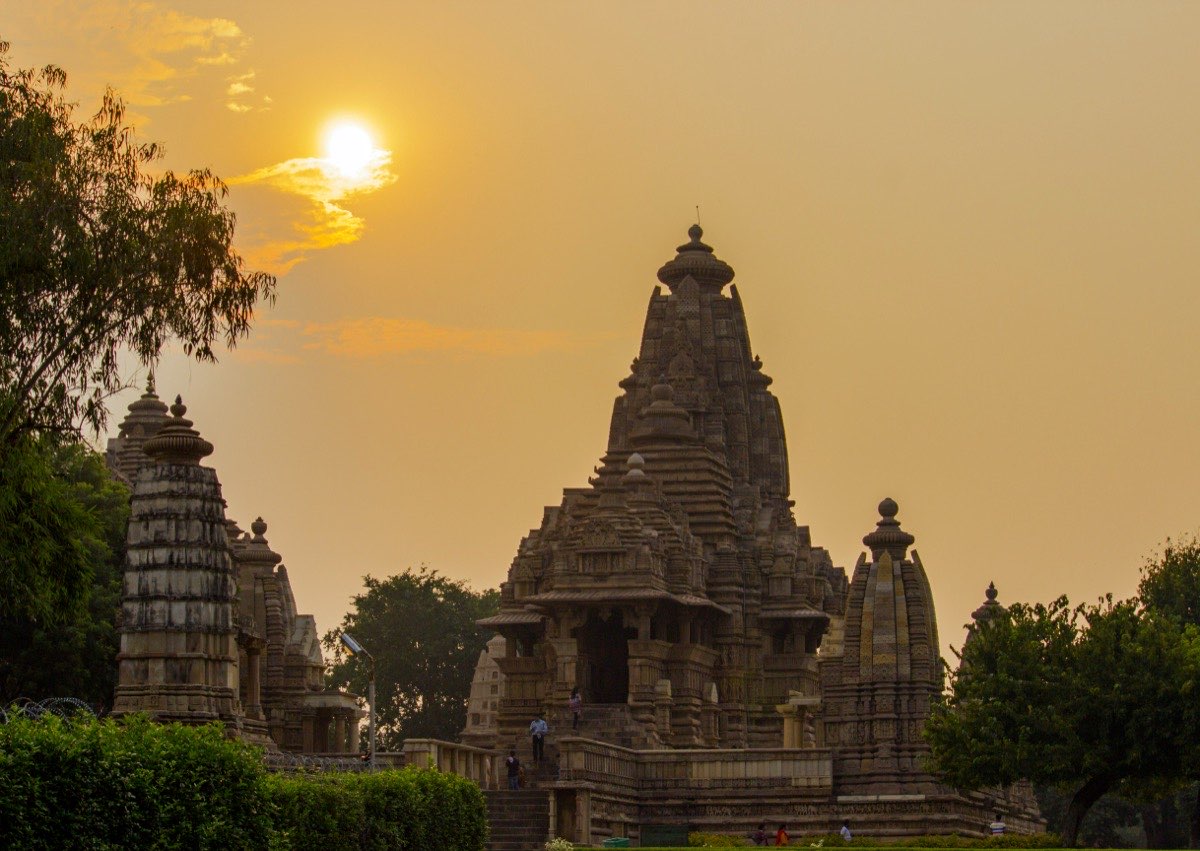
Vāstu Śāstra (वास्तु शास्त्र, “science of dwelling” or “science of architecture”) is one of the most remarkable intellectual achievements of ancient Hindu civilization — a comprehensive system of architectural and spatial design that weaves together cosmology, mathematics, geometry, astronomy, and theology into a unified science of building. From the towering gopurams of South Indian temples to the symmetrical courtyards of Rajasthani havelis, from the cosmic geometry of Khajurāho to the modern apartments of Mumbai and Delhi, Vāstu Śāstra has shaped how Hindus conceive of, design, and inhabit built space for over three thousand years.
Etymology and Foundational Concepts
The word vāstu derives from the Sanskrit root vas, meaning “to dwell, to live, to reside.” Śāstra means “science, teaching, or treatise.” Together, Vāstu Śāstra signifies the science of creating spaces that are in harmony with cosmic forces — spaces where human life can flourish in alignment with the natural and divine order.
The tradition holds that architecture is not merely a technical or aesthetic endeavour but a sacred act. Every building — whether a humble dwelling, a royal palace, or a magnificent temple — is understood as a microcosm of the universe. The Bṛhat Saṃhitā of Varāhamihira (6th century CE) declares that a house built according to Vāstu principles brings happiness, health, and prosperity, while one that violates these principles invites misfortune (Bṛhat Saṃhitā, Chapter 53).
The scope of Vāstu Śāstra extends far beyond house construction. It encompasses town planning (nagara vinyāsa), temple design (prāsāda lakṣaṇa), fort construction (durga nirmāṇa), water management (jala sthāpana), garden design (vana racanā), and even the construction of vehicles and furniture.
Vedic Origins and Textual Tradition
The roots of Vāstu thought can be traced to the earliest Vedic literature. The Ṛg Veda contains hymns addressing the construction of altars and sacred spaces, particularly the elaborate fire altar (agnicayana) described in the Śatapatha Brāhmaṇa, which involves precise geometric calculations that prefigure later Vāstu principles. The Atharva Veda (specifically the Śālaśūkta or “Hymn of the House” in Kāṇḍa 3) offers prayers and instructions for house construction, invoking blessings upon the dwelling and its inhabitants.
The architectural knowledge system matured through several centuries, producing a rich textual tradition. Six classical texts are considered the most authoritative:
- Mayamata — attributed to the divine architect Maya, this South Indian text provides detailed specifications for temple and residential construction
- Mānasāra — a comprehensive treatise covering everything from village planning to sculptural proportions
- Samarāṅgaṇa Sūtradhāra — composed by King Bhoja of Dhārā (11th century CE), this encyclopaedic work covers architecture, town planning, and even mechanical devices
- Rājavallabha — focused on residential architecture and royal constructions
- Viśvakarmaprakāśa — attributed to Viśvakarman, the divine architect of the gods
- Aparājitapṛcchā — a 12th-century Gujarati text in dialogue format
Additionally, the Bṛhat Saṃhitā of Varāhamihira contains essential chapters on architecture, and the Matsya Purāṇa (chapters 252-270) provides extensive treatment of Vāstu principles within a mythological framework.
The Legend of Vāstu Puruṣa
At the heart of Vāstu Śāstra lies a powerful myth that transforms abstract architectural principles into a living cosmological drama. According to the Matsya Purāṇa, in the primordial age, an enormous formless being (bhūta) arose from the sweat of Lord Śiva during his cosmic battle with the demon Andhaka (अन्धक, “blindness, darkness”). This being was so vast and voracious that it began to devour everything in its path, threatening to consume the three worlds.
Alarmed, the devas (gods) appealed to Lord Brahmā for help. Brahmā commanded the gods — forty-five in number — to seize the being and pin him face-down upon the earth. Each deity took a position on a different part of his body, pressing him into the ground. Brahmā himself occupied the central position, upon the being’s navel.
The subdued creature begged for mercy. Brahmā, moved by his plea, granted him a boon: he would henceforth be known as Vāstu Puruṣa (वास्तु पुरुष, “the Spirit of the Dwelling”), and all those who built upon the earth would first need to propitiate him through proper rituals and offerings. Any construction that honoured the Vāstu Puruṣa and respected the positions of the gods upon his body would be blessed with harmony and prosperity; any construction that violated these principles would invite the wrath of the disturbed cosmic being.
This myth provides the foundation for the Vāstu Puruṣa Maṇḍala — the sacred diagram that serves as the master template for all architectural design in the Hindu tradition.
The Vāstu Puruṣa Maṇḍala: Sacred Grid of the Cosmos
The Vāstu Puruṣa Maṇḍala (वास्तु पुरुष मण्डल) is a geometric grid representing the body of the Vāstu Puruṣa, with the forty-five deities occupying their designated positions. It is simultaneously a cosmological map, a mathematical diagram, and a practical architectural blueprint.
The Maṇḍala comes in several sizes, defined by the number of squares in the grid:
- Sakala (1 square) — the simplest unit
- Pecaka (4 squares, 2×2)
- Pīṭha (9 squares, 3×3) — the smallest temple format
- Mahāpīṭha (16 squares, 4×4)
- Upapīṭha (25 squares, 5×5)
- Ugrapīṭha (36 squares, 6×6)
- Sthaṇḍila (49 squares, 7×7)
- Maṇḍūka (64 squares, 8×8) — the most common and sacred temple format
- Paramasāyika (81 squares, 9×9) — used for palaces and large temples
The Maṇḍūka Maṇḍala (8×8, 64 squares) is the most widely used for temple construction. In this grid, the central zone — known as Brahma Pada (ब्रह्मपद) — is reserved for the supreme divine principle. This is where the garbhagṛha (sanctum sanctorum) of a temple is placed. Surrounding Brahma Pada are concentric zones of decreasing sanctity:
- Daivika Pada — the zone of the gods, where subsidiary shrines and the inner prākāra (enclosure wall) are located
- Mānuṣa Pada — the zone of human activity, corresponding to the outer corridors and gathering spaces
- Paiśāca Pada — the outermost zone, associated with semi-divine and potentially malevolent beings, where the boundary wall stands
This concentric arrangement creates a spatial hierarchy that mirrors the Hindu cosmological understanding of the universe: the sacred centre radiating outward into progressively more worldly zones.
The Pañca Mahābhūta: Five Elements in Architecture
Central to Vāstu Śāstra is the integration of the Pañca Mahābhūta (पञ्च महाभूत) — the five great elements that constitute all existence according to Sāṅkhya philosophy:
-
Pṛthvī (पृथ्वी, Earth) — provides stability, solidity, and grounding. Associated with the southwest direction and the sense of smell. Heavy construction materials and foundation strength correspond to this element.
-
Jala (जल, Water) — represents flow, adaptability, and purification. Associated with the northeast. Water features, wells, and drainage systems are governed by this element. The northeast corner of a building is traditionally kept open and clean to invite positive energy.
-
Agni (अग्नि, Fire) — embodies energy, transformation, and illumination. Associated with the southeast. Kitchens, fire pits, and electrical installations are placed in this direction.
-
Vāyu (वायु, Air) — signifies movement, freshness, and circulation. Associated with the northwest. Ventilation, windows, and guest rooms are positioned according to air flow principles.
-
Ākāśa (आकाश, Space/Ether) — represents expansion, openness, and the unmanifest. Associated with the centre of the structure. The central courtyard (brahmastāna) is kept open to honour this element, allowing cosmic energy to permeate the dwelling.
The harmonious balance of these five elements in a building is believed to create an environment conducive to physical health, mental clarity, and spiritual growth.
Directional Deities and Spatial Theology
Vāstu Śāstra assigns divine guardians — the Aṣṭa Dikpāla (अष्ट दिक्पाल, “Eight Guardians of the Directions”) — to each cardinal and intercardinal direction:
- East (Pūrva) — Indra, king of the gods; associated with prosperity and sunrise
- Southeast (Āgneya) — Agni, god of fire; governs cooking and energy
- South (Dakṣiṇa) — Yama, lord of death and dharma; associated with longevity and righteousness
- Southwest (Nairṛtya) — Nirṛti, goddess of dissolution; governs stability and heaviness
- West (Paścima) — Varuṇa, god of water and cosmic order; associated with water elements
- Northwest (Vāyavya) — Vāyu, god of wind; governs air circulation and movement
- North (Uttara) — Kubera, lord of wealth; associated with financial prosperity
- Northeast (Īśāna) — Īśāna (Śiva in his benevolent form); the most sacred direction, associated with spirituality and divine grace
The placement of rooms, doors, windows, and functional areas within a building is determined by these directional associations. The main entrance is ideally oriented toward the east or north, the pūjā room is placed in the northeast, and heavy storage is positioned in the southwest — each placement reflecting the theological attributes of the presiding deity.
Temple Architecture: Vāstu in Its Highest Expression
Hindu temple architecture represents the supreme application of Vāstu principles. A temple is conceived not merely as a house of worship but as the body of the divine — a devalaya (देवालय, “abode of the gods”) that replicates the structure of the cosmos in stone, brick, and mortar.
The canonical temple follows a precise sequence of spatial zones based on the Vāstu Puruṣa Maṇḍala:
-
Garbhagṛha (गर्भगृह, “womb chamber”) — the innermost sanctum, dark and enclosed, housing the principal deity. It corresponds to Brahma Pada of the Maṇḍala.
-
Antarāla (अन्तराल) — the vestibule connecting the sanctum to the outer hall.
-
Maṇḍapa (मण्डप) — the pillared assembly hall where devotees gather. Some temples have multiple maṇḍapas for different ritual purposes.
-
Prākāra (प्राकार) — the circumambulatory passage and enclosure walls.
-
Gopura (गोपुर) — the ornate entrance tower, particularly prominent in South Indian Dravidian temples.
Above the garbhagṛha rises the śikhara (शिखर, “mountain peak”) or vimāna — the towering superstructure that symbolizes Mount Meru, the cosmic axis. The śikhara’s design follows the concentric circle-and-square geometry derived from the Vāstu Puruṣa Maṇḍala, with each successive level representing higher spiritual realms.
The Kandariyā Mahādeva Temple at Khajurāho (c. 1025-1050 CE) exemplifies these principles magnificently. Its rising profile — from the low entrance porch through progressively taller maṇḍapas to the soaring 31-metre śikhara — perfectly embodies the Vāstu concept of ascending from the mundane to the divine.
Vāstu in Town Planning and Residential Architecture
Beyond individual buildings, Vāstu Śāstra provides comprehensive principles for urban design. The Mānasāra and Arthaśāstra describe several town layouts:
- Daṇḍaka — a rectangular grid plan, ideal for commercial towns
- Svastika — a plan based on the auspicious svastika symbol, with roads radiating from a central square
- Padmaka — a lotus-shaped plan for sacred cities
- Nandyāvarta — a labyrinthine plan for fortified cities
- Prastara — a linear settlement plan for river-bank towns
Ancient cities like Mohenjo-daro and Harappā (Indus Valley Civilization, c. 2600-1900 BCE) display remarkable grid planning and orientation that some scholars have connected to proto-Vāstu principles, though this remains debated. The city of Jaipur, designed by Vidyādhar Bhattāchārya in 1727 CE under Mahārāja Sawai Jai Singh II, is perhaps the most celebrated example of a city built explicitly according to Vāstu and Śilpa Śāstra principles, with its precise grid layout oriented to the cardinal directions.
For residential architecture, Vāstu prescribes the ideal proportions, room placement, and orientation of a house. The Mānasāra describes twelve types of residential buildings (gṛha), each suited to different social stations and purposes. The central courtyard (brahmastāna) — corresponding to the Ākāśa element and Brahma Pada of the Maṇḍala — is considered essential, providing light, ventilation, and a sacred centre that connects the household to the cosmos.
Vāstu Śāstra and Modern Practice
In contemporary India, Vāstu Śāstra has experienced a remarkable revival. Urban architects and interior designers frequently incorporate Vāstu principles into their work, and real estate developers market “Vāstu-compliant” properties as a significant selling point. The tradition has also gained international attention as part of the broader global interest in mindful architecture and biophilic design.
Modern practitioners often emphasize the environmental wisdom embedded in traditional Vāstu principles: orientation toward prevailing winds for natural ventilation, placement of water sources to maximize hygiene, use of courtyards for thermal regulation, and the selection of building materials based on local climate conditions. Research published in architectural journals has noted that many Vāstu recommendations align with contemporary principles of sustainable and climate-responsive design.
However, the tradition has also attracted legitimate criticism. Sceptics argue that the prescriptive rigidity of some Vāstu rules — such as avoiding south-facing entrances or specific room placements — lacks empirical justification and can unnecessarily constrain design choices. The commercialization of Vāstu consultation has also led to concerns about exploitation and pseudo-scientific claims.
The scholarly consensus increasingly recognizes Vāstu Śāstra as a sophisticated knowledge system that, while rooted in cosmological beliefs, contains genuine insights about climate-responsive design, spatial psychology, and the relationship between built environments and human well-being. The challenge lies in separating these enduring principles from superstitious accretions and commercial exploitation.
The Living Science of Sacred Space
From the meticulously proportioned temples of Khajurāho and Tañjāvūr to the grid-planned city of Jaipur, from the courtyard houses of Kerala to the modern apartments of Bengaluru, Vāstu Śāstra has shaped the Hindu relationship with built space for millennia. At its core, this tradition embodies a profound insight: that architecture is not merely the arrangement of walls and roofs, but the creation of a living space that connects human existence to the cosmic order.
As the Viśvakarmaprakāśa declares: vāstu sthāne sthitaṃ viśvaṃ — “in the site of the dwelling resides the entire universe.” In the Hindu understanding, every building is a cosmos in miniature, every room a sacred precinct, every threshold a crossing between the mundane and the divine. This is the enduring legacy of Vāstu Śāstra — not merely a set of architectural rules, but a vision of space itself as sacred, alive, and meaningful.