Introduction
Kubera (Sanskrit: कुबेर, IAST: Kubera), also known as Vaiśravaṇa, Dhanada (“giver of wealth”), and Dhanapati (“lord of wealth”), is one of the most distinctive and multifaceted deities in the Hindu pantheon. He occupies a unique position as the god of wealth, treasure, and material abundance, the king of the Yakṣas (nature spirits and guardians of hidden treasure), and one of the eight Dikpālas (guardians of the cosmic directions), specifically the regent of the North. Unlike the great gods of the Hindu trinity — Brahmā, Viṣṇu, and Śiva — Kubera was originally a mortal who attained divine status through severe austerities, making his story one of the most compelling narratives of spiritual ascent in Hindu mythology (Wikipedia, “Kubera”; Britannica, “Kubera”).
Kubera’s mythology is extraordinarily rich and extends far beyond Hinduism. He appears as Vaiśravaṇa (Pāli: Vessavaṇa) in Buddhist tradition, where he is one of the Four Heavenly Kings guarding the cardinal directions. In Jain tradition, he is identified with the Yakṣa Sarvānubhūti or the attendant deity Maṇibhadra. His influence reaches across all of South and East Asia — from the grand temples of India to the guardian figures flanking Japanese Buddhist sanctuaries, where he is known as Bishamonten (Britannica, “Kubera”; Encyclopedia of Buddhism, “Vaiśravaṇa”).
Origins and Lineage
The genealogy of Kubera connects him to the most fundamental creative forces of the Hindu cosmos. According to the Viṣṇu Purāṇa (4.2) and the Mahābhārata (Sabhā Parva 10), Kubera is the son of the sage Viśravas and his wife Iḍaviḍā (also called Devavarṇinī). Viśravas was the son of the great ṛṣi Pulastya, one of the ten Prajāpatis (mind-born sons of Brahmā). This makes Kubera a grandson of Pulastya and a great-grandson of Brahmā himself — a lineage of extraordinary spiritual pedigree.
Critically, Kubera’s father Viśravas had a second wife, the rākṣasī Kaikasī, by whom he fathered Rāvaṇa, Kumbhakarṇa, Vibhīṣaṇa, and Śūrpaṇakhā. This genealogical detail makes Kubera the elder half-brother of Rāvaṇa — a relationship that drives one of the most significant narratives in the Rāmāyaṇa. The contrast between the two brothers — Kubera the righteous custodian of wealth and Rāvaṇa the ambitious usurper — forms one of the great moral polarities of Hindu epic literature (Wikipedia, “Kubera”; Wisdomlib, “The Yaksha King Kubera”).
The Kingdom of Laṅkā and Its Loss
According to the Rāmāyaṇa (Uttara Kāṇḍa 3–12) and the Bhāgavata Purāṇa (9.10), Kubera originally ruled the magnificent golden city of Laṅkā (modern Sri Lanka), which had been constructed by the divine architect Viśvakarman. Under Kubera’s just and prosperous reign, Laṅkā was a paradise of abundance, inhabited by Yakṣas and adorned with golden palaces, gem-studded streets, and celestial gardens.
However, Kubera’s half-brother Rāvaṇa, having obtained extraordinary boons from Brahmā through fierce austerities, coveted Laṅkā’s splendour. Rāvaṇa attacked the city with his rākṣasa armies and drove Kubera out by force. In the process, Rāvaṇa also seized Kubera’s most prized possession — the Puṣpaka Vimāna, the celestial flying chariot. Dispossessed of his kingdom and his vehicle, Kubera retreated northward and established his new capital at Alakāpurī (Alakā), a mythical city situated near Mount Kailāsa in the Himalayas, close to the abode of Lord Śiva.
The expulsion from Laṅkā is not merely a tale of conflict between brothers; it is a parable about the vulnerability of legitimate wealth to violent ambition. Kubera, despite his divine status and immense riches, chose not to engage in retaliatory warfare but instead accepted his displacement with the equanimity of one who understands that true wealth lies beyond material possession (Rāmāyaṇa, Uttara Kāṇḍa 11–12).
The Puṣpaka Vimāna
The Puṣpaka Vimāna (Sanskrit: पुष्पकविमान) is one of the most celebrated objects in Hindu mythology — a self-propelled aerial chariot that could expand or contract to accommodate any number of passengers and travel at the speed of thought. According to the Rāmāyaṇa, the Vimāna was originally created by Viśvakarman (the divine architect) for Brahmā, who gifted it to Kubera. When Rāvaṇa conquered Laṅkā, he seized the Puṣpaka Vimāna and used it throughout his reign.
After Rāma defeated Rāvaṇa in the great war of Laṅkā, the Puṣpaka Vimāna was used by Rāma to transport himself, Sītā, Lakṣmaṇa, and their allies back to Ayodhyā. The famous passage in the Yuddha Kāṇḍa (126–127) describes the aerial journey from Laṅkā to Ayodhyā, with Rāma pointing out the landmarks below to Sītā. Rāma, in his characteristic righteousness, subsequently returned the Vimāna to Kubera, its rightful owner.
The Puṣpaka Vimāna has captured the imagination of Indian civilization for millennia. Modern Indian popular culture frequently references it, and some writers on ancient Indian technology have drawn speculative connections between the Vimāna descriptions and early concepts of aviation — though such claims remain firmly in the realm of speculation rather than established history (Wikipedia, “Kubera”).
Iconography and Attributes
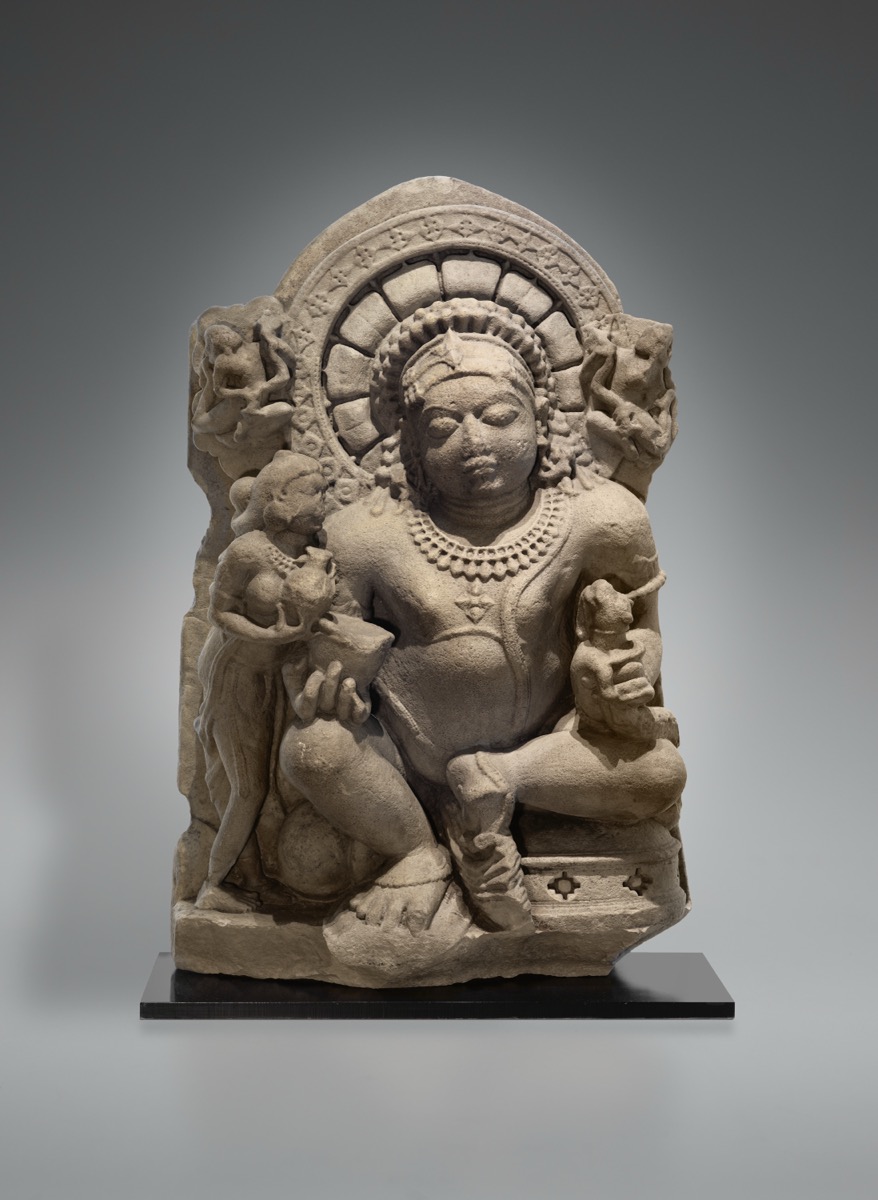
Kubera’s iconographic representation is distinctive among Hindu deities. He is typically depicted as a corpulent, pot-bellied figure — his ample body symbolizing abundance, prosperity, and the fullness of material blessings. Unlike the idealized, athletic forms of warrior deities like Rāma or Kārttikeya, Kubera’s portly physique is a deliberate artistic choice conveying wealth and well-fed contentment.
Key iconographic features include:
- Complexion: Golden or white, signifying purity and auspiciousness
- Body: Dwarf-like or short and stout, with a prominent belly
- Eyes: Sometimes depicted with only one eye (the other lost in a curse from Śiva, according to the Śiva Purāṇa)
- Ornaments: Lavishly bejewelled with golden crowns, necklaces, armlets, and bracelets
- Attributes: Holds a mace (gadā) or club in one hand; a mongoose (nakula) vomiting jewels in the other — the jewel-disgorging mongoose being his most characteristic emblem
- Mount (Vāhana): A man (sometimes described as a puṣpaka chariot), or in some traditions a ram
- Consort: Ṛddhi (Prosperity) or Yakṣī Bhadrā
The jewel-vomiting mongoose is particularly significant — it is a symbol found across Hindu, Buddhist, and Jain iconography of Kubera, representing the idea that wealth properly obtained naturally multiplies and overflows (Yale University Art Gallery; Britannica, “Kubera”).
Kubera as Dikpāla: Guardian of the North
In the system of the Aṣṭa-Dikpālas (eight guardians of the cosmic directions), Kubera presides over the North (uttara-diś). This cosmological role places him alongside seven other directional guardians: Indra (East), Agni (Southeast), Yama (South), Nirṛti (Southwest), Varuṇa (West), Vāyu (Northwest), and Īśāna (Northeast). As the northern guardian, Kubera oversees the direction associated with Mount Meru, the cosmic axis of the Hindu universe, and with Mount Kailāsa, the abode of Śiva.
The Bṛhat Saṃhitā of Varāhamihira (6th century CE) prescribes that images of Kubera should be placed facing north in temples and sacred architecture. The Mānasāra and Mayamata — ancient treatises on Indian architecture and sculpture — provide detailed specifications for Kubera images in their capacity as directional guardians (Wikipedia, “Kubera”).
Kubera in the Epics
In the Rāmāyaṇa
Beyond the narrative of Laṅkā’s loss, Kubera plays several roles in the Rāmāyaṇa. In the Uttara Kāṇḍa, he is instrumental in the backstory that leads to Rāvaṇa’s rise to power. It is the sight of Kubera’s magnificent aerial chariot passing over Laṅkā that first ignites Kaikasī’s (Rāvaṇa’s mother) ambition for her sons to surpass him. Kubera also sends his messenger to Rāvaṇa to counsel restraint, only to have his envoy brutally rejected — foreshadowing Rāvaṇa’s eventual downfall through adharma (unrighteousness).
In the Mahābhārata
In the Mahābhārata, Kubera’s capital Alakāpurī is described in lavish detail in the Sabhā Parva (chapters 10–11), where his court is portrayed as rivaling the splendour of Indra’s heaven:
Alakāṃ nāma nagarīṃ Yakṣāṇāṃ patinā kṛtām / divyām puṣpavikīrṇāṃ ca nānādrumalatāvṛtām — “The city named Alakā, built by the lord of the Yakṣas, divine and strewn with flowers, covered with various trees and creepers.” (Sabhā Parva 10.13)
Kubera also appears in the Vana Parva (155–160) when the Pāṇḍavas encounter his domains during their Himalayan pilgrimage. Bhīma’s encounter with the Yakṣa attendants of Kubera and the subsequent meeting between Yudhiṣṭhira and Kubera’s representative Maṇibhadra demonstrates the complex relationship between human kings and divine wealth-givers in Hindu cosmology (Wikipedia, “Kubera”).
The City of Alakāpurī
After his displacement from Laṅkā, Kubera established his new capital at Alakāpurī (Alakā), described in the Meghadūta of Kālidāsa and multiple Purāṇic texts as a city of surpassing beauty located on the slopes of Mount Kailāsa. Kālidāsa’s celebrated poem provides the most lyrical description of Alakā in Sanskrit literature:
Tām cet vāyau saranilayapatāke Yakṣeśvarasya / pādanyāsairmukharitaśilāṃ yā vilāsaḥ striṇāṃ te — describing the women of Yakṣa-lord’s city whose footsteps make the stone pathways resound. (Meghadūta 67–68)
Alakā is described as having crystal palaces, wish-fulfilling trees (kalpavṛkṣa), gardens of celestial flowers, and streams of gold. The city is guarded by fierce Yakṣa warriors and protected by the proximity of Lord Śiva on nearby Kailāsa — underscoring the special relationship between Kubera and the great god (World History Encyclopedia, “Kubera”).
Kubera and Lord Śiva
The relationship between Kubera and Lord Śiva is one of the most important theological dimensions of Kubera’s character. As a neighbour on Mount Kailāsa, Kubera is considered a devoted bhakta (devotee) of Śiva, and their relationship is characterized by mutual respect and divine friendship.
The Śiva Purāṇa relates that Kubera once cast a lustful glance at Pārvatī, the consort of Śiva, for which Śiva punished him by destroying one of his eyes — hence Kubera’s occasional depiction as one-eyed (Ekapiṅgala, “one with a tawny eye”). Despite this incident, Śiva continued to regard Kubera with favour, appointing him as one of his gaṇas (attendant deities) and granting him dominion over all treasures of the earth.
This theology places wealth under the ultimate authority of Śiva — the supreme ascetic who has renounced all material possession. The paradox is deliberate: true wealth is a gift of the divine, and its custodian (Kubera) serves the one who has transcended all desire for it (Śiva). This teaching forms the basis of the Śaiva understanding of wealth as anugraha (grace) rather than personal acquisition.
The Nine Treasures (Navaratna Nidhis)
One of Kubera’s most important mythological possessions is the Nava Nidhis — nine great treasures that he guards on behalf of the cosmos. These are enumerated in the Amarakośa of Amarasiṃha and the Padma Purāṇa as:
- Padma (Lotus treasure)
- Mahāpadma (Great Lotus treasure)
- Śaṅkha (Conch treasure)
- Makara (Crocodile treasure)
- Kacchapa (Tortoise treasure)
- Mukunda (Jasmine treasure)
- Nanda (Joy treasure)
- Nīla (Sapphire treasure)
- Kharva (Dwarf treasure)
Each Nidhi is personified as a semi-divine being and associated with specific forms of prosperity. The concept of the Nava Nidhis has deeply influenced Indian folklore and literature, appearing in regional traditions from Tamil ciṟupañcamūlam texts to Hindi nidhī proverbs, and it remains a living concept in contemporary Hindu worship (Wikipedia, “Kubera”).
Kubera in Buddhist Tradition
In Buddhist tradition, Kubera is known as Vaiśravaṇa (Pāli: Vessavaṇa) and occupies a prominent position as one of the Caturmahārāja — the Four Great Heavenly Kings who guard the four cardinal directions. As regent of the North, he commands the Yakṣas and is tasked with protecting the Dharma and all who practise it.
The Āṭānāṭiya Sutta of the Dīgha Nikāya (DN 32) presents Vaiśravaṇa addressing the Buddha directly, offering protection to the Saṅgha and teaching a protective chant. In Mahāyāna Buddhism, particularly in the Tibetan and East Asian traditions, Vaiśravaṇa-Kubera is widely worshipped as a bestower of wealth and a protector of monasteries. The Japanese form, Bishamonten, is one of the Seven Lucky Gods (Shichi Fukujin) — demonstrating the extraordinary geographical and cultural reach of this deity (Encyclopedia of Buddhism, “Vaiśravaṇa”).
Kubera in Jain Tradition
Jain tradition also incorporates Kubera, primarily as a Yakṣa attendant associated with specific Tīrthaṅkaras. The Yakṣa Sarvānubhūti (or Maṇibhadra in some lineages) is identified with Kubera and serves as the guardian deity (śāsanadevata) of the nineteenth Tīrthaṅkara Mallinātha. Jain temples across western India, particularly in Gujarat and Rajasthan, frequently include Kubera images in their iconographic programmes, demonstrating the pan-Indian reach of this deity beyond any single sectarian boundary (Britannica, “Kubera”).
Worship and Rituals
Kubera worship is widespread across India, particularly in contexts related to financial prosperity, business success, and material well-being. Key worship practices include:
- Dhanteras: The thirteenth day of the dark half of the month of Āśvina (October–November), two days before Diwali, is especially sacred to Kubera. On this day, devotees worship Kubera alongside Goddess Lakṣmī and Lord Gaṇeśa to invite prosperity into their homes.
- Kubera Pūjā: A specific worship ritual performed on Dhanteras night or on Fridays, involving offerings of gold coins, rice, turmeric, and flowers to an image of Kubera.
- Kubera Yantra: A mystical diagram (yantra) associated with Kubera is used in tantric worship to attract wealth. The Kubera Yantra typically features a central bindu surrounded by interlocking triangles.
- Kubera Mantra: The mantras Oṃ Śrīṃ Hrīṃ Klīṃ Śrīṃ Klīṃ Vittēśvarāya Namaḥ and Oṃ Yakṣāya Kuberāya Vaiśravaṇāya Dhanadhānyādhipataye / Dhanadhānyasamṛddhiṃ Me Dehi Dāpaya Svāhā are recited for prosperity.
In South Indian temples, Kubera is typically placed in the northern niche of the outer walls, in accordance with his directional guardianship. Major temples at Tiruvidaimarudur (Tamil Nadu) and the Padmanabhaswamy Temple (Thiruvananthapuram, Kerala) — the latter famously discovered to contain vast treasure vaults — have strong associations with Kubera worship (Wikipedia, “Kubera”).
Cultural Significance and Legacy
Kubera’s influence on Indian culture extends far beyond the religious sphere:
- Language: The expression “Kuber kā khazānā” (Kubera’s treasury) is a common Hindi idiom for limitless wealth. Similar expressions exist in Tamil, Bengali, and other Indian languages.
- Architecture: Kubera images are an essential component of Hindu temple architecture, always placed in the northern niche of the prākāra (temple enclosure).
- Literature: From Kālidāsa’s Meghadūta to the Kathāsaritsāgara of Somadeva, Kubera and his Yakṣa subjects populate some of the finest works of classical Sanskrit literature.
- Moral philosophy: Kubera embodies the Hindu teaching that wealth (artha) is one of the four legitimate goals of human life (puruṣārthas) — not to be scorned but to be pursued righteously and used generously.
- Cross-cultural bridge: As a deity shared by Hinduism, Buddhism, and Jainism, Kubera represents the remarkable capacity of Indian religious thought to create shared sacred figures across sectarian boundaries.
Conclusion
Kubera stands as a figure of extraordinary breadth in the Hindu religious imagination — at once the pot-bellied, jewel-bedecked lord of treasure and a profound symbol of the right relationship between human beings and material wealth. His story encompasses loss (the exile from Laṅkā), devotion (his service to Śiva), guardianship (the protection of the North and all earthly treasure), and ultimately, the teaching that legitimate wealth, properly guarded and generously shared, is a divine blessing.
As the Arthaśāstra of Kauṭilya reminds us:
Artha eva pradhānaḥ — “Wealth indeed is paramount.”
But Kubera’s mythology adds the crucial qualification: wealth is paramount only when it rests under the sovereignty of dharma. In this teaching lies the enduring relevance of the Yakṣa King — the divine custodian who reminds humanity that prosperity without righteousness is merely Rāvaṇa’s plunder, while wealth governed by dharma is the eternal treasury of Alakāpurī.