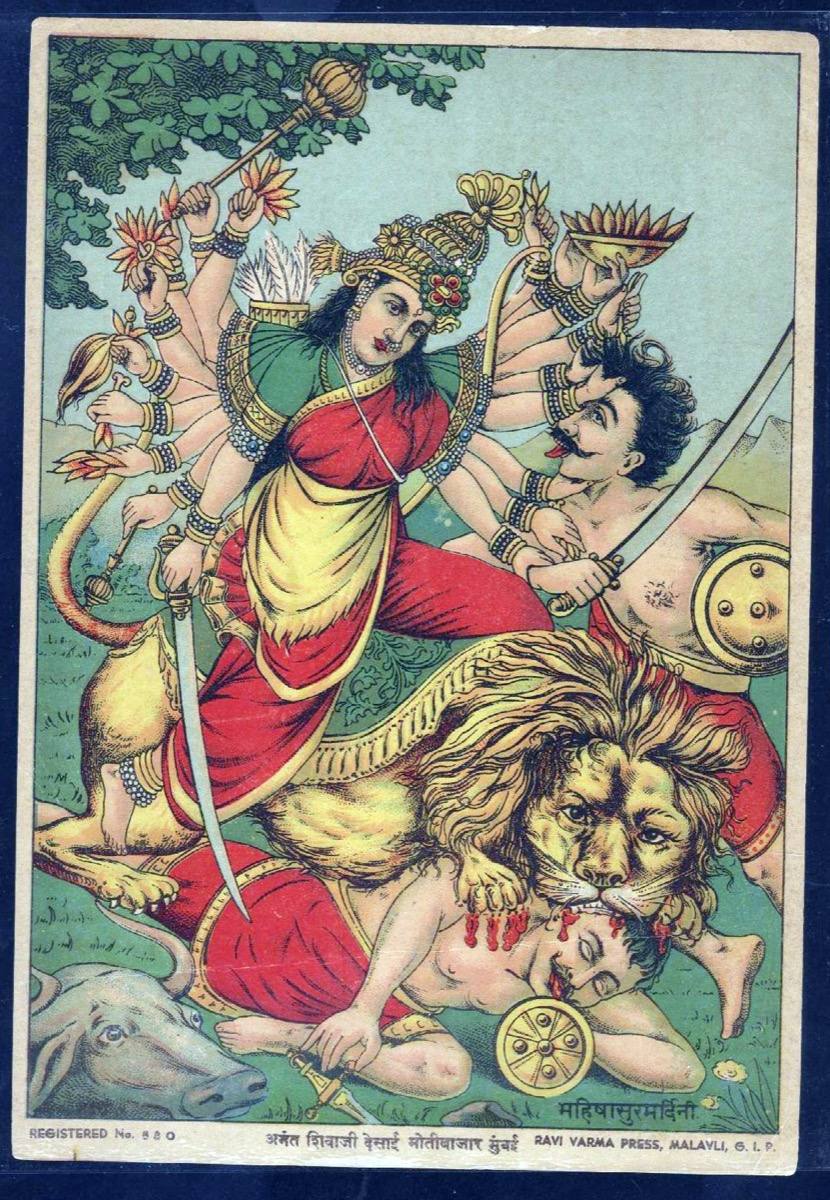
The Devī Aparādha Kṣamāpaṇa Stotram (“Hymn Seeking Forgiveness from the Goddess for Transgressions”) is one of the most emotionally poignant and theologically profound devotional compositions in the Hindu tradition. Attributed to Ādi Śaṅkarācārya (c. 788—820 CE), the supreme philosopher of Advaita Vedānta, this hymn of 12 verses unfolds a deeply personal dialogue between a wayward child and the universal Mother, in which the devotee confesses every failure of worship, every shortcoming of devotion, and every act of spiritual negligence — and then throws himself entirely upon the unconditional mercy of the Divine Mother, Jagadambā.
The stotram’s central message is crystallized in a single unforgettable line that resonates through four of its twelve verses: “Kuputro jāyeta kvacidapi kumātā na bhavati” — “A bad son may be born, but a bad mother? Never.” This radical declaration of maternal grace transcends all human notions of reward and punishment, establishing the Goddess as the one refuge to whom even the most fallen soul may turn with certainty of acceptance.
Ādi Śaṅkarācārya and the Worship of the Divine Mother
The Advaitin and the Devī
That this hymn comes from the pen of Śaṅkarācārya — a philosopher celebrated primarily for his non-dual (advaita) exposition of Brahman as formless, attributeless reality — is itself a matter of profound significance. Śaṅkara, far from being a dry metaphysician, was among the greatest devotional poets of the Hindu tradition. His literary output includes an extraordinary range of hymns to various deities, but his compositions addressed to the Goddess hold a special place. The Saundaryalaharī (“The Wave of Beauty”), the Devī Bhujanga Stotram, and the Ānanda Laharī all testify to his deep engagement with Śākta devotionalism.
The tradition of the Śaṅkara Maṭhas preserves accounts of the master’s personal devotion to the Goddess. According to hagiographic texts such as the Mādhavīya Śaṅkara Vijaya, Śaṅkara worshipped the Devī throughout his life and established the Śrī Cakra at several temples. The Devī Aparādha Kṣamāpaṇa Stotram fits naturally within this devotional landscape: it is the great philosopher laying down all intellectual pride and approaching the Divine Mother not as a learned ācārya but as a helpless, erring child.
The Philosophical Framework of Kṣamā (Forgiveness)
In Hindu theology, divine forgiveness (kṣamā) is not a transactional process in which the deity weighs offences against merit. Rather, it flows from the very nature (svabhāva) of the divine, particularly when that divine is apprehended as the Universal Mother. The Devī Māhātmya (Mārkaṇḍeya Purāṇa, chapters 81—93) establishes the Goddess as sarvamaṅgalā (the auspicious source of all good) and śaraṇāgatavatsalā (tender towards those who seek refuge). The Kṣamāpaṇa Stotram draws directly from this theological wellspring, presenting kṣamā not as something the devotee earns but as something the Mother cannot withhold — for withholding it would violate her own nature.
Structure and Verse-by-Verse Analysis
The stotram consists of 12 verses (śloka), composed predominantly in the Śikhariṇī metre (verses 1—8) and the Anuṣṭubh metre (verses 9—12). The hymn progresses through a carefully structured emotional and theological arc: from confession of ignorance and failure (verses 1—5), through proclamation of the Goddess’s transformative power (verses 6—7), to an unqualified surrender in which the devotee asks for nothing but the privilege of calling upon her name (verses 8—12).
Verse 1: The Confession of Ignorance
न मन्त्रं नो यन्त्रं तदपि च न जाने स्तुतिमहो न चाह्वानं ध्यानं तदपि च न जाने स्तुतिकथाः । न जाने मुद्रास्ते तदपि च न जाने विलपनं परं जाने मातस्त्वदनुसरणं क्लेशहरणम् ॥१॥
Na mantraṃ no yantraṃ tadapi ca na jāne stutimaho Na cāhvānaṃ dhyānaṃ tadapi ca na jāne stutikathāḥ | Na jāne mudrāste tadapi ca na jāne vilapanaṃ Paraṃ jāne mātastvadanusaraṇaṃ kleśaharaṇam ||1||
Translation: “I know not the mantra nor the yantra; I know not the hymns of praise. I know not the invocations nor the meditation; I know not the tales of your glory. I know not the sacred mudrās, nor do I know how to lament before you. But one thing I do know, O Mother — that following you removes all afflictions.”
This opening verse is a masterpiece of devotional rhetoric. Through the sixfold repetition of na jāne (“I do not know”), the poet systematically strips away every conventional mode of worship — mantra recitation, yantra installation, stuti (eulogy), āhvāna (invocation), dhyāna (meditation), and mudrā (sacred gestures). Having confessed total ritual incompetence, the verse then pivots with paraṃ jāne (“but this I know”): that merely following the Mother is enough to destroy all suffering. The verse thus establishes the stotram’s theological foundation: the Goddess’s grace is not contingent on ritual perfection.
Verses 2—4: The Refrain of Unconditional Motherhood
विधेरज्ञानेन द्रविणविरहेणालसतया विधेयाशक्यत्वात्तव चरणयोर्या च्युतिरभूत् । तदेतत् क्षन्तव्यं जननि सकलोद्धारिणि शिवे कुपुत्रो जायेत क्वचिदपि कुमाता न भवति ॥२॥
Vidherajñānena draviṇaviraheṇālasatayā Vidheyāśakyatvāttava caraṇayoryā cyutirabhūt | Tadetat kṣantavyaṃ janani sakaloddāriṇi śive Kuputro jāyeta kvacidapi kumātā na bhavati ||2||
Translation: “Through ignorance of proper rites, through lack of wealth, through laziness, and through inability to perform — whatever failings I have committed at your feet, O Mother who uplifts all, O Śivā, all this should be forgiven. For a bad son may sometimes be born, but a bad mother? Never.”
The concluding half-verse — kuputro jāyeta kvacidapi kumātā na bhavati — becomes the stotram’s signature refrain, repeated identically in verses 2, 3, and 4. Each repetition deepens its meaning. In verse 2, the devotee confesses his ignorance and poverty as reasons for his failures. In verse 3, he acknowledges that among the Mother’s many “simple and good” sons, he alone is the wayward one — yet argues that this very waywardness makes him most in need of her protection, and she must not abandon him. In verse 4, he admits he has performed no service (caraṇa-sevā) and offered no wealth (draviṇam), yet marvels that the Mother continues to maintain her incomparable affection (nirupamaṃ sneham) toward him.
The theological import is extraordinary. The devotee does not bargain, does not promise reform, does not offer any future recompense. He simply states the ontological reality: a mother’s love cannot fail. This is not emotional sentimentality — it is a metaphysical claim about the nature of the Divine Feminine.
Verse 5: The Cry of Old Age
परित्यक्ता देवा विविधविधसेवाकुलतया मया पञ्चाशीतेरधिकमपनीते तु वयसि । इदानीं चेन्मातस्तव यदि कृपा नापि भविता निरालम्बो लम्बोदरजननि कं यामि शरणम् ॥५॥
Parityaktā devā vividhavidhasevākulatayā Mayā pañcāśīteradhikamapanīte tu vayasi | Idānīṃ cenmātastava yadi kṛpā nāpi bhavitā Nirālambo lambodarajanani kaṃ yāmi śaraṇam ||5||
Translation: “I have neglected all deities and abandoned all forms of worship. More than eighty-five years of my life have passed away. If even now your compassion does not arise, O Mother of Gaṇeśa, to whom shall this unsupported one go for refuge?”
This verse introduces a note of desperate urgency. The specific mention of eighty-five years is poetically striking — whether autobiographical or rhetorical, it conveys a life spent in spiritual dereliction. The address to the Goddess as Lambodarajanani (“Mother of the Pot-bellied One,” i.e. Gaṇeśa) adds domestic tenderness, reminding the Goddess that she is already a proven mother. The word nirālambaḥ (“without any support”) echoes the condition of total helplessness that is, paradoxically, the precondition of genuine surrender (śaraṇāgati).
Verse 6: The Transformative Power of the Goddess
श्वपाको जल्पाको भवति मधुपाकोपमगिरा निरातङ्को रङ्को विहरति चिरं कोटिकनकैः । तवापर्णे कर्णे विशति मनुवर्णे फलमिदं जनः को जानीते जननि जपनीयं जपविधौ ॥६॥
Śvapāko jalpāko bhavati madhupākopamagirā Nirātaṅko raṅko viharati ciraṃ koṭikanakaiḥ | Tavāparṇe karṇe viśati manuvarṇe phalamidam Janaḥ ko jānīte janani japanīyaṃ japavidhau ||6||
Translation: “An outcaste becomes eloquent, his speech sweet as honey; a pauper wanders fearlessly amid crores of gold coins — such is the fruit when your mantra-syllable enters one’s ear, O Aparṇā. Who, O Mother, can truly comprehend the mystery of your japa?”
The verse pivots from confession to proclamation. The Goddess’s grace is not merely forgiving — it is transformative. The śvapāka (literally “dog-cooker,” denoting the lowest social category) gains eloquence that drips like honey; the destitute beggar (raṅka) moves amidst fabulous wealth without anxiety. The alliterative play on -āka and -aṅka sounds, and the cascading ja sounds in the last line (janaḥ ko jānīte janani japanīyaṃ japavidhau), create a musical texture that itself embodies the sweetness being described.
Verse 7: Śiva’s Glory Through the Goddess
चिताभस्मालेपो गरलमशनं दिक्पटधरो जटाधारी कण्ठे भुजगपतिहारी पशुपतिः । कपाली भूतेशो भजति जगदीशैकपदवीं भवानि त्वत्पाणिग्रहणपरिपाटीफलमिदम् ॥७॥
Citābhasmālepo garalamśanaṃ dikpaṭadharo Jaṭādhārī kaṇṭhe bhujagapatihārī paśupatiḥ | Kapālī bhūteśo bhajati jagadīśaikapadavīṃ Bhavāni tvatpāṇigrahaṇaparipāṭīphalamidaṃ ||7||
Translation: “Smeared with cremation ashes, eating poison, wearing the directions as his garment, matted-haired, with the king of serpents as a necklace — Paśupati, the skull-bearer, lord of ghosts, attains the supreme position of Lord of the Universe. O Bhavānī, this is the fruit of taking your hand in marriage!”
This verse is a brilliant theological argument delivered as a compliment. It catalogues Śiva’s “disqualifications” — ash-smeared, poison-drinking, naked, skull-carrying, snake-garlanded — and then reveals the punchline: despite all this, he became Jagadīśa (Lord of the Universe). How? Through the Goddess’s grace, symbolized by the act of pāṇigrahaṇa (the clasping of hands in marriage). The implication for the devotee is unmistakable: if the Goddess can elevate even the ash-covered ascetic of the cremation grounds to cosmic lordship, what can she not do for a mere wayward child?
Verse 8: The Prayer of Pure Devotion
न मोक्षस्याकाङ्क्षा भवविभववाञ्छापि च न मे न विज्ञानापेक्षा शशिमुखि सुखेच्छापि न पुनः । अतस्त्वां संयाचे जननि जननं यातु मम वै मृडानी रुद्राणी शिव शिव भवानीति जपतः ॥८॥
Na mokṣasyākāṅkṣā bhavavibhavavāñchāpi ca na me Na vijñānāpekṣā śaśimukhi sukhecchāpi na punaḥ | Atastvāṃ saṃyāce janani jananaṃ yātu mama vai Mṛḍānī rudrāṇī śiva śiva bhavānīti japataḥ ||8||
Translation: “I do not desire liberation; nor do I desire worldly prosperity. I do not seek knowledge, O Moon-Faced One, nor do I desire happiness. I pray to you only for this, O Mother: let my remaining life pass in chanting — Mṛḍānī, Rudrāṇī, Śiva, Śiva, Bhavānī!”
This verse represents the highest point of the stotram’s devotional arc. Having confessed ignorance (verse 1), failure (verses 2—4), wasted life (verse 5), and acknowledged the Goddess’s transformative power (verses 6—7), the devotee now asks for the only thing that matters: not mokṣa, not wealth, not even knowledge — but simply the joy of repeating the Mother’s names. The list of names — Mṛḍānī (the gentle one, consort of Mṛḍa/Śiva), Rudrāṇī (the fierce one, consort of Rudra), Bhavānī (the existential one, consort of Bhava) — encompasses the Goddess’s full range from tenderness to ferocity to cosmic being.
Verses 9—12: Final Supplication
The closing four verses shift to shorter metres and intensify the emotional plea. Verse 9 acknowledges that the devotee never worshipped the Goddess with proper rituals (vidhina vividhopacāraiḥ) and that his mind produced only rough and unworthy thoughts — yet argues that extending grace to such an unworthy soul is precisely what befits the supreme nature of the Goddess (ucitam amba paraṃ tavaiva).
Verse 10 contains the memorable analogy: “Sunk in calamity, I remember you now, O Durgā, Ocean of Compassion. Do not consider this hypocrisy on my part — for hungry and thirsty children instinctively cry out for their mother” (kṣudhātṛṣārtā jananīṃ smaranti).
Verse 11 delivers the theological climax: “O Jagadambā, what is surprising here? Your compassion remains perfectly full. For despite her son committing offence upon offence, a mother never neglects her child” (na hi mātā samupekṣate sutam).
The final verse (12) offers total self-abandonment: “No sinner equals me; no destroyer of sin equals you. Knowing this, O Mahādevī, do what is proper” (matsamaḥ pātakī nāsti pāpaghnī tvatsamā na hi | evaṃ jñātvā mahādevī yathāyogyaṃ tathā kuru). The simplicity is devastating — the devotee places the full moral calculus before the Goddess and leaves the outcome entirely to her judgment.
The Mother-Child Theology of Divine Forgiveness
The Devī Aparādha Kṣamāpaṇa Stotram articulates what scholars of Hindu theology call the “mother-child model” of the divine-human relationship, which stands in contrast to — and, in some formulations, takes precedence over — the “master-servant” or “king-subject” models found in other devotional traditions.
In the mother-child paradigm, the devotee’s qualification for grace is not virtue but need. Just as a mother does not feed only the well-behaved child and starve the disobedient one, the Divine Mother does not restrict her grace to those who perform flawless rituals. The Śrī Vaiṣṇava tradition developed a parallel concept in the mārjāra-nyāya (“cat-hold” principle), where the mother cat seizes the kitten regardless of the kitten’s effort, in contrast to the markaṭa-nyāya (“monkey-hold”) where the baby monkey must cling to its mother. Śaṅkara’s stotram operates firmly in the mārjāra mode: the devotee claims no capacity whatsoever and relies entirely on the Mother’s initiative.
This theology finds robust scriptural support in the Devī Māhātmya (Mārkaṇḍeya Purāṇa 91.3—4), where the Goddess promises: “Whenever you remember me in times of distress, I shall remove all your afflictions” — a verse that verse 10 of the Kṣamāpaṇa Stotram directly echoes.
Liturgical Context: Navarātri and Durgā Saptaśatī
The Devī Aparādha Kṣamāpaṇa Stotram occupies a specific liturgical position within the recitation of the Durgā Saptaśatī (also known as the Devī Māhātmya or Caṇḍī Pāṭha), the 700-verse scripture in praise of the Goddess from the Mārkaṇḍeya Purāṇa.
Position in the Saptaśatī Recitation
The complete Durgā Saptaśatī pāṭha includes several auxiliary texts (aṅgas) that frame the 13 chapters of the main text. These include the Devī Kavacam (Armor of the Goddess), the Argalā Stotram (Bolt-Hymn), the Kīlakam (Peg-Hymn), and the Devī Sūktam as preliminary recitations. The Aparādha Kṣamāpaṇa Stotram is recited at the conclusion of the Saptaśatī as a closing prayer, acknowledging that in the course of the lengthy recitation, the devotee may have committed inadvertent errors — mispronunciations of mantras, omission of bindu or visarga, failure to show proper mudrās, lapses in concentration, or incorrect intonation of Vedic accents.
Navarātri Usage
During the nine nights of Navarātri, when devotees undertake the complete recitation of the Durgā Saptaśatī (often divided across three days for the three sections — Prathama Caritra, Madhyama Caritra, and Uttama Caritra), the Kṣamāpaṇa Stotram is recited on the concluding day (often the ninth night, Mahā Navamī, or the tenth day, Vijayā Daśamī). Some traditions prescribe its daily recitation after each day’s portion of the Saptaśatī.
The stotram thus serves a dual purpose: it is both a personal expression of devotion and a ritual safeguard, ensuring that the merit of the Saptaśatī recitation is not diminished by inadvertent errors.
Comparison with Other Penitential Hymns
Śivāparādha Kṣamāpaṇa Stotram
Śaṅkarācārya composed a parallel hymn addressed to Lord Śiva — the Śivāparādha Kṣamāpaṇa Stotram — which mirrors the Devī version in structure and theme. Both use the literary device of systematic confession followed by an appeal to divine nature. However, the Devī version is distinguished by its sustained maternal imagery: while the Śiva hymn appeals to the Lord’s infinite compassion (karuṇā), the Devī hymn appeals specifically to maternal love (vātsalya), which the tradition considers even more unconditional.
Rāmacandra’s Aparādha Stotra
The tradition also preserves the Rāmāparādha Kṣamāpaṇa Stotram, attributed to Tulsīdāsa, where similar themes of divine forgiveness appear. But the Devī version remains unique in its insistence that the mother-child bond makes forgiveness not merely possible but inevitable — a metaphysical necessity rooted in the Goddess’s very nature.
The Larger Genre of Stuti Literature
The Kṣamāpaṇa genre represents a distinctive subcategory within Hindu devotional literature. Unlike hymns of praise (stuti), which glorify the deity’s attributes, or hymns of petition (prārthanā), which request specific boons, the kṣamāpaṇa hymn works through confession and self-abasement. The devotional dynamic is one of radical vulnerability: the poet’s strength lies precisely in the completeness of his acknowledged weakness.
The Devī as Jagadambā: Universal Motherhood
The stotram’s most profound theological contribution is its development of the concept of Jagadambā — the Mother of the Universe — not merely as a poetic title but as an ontological reality. If the Goddess is truly the Mother of all beings, then her motherhood is not metaphorical but constitutive of her being. And if motherhood is constitutive of her being, then the defining quality of motherhood — unconditional love that never abandons its object — must also be constitutive of her being.
This is the force of the refrain kumātā na bhavati: it is not a plea (“please don’t be a bad mother”) but a statement of fact (“a bad mother does not exist”). The devotee does not cajole the Goddess into being merciful; he reminds her — and himself — that mercy is what she is. This represents a remarkably sophisticated theology of grace that anticipates, and in some ways surpasses, similar developments in other religious traditions.
The Devī Bhāgavata Purāṇa (7.33.13—21) affirms this vision, presenting the Goddess as the supreme parā prakṛti who sustains all beings as a mother sustains her children — not because they deserve it, but because sustaining them is her nature. The Kṣamāpaṇa Stotram may be read as Śaṅkarācārya’s poetic distillation of this Purāṇic theology.
Guidelines for Recitation
Traditional practice recommends reciting the Devī Aparādha Kṣamāpaṇa Stotram:
- After completing the Durgā Saptaśatī or any portion thereof
- After any Devī pūjā as a closing prayer
- During Navarātri, especially on Mahā Navamī or Vijayā Daśamī
- On Fridays (Śukravāra), which are traditionally associated with the Goddess
- Whenever one feels the burden of past errors and seeks spiritual renewal
The recitation should be done with a sincere heart, seated before an image or in a clean place, ideally after a bath and in a state of inner quietude. However, as the stotram itself declares, the Goddess does not require perfect ritual conditions — only a heart that turns to her.
Closing Reflection
The Devī Aparādha Kṣamāpaṇa Stotram endures not because it teaches something intellectually novel, but because it gives voice to the most fundamental of all human spiritual experiences: the consciousness of one’s own inadequacy before the divine, and the corresponding hope — more than hope, the certainty — that the divine is greater than our inadequacy. In choosing the mother-child relationship as his governing metaphor, Śaṅkarācārya touched something universal. Every tradition knows the concept of divine mercy; but the Kṣamāpaṇa Stotram locates mercy not in a divine decision to forgive, but in the divine incapacity to abandon. The Mother cannot forsake her child — not because she chooses not to, but because kumātā na bhavati: a bad mother simply does not exist.
For the devotee who recites these twelve verses with understanding, the stotram offers a liberating paradox: the admission of total spiritual failure becomes the door to total spiritual acceptance. In confessing that he knows nothing — no mantra, no yantra, no mudrā, no meditation — the devotee discovers the one thing worth knowing: tvadanusaraṇaṃ kleśaharaṇam — “following you removes all afflictions.”