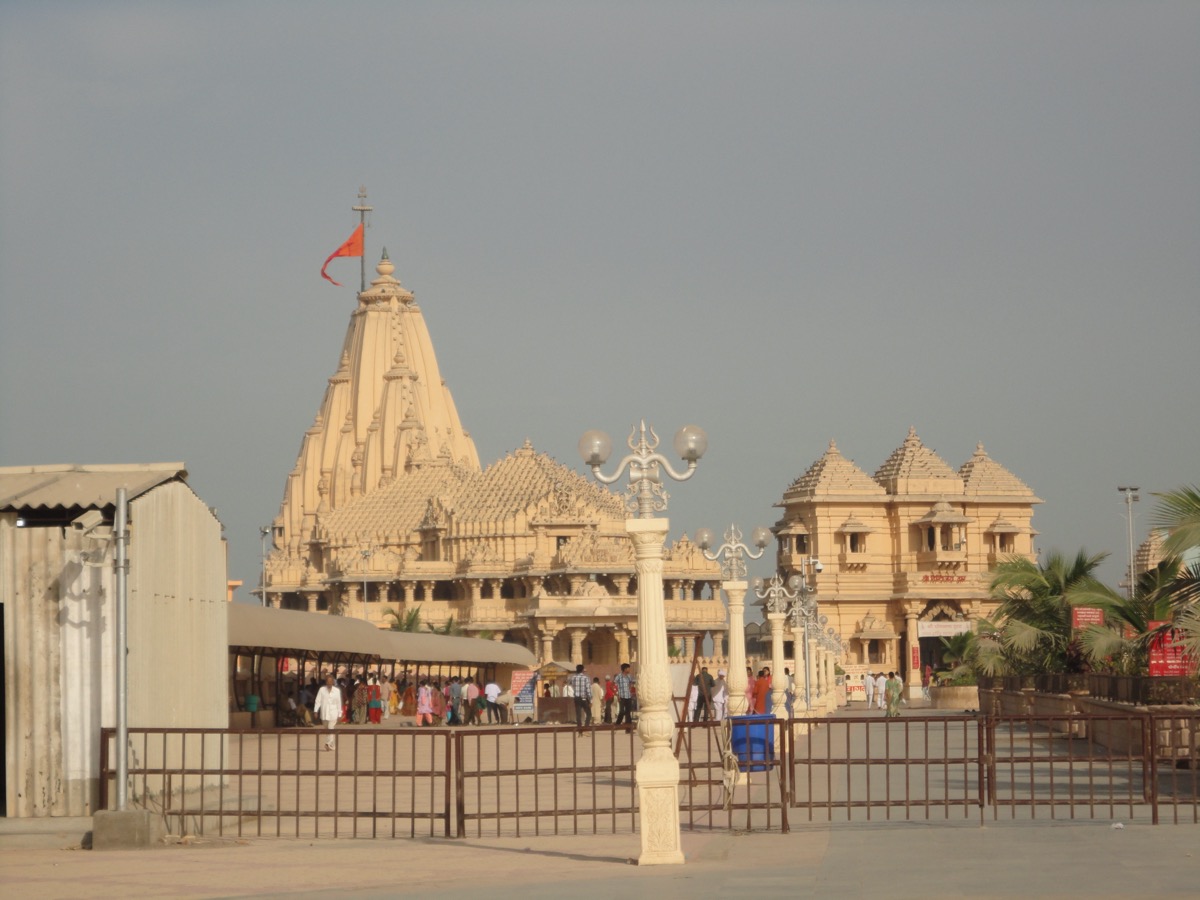
The Dvādaśa Jyotirliṅga Stotram is one of the most widely recited hymns in the Śaiva devotional tradition. Attributed to Ādi Śaṅkarācārya (8th century CE), this compact yet profoundly sacred stotra enumerates the twelve Jyotirliṅgas — the self-manifested luminous liṅgas of Lord Śiva that are regarded as the supreme pilgrimage destinations in all of Hinduism. The word jyotirliṅga derives from jyoti (radiant light) and liṅga (the sacred mark or symbol of Śiva), signifying that these are sites where Śiva first manifested himself as an infinite column of blazing light, transcending both Brahmā and Viṣṇu.
The stotram exists in two principal recensions: a laghu (concise) version of four verses that simply names and locates each Jyotirliṅga, and an extended version of thirteen verses attributed to Śaṅkarācārya that offers a devotional meditation upon each shrine individually. Both versions are presented below, as both are integral to the living tradition of Jyotirliṅga worship.
The Laghu (Concise) Stotram — Complete Text
Devanāgarī
सौराष्ट्रे सोमनाथं च श्रीशैले मल्लिकार्जुनम् । उज्जयिन्यां महाकालं ॐकारममलेश्वरम् ॥१॥
परल्यां वैद्यनाथं च डाकिन्यां भीमशंकरम् । सेतुबन्धे तु रामेशं नागेशं दारुकावने ॥२॥
वाराणस्यां तु विश्वेशं त्र्यम्बकं गौतमीतटे । हिमालये तु केदारं घुश्मेशं च शिवालये ॥३॥
एतानि ज्योतिर्लिङ्गानि सायं प्रातः पठेन्नरः । सप्तजन्मकृतं पापं स्मरणेन विनश्यति ॥४॥
IAST Transliteration
Saurāṣṭre Somanāthaṃ ca Śrīśaile Mallikārjunam | Ujjayinyāṃ Mahākālaṃ Oṃkāram Amaleśvaram ||1||
Paralyāṃ Vaidyanāthaṃ ca Ḍākinyāṃ Bhīmaśaṅkaram | Setubandhe tu Rāmeśaṃ Nāgeśaṃ Dārukāvane ||2||
Vārāṇasyāṃ tu Viśveśaṃ Tryambakaṃ Gautamītaṭe | Himālaye tu Kedāraṃ Ghuśmeśaṃ ca Śivālaye ||3||
Etāni Jyotirliṅgāni Sāyaṃ Prātaḥ Paṭhennaraḥ | Saptajanmakṛtaṃ Pāpaṃ Smaraṇena Vinaśyati ||4||
Verse-by-Verse Meaning
Verse 1: In Saurāṣṭra (Gujarat) is Somanātha; at Śrīśaila (Andhra Pradesh) is Mallikārjuna; in Ujjayinī (Ujjain, Madhya Pradesh) is Mahākāla; and at Oṃkāra (island in the Narmadā) is Amaleśvara (Oṃkāreśvara).
Verse 2: At Paralī (Parli Vaijnath, Maharashtra) is Vaidyanātha; at Ḍākinī (Bhimashankar, Maharashtra) is Bhīmaśaṅkara; at Setubandha (Rāmeśvaram, Tamil Nadu) is Rāmeśa; and in the Dāruka forest is Nāgeśa (Nāgeśvara, Gujarat).
Verse 3: In Vārāṇasī (Uttar Pradesh) is Viśveśa (Viśvanātha); at the banks of the Gautamī (Godāvarī river, Maharashtra) is Tryambaka (Trimbakeśvara); in the Himālaya is Kedāra (Kedāranātha, Uttarakhand); and at Śivālaya (Ellora, Maharashtra) is Ghuśmeśa (Ghṛṣṇeśvara).
Verse 4 (Phala Śruti): One who recites these names of the Jyotirliṅgas in the evening and morning — the sins accumulated over seven births are destroyed by this remembrance alone.
The Extended Stotram — Individual Verses for Each Jyotirliṅga
The expanded version, also attributed to Śaṅkarācārya, provides a devotional meditation on each shrine:
1. Somanātha — Saurāṣṭra, Gujarat
सौराष्ट्रदेशे विशदेऽतिरम्ये ज्योतिर्मयं चन्द्रकलावतंसम् । भक्तिप्रदानाय कृपावतीर्णं तं सोमनाथं शरणं प्रपद्ये ॥
In the radiant and exceedingly beautiful land of Saurāṣṭra, I take refuge in Somanātha — resplendent with luminous glory, adorned with the crescent moon, who has descended in compassion to bestow devotion upon seekers.
Somanātha in Prabhās Paṭan, Gujarat, is traditionally listed as the first Jyotirliṅga. The Śiva Purāṇa (Koṭi Rudra Saṃhitā, chapters 31-34) narrates that the Moon (Soma) was cursed by Dakṣa for favouring Rohiṇī among his twenty-seven wives. Soma performed severe penance at Prabhāsa and was blessed by Śiva, who restored his lustre in a waxing-waning cycle. Grateful, Soma established this liṅga. The temple, destroyed and rebuilt numerous times across centuries, stands today as a testament to the indestructibility of faith.
2. Mallikārjuna — Śrīśailam, Andhra Pradesh
श्रीशैलशृङ्गे विबुधातिसङ्गे तुलाद्रितुङ्गेऽपि मुदा वसन्तम् । तमर्जुनं मल्लिकपूर्वमेकं नमामि संसारसमुद्रसेतुम् ॥
On the peak of Śrīśaila, amidst the assembly of celestial beings, joyously dwelling even atop that lofty mountain, I bow to Mallikārjuna — the sole bridge across the ocean of saṃsāra.
Mallikārjuna at Śrīśailam sits atop the Nallamala Hills along the river Kṛṣṇā. The name combines Mallikā (jasmine, representing Pārvatī) and Arjuna (the radiant one, Śiva). According to the Śiva Purāṇa, when Kārttikeya left his parents in displeasure, Śiva and Pārvatī followed him to this mountain and established themselves here as Mallikārjuna. The Skanda Purāṇa declares this kṣetra equivalent to Kailāsa itself.
3. Mahākāleśvara — Ujjain, Madhya Pradesh
अवन्तिकायां विहितावतारं मुक्तिप्रदानाय च सज्जनानाम् । अकालमृत्योः परिरक्षणार्थं वन्दे महाकालमहासुरेशम् ॥
In Avantikā (Ujjain), I salute Mahākāla, the great lord of the celestials, who has descended to grant liberation to the righteous and to protect them from untimely death.
Mahākāleśvara is the only Jyotirliṅga described as svayambhū (self-born) and dakṣiṇāmukha (south-facing), a form associated with Śiva as the conqueror of Death. The Śiva Purāṇa recounts how Śiva destroyed the demon Dūṣana who terrorized the devotees of Avantī, manifesting as Mahākāla — “Great Time” — the supreme destroyer. The celebrated Bhasm Āratī performed here at dawn with sacred ash is unique among all Śiva temples.
4. Oṃkāreśvara — Māndhātā Island, Madhya Pradesh
कावेरिकानर्मदयोः पवित्रे समागमे सज्जनतारणाय । सदैवमान्धातृपुरे वसन्तमोङ्कारमीशं शिवमेकमीडे ॥
At the sacred confluence of the Kāverī and Narmadā, dwelling always in the city of Māndhātā for the salvation of the virtuous, I praise Oṃkāreśvara, the one auspicious Lord.
Oṃkāreśvara occupies a natural island shaped like the sacred syllable Oṃ in the river Narmadā. The Śiva Purāṇa relates that the Vindhya mountain performed intense tapas here and was blessed by Śiva who manifested in two forms — Oṃkāreśvara and Amaleśvara (also called Māmaleśvara) — on opposite banks. King Māndhātā is also credited with establishing worship here.
5. Vaidyanātha — Deogarh, Jharkhand
पूर्वोत्तरे प्रज्वलिकानिधाने सदा वसन्तं गिरिजासमेतम् । सुरासुराराधितपादपद्मं श्रीवैद्यनाथं तमहं नमामि ॥
In the north-east, dwelling with Girijā (Pārvatī) at the place of blazing radiance, whose lotus feet are worshipped by gods and demons alike, I bow to Śrī Vaidyanātha.
Vaidyanātha means “Lord of Physicians.” The Śiva Purāṇa narrates that Rāvaṇa, after prodigious austerities on Mount Kailāsa, attempted to carry Śiva to Laṅkā. Śiva, pleased yet testing him, became immovable at this spot. Śiva then healed Rāvaṇa’s injuries sustained during the ordeal, earning the epithet Vaidyanātha. This shrine at Deogarh is the centrepiece of the famous Śrāvaṇī Melā, one of India’s largest annual pilgrimages.
6. Nāgeśvara — Dārukāvana, Gujarat
याम्ये सदङ्गे नगरेऽतिरम्ये विभूषिताङ्गं विविधैश्च भोगैः । सद्भक्तिमुक्तिप्रदमीशमेकं श्रीनागनाथं शरणं प्रपद्ये ॥
In the exceedingly beautiful southern city, adorned with various splendours, I take refuge in Śrī Nāganātha, the sole lord who bestows true devotion and liberation.
Nāgeśvara (also Nāganātha) is situated near Dvārakā in Gujarat, though claims also exist for Aundha Nāganāth in Maharashtra. The Śiva Purāṇa relates the story of the devotee couple Supriya and Daruka: when the demon Dāruka imprisoned Śiva-devotees, Supriya invoked Śiva through the chanting of the Pañcākṣara mantra (Oṃ Namaḥ Śivāya), and Śiva appeared as Nāgeśvara to destroy the demon and liberate the faithful.
7. Kedāranātha — Himālaya, Uttarakhand
महाद्रिपार्श्वे च तटे रमन्तं सम्पूज्यमानं सततं मुनीन्द्रैः । सुरासुरैर्यक्षमहोरगाढ्यैः केदारमीशं शिवमेकमीडे ॥
Rejoicing on the slopes and banks of the great mountain, constantly worshipped by the foremost sages, by gods, demons, Yakṣas, and great serpents — I praise Kedāreśvara, the one auspicious Lord.
Kedāranātha stands at an elevation of 3,583 metres near the source of the Mandākinī river. The Śiva Purāṇa records that the Pāṇḍavas, seeking Śiva’s forgiveness after the Kurukṣetra war, pursued him to this Himalayan retreat. Śiva assumed the form of a bull (Nandī) and dove into the earth; his hump remained above ground as the triangular rock worshipped as the Kedāra liṅga. The temple is accessible only six months a year, closing during winter when the ceremonial image is moved to Ūkhīmaṭh.
8. Tryambakeśvara — Nāsik, Maharashtra
सह्याद्रिशीर्षे विमले वसन्तं गोदावरीतीरपवित्रदेशे । यद्दर्शनात्पातकमाशु नाशं प्रयाति तं त्र्यम्बकमीशमीडे ॥
Dwelling on the pure summit of the Sahyādri mountains, in the sacred land on the banks of the Godāvarī, by whose darśana sins swiftly perish — I praise Tryambakeśvara.
Tryambakeśvara near Nāsik is unique in that its liṅga displays three faces representing Brahmā, Viṣṇu, and Śiva (the Trimūrti). The Godāvarī river originates near this temple from the Brahmagiri hill. According to the Śiva Purāṇa, the sage Gautama, after being falsely accused of cow-slaughter, performed severe tapas. Śiva, pleased, released the Godāvarī (also called Gautamī) from his jaṭā and remained here as Tryambakeśvara — “the three-eyed Lord.”
9. Rāmeśvaram — Setubandha, Tamil Nadu
सुताम्रपर्णीजलराशियोगे निबध्य सेतुं विशिखैरसंख्यैः । श्रीरामचन्द्रेण समर्पितं तं रामेश्वराख्यं नियतं नमामि ॥
At the confluence of the Tāmraparṇī waters, where an innumerable bridge of arrows was bound, established by Śrī Rāmacandra — I ever bow to the one known as Rāmeśvara.
Rāmeśvaram at the southeastern tip of India is inseparable from the Rāmāyaṇa. Before crossing to Laṅkā, Śrī Rāma established a Śiva liṅga here to atone for the brahmahatyā incurred in slaying Rāvaṇa (who was a brāhmaṇa). The Rāmāyaṇa and Śiva Purāṇa both affirm that Rāma worshipped Śiva here as Rāmeśvara — “the Lord of Rāma.” The temple’s magnificent corridor of 1,212 pillars is the longest in India. Pilgrims traditionally carry Gaṅgā water from Vārāṇasī to abhiṣeka Rāmeśvara, and vice versa.
10. Bhīmaśaṅkara — Sahyādri, Maharashtra
यं डाकिनीशाकिनिकासमाजे निषेव्यमाणं पिशिताशनैश्च । सदैव भीमादिपदप्रसिद्धं तं शंकरं भक्तहितं नमामि ॥
Served by assemblies of Ḍākinīs and Śākinīs and by flesh-eating beings, ever renowned by the name Bhīma and other epithets — I bow to that Śaṅkara who secures the welfare of devotees.
Bhīmaśaṅkara in the Sahyādri range of Maharashtra is surrounded by dense forests and is the source of the river Bhīmā. The Śiva Purāṇa narrates the tale of the demon Bhīma, son of Kumbhakarṇa, who harassed the gods and devotees. When the devout king Kamaluṣṇa was threatened, Śiva manifested and destroyed the demon. The sweat from Śiva’s cosmic battle became the river Bhīmarathī (Bhīmā), and the liṅga was established as Bhīmaśaṅkara.
11. Viśvanātha — Vārāṇasī, Uttar Pradesh
सानन्दमानन्दवने वसन्तमानन्दकन्दं हतपापवृन्दम् । वाराणसीनाथमनाथनाथं श्रीविश्वनाथं शरणं प्रपद्ये ॥
Dwelling blissfully in the Forest of Bliss (Ānandavana), the root-source of all bliss, destroyer of multitudes of sins, Lord of Vārāṇasī, Lord of the lordless — I take refuge in Śrī Viśvanātha.
Kāśī Viśvanātha in Vārāṇasī is perhaps the most celebrated Śiva shrine in existence. The Kāśī Khaṇḍa of the Skanda Purāṇa declares that Śiva himself never abandons this city — even during cosmic dissolution (pralaya), he holds Kāśī aloft on his trident. The title Viśvanātha — “Lord of the Universe” — affirms Śiva’s supreme sovereignty. It is believed that dying in Kāśī while hearing the Tāraka Mantra whispered by Śiva grants immediate liberation (mokṣa).
12. Ghṛṣṇeśvara — Ellora, Maharashtra
इलापुरे रम्यविशालकेऽस्मिन् समुल्लसन्तं च जगद्वरेण्यम् । वन्दे महोदारतरस्वभावं घृष्णेश्वराख्यं शरणं प्रपद्ये ॥
In this beautiful and spacious Ilāpura, shining forth, the most venerable in all the world, of most generous nature — I salute and take refuge in the one named Ghṛṣṇeśvara.
Ghṛṣṇeśvara (also Ghuśmeśvara or Ghruśmeśvara) near the Ellora caves in Maharashtra is the last of the twelve Jyotirliṅgas. The Śiva Purāṇa tells of the devoted woman Ghṛṣṇā (or Kuśumā), whose son was murdered by a jealous co-wife. When Ghṛṣṇā immersed the remains in a nearby lake with unwavering devotion to Śiva, the boy was restored to life. Śiva then manifested as Ghṛṣṇeśvara, blessing all who worship here. The temple’s proximity to the UNESCO World Heritage site of Ellora connects Śaiva devotion with India’s finest rock-cut architecture.
Phala Śruti (Concluding Benediction)
ज्योतिर्मयद्वादशलिङ्गकानां शिवात्मनां प्रोक्तमिदं क्रमेण । स्तोत्रं पठित्वा मनुजोऽतिभक्त्या फलं तदालोक्य निजं भजेच्च ॥
This stotra, which has been narrated in sequence about the twelve luminous liṅgas that are the very essence of Śiva — the person who recites it with great devotion shall attain its fruit and worship the Lord in his own Self.
Origin in the Śiva Purāṇa
The scriptural foundation for the twelve Jyotirliṅgas appears primarily in the Śiva Purāṇa, particularly the Vidyeśvara Saṃhitā (chapters 6-12) and the Koṭi Rudra Saṃhitā (chapters 14-43). The cosmic origin myth is as follows:
Once Brahmā and Viṣṇu disputed which of them was supreme. Śiva manifested between them as an infinite pillar of blazing light (jyoti stambha) with neither beginning nor end. Brahmā took the form of a swan and flew upward; Viṣṇu became a boar and dug downward. Neither could find the limits of the column. Viṣṇu humbly acknowledged Śiva’s supremacy; Brahmā falsely claimed he had found the top. Śiva then revealed his form, cursed Brahmā (that he would have no separate temple worship), and blessed Viṣṇu. The twelve sites where this infinite light pierced the earth became the twelve Jyotirliṅgas — each a point where the formless Absolute chose to dwell in form for the benefit of devotees.
The Śiva Purāṇa (Vidyeśvara Saṃhitā 1.21-22) specifically states:
“The liṅga, the sacred symbol of Śiva, is itself the form of the universe. The entire world is established upon it and dissolves back into it.”
Geographical Mapping of the Twelve Jyotirliṅgas
The twelve Jyotirliṅgas span the length and breadth of the Indian subcontinent, forming a sacred geography:
| No. | Jyotirliṅga | Location | State | Region |
|---|---|---|---|---|
| 1 | Somanātha | Prabhās Paṭan | Gujarat | West |
| 2 | Mallikārjuna | Śrīśailam | Andhra Pradesh | South |
| 3 | Mahākāleśvara | Ujjain | Madhya Pradesh | Central |
| 4 | Oṃkāreśvara | Māndhātā Island | Madhya Pradesh | Central |
| 5 | Vaidyanātha | Deogarh | Jharkhand | East |
| 6 | Nāgeśvara | Dārukāvana (Dvārakā) | Gujarat | West |
| 7 | Kedāranātha | Kedārnāth | Uttarakhand | North |
| 8 | Tryambakeśvara | Nāsik | Maharashtra | West |
| 9 | Rāmeśvaram | Setubandha | Tamil Nadu | South |
| 10 | Bhīmaśaṅkara | Sahyādri | Maharashtra | West |
| 11 | Viśvanātha | Vārāṇasī | Uttar Pradesh | North |
| 12 | Ghṛṣṇeśvara | Ellora | Maharashtra | West |
This distribution is not accidental. The Jyotirliṅgas delineate a sacred map of Bhārata, ensuring that no region of the subcontinent is beyond the reach of Śiva’s luminous presence. Maharashtra contains three, Gujarat two, Madhya Pradesh two — yet northern, southern, and eastern India are each represented, making the complete pilgrimage a journey across the entirety of the land.
The Pilgrimage Tradition
The aspiration to visit all twelve Jyotirliṅgas — known as the Dvādaśa Jyotirliṅga Yātrā — has been a cherished ideal in Śaiva devotion for centuries. While no single canonical text prescribes a fixed itinerary, the tradition holds that:
- Completing the circuit of all twelve shrines in a single lifetime destroys the accumulated pāpa (sin) of countless births and opens the path to mokṣa.
- The yātrā may begin from any Jyotirliṅga, though many pilgrims follow the order given in the stotram, starting with Somanātha and concluding with Ghṛṣṇeśvara.
- At each shrine, the devotee performs abhiṣeka (ritual bathing of the liṅga), offers bilva leaves, chants the Pañcākṣara Mantra (Oṃ Namaḥ Śivāya), and recites this very stotram.
- Traditional pilgrims carried water from one Jyotirliṅga site to pour upon the next, linking the shrines through the sacred element of water. The most famous example is carrying Gaṅgā water from Kāśī to Rāmeśvaram.
- The Śrāvaṇa month (July-August) is considered especially auspicious for Jyotirliṅga pilgrimage, when millions of Kāṃvariyas carry Gaṅgā water to Śiva temples.
Recitation Practices
The Dvādaśa Jyotirliṅga Stotram is traditionally recited in the following contexts:
-
Sandhyā recitation: The phala śruti specifically mentions sāyaṃ prātaḥ — evening and morning — as the ideal times, aligning with the two major sandhyā periods.
-
Pradoṣa Vrata: On Trayodaśī (the thirteenth day of each lunar fortnight), this stotram is recited during the pradoṣa kāla (the period around sunset), considered supremely auspicious for Śiva worship.
-
Mahāśivarātri: The night of Śiva is the most powerful occasion for Jyotirliṅga stotram recitation. Devotees who recite it during the four yāmas (watches) of this night are said to receive the merit of visiting all twelve shrines.
-
Śrāvaṇa Somavāra: Every Monday during the month of Śrāvaṇa, devotees recite this stotram alongside the Rudra Abhiṣeka as part of extended Śiva worship.
-
During pilgrimage: At each Jyotirliṅga shrine, recitation of the complete stotram invokes the presence of all twelve liṅgas, so that worshipping at one shrine becomes worship at all twelve.
The recommended practice is to sit facing north or east, light a dīpa (oil lamp), offer bilva leaves and white flowers to a Śiva liṅga or image, and recite the stotram with steady concentration. The stotra may be chanted 108 times (aṣṭottaraśata) for a focused anușṭhāna (disciplined practice) over a period of days or weeks.
Phala Śruti — Benefits of Recitation
The stotram’s own concluding verse declares the most essential benefit: destruction of the sins of seven lifetimes (saptajanmakṛtaṃ pāpaṃ smaraṇena vinaśyati). The Śaiva tradition elaborates further:
- Removal of akāla mṛtyu (untimely death): The invocation of Mahākāla specifically promises protection from premature death.
- Healing: Vaidyanātha, the “Lord of Physicians,” is invoked for relief from disease and bodily suffering.
- Destruction of fear: The Jyotirliṅgas, as manifestations of the infinite light of Śiva, dispel all forms of spiritual darkness and existential fear.
- Equivalent merit of pilgrimage: Those unable to physically travel to all twelve sites receive the spiritual merit of the complete yātrā through sincere recitation.
- Liberation (mokṣa): The extended phala śruti declares that the devotee who recites with atiśaya bhakti (supreme devotion) shall “attain the fruit and worship the Lord in the Self” — a veiled reference to Self-realization and ultimate liberation.
Significance in Śaiva Devotion
The Dvādaśa Jyotirliṅga Stotram occupies a unique position in Hindu devotional literature because it bridges multiple dimensions of religious life:
Theology: It affirms Śiva as the infinite, self-luminous Absolute (jyoti svarūpa) who transcends all other deities, as demonstrated in the cosmic pillar narrative. Each Jyotirliṅga is not merely a sacred place but a point where the formless becomes accessible in form.
Sacred geography: The stotram is simultaneously a māhātmya (glorification) and a tīrtha mālikā (garland of pilgrimage sites), mapping Śiva’s presence across the subcontinent and sanctifying the land of Bhārata itself as Śiva’s body.
Devotional accessibility: In its laghu form of just four verses, the stotram can be memorized by any devotee regardless of learning. It democratizes the fruits of pilgrimage, offering to the poor and infirm the same spiritual benefits that only the wealthy and able-bodied could otherwise attain through physical travel.
Liturgical centrality: Whether in daily household worship, temple ritual, or elaborate Śivarātri observances, this stotram is among the most frequently chanted Śaiva texts. Its presence in virtually every Śaiva pūjā manual across linguistic and sectarian boundaries testifies to its pan-Indian acceptance.
The Dvādaśa Jyotirliṅga Stotram thus serves as a complete spiritual practice in miniature — invoking the divine, mapping the sacred, narrating the mythological, and promising the soteriological, all within a few memorizable verses that have resounded in Śiva temples and devotee homes for over a millennium.