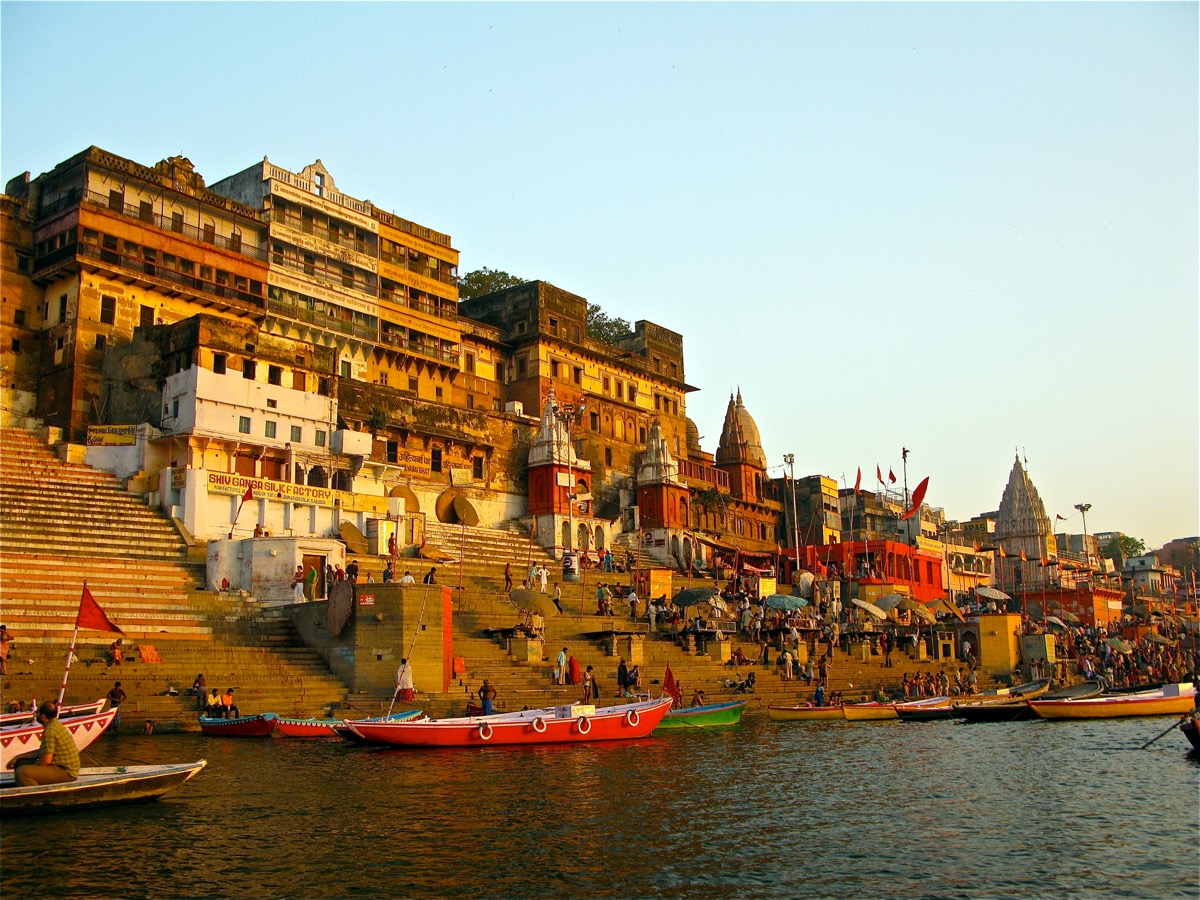
Gaṅgā Stotram — the “Hymn to the Ganges” — is a luminous devotional composition of fourteen verses by Ādi Śaṅkarācārya (c. 788–820 CE), the foremost exponent of Advaita Vedānta and one of the most prolific sacred poets in the Hindu tradition. Addressed to the river goddess Gaṅgā as a divine mother, cosmic purifier, and liberator of three worlds, the stotra weaves together theology, devotion, and sublime poetry in the lilting Pajjhaṭikā metre. For over a millennium, it has been chanted on the ghats of Vārāṇasī, Haridvāra, and Ṛṣīkeśa — and wherever Hindus invoke the sacred river to wash away sin, bestow grace, and carry the soul toward liberation.
Śaṅkarācārya and the Gaṅgā
The Poet-Philosopher at the River’s Edge
Ādi Śaṅkarācārya traversed the length and breadth of India during his brief but extraordinary life of thirty-two years, establishing four maṭhas (monastic seats) and composing hundreds of philosophical treatises and devotional hymns. His relationship with the Gaṅgā was both personal and theological. Born at Kālaḍi in Kerala, he journeyed north to Kāśī (Vārāṇasī), where the Gaṅgā’s ghats became the setting for many of his most celebrated compositions.
The Gaṅgā Stotram (also called Gaṅgāṣṭakam in some traditions, though the standard recension contains fourteen verses rather than eight) reflects Śaṅkara’s characteristic genius: the integration of bhakti (devotion) with jñāna (knowledge). While his Brahma Sūtra Bhāṣya and Vivekacūḍāmaṇi address the formless, attributeless Brahman, his stotras — including this hymn — celebrate the divine in its saguṇa (qualified) manifestation, here as the goddess flowing from Śiva’s matted locks to purify all creation.
Why Gaṅgā?
In the Hindu cosmological vision, Gaṅgā is not merely a geographical river but a cosmic principle — āpas (sacred water) that descends from the heavenly realm (svarga), passes through the earthly plane (bhūloka), and flows into the netherworld (pātāla), thereby linking all three worlds (tribhuvana). The Bhāgavata Purāṇa (5.17.1) narrates how Gaṅgā first flowed from the toe of Lord Viṣṇu (Viṣṇupādī), while the Śiva Purāṇa describes how Śiva received her on his head (jaṭā) to break her fall and save the earth from destruction. These dual associations — Vaiṣṇava and Śaiva — make Gaṅgā uniquely venerated across all Hindu traditions.
Complete Text: Devanāgarī, Transliteration, and Translation
Verse 1
देवि सुरेश्वरि भगवति गङ्गे त्रिभुवनतारिणि तरलतरङ्गे । शङ्करमौलिविहारिणि विमले मम मतिरास्तां तव पदकमले ॥१॥
Devī sureśvarī bhagavatī gaṅge tribhuvanatāriṇī taralataraṅge | Śaṅkaramaulivihāriṇī vimale mama matirāstāṃ tava padakamale ||1||
Translation: “O Goddess Gaṅgā! O Supreme Goddess among the celestials, O blessed one! Saviour of the three worlds, with restless, shimmering waves, You who sport upon the crown of Lord Śaṅkara (Śiva), O immaculate one — may my mind ever rest at Your lotus feet.”
The opening verse establishes all the essential epithets: sureśvarī (sovereign among gods), tribhuvanatāriṇī (deliverer of three worlds), and śaṅkaramaulivihāriṇī (dwelling on Śiva’s crest) — positioning Gaṅgā simultaneously as goddess, mother, and cosmic purifier.
Verse 2
भागीरथि सुखदायिनि मातस्तव जलमहिमा निगमे ख्यातः । नाहं जाने तव महिमानं पाहि कृपामयि मामज्ञानम् ॥२॥
Bhāgīrathī sukhadāyinī mātastava jalamahimā nigame khyātaḥ | Nāhaṃ jāne tava mahimānaṃ pāhi kṛpāmayī māmajñānam ||2||
Translation: “O Mother Bhāgīrathī, bestower of happiness! The glory of Your waters is celebrated in the Vedas. I do not know the extent of Your greatness — O compassionate one, protect me, an ignorant soul.”
The name Bhāgīrathī recalls King Bhagīratha, whose severe penance brought the Gaṅgā down from heaven to earth to liberate his ancestors. This verse introduces the theme of human limitation before divine grace — the devotee does not claim to comprehend the river’s majesty but surrenders in humility.
Verse 3
हरिपदपाद्यतरङ्गिणि गङ्गे हिमविधुमुक्ताधवलतरङ्गे । दूरीकुरु मम दुष्कृतिभारं कुरु कृपया भवसागरपारम् ॥३॥
Haripadapādyataraṅgiṇī gaṅge himavidhumuktādhavala-taraṅge | Dūrīkuru mama duṣkṛtibhāraṃ kuru kṛpayā bhavasāgarapāram ||3||
Translation: “O Gaṅgā, flowing as the foot-wash water from Lord Hari’s feet, Your waves are white as snow, moonlight, and pearls. Remove the burden of my evil deeds and, by Your mercy, carry me across the ocean of worldly existence.”
Here Gaṅgā’s Vaiṣṇava origin is invoked — she is haripadapādyataraṅgiṇī, born from the washing of Viṣṇu’s feet. The request to cross bhavasāgara (the ocean of saṃsāra) places the stotra firmly within the soteriological framework of liberation theology.
Verse 4
तव जलममलं येन निपीतं परमपदं खलु तेन गृहीतम् । मातर्गङ्गे त्वयि यो भक्तः किल तं द्रष्टुं न यमः शक्तः ॥४॥
Tava jalamamalaṃ yena nipītaṃ paramapadaṃ khalu tena gṛhītam | Mātargaṅge tvayi yo bhaktaḥ kila taṃ draṣṭuṃ na yamaḥ śaktaḥ ||4||
Translation: “Whoever has drunk Your pure waters has truly attained the supreme state. O Mother Gaṅgā, one who is devoted to You — Yama, the lord of death, is unable even to look upon him.”
This verse makes an extraordinary theological claim: devotion to Gaṅgā renders the devotee immune to death’s power. The Garuḍa Purāṇa (Pretakāṇḍa 10.55-56) similarly affirms that those who die near the Gaṅgā or with Gaṅgā water on their lips are freed from Yama’s noose.
Verse 5
पतितोद्धारिणि जाह्नवि गङ्गे खण्डितगिरिवरमण्डितभङ्गे । भीष्मजननि हे मुनिवरकन्ये पतितनिवारिणि त्रिभुवनधन्ये ॥५॥
Patitodddhāriṇī jāhnavī gaṅge khaṇḍitagirivaramaṇḍitabhaṅge | Bhīṣmajanani he munivarakanye patitanivāriṇī tribhuvanadhanye ||5||
Translation: “O Jāhnavī Gaṅgā, uplifter of the fallen! Your currents, breaking through the great mountains, are adorned with beautiful bends. O mother of Bhīṣma, O daughter of the great sage (Jahnu)! You who redeem the fallen — O blessed one of the three worlds!”
This verse weaves together three origin narratives: Gaṅgā as Jāhnavī (daughter of sage Jahnu, who swallowed and released her), as Bhīṣmajanani (mother of the great warrior Bhīṣma from the Mahābhārata, born of Gaṅgā and King Śāntanu), and as the river that carved its path through the Himalayas.
Verse 6
कल्पलतामिव फलदां लोके प्रणमति यस्त्वां न पतति शोके । पारावारविहारिणि गङ्गे विमुखयुवतीकृततरलापाङ्गे ॥६॥
Kalpalatāmiva phaladāṃ loke praṇamati yastvāṃ na patati śoke | Pārāvāravihāriṇī gaṅge vimukhayuvatīkṛtataralāpāṅge ||6||
Translation: “In this world You are like a wish-fulfilling creeper (kalpalatā), granting all fruits. Whoever bows to You never falls into sorrow. O Gaṅgā, who flows from the mountains to the ocean, Your glancing waves are like the sidelong glances of a coy maiden.”
The comparison to the kalpalatā — the divine creeper that grants all desires — elevates Gaṅgā to the status of a wish-fulfilling deity. The poetic image of her waves as a maiden’s flirtatious glances reveals Śaṅkara’s lyrical genius.
Verse 7
तव चेन्मातः स्रोतः स्नातः पुनरपि जठरे सोऽपि न जातः । नरकनिवारिणि जाह्नवि गङ्गे कलुषविनाशिनि महिमोत्तुङ्गे ॥७॥
Tava cenmātaḥ srotaḥ snātaḥ punarapi jaṭhare so’pi na jātaḥ | Narakanivāriṇī jāhnavī gaṅge kaluṣavināśinī mahimottuṅge ||7||
Translation: “O Mother! Whoever has bathed in Your stream is never born again in a womb. O Jāhnavī Gaṅgā, preventer of hell, destroyer of impurity, Your glory is supreme.”
The promise here is nothing less than mokṣa — liberation from the cycle of rebirth. This verse resonates with the Padma Purāṇa’s teaching that a single bath in the Gaṅgā destroys the sins of a thousand lifetimes.
Verse 8
पुनरसदङ्गे पुण्यतरङ्गे जय जय जाह्नवि करुणापाङ्गे । इन्द्रमुकुटमणिराजितचरणे सुखदे शुभदे भृत्यशरण्ये ॥८॥
Punarasadaṅge puṇyataraṅge jaya jaya jāhnavī karuṇāpāṅge | Indramukuṭamaṇirājitacaraṇe sukhade śubhade bhṛtyaśaraṇye ||8||
Translation: “O pure-limbed one with sacred waves, victory, victory to You, O Jāhnavī of compassionate glances! Your feet are adorned by the jewels in Indra’s crown. O giver of happiness, bestower of auspiciousness, refuge of Your servants!”
The image of Indra — king of the gods — placing the jewels of his crown at Gaṅgā’s feet signifies that even the lord of heaven bows before the sacred river. The triple call jaya jaya introduces the celebratory tone that intensifies toward the stotra’s conclusion.
Verse 9
रोगं शोकं तापं पापं हर मे भगवति कुमतिकलापम् । त्रिभुवनसारे वसुधाहारे त्वमसि गतिर्मम खलु संसारे ॥९॥
Rogaṃ śokaṃ tāpaṃ pāpaṃ hara me bhagavatī kumatikalāpam | Tribhuvanasāre vasudhāhāre tvamasi gatirmama khalu saṃsāre ||9||
Translation: “O Goddess! Remove my disease, sorrow, affliction, sin, and the accumulation of wicked thoughts. O essence of the three worlds, O necklace of the earth — You alone are my refuge in this cycle of worldly existence.”
The five-fold plea — roga (disease), śoka (grief), tāpa (suffering), pāpa (sin), kumati (wicked thought) — catalogues the full range of human affliction. The epithet vasudhāhāre (“necklace of the earth”) is a striking geographical metaphor: the Gaṅgā adorns the Indian subcontinent as a jewelled necklace adorns a woman.
Verse 10
अलकानन्दे परमानन्दे कुरु करुणामयि कातरवन्द्ये । तव तटनिकटे यस्य निवासः खलु वैकुण्ठे तस्य निवासः ॥१०॥
Alakānande paramānande kuru karuṇāmayī kātaravandye | Tava taṭanikaṭe yasya nivāsaḥ khalu vaikuṇṭhe tasya nivāsaḥ ||10||
Translation: “O Alakānandā, O giver of supreme bliss! O compassionate one, worshipped by the distressed! Whoever dwells near Your banks indeed dwells in Vaikuṇṭha (the abode of Viṣṇu).”
The name Alakānandā refers to one of the principal headstreams of the Gaṅgā in the Himalayas. The verse’s theological claim is remarkable: proximity to the Gaṅgā is spiritually equivalent to residing in Viṣṇu’s eternal paradise.
Verse 11
वरमिह नीरे कमठो मीनः किं वा तीरे शरटः क्षीणः । अथवा श्वपचो मलिनो दीनः तव न हि दूरे नृपतिः कुलीनः ॥११॥
Varamiha nīre kamaṭho mīnaḥ kiṃ vā tīre śaraṭaḥ kṣīṇaḥ | Athavā śvapaco malino dīnaḥ tava na hi dūre nṛpatiḥ kulīnaḥ ||11||
Translation: “Better to be a turtle or a fish in Your waters, or a wretched lizard on Your bank, or even an outcast (śvapaca), poor and unclean — but near You — than a noble king far from You.”
This is perhaps the most socially revolutionary verse in the entire stotra. Śaṅkara, a Brahmin philosopher, declares that the lowest outcaste living near the Gaṅgā is superior to a high-born king who is distant from her. The verse subverts the caste hierarchy by making proximity to the divine — not birth — the measure of spiritual worth.
Verse 12
भो भुवनेश्वरि पुण्ये धन्ये देवि द्रवमयि मुनिवरकन्ये । गङ्गास्तवमिममलं नित्यं पठति नरो यः स जयति सत्यम् ॥१२॥
Bho bhuvaneśvarī puṇye dhanye devī dravamayī munivarakanye | Gaṅgāstavamimamaalaṃ nityaṃ paṭhati naro yaḥ sa jayati satyam ||12||
Translation: “O Sovereign of the universe, O sacred and blessed one! O Goddess flowing in liquid form, O daughter of the great sage! Whoever recites this stainless hymn to Gaṅgā daily — he truly triumphs.”
This verse begins the phalaśruti (declaration of benefits), a standard feature of Hindu stotras. The promise of jayati satyam (“truly triumphs”) encompasses both worldly success and spiritual victory.
Verse 13
येषां हृदये गङ्गाभक्तिस्तेषां भवति सदा सुखमुक्तिः । मधुरमनोहरपज्झटिकाभिः परमानन्दकलितललिताभिः ॥१३॥
Yeṣāṃ hṛdaye gaṅgābhaktis teṣāṃ bhavati sadā sukhamuktiḥ | Madhuramanohara-pajjhaṭikābhiḥ paramānandakalitalalitābhiḥ ||13||
Translation: “Those in whose hearts dwells devotion to Gaṅgā always experience the joy of liberation. This hymn is composed in the sweet and charming Pajjhaṭikā metre, infused with supreme bliss and grace.”
The verse reveals the metre — Pajjhaṭikā — a lilting, song-like rhythm from the Prākṛt poetic tradition, chosen deliberately by Śaṅkara for its musical quality. The identification of the metre suggests the stotra was intended for singing, not merely recitation.
Verse 14
गङ्गास्तोत्रमिदं भवसारं वाञ्छितफलदं विमलं सारम् । शङ्करसेवकशङ्करविरचितं पठति सुखी स्तव इति च समाप्तम् ॥१४॥
Gaṅgāstotramidaṃ bhavasāraṃ vāñchitaphaladaṃ vimalaṃ sāram | Śaṅkarasevaka-śaṅkara-viracitaṃ paṭhati sukhī stava iti ca samāptam ||14||
Translation: “This Gaṅgā Stotram is the essence of worldly existence, the bestower of desired fruits, pure and quintessential. It is composed by Śaṅkara (Ādi Śaṅkarācārya), the servant of Śaṅkara (Lord Śiva). Whoever recites it attains happiness. Thus this hymn is concluded.”
The closing verse contains a beautiful double meaning: Śaṅkara-sevaka-Śaṅkara — “Śaṅkara who serves Śaṅkara.” The poet identifies himself as the servant of Lord Śiva (also called Śaṅkara), thereby connecting the human composer to the divine source of the hymn.
Gaṅgā’s Divine Attributes in the Stotra
The Cosmic Purifier
The central theological function of Gaṅgā in this stotra is purification (pāvana). Verses 3, 4, 7, and 9 progressively amplify this theme: she removes the burden of evil deeds (duṣkṛtibhāra), grants the supreme state (paramapadaṃ) to those who drink her water, destroys impurity (kaluṣavināśinī), and eliminates disease, sorrow, and sin.
This purification theology draws on the Viṣṇu Purāṇa (2.8.120), which states: gaṅgā gaṅgeti yo brūyād yojanānāṃ śatairapi | mucyate sarvapāpebhyo viṣṇulokaṃ sa gacchati — “One who utters ‘Gaṅgā, Gaṅgā’ even from hundreds of yojanas away is freed from all sins and proceeds to Viṣṇu’s abode.”
The Mother Figure
Throughout the stotra, Gaṅgā is addressed as Mātā (Mother) — in verses 2, 4, 7, and implicitly throughout. This maternal identity is central to Hindu river theology. The Mahābhārata (Anuśāsana Parva 26.60) declares: yathā mātā svake putre dayāṃ kurvanti suvrate | tathā gaṅgā manuṣyeṣu sarvadā kurute dayām — “Just as a mother shows compassion to her own child, so Gaṅgā always shows compassion to human beings.”
The Liberator
Gaṅgā as tribhuvanatāriṇī (deliverer of three worlds) and patitodddhāriṇī (uplifter of the fallen) functions as a soteriological agent — she does not merely cleanse but liberates. Verse 7 makes this explicit: bathing in her stream ends the cycle of rebirth entirely.
Recitation Traditions
At the Ghats of Vārāṇasī
In Vārāṇasī (Kāśī), the Gaṅgā Stotram is recited daily at dawn and dusk, particularly at Daśāśvamedha Ghāṭ and Assi Ghāṭ. Priests and pilgrims chant the fourteen verses while performing snāna (ritual bathing) or offering water (arghya) to the rising sun. The stotra serves as a personal devotional preparation before the more elaborate communal Gaṅgā Āratī ceremony.
At Haridvāra
At Har kī Paurī (literally “the Step of God”) in Haridvāra, where the Gaṅgā emerges from the Himalayan foothills onto the plains, the Gaṅgā Stotram is integral to the evening āratī. Thousands gather nightly as priests wave massive flaming lamps (dīpa) and the stotra echoes across the water, its Pajjhaṭikā metre perfectly suited to congregational chanting.
Connection to the Gaṅgā Āratī
The Gaṅgā Stotram and the famous Gaṅgā Āratī ceremony are intimately connected but distinct. The āratī is a ritual of light-offering performed communally with choreographed movements of large brass lamps, conch shells, and incense. The stotra is the textual devotion that often accompanies or precedes the āratī. Many āratī ceremonies incorporate verses from this stotra alongside the more widely known “Om Jai Gaṅge Māta” āratī song.
Gaṅgā Dussehrā
The festival of Gaṅgā Dussehrā — celebrated on the tenth day (daśamī) of the bright half of Jyeṣṭha month (May–June) — commemorates the descent of the Gaṅgā to earth. The Gaṅgā Stotram is one of the most frequently chanted texts on this occasion. Devotees believe that recitation during Gaṅgā Dussehrā amplifies the stotra’s merit tenfold, and mass recitations are organized at river ghats across northern India.
Theological Depth: Purification and Grace
Water as Sacred Medium
Hindu theology distinguishes between physical cleansing and spiritual purification. The Gaṅgā Stotram operates at the latter level. When verse 4 states that drinking Gaṅgā water leads to the paramapadaṃ (supreme state), this is not a claim about physical hydration but about tīrtha-snāna — the transformative encounter with the sacred.
The Manusmṛti (5.109) teaches: adbhiḥ śudhyanti gātrāṇi manaḥ satyena śudhyati | vidyā tapobhyām bhūtātmā buddhir jñānena śudhyati — “The body is purified by water, the mind by truth, the soul by learning and austerity, and the intellect by knowledge.” Gaṅgā, in this stotra, accomplishes all four simultaneously — she is water, truth, knowledge, and austerity in liquid form.
Grace Beyond Merit
A remarkable feature of the Gaṅgā Stotram is its insistence on unconditional grace. Verse 11’s declaration that an outcast near Gaṅgā surpasses a king far from her echoes the broader Hindu teaching of anugraha (divine grace) that transcends human categories of worthiness. The Śvetāśvatara Upaniṣad (6.23) affirms: yasya deve parā bhaktir yathā deve tathā gurau | tasyaite kathitā hy arthāḥ prakāśante mahātmanaḥ — spiritual truths reveal themselves to those with supreme devotion, regardless of their social station.
The River as Mother: Ecological and Spiritual Dimensions
A Living Goddess
For the Hindu devotee, the Gaṅgā is not a metaphor for the divine — she is divine. The stotra addresses her as devī (goddess), bhagavatī (blessed one), and bhuvaneśvarī (sovereign of the universe). This theology has profound ecological implications. When a river is your mother and your goddess, polluting her becomes not merely an environmental crime but a sacrilege.
The Environmental Message
The Gaṅgā Stotram’s celebration of the river’s purity (vimale, “immaculate”; amala, “stainless”) carries an urgent contemporary resonance. The Gaṅgā today faces severe pollution from industrial waste, sewage, and agricultural runoff. Hindu environmental activists have drawn on texts like this stotra to argue that the protection of the Gaṅgā is a religious obligation — dharma — not merely a policy question. The hymn’s vision of Gaṅgā as kaluṣavināśinī (destroyer of impurity) challenges moderns to ask: who will now purify the purifier?
Comparison with Other River Hymns
The Gaṅgā Stotram belongs to a rich tradition of Hindu river devotion:
- Yamunāṣṭakam by Vallabhācārya — an eight-verse hymn to the Yamunā emphasising her role in Kṛṣṇa’s childhood līlā
- Narmadāṣṭakam by Śaṅkarācārya — praising the Narmadā as a purifier whose mere sight (darśana) grants merit, whereas other rivers require bathing
- Kāverī Stotram — celebrating the Kāverī as the “Gaṅgā of the South”
- Sarasvatī Stotra — addressing the now-invisible Sarasvatī river
What distinguishes the Gaṅgā Stotram is its universality: while other river hymns tend to be regional, the Gaṅgā stotra is chanted across all of India and the Hindu diaspora. Its theology of unconditional purification and its association with both Śiva and Viṣṇu give it pan-sectarian appeal.
Musical Renditions
The Pajjhaṭikā metre lends itself beautifully to musical setting. The stotra has been rendered in numerous rāgas in both Carnatic and Hindustānī classical traditions:
- M.S. Subbulakshmi’s recording remains the definitive classical rendition, combining devotional intensity with musical precision
- Pandit Jasraj set the stotra in rāga Darbārī Kānaḍā, lending it a meditative, late-night quality
- Anuradha Paudwal and Anup Jalota have created widely circulated devotional (bhajan) recordings
- Temple musicians at Vārāṇasī’s Daśāśvamedha Ghāṭ perform the stotra nightly using shehnāī and tablā accompaniment
The recurring refrain structure — each verse ending with a vocative address to Gaṅgā — creates a natural call-and-response pattern that makes the stotra ideal for congregational singing.
Recitation Guide
When to Recite
- Daily: At dawn (brāhma-muhūrta) or dusk (sandhyākāla), ideally facing east or north
- Special occasions: Gaṅgā Dussehrā, Makara Saṅkrānti, Kumbha Melā, Kārtika Pūrṇimā
- Life events: Before snāna (bathing) in any sacred river, during śrāddha (ancestral rites), at the time of death (antyeṣṭi)
How to Recite
Traditional practice calls for the devotee to face the Gaṅgā (or the direction of any nearby river) with joined palms (añjali). The fourteen verses are chanted slowly, with clear pronunciation of each Sanskrit syllable. Many practitioners offer water (jala-dāna) or flowers during the recitation. The phalaśruti (verses 12-14) promises that daily recitation brings happiness, liberation, and the fulfilment of all desires.
Pronunciation Notes
Key Sanskrit sounds for correct recitation:
- ṅ in gaṅge — a nasal ‘ng’ as in “sing”
- ś in śaṅkara — a palatal sibilant, like ‘sh’ in “she”
- ṭ in pajjhaṭikā — a retroflex ‘t’, tongue curled back
- ṇ in tāriṇī — a retroflex nasal, tongue touching the palate
The Gaṅgā Stotram is more than a hymn — it is a prayer in liquid form, a poetic channelling of the river’s own voice. When Śaṅkara writes mama matirāstāṃ tava padakamale (“may my mind rest at Your lotus feet”), he speaks for every pilgrim who has stood at the water’s edge in Kāśī at dawn, watching the first light catch the river’s surface, and felt the unmistakable presence of the sacred. That experience — personal, immediate, and transformative — is the Gaṅgā Stotram’s ultimate gift.