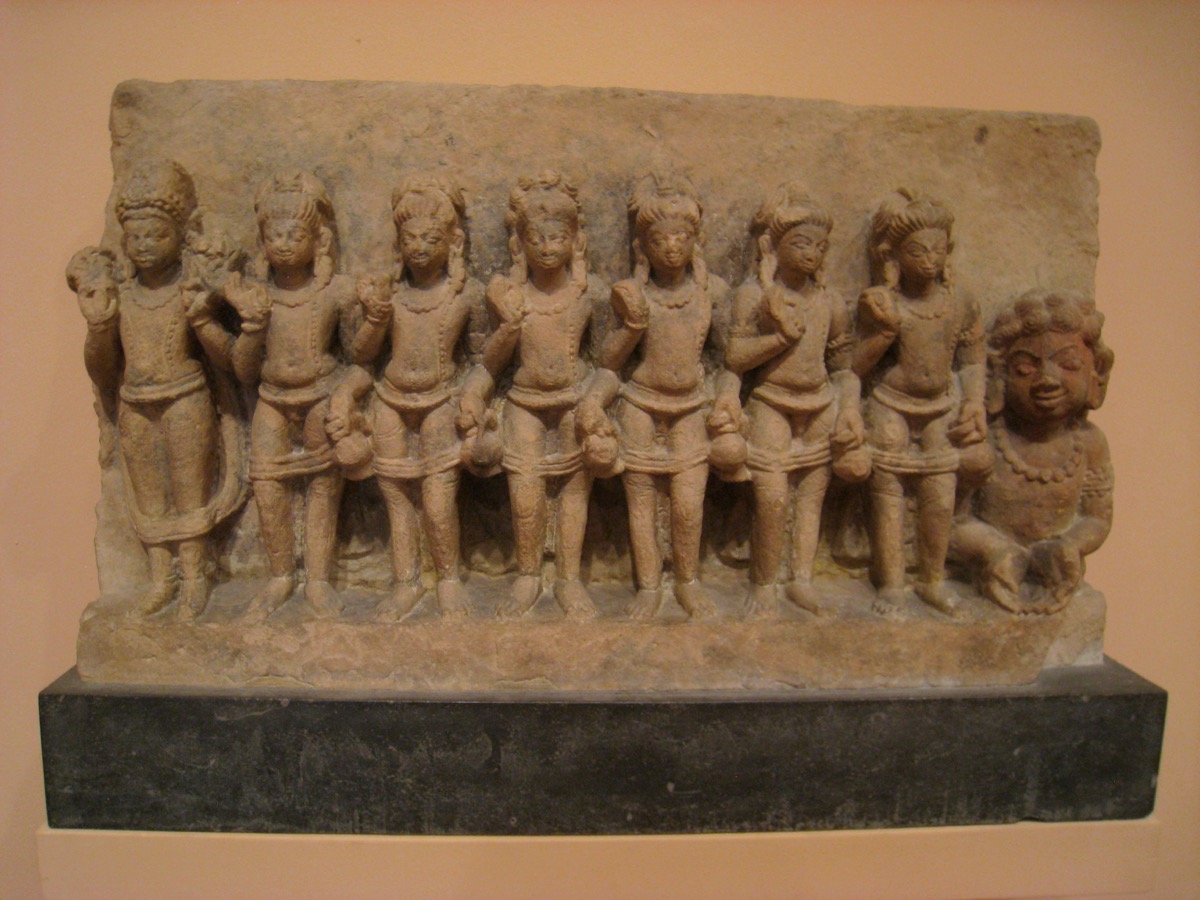
The Navagraha Stotram is one of the most widely recited hymns in Hindu devotional practice, addressed to the nine celestial bodies (Navagraha) that govern human destiny according to Vedic astrology (Jyotiṣa Śāstra). Attributed traditionally to Sage Vyāsa, the compiler of the Vedas and the Mahābhārata, this stotram consists of nine verses — one for each graha — and is chanted to appease planetary influences, mitigate doṣa (afflictions), and invoke cosmic harmony in one’s life.
The word Navagraha derives from Sanskrit: nava (nine) + graha (that which seizes or influences). Unlike the modern astronomical concept of planets, the Hindu grahas include the Sun and Moon as well as two shadow planets (Rāhu and Ketu), reflecting an understanding of celestial bodies as conscious cosmic forces that “grasp” and shape earthly existence.
The Complete Navagraha Stotram
Verse 1 — Sūrya (Sun)
जपाकुसुमसंकाशं काश्यपेयं महद्द्युतिम्। तमोऽरिं सर्वपापघ्नं प्रणतोऽस्मि दिवाकरम्॥
Japākusumasaṃkāśaṃ Kāśyapeyaṃ Mahaddyutim | Tamo’riṃ Sarvapāpaghnaṃ Praṇato’smi Divākaram ||
Meaning: I bow to the Sun (Divākara), who shines like the hibiscus (japā) flower, who is the son of Kaśyapa, who possesses great radiance, who is the enemy of darkness, and who destroys all sins.
Sūrya is the king of the grahas, the Ātmakāraka (significator of the soul). In the Ṛgveda (1.115.1), he is praised as the eye of Mitra and Varuṇa. He governs Sunday (Ravivāra), rules the zodiac sign Siṃha (Leo), and his gemstone is the Ruby (Māṇikya). Sūrya represents authority, vitality, father, government, and self-confidence.
Verse 2 — Chandra (Moon)
दधिशंखतुषाराभं क्षीरोदार्णवसम्भवम्। नमामि शशिनं सोमं शम्भोर्मुकुटभूषणम्॥
Dadhiśaṅkhatuṣārābhaṃ Kṣīrodārṇavasambhavam | Namāmi Śaśinaṃ Somaṃ Śambhormukuṭabhūṣaṇam ||
Meaning: I salute Chandra (the Moon), who has the lustre of curd, conch, and snow, who arose from the Ocean of Milk (Kṣīra Sāgara), and who adorns the crown of Lord Śambhu (Śiva).
Chandra is the Manaskāraka (significator of the mind). The Bṛhadāraṇyaka Upaniṣad (1.5.13) identifies the Moon with manas (mind). He governs Monday (Somavāra), rules Karkaṭa (Cancer), and his gemstone is the Pearl (Muktā). Chandra represents the mind, emotions, mother, fertility, and mental peace.
Verse 3 — Maṅgala (Mars)
धरणीगर्भसम्भूतं विद्युत्कान्तिसमप्रभम्। कुमारं शक्तिहस्तं च मंगलं प्रणमाम्यहम्॥
Dharaṇīgarbhasambhūtaṃ Vidyutkāntisama-prabham | Kumāraṃ Śaktihastaṃ ca Maṅgalaṃ Praṇamāmyaham ||
Meaning: I bow to Maṅgala (Mars), who was born from the womb of the Earth (Dharaṇī), who has the brilliance of lightning, who is youthful (Kumāra), and who holds the weapon Śakti (spear) in his hand.
Maṅgala is the son of Bhūmi Devī (Earth Goddess), hence called Bhaumā. He governs Tuesday (Maṅgalavāra), rules Meṣa (Aries) and Vṛścika (Scorpio), and his gemstone is Red Coral (Pravāla). Mars signifies courage, brothers, landed property, surgery, and martial energy.
Verse 4 — Budha (Mercury)
प्रियंगुकलिकाश्यामं रूपेणाप्रतिमं बुधम्। सौम्यं सौम्यगुणोपेतं तं बुधं प्रणमाम्यहम्॥
Priyaṅgukalikāśyāmaṃ Rūpeṇāpratimaṃ Budham | Saumyaṃ Saumyaguṇopetaṃ Taṃ Budhaṃ Praṇamāmyaham ||
Meaning: I bow to Budha (Mercury), who is dark like the bud of the priyaṅgu plant (beauty-berry), who is of incomparable form, who is gentle (Saumya), and who is endowed with gentle qualities.
Budha is the son of Chandra and Tārā. He governs Wednesday (Budhavāra), rules Mithuna (Gemini) and Kanyā (Virgo), and his gemstone is Emerald (Marakata). Mercury represents intellect, speech, commerce, education, communication, and analytical thinking.
Verse 5 — Bṛhaspati (Jupiter)
देवानां च ऋषीणां च गुरुं काञ्चनसन्निभम्। बुद्धिभूतं त्रिलोकेशं तं नमामि बृहस्पतिम्॥
Devānāṃ ca Ṛṣīṇāṃ ca Guruṃ Kāñcanasannibham | Buddhibhūtaṃ Trilokeśaṃ Taṃ Namāmi Bṛhaspatim ||
Meaning: I bow to Bṛhaspati (Jupiter), who is the preceptor (Guru) of the Devas and Ṛṣis, who is golden in complexion, who is the embodiment of wisdom (Buddhi), and who is the lord of the three worlds.
Bṛhaspati is the Guru of the celestials. The Ṛgveda (4.50) devotes an entire hymn to his glory. He governs Thursday (Guruvāra / Bṛhaspatigāra), rules Dhanus (Sagittarius) and Mīna (Pisces), and his gemstone is Yellow Sapphire (Puṣparāga). Jupiter signifies wisdom, dharma, children, wealth, spiritual knowledge, and the guru.
Verse 6 — Śukra (Venus)
हिमकुन्दमृणालाभं दैत्यानां परमं गुरुम्। सर्वशास्त्रप्रवक्तारं भार्गवं प्रणमाम्यहम्॥
Himakunda-mṛṇālābhaṃ Daityānāṃ Paramaṃ Gurum | Sarvaśāstrapravaktāraṃ Bhārgavaṃ Praṇamāmyaham ||
Meaning: I bow to Śukra (Venus), who has the lustre of snow, jasmine (kunda), and lotus stalks (mṛṇāla), who is the supreme preceptor of the Daityas (asuras), and who is the expounder of all śāstras — Bhārgava, the descendant of Bhṛgu.
Śukra (Śukrācārya) is the Guru of the Asuras, son of Sage Bhṛgu. He governs Friday (Śukravāra), rules Vṛṣabha (Taurus) and Tulā (Libra), and his gemstone is Diamond (Vajra / Hīra). Venus signifies love, marriage, artistic talent, luxury, vehicles, and material pleasures.
Verse 7 — Śani (Saturn)
नीलाञ्जनसमाभासं रविपुत्रं यमाग्रजम्। छायामार्तण्डसम्भूतं तं नमामि शनैश्चरम्॥
Nīlāñjansamābhāsaṃ Raviputraṃ Yamāgrajam | Chāyāmārtaṇḍasambhūtaṃ Taṃ Namāmi Śanaiścaram ||
Meaning: I bow to Śani (Saturn), who has the appearance of blue collyrium (nīlāñjana), who is the son of Sūrya (Ravi), the elder brother of Yama (god of death), who was born of Chāyā and Mārtaṇḍa (the Sun).
Śani is perhaps the most feared and revered of the grahas. His slow movement (śanaiḥ = slowly) across the zodiac gives him his name. He governs Saturday (Śanivāra), rules Makara (Capricorn) and Kumbha (Aquarius), and his gemstone is Blue Sapphire (Nīlam). Saturn signifies discipline, longevity, sorrow, renunciation, servants, and karmic lessons. The period of Sāḍe Sātī (Saturn’s 7.5-year transit over the natal Moon) is considered one of the most significant astrological transits in Jyotiṣa.
Verse 8 — Rāhu (North Lunar Node)
अर्धकायं महावीर्यं चन्द्रादित्यविमर्दनम्। सिंहिकागर्भसम्भूतं तं राहुं प्रणमाम्यहम्॥
Ardhakāyaṃ Mahāvīryaṃ Candrādityavimardanam | Siṃhikāgarbhasambhūtaṃ Taṃ Rāhuṃ Praṇamāmyaham ||
Meaning: I bow to Rāhu, who has half a body, who possesses great valour, who causes the eclipses (vimardana) of the Sun and Moon, and who was born from the womb of Siṃhikā.
Rāhu is the ascending (north) lunar node — a chāyā graha (shadow planet) without a physical body. According to the Samudra Manthana narrative in the Bhāgavata Purāṇa (8.9), the asura Svarbhānu drank the amṛta but was decapitated by Viṣṇu’s Sudarśana Cakra; his head became Rāhu and his trunk became Ketu. Rāhu has no day of his own but is propitiated on Saturday or during eclipses. His gemstone is Hessonite Garnet (Gomedha). Rāhu signifies illusion, obsession, foreign lands, sudden changes, and unconventional pursuits.
Verse 9 — Ketu (South Lunar Node)
पलाशपुष्पसंकाशं तारकाग्रहमस्तकम्। रौद्रं रौद्रात्मकं घोरं तं केतुं प्रणमाम्यहम्॥
Palāśapuṣpasaṃkāśaṃ Tārakāgrahamastakam | Raudraṃ Raudrātmakaṃ Ghoraṃ Taṃ Ketuṃ Praṇamāmyaham ||
Meaning: I bow to Ketu, who resembles the Palāśa (flame-of-the-forest) flower, who is the head (chief) among stars and planets, who is fierce (Raudra), who is of a terrible nature, and who is dreadful.
Ketu is the descending (south) lunar node — the trunk of Svarbhānu. Like Rāhu, Ketu is a shadow planet. He is propitiated on Tuesday or Saturday. His gemstone is Cat’s Eye (Vaidūrya / Lahsuniyā). Ketu signifies mokṣa (liberation), spiritual insight, past-life karma, detachment, sudden loss, and mystical knowledge. In Jyotiṣa, a strong Ketu is considered highly favourable for spiritual advancement.
The Phala Śruti (Benefit Verse)
The stotram concludes with a phala śruti declaring the merit of recitation:
इति व्यासमुखोद्गीतं यः पठेत्सुसमाहितः। दिवा वा यदि वा रात्रौ विघ्नशान्तिर्भविष्यति॥
Iti Vyāsamukhodgītaṃ Yaḥ Paṭhet Susamāhitaḥ | Divā vā Yadi vā Rātrau Vighnaśāntir Bhaviṣyati ||
Meaning: Thus this hymn, sung from the mouth of Vyāsa, when recited with concentration — whether by day or by night — shall bring about the pacification of all obstacles (vighna śānti).
Jyotiṣa and the Navagraha System
The Navagraha system is the cornerstone of Vedic astrology (Jyotiṣa). The Bṛhat Parāśara Horā Śāstra, the foundational text of predictive astrology attributed to Sage Parāśara (father of Vyāsa), devotes its opening chapters to describing the nature, characteristics, and significations of each graha.
The Cosmic Hierarchy
In the Jyotiṣa framework, the nine grahas are classified according to their nature:
- Benefic (Śubha) Grahas: Bṛhaspati (Jupiter), Śukra (Venus), Budha (Mercury — when associated with benefics), and the waxing Chandra (Moon)
- Malefic (Pāpa) Grahas: Sūrya (Sun), Śani (Saturn), Maṅgala (Mars), Rāhu, and Ketu
- Variable: Budha (Mercury) takes on the nature of the planet it associates with
Each graha governs specific houses (bhāvas), signs (rāśis), asterisms (nakṣatras), and periods (daśās) in a horoscope. The Viṃśottarī Daśā system assigns a total of 120 years distributed among the nine grahas: Sūrya (6), Chandra (10), Maṅgala (7), Rāhu (18), Bṛhaspati (16), Śani (19), Budha (17), Ketu (7), and Śukra (20).
Planetary Days and Horas
Each day of the week is governed by a graha, and each hour (horā) of the day rotates through the planetary sequence:
| Day | Sanskrit Name | Ruling Graha | Auspicious For |
|---|---|---|---|
| Sunday | Ravivāra | Sūrya | Worship, authority, health |
| Monday | Somavāra | Chandra | Peace of mind, motherly blessings |
| Tuesday | Maṅgalavāra | Maṅgala | Courage, property, Hanumān pūjā |
| Wednesday | Budhavāra | Budha | Education, business, communication |
| Thursday | Guruvāra | Bṛhaspati | Spiritual study, guru worship |
| Friday | Śukravāra | Śukra | Marriage, arts, Devī worship |
| Saturday | Śanivāra | Śani | Śani pūjā, charity, oil donation |
Navagraha Gemstone Associations
The Navaratna (nine gems) system links each graha to a specific precious stone, believed to channel and harmonise planetary energies when worn on the correct finger in a specific metal:
| Graha | Gemstone | Sanskrit | Metal | Finger |
|---|---|---|---|---|
| Sūrya | Ruby | Māṇikya | Gold | Ring |
| Chandra | Pearl | Muktā | Silver | Little |
| Maṅgala | Red Coral | Pravāla | Gold/Copper | Ring |
| Budha | Emerald | Marakata | Gold | Little |
| Bṛhaspati | Yellow Sapphire | Puṣparāga | Gold | Index |
| Śukra | Diamond | Vajra | Platinum/Silver | Middle |
| Śani | Blue Sapphire | Nīlam | Iron/Gold | Middle |
| Rāhu | Hessonite Garnet | Gomedha | Silver | Middle |
| Ketu | Cat’s Eye | Vaidūrya | Gold | Ring |
The Bṛhat Saṃhitā of Varāhamihira (chapter 80) discusses the properties of gems and their planetary rulers, forming the basis of the ratna śāstra (science of gems) tradition.
The Navagraha Temples of Tamil Nadu
Tamil Nadu is home to the renowned Navagraha Sthala — nine ancient Śiva temples, each dedicated to one of the nine planetary deities. These temples, mostly situated along the Kāvērī river basin in the Tañjāvūr (Thanjavur) district, date to the Chola dynasty period (9th-13th centuries CE) and are among the most important pilgrimage sites for those seeking graha śānti (planetary pacification).
- Sūryanār Koil (Sūrya) — Tirunallar vicinity; enshrines Sūrya as the presiding graha
- Thingaloor / Kailasanathar Temple (Chandra) — Near Kumbakonam; Chandra worshipped Śiva here to be cured of a curse
- Vaitheeswaran Koil (Maṅgala / Mars) — One of the most visited; famed for its Nāḍī Jyotiṣa (palm-leaf astrology) tradition
- Tiruvenkadu / Swetharanyeswarar Temple (Budha) — Budha is believed to have worshipped Śiva here
- Alangudi / Āpatsahāyeswarar Temple (Bṛhaspati) — Jupiter worshipped Śiva for relief from a curse by Indra
- Kanjanur / Agneeswarar Temple (Śukra) — Śukrācārya performed penance here
- Tirunallar / Darbaranyeswarar Temple (Śani) — The most famous Śani temple; King Nala’s Śani affliction was relieved here (Nala-Damayantī story from the Mahābhārata)
- Tirunageswaram / Rāhu Sthalam (Rāhu) — Contains the famous Rāhu Kāla pūjā tradition
- Keezhaperumpallam / Nāganāthaswāmī Temple (Ketu) — Ketu worshipped Śiva for spiritual liberation
Pilgrims traditionally visit all nine temples in a specific sequence, often completing the circuit in a single day or over a weekend, to obtain comprehensive graha doṣa nivāraṇa (removal of all planetary afflictions).
Remedial Uses and Ritual Practice
When to Recite
The Navagraha Stotram is particularly recommended:
- During planetary transits (gocarā) — especially Sāḍe Sātī (Saturn’s transit over natal Moon), Rāhu-Ketu transits, and Jupiter’s transit through the 8th or 12th house
- During eclipses (grahaṇa) — solar and lunar eclipses are considered powerful times for graha śānti recitation
- On the respective planetary day — e.g., reciting the Sūrya verse on Sundays, the Śani verse on Saturdays
- Before important undertakings — marriages, house-warming (gṛha praveśa), business launches, and examinations
- As part of daily pūjā — many practitioners include the Navagraha Stotram in their daily morning worship
Ritual Method
The traditional method of recitation involves:
- Sankalpa — Declaring one’s intention and the specific graha doṣa to be addressed
- Āvāhana — Invoking the nine grahas, ideally before images or a Navagraha yantra
- Stotram Pāṭha — Reciting the nine verses with clear pronunciation and devotion
- Japa — Advanced practitioners may follow with 108 repetitions of the specific graha’s bīja mantra:
- Sūrya: Oṃ Hrāṃ Hrīṃ Hrauṃ Saḥ Sūryāya Namaḥ
- Chandra: Oṃ Śrāṃ Śrīṃ Śrauṃ Saḥ Candrāya Namaḥ
- Maṅgala: Oṃ Krāṃ Krīṃ Krauṃ Saḥ Bhaumāya Namaḥ
- Budha: Oṃ Brāṃ Brīṃ Brauṃ Saḥ Budhāya Namaḥ
- Bṛhaspati: Oṃ Grāṃ Grīṃ Grauṃ Saḥ Gurave Namaḥ
- Śukra: Oṃ Drāṃ Drīṃ Drauṃ Saḥ Śukrāya Namaḥ
- Śani: Oṃ Prāṃ Prīṃ Prauṃ Saḥ Śanaiścarāya Namaḥ
- Rāhu: Oṃ Bhāṃ Bhīṃ Bhauṃ Saḥ Rāhave Namaḥ
- Ketu: Oṃ Srāṃ Srīṃ Srauṃ Saḥ Ketave Namaḥ
- Visarjana — Concluding with prayers for peace and cosmic harmony
Charitable Remedies (Dāna)
Each graha is associated with specific items for charitable donation as a remedial measure:
- Sūrya: Wheat, jaggery, red cloth, copper vessel
- Chandra: Rice, white cloth, silver, milk
- Maṅgala: Red lentils (masūra dāl), jaggery, red cloth
- Budha: Green gram (mūṅg dāl), green cloth, bronze
- Bṛhaspati: Chickpeas (chanā dāl), yellow cloth, gold, turmeric
- Śukra: White rice, white cloth, silver, ghee, camphor
- Śani: Black sesame (til), mustard oil, iron, blue/black cloth
- Rāhu: Black gram (urad dāl), coconut, blue cloth
- Ketu: Blanket, seven grains (sapta dhānya), flag
Scriptural Context and Philosophical Significance
The Navagraha system reflects the profound Hindu understanding that human beings exist within an interconnected cosmic web. The Bṛhadāraṇyaka Upaniṣad (3.9.5) references celestial bodies as aspects of the divine, while the Chāndogya Upaniṣad (5.10.1-2) describes the cosmic path of the departed soul through various celestial regions governed by these luminaries.
From the philosophical perspective of Advaita Vedānta, the grahas are understood not as independent powers controlling human fate but as instruments of one’s own karma. Śrī Śaṅkarācārya, while not denying the influence of celestial bodies, taught that ultimate liberation (mokṣa) transcends all planetary influences. The Navagraha Stotram, in this view, is a devotional practice that cultivates surrender to the divine order (Ṛta) while simultaneously purifying the mind through focused recitation.
The Bhagavad Gītā (9.25) provides the broader framework: “Those who worship the Devas go to the Devas.” By worshipping the Navagrahas with understanding and devotion, the practitioner aligns with the cosmic intelligence that governs the rhythms of time, seasons, and destiny — not as a fatalistic submission but as an awakened participation in the divine dance of the universe.