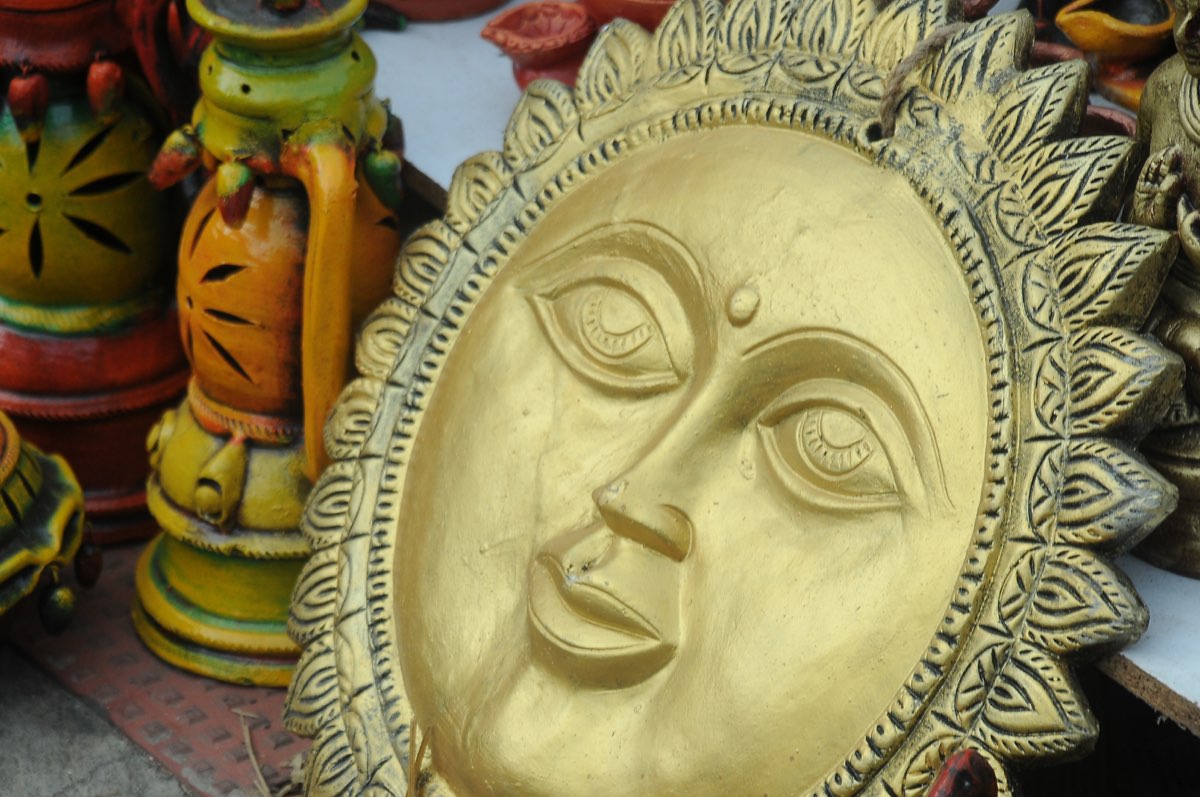
The Ādityahṛdayam (“The Heart of Āditya”) is one of the most revered hymns in Hindu scripture, enshrined within the Yuddha Kāṇḍa (Book of War) of Vālmīki’s Rāmāyaṇa (Sarga 107, verses 1–31 in most recensions). This sacred composition was taught by the great sage Agastya to Śrī Rāma on the battlefield of Laṅkā, at the critical moment when Rāma stood exhausted and contemplative before his final confrontation with the demon-king Rāvaṇa. Through this hymn, Agastya reveals the supreme nature of Sūrya — the Sun — as the cosmic power that sustains all life, vanquishes darkness, and grants victory to the righteous.
The Narrative Context
Rāma on the Battlefield
The scene opens at the climax of the great war. Rāma has already battled countless rākṣasa warriors — Kumbhakarṇa, Indrajit, and wave after wave of Rāvaṇa’s forces. Now, standing on the field at Laṅkā with Rāvaṇa himself approaching for the final combat, Rāma is described as yuddhaparishrānta — exhausted by battle — and cintayā sthita — absorbed in anxious thought.
At this moment, the divine sage Agastya, who has come to witness the battle along with the assembled devas, approaches Rāma and addresses him:
ततो युद्धपरिश्रान्तं समरे चिन्तया स्थितम् । रावणं चाग्रतो दृष्ट्वा युद्धाय समुपस्थितम् ॥१॥
Tato yuddhaparishrāntaṃ samare cintayā sthitam | Rāvaṇaṃ cāgrato dṛṣṭvā yuddhāya samupasthitam ||1||
Translation: “Then, seeing Rāma exhausted in battle and standing lost in thought on the field, and seeing Rāvaṇa before him ready for combat…”
दैवतैश्च समागम्य द्रष्टुमभ्यागतो रणम् । उपागम्याब्रवीद्राममगस्त्यो भगवानृषिः ॥२॥
Daivataishca samāgamya draṣṭumabhyāgato raṇam | Upāgamyābravīdrāmam Agastyo bhagavān ṛṣiḥ ||2||
Translation: “The blessed sage Agastya, who had come with the gods to witness the battle, approached Rāma and spoke thus.”
Agastya’s Teaching
Agastya then reveals the Ādityahṛdayam — the “secret heart” (hṛdayam) of the Sun — as the means by which Rāma will overcome all enemies and attain victory. This is significant: at the moment of greatest crisis, the solution offered is not a weapon or military stratagem but a hymn of devotion and cosmological truth.
The Structure of the Hymn
The Ādityahṛdayam comprises approximately 31 ślokas composed primarily in the anuṣṭubh metre (eight syllables per quarter-verse, the most common Vedic and epic metre). The hymn can be divided into four sections:
- Verses 1–4: The narrative frame — Agastya approaches Rāma
- Verses 5–23: The hymn proper — the names, attributes, and cosmic functions of Sūrya
- Verses 24–27: The phalaśruti — the benefits of recitation and the method of worship
- Verses 28–31: Rāma’s recitation and its result — victory over Rāvaṇa
Key Verses with Translation
The Invocation (Verse 5)
आदित्यहृदयं पुण्यं सर्वशत्रुविनाशनम् । जयावहं जपेन्नित्यम् अक्षय्यं परमं शिवम् ॥५॥
Ādityahṛdayaṃ puṇyaṃ sarvaśatruvināśanam | Jayāvahaṃ japennityam akṣayyaṃ paramaṃ śivam ||5||
Translation: “This holy Ādityahṛdayam destroys all enemies. It brings victory. One who recites it daily attains imperishable, supreme auspiciousness.”
The Supreme Nature of Sūrya (Verses 6–8)
सर्वमङ्गलमाङ्गल्यं सर्वपापप्रणाशनम् । चिन्ताशोकप्रशमनम् आयुर्वर्धनमुत्तमम् ॥६॥
Sarvamaṅgalamāṅgalyaṃ sarvapāpapraṇāśanam | Cintāśokapraśamanam āyurvardhanamuttamam ||6||
Translation: “It is the most auspicious among all auspicious things, the destroyer of all sins, the remover of all anxiety and sorrow, and the supreme bestower of longevity.”
रश्मिमन्तं समुद्यन्तं देवासुरनमस्कृतम् । पूजयस्व विवस्वन्तं भास्करं भुवनेश्वरम् ॥७॥
Raśmimantaṃ samudyantaṃ devāsuranamaskṛtam | Pūjayasva vivasvantaṃ bhāskaraṃ bhuvaneśvaram ||7||
Translation: “Worship Him — the radiant one who rises, who is saluted by both devas and asuras, the luminous Vivasvān, the light-maker, the lord of the worlds.”
The Thousand Names (Verses 9–15)
In the central section, Agastya enumerates the many names and aspects of Sūrya, each revealing a different dimension of the solar deity’s cosmic function:
सर्वदेवात्मको ह्येष तेजस्वी रश्मिभावनः । एष देवासुरगणांल्लोकान् पाति गभस्तिभिः ॥९॥
Sarvadevātmako hyeṣa tejasvī raśmibhāvanaḥ | Eṣa devāsura-gaṇāṃl lokān pāti gabhastibhiḥ ||9||
Translation: “He is indeed the embodiment of all gods, resplendent, the nourisher through His rays. He protects the hosts of devas and asuras and all the worlds with His beams.”
Key names and epithets enumerated in the hymn include:
- Āditya — Son of Aditi, the boundless cosmic mother
- Savitṛ — The impeller, the vivifying force
- Sūrya — The supreme light
- Bhāskara — The maker of light
- Vivasvān — The shining one
- Bhānu — Radiance itself
- Arka — The ray, the worshipped one
- Mārīci — Ray of light (also the name of a Prajāpati)
- Āditya — Belonging to the infinite
- Tvaṣṭṛ — The divine craftsman
- Pūṣan — The nourisher
- Mitra — The friend, the keeper of cosmic order (ṛta)
- Dhātṛ — The sustainer
- Hiraṇyagarbha — The golden womb, the cosmic embryo
Sūrya as the Cosmic Self (Verses 13–15)
एष ब्रह्मा च विष्णुश्च शिवः स्कन्दः प्रजापतिः । महेन्द्रो धनदः कालो यमः सोमो ह्यपां पतिः ॥१३॥
Eṣa brahmā ca viṣṇuśca śivaḥ skandaḥ prajāpatiḥ | Mahendro dhanadaḥ kālo yamaḥ somo hyapāṃ patiḥ ||13||
Translation: “He is Brahmā, He is Viṣṇu, He is Śiva, He is Skanda, He is Prajāpati. He is Mahendra, Kubera, Kāla (Time), Yama, Soma, and the Lord of Waters.”
This verse is theologically significant because it identifies Sūrya not as one deity among many but as the manifest form of the Supreme Brahman — the One who appears as all the gods. This aligns with the Vedic understanding expressed in the Ṛgveda (1.164.46): ekaṃ sad viprā bahudhā vadanti — “The wise call the One Reality by many names.”
पितरो वसवः साध्या ह्यश्विनौ मरुतो मनुः । वायुर्वह्निः प्रजाप्राणा ऋतुकर्ता प्रभाकरः ॥१४॥
Pitaro vasavaḥ sādhyā hyaśvinau maruto manuḥ | Vāyurvahniḥ prajāprāṇā ṛtukartā prabhākaraḥ ||14||
Translation: “He is the Pitṛs (ancestors), the Vasus, the Sādhyas, the Aśvins, the Maruts, and Manu. He is Vāyu (wind), Agni (fire), the life-breath of all beings, the maker of seasons, and the source of light.”
The Prayer for Victory (Verses 22–24)
एनमापत्सु कृच्छ्रेषु कान्तारेषु भयेषु च । कीर्तयन् पुरुषः कश्चिन्नावसीदति राघव ॥२२॥
Enamāpatsu kṛcchreṣu kāntāreṣu bhayeṣu ca | Kīrtayan puruṣaḥ kaścinnāvasīdati Rāghava ||22||
Translation: “O Rāghava, any person who glorifies this Sun in times of distress, in hardship, in the wilderness, or in fear, shall never be overcome.”
पूजयस्वैनमेकाग्रे देवदेवं जगत्पतिम् । एतत्त्रिगुणितं जप्त्वा युद्धेषु विजयिष्यसि ॥२३॥
Pūjayasvainamekāgre devadevaṃ jagatpatim | Etattriguṇitaṃ japtvā yuddheṣu vijayiṣyasi ||23||
Translation: “Worship this God of gods, the Lord of the universe, with single-pointed concentration. Having chanted this hymn thrice, you shall be victorious in battle.”
Rāma’s Victory (Verses 28–31)
एवं कृत्वा ततो युद्धे सूर्यमालोक्य राघवः । ततो युद्धाय संरब्धो रावणं गन्तुमभ्यगात् ॥
Translation: “Having done thus, Rāghava (Rāma), gazing at the Sun on the battlefield, went forth with renewed vigour to engage Rāvaṇa in combat.”
The hymn concludes with Rāma, having recited the Ādityahṛdayam three times and sipped water (ācamana) for purification, feeling his heart filled with supreme joy. He then takes up his bow and advances toward Rāvaṇa, ultimately slaying the demon-king and restoring cosmic order (dharma).
Philosophical Significance
Sūrya as Pratyakṣa Brahman
The Vedic tradition uniquely identifies the Sun as pratyakṣa Brahman — the directly perceptible form of the Absolute. Unlike other aspects of Brahman that must be apprehended through scripture or meditation, the Sun is visible to all beings every day. The Chāndogya Upaniṣad (3.19.1) declares: ādityo brahmety ādeśaḥ — “The teaching is that the Sun is Brahman.”
The Ādityahṛdayam builds on this Vedic foundation by presenting Sūrya as the embodiment of all divine powers. This is not mere poetic exaggeration but reflects the Upaniṣadic understanding that all phenomenal distinctions — the many gods, the many worlds — are ultimately expressions of a single luminous Reality.
The Symbolism of Light and Darkness
At the narrative level, Rāma’s battle with Rāvaṇa is a confrontation between dharma and adharma. At the symbolic level, it is the eternal struggle between light (jyotis) and darkness (tamas). The Ādityahṛdayam explicitly invokes the Sun — the supreme source of physical and spiritual light — as the power that dispels both outer and inner darkness.
The Bṛhadāraṇyaka Upaniṣad (1.3.28) prays: tamaso mā jyotir gamaya — “Lead me from darkness to light.” The Ādityahṛdayam is, in essence, a dramatic enactment of this prayer on the battlefield of Laṅkā.
Agastya: The Bridge Between Worlds
The choice of Agastya as the teacher of this hymn is significant. Agastya is one of the Saptarṣis (Seven Great Sages) and is particularly associated with the southern regions of India. According to the Ṛgveda (1.179), Agastya is born from a kumbha (pot) placed before Mitra and Varuṇa. He is credited with:
- Drinking the ocean to expose the hiding rākṣasas (Mahābhārata, Vana Parva 104)
- Subduing the Vindhya mountains to allow the Sun’s passage southward
- Bringing Vedic civilization to southern India
- Composing hymns in the Ṛgveda (Maṇḍala 1, Sūktas 166–191)
Agastya’s role as the intermediary who transmits solar wisdom to Rāma reflects his function as a bridge between the celestial and terrestrial realms, between Vedic knowledge and practical application.
Recitation Practice
Traditional Method
The traditional method of reciting the Ādityahṛdayam follows Agastya’s own instruction to Rāma:
- Face east toward the rising sun (ideally at dawn)
- Perform ācamana — ritual sipping of water for purification
- Recite the hymn three times (triguṇitam), as prescribed in verse 23
- Offer arghya — oblation of water to the Sun
- Conclude with namaskāra — prostration to Sūrya
Occasions for Recitation
The Ādityahṛdayam is especially recited on:
- Ratha Saptamī — the seventh day of the bright fortnight of Māgha month, celebrating Sūrya’s chariot
- Makara Saṅkrānti — the Sun’s northward transit
- Sundays — the day of Sūrya
- Before any important undertaking — examinations, journeys, battles (metaphorical or literal)
- During illness — the hymn’s phalaśruti promises health and longevity
Spiritual Benefits
The phalaśruti (Verses 24–27) promises that regular recitation will:
- Destroy all enemies, both outer and inner (verse 5)
- Remove all sins (sarvapāpapraṇāśanam, verse 6)
- Eliminate anxiety and sorrow (cintāśokapraśamanam, verse 6)
- Grant supreme auspiciousness (paramaṃ śivam, verse 5)
- Bestow victory in all endeavours (vijayiṣyasi, verse 23)
- Grant longevity and health (āyurvardhanam, verse 6)
The Ādityahṛdayam in the Broader Tradition
The worship of Sūrya has ancient Vedic roots. The Ṛgveda contains numerous hymns to Sūrya and Savitṛ, and the Gāyatrī Mantra (Ṛgveda 3.62.10) — the holiest verse in Hinduism — is itself a prayer to the solar divinity. The Ādityahṛdayam extends this solar theology into the epic tradition, making it accessible within the narrative framework of the Rāmāyaṇa.
The hymn also connects to the tradition of Sūrya Namaskāra (Sun Salutation), the yogic practice of twelve postures performed facing the sun, each accompanied by a mantra invoking one of Sūrya’s twelve names. The twelve Ādityas — Dhātṛ, Mitra, Aryaman, Rudra, Varuṇa, Sūrya, Bhaga, Vivasvān, Pūṣan, Savitṛ, Tvaṣṭṛ, and Viṣṇu — are all acknowledged within the Ādityahṛdayam’s comprehensive vision of solar divinity.
In the living tradition of Hinduism, the Ādityahṛdayam remains one of the most frequently recited stotras, chanted daily by millions who, like Rāma on the field of Laṅkā, seek the light of the Sun to dispel the darkness of fear, ignorance, and adversity.