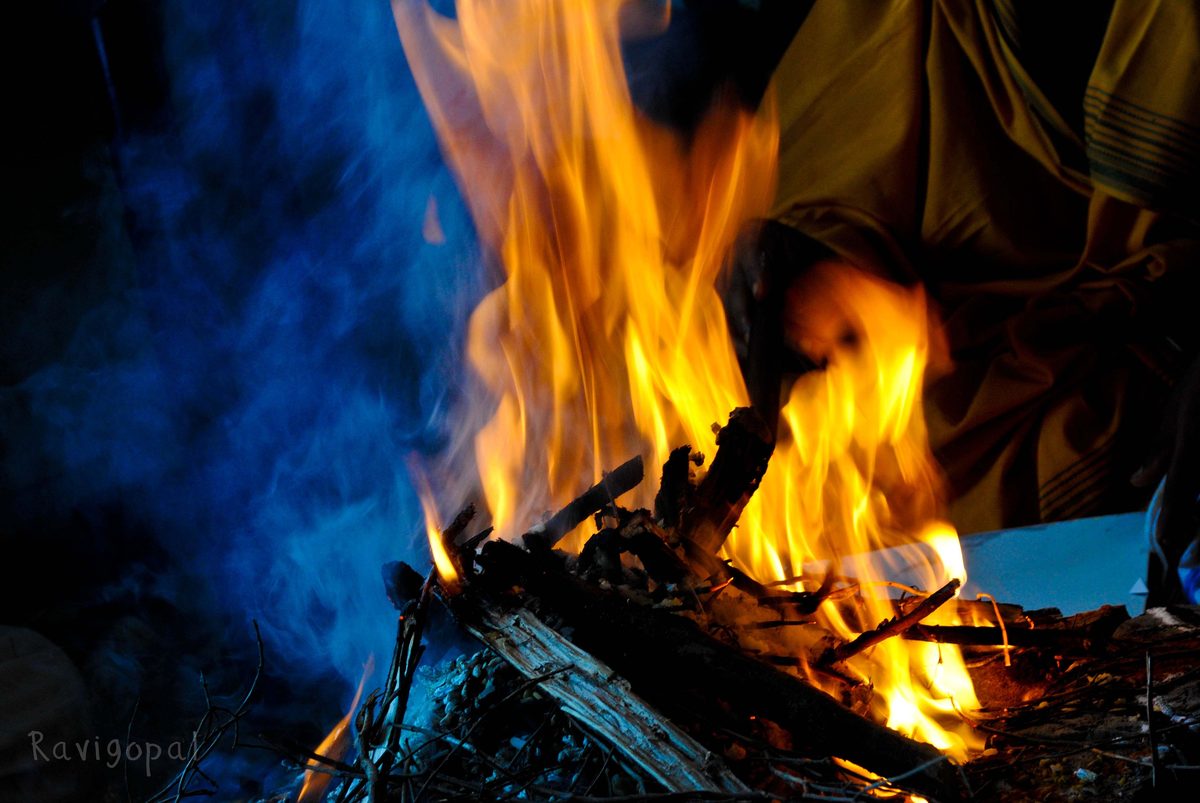
The Pavamāna Mantra, beginning with the immortal words asato mā sadgamaya, is one of the most widely recited prayers in the Hindu tradition. Found in Bṛhadāraṇyaka Upaniṣad 1.3.28, it consists of three entreaties that together form a complete spiritual aspiration — the soul’s yearning to move from ignorance to knowledge, from the transient to the eternal.
The Complete Mantra
ॐ असतो मा सद्गमय । तमसो मा ज्योतिर्गमय । मृत्योर्मा अमृतं गमय । ॐ शान्तिः शान्तिः शान्तिः ॥
oṃ asato mā sadgamaya | tamaso mā jyotirgamaya | mṛtyormā amṛtaṃ gamaya | oṃ śāntiḥ śāntiḥ śāntiḥ ||
Translation:
- From the unreal, lead me to the Real.
- From darkness, lead me to Light.
- From death, lead me to Immortality.
- Oṃ — Peace, Peace, Peace.
The Upaniṣadic Context
The Pavamāna Mantra appears within a remarkable philosophical narrative in the first adhyāya of the Bṛhadāraṇyaka Upaniṣad, the largest and arguably the most philosophically profound of the classical Upaniṣads. This Upaniṣad belongs to the Śatapatha Brāhmaṇa of the Śukla Yajurveda (White Yajurveda), specifically the Kāṇva recension.
The immediate context is a discussion about the cosmic battle between the devas (gods) and the asuras (demons), understood as an allegory for the inner struggle between illuminating and obscuring forces within the human being. The Upaniṣad narrates how the devas sought to overcome the asuras through the power of the udgītha (the sacred chant of the Sāma Veda). Each sense faculty — speech, smell, sight, hearing, and mind — attempted to chant the udgītha, but each was pierced by the asuras with evil. Only when Prāṇa (the vital breath) undertook the chant were the asuras scattered, for Prāṇa alone is untouched by evil (Bṛhadāraṇyaka Upaniṣad 1.3.1–7).
It is within this narrative of purification through Prāṇa that the three Pavamāna prayers emerge. The word pavamāna itself derives from the root pū (“to purify”), and these verses are called pavamāna because they are recited during the purificatory rites — they are prayers that purify the one who chants them (Bṛhadāraṇyaka Upaniṣad 1.3.28).
The Three Prayers Explained
Asato Mā Sadgamaya — From the Unreal to the Real
asato mā sadgamaya “From the unreal (asat), lead me to the Real (sat).”
The first prayer addresses the fundamental metaphysical distinction in Vedāntic philosophy: the difference between asat (the unreal, the non-existent, the phenomenally apparent) and sat (the Real, Being itself, Brahman). Ādi Śaṅkarācārya, in his bhāṣya (commentary) on this verse, explains that asat refers to mṛtyu (death) — the entire realm of saṃsāric existence that is subject to change, decay, and dissolution. Sat, by contrast, is amṛta (the immortal) — that which never ceases to be (Śaṅkara Bhāṣya on Bṛhadāraṇyaka Upaniṣad 1.3.28).
In Advaita Vedānta, the world of names and forms (nāma-rūpa) is considered mithyā — not absolutely real, not absolutely unreal, but a superimposition upon the one non-dual reality, Brahman. The prayer is thus a plea to move from identification with the ephemeral body-mind complex to recognition of one’s identity as Ātman, which is identical with Brahman — the sole reality proclaimed in the mahāvākya tat tvam asi (“That thou art,” Chāndogya Upaniṣad 6.8.7).
Tamaso Mā Jyotirgamaya — From Darkness to Light
tamaso mā jyotirgamaya “From darkness (tamas), lead me to Light (jyoti).”
The second prayer moves from ontology to epistemology. Tamas here signifies spiritual ignorance (avidyā), the veiling power (āvaraṇa śakti) that conceals the true nature of the Self. Jyoti is the light of knowledge (jñāna), specifically ātma-jñāna — Self-knowledge that dispels the darkness of nescience.
Śaṅkarācārya identifies tamas with mṛtyu (death) as well, since ignorance is the root cause of the cycle of birth and death. He writes: “tama iti mṛtyurevaitattamasaḥ; jyotiriti amṛtam” — “Darkness is verily death; light is immortality” (Śaṅkara Bhāṣya on Bṛhadāraṇyaka Upaniṣad 1.3.28). The Upaniṣadic metaphor of light and darkness is pervasive throughout Vedic literature. The Ṛg Veda itself opens with an invocation to Agni, the divine fire and light. The Muṇḍaka Upaniṣad (2.2.10) declares: “tameva bhāntam anubhāti sarvam, tasya bhāsā sarvam idaṃ vibhāti” — “Everything shines only after Him who shines; by His light all this is illumined.”
This prayer is particularly significant in the context of the guru-śiṣya paramparā (teacher-student tradition), where the guru is regarded as one who leads the student from the darkness of ignorance to the light of Self-realization. The very word guru is etymologized in the Advaya Tāraka Upaniṣad as: “gu-śabdas tv andhakāraḥ syāt, ru-śabdas tan-nirodhakaḥ” — “The syllable gu means darkness, the syllable ru means its dispeller.”
Mṛtyormā Amṛtaṃ Gamaya — From Death to Immortality
mṛtyormā amṛtaṃ gamaya “From death (mṛtyu), lead me to Immortality (amṛta).”
The third prayer is the culmination and synthesis of the first two. Mṛtyu (death) encompasses all that the first two prayers address — unreality and darkness are both forms of spiritual death. Amṛta (immortality, literally “the deathless”) is not mere continuation of individual existence but the realization of one’s true nature as Brahman, which was never born and therefore can never die.
Śaṅkarācārya explains that these three prayers are not three separate requests but three expressions of the same fundamental aspiration, viewed from different angles. He clarifies: “asadeva mṛtyuḥ, tad anu asat, tamo bhavati” — “Death itself is unreality; unreality entails darkness” (Śaṅkara Bhāṣya on Bṛhadāraṇyaka Upaniṣad 1.3.28). The progression is logical: what is unreal is shrouded in darkness, and what is shrouded in darkness leads to death (the cycle of repeated transmigration). Conversely, to know the Real is to see the Light, and to see the Light is to attain Immortality.
The Kaṭha Upaniṣad (1.2.18) supports this understanding: “na jāyate mriyate vā vipaścit” — “The knowing Self is neither born nor does it die.” Immortality, in the Upaniṣadic framework, is not something gained anew but something eternally present, merely obscured by ignorance.
The Bṛhadāraṇyaka Upaniṣad in Vedic Literature
The Bṛhadāraṇyaka Upaniṣad holds a position of supreme importance in Hindu philosophical literature. As part of the Śukla Yajurveda, it belongs to the jñāna-kāṇḍa (knowledge section) of the Vedas. The word bṛhat means “great” or “vast,” and āraṇyaka means “forest text” — indicating it was traditionally studied in the seclusion of the forest by those pursuing the highest knowledge.
The Upaniṣad is divided into six adhyāyas (chapters), further subdivided into brāhmaṇas (sections). The first two adhyāyas, called the Madhu Kāṇḍa (Honey Section), deal with the mutual dependence of all things and the identity of Ātman and Brahman. The Pavamāna Mantra falls within this section.
This Upaniṣad contains some of the most celebrated passages in all of Indian philosophy, including:
- The Maitreyī-Yājñavalkya dialogue on the nature of the Self (2.4 and 4.5)
- The declaration ahaṃ brahmāsmi (“I am Brahman,” 1.4.10), one of the four mahāvākyas
- The teaching of neti neti (“not this, not this,” 2.3.6) as the method of defining Brahman by negation
- The Gārgyī-Yājñavalkya debate on the ultimate substratum of reality (3.6 and 3.8)
Śaṅkarācārya’s Commentary
Ādi Śaṅkarācārya (c. 788–820 CE), the great systematizer of Advaita Vedānta, wrote an extensive bhāṣya on the entire Bṛhadāraṇyaka Upaniṣad. His commentary on the Pavamāna Mantra is notable for its insistence that the three lines are not merely devotional sentiments but precise philosophical statements.
Śaṅkara emphasizes that the prayer is addressed to the inner controller (antaryāmin) — Brahman as the indwelling Self — not to an external deity. The movement from asat to sat is not a physical journey but the removal of superimposed ignorance (adhyāsa-nivṛtti). Once ignorance is removed, what remains is what has always been: the self-luminous Ātman, identical with Brahman.
He also notes the connection between this mantra and the broader context of the prāṇa-vidyā (knowledge of the vital breath) in the first chapter. Just as Prāṇa alone could perform the udgītha without being corrupted by evil, so too the aspirant who realizes the Self transcends the duality of good and evil, real and unreal, light and darkness, life and death.
Ritual and Devotional Use
The Pavamāna Mantra is recited across a wide range of Hindu religious contexts:
- Sandhyāvandana: Many practitioners include this mantra in their daily twilight prayers.
- Yajña and Homa: The mantra is chanted during fire rituals as part of the purificatory oblations, staying true to its name as a pavamāna (purifying) hymn.
- Upanayana and Vedic Initiation: The prayer is often chanted during the sacred thread ceremony, marking the beginning of Vedic study.
- Funeral Rites (Antyeṣṭi): The mantra accompanies the departed soul, as a prayer for liberation from the cycle of death and rebirth.
- Meditation and Japa: Practitioners use the mantra as a meditative focus, contemplating the meaning of each line as a progression in spiritual realization.
The threefold repetition of śāntiḥ (peace) at the end is a standard Vedic convention. The three repetitions invoke peace against the three types of affliction (tāpatraya): ādhidaivika (divine or cosmic), ādhibhautika (physical or environmental), and ādhyātmika (personal or psychological).
Universal Resonance
The Pavamāna Mantra has achieved a remarkable universality beyond its strictly Vedic origins. Its appeal lies in the simplicity and depth of its aspiration — every human being, regardless of tradition, can identify with the desire to move from confusion to clarity, from fear to freedom, from mortality to the eternal.
The mantra reminds us that the spiritual journey is fundamentally one of recognition rather than acquisition. We do not need to become something we are not; we need only to shed the layers of misidentification. As the Chāndogya Upaniṣad (6.10.3) teaches: “sa ya eṣo’ṇimā aitadātmyam idaṃ sarvam, tat satyam, sa ātmā, tat tvam asi” — “That which is the finest essence, this whole world has that as its Self. That is the Real. That is the Self. That art thou.”
In the words of this ancient prayer, the entire path of Vedānta is encapsulated: turn from the unreal to the Real, from darkness to Light, from death to the Deathless — and abide in the peace that surpasses all understanding.
Scripture References
- Bṛhadāraṇyaka Upaniṣad 1.3.28 (source of the Pavamāna Mantra)
- Bṛhadāraṇyaka Upaniṣad 1.3.1–7 (context: the devas and asuras)
- Bṛhadāraṇyaka Upaniṣad 1.4.10 (ahaṃ brahmāsmi)
- Chāndogya Upaniṣad 6.8.7 (tat tvam asi)
- Kaṭha Upaniṣad 1.2.18 (the Self is unborn and undying)
- Muṇḍaka Upaniṣad 2.2.10 (all things shine by His light)