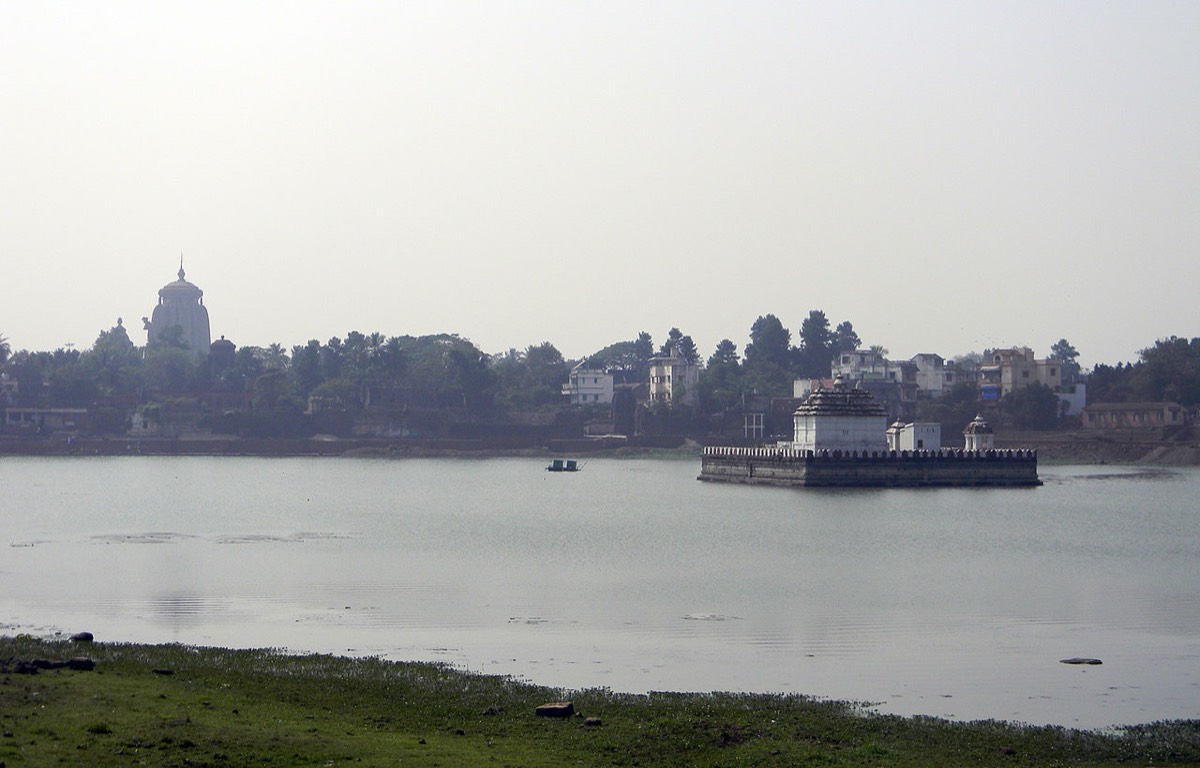
Lingarāja Temple (ଲିଙ୍ଗରାଜ ମନ୍ଦିର / लिंगराज मंदिर) rises majestically to a height of 55 meters (180 feet) above the sacred waters of Bindu Sāgara in the heart of Bhubaneswar, the capital of Odisha. This extraordinary temple, dating primarily to the 11th century CE, is universally recognized as the finest and most complete example of Kalinga temple architecture — the distinctive regional style of temple building that developed in eastern India over nearly a millennium. Dedicated to Lord Śiva as Tribhuvanēśvara (“Lord of Three Worlds”), with a unique theological synthesis that also incorporates the worship of Viṣṇu as Harihara, the Lingarāja Temple is the spiritual anchor of what was once a vast sacred landscape of over 7,000 temples, earning Bhubaneswar the enduring epithet of Ekāmra Kṣetra — the “Field of the Single Mango Tree” — and its modern designation as the “Temple City of India.”
The Sacred Landscape of Ekāmra Kṣetra
Bhubaneswar’s identity as a sacred city predates the Lingarāja Temple by many centuries. The Ekāmra Purāṇa, a local māhātmya (glorification text) dating to the 13th century but recording far older traditions, describes the city as one of the holiest sites in all of India — a kṣetra where Śiva himself chose to reside beneath a magnificent mango tree (ekāmra). The text declares: “Even the gods desire to be born in Ekāmra Kṣetra, for here the very dust grants liberation.”
The Bindu Sāgara (also called Bindu Sārovara), the large sacred tank that lies immediately north of the Lingarāja Temple, is described in the Ekāmra Purāṇa as containing drops (bindu) of water from every sacred river and water body in India. Ritual bathing in this tank before worshipping at Lingarāja is considered equivalent to performing pilgrimages to all the sacred waters (tīrthas) of the subcontinent. The tank, measuring approximately 450 meters by 170 meters, remains an active site of religious bathing and ritual, particularly during the festival of Aśokaṣṭamī.
Historical Development
While the exact date of the Lingarāja Temple’s construction is debated among scholars, the consensus places the principal phase of building during the reign of the Somavaṃśī (Soma dynasty) kings, specifically between approximately 1025 and 1060 CE, with subsequent additions and modifications by the Eastern Gaṅga dynasty rulers. Archaeological evidence and stylistic analysis suggest that an earlier, smaller shrine may have existed at the site from as early as the 6th–7th century CE.
The temple’s construction represents the culmination of a long evolution of Kalinga temple architecture that can be traced through earlier Bhubaneswar temples:
- Paraśurāmeśvara Temple (c. 650 CE) — The earliest surviving Śiva temple in Bhubaneswar
- Mukteśvara Temple (c. 950 CE) — Called the “gem of Odishan architecture” for its refined proportions
- Rājārāṇī Temple (c. 1000 CE) — Notable for its sculptural richness
- Lingarāja Temple (c. 1025–1060 CE) — The mature perfection of the Kalinga style
The progression from Paraśurāmeśvara to Lingarāja spans approximately four centuries and represents one of the most coherent and well-documented evolutions of a regional architectural tradition anywhere in the world.
Architecture: The Perfection of the Kalinga Style
The Lingarāja Temple complex is a walled enclosure of approximately 150 meters by 125 meters, containing the main temple and over 150 subsidiary shrines. The main temple itself consists of four distinct structures aligned on an east-west axis, each exemplifying a specific component of the mature Kalinga architectural vocabulary:
Deul (Vimāna / Sanctum Tower)
The deul — the soaring curvilinear tower over the sanctum sanctorum — is the temple’s most commanding feature. Rising 55 meters (180 feet), it follows the rekhā deul form: a square base that transitions through a series of moldings into a graceful curvilinear spire crowned by a flattened, ribbed disc (āmalaka) and a sacred water vessel (kalaśa). The tower’s surface is articulated with vertical projections (rathas) — five on each face — that create a rich interplay of light and shadow. Each ratha is adorned with miniature temple forms (aṅga-śikharas) that echo the main tower’s profile, creating a visual effect of organic upward growth, as though the tower were a living form reaching toward the divine.
The garbhagṛha (sanctum) at the base of the deul houses a massive svayambhū liṅga (self-manifested Śiva liṅga) of granite, standing approximately 2.5 meters in diameter and set within a yoni-pīṭha. This liṅga is one of the largest in any Indian temple and is bathed daily with water, milk, and bel leaves during elaborate ritual worship.
Jagamohana (Assembly Hall)
The jagamohana is a large, pyramidal-roofed hall (pīḍhā deul) immediately east of the sanctum, serving as the congregation space where devotees gather for darśana (sacred viewing) and religious discourses. Its roof rises in horizontal tiers of diminishing size, creating a stepped-pyramid form that contrasts dramatically with the curvilinear deul behind it.
Naṭa Maṇḍira (Dance Hall)
East of the jagamohana stands the naṭa maṇḍira, a pillared hall originally used for performances of sacred music and dance. This structure, with its open sides and elaborately carved pillars, reflects the centrality of performing arts in temple worship.
Bhoga Maṇḍapa (Hall of Offerings)
The easternmost structure is the bhoga maṇḍapa, where food offerings (bhoga) are prepared and presented to the deity before distribution as prasāda to devotees. The daily preparation and distribution of mahāprasāda at Lingarāja remains an important communal and spiritual practice.
The Harihara Synthesis
One of the Lingarāja Temple’s most distinctive theological features is its Harihara character — the synthesis of Śiva and Viṣṇu worship within a single sacred complex. While the temple is predominantly Śaiva (dedicated to Śiva), the Ekāmra Purāṇa and temple inscriptions describe the presiding deity as Tribhuvanēśvara-Harihara, combining the attributes of both great gods.
This synthesis is visible in the temple’s ritual practices: the Śiva liṅga in the sanctum is worshipped with both bel leaves (sacred to Śiva) and tulasī (sacred to Viṣṇu). The temple’s mahāprasāda includes both Śaiva and Vaiṣṇava offerings. This theological inclusiveness reflects a broader tendency in medieval Odishan Hinduism toward harmonizing sectarian differences — a tendency that found its fullest expression in the Jagannātha cult at Puri, where Viṣṇu, Śiva, Śakti, and even Buddhist elements are synthesized.
Sculptural Wealth
The Lingarāja Temple’s exterior walls are adorned with an extensive program of sculpture, though less elaborate than the later Konark Sun Temple. The principal sculptural elements include:
- Pārśva-devatā (niche deities): Large images of Gaṇeśa, Kārttikeya, and Pārvatī in niches on the three outer faces of the deul (south, west, and north respectively)
- Scroll work and floral patterns: Exquisite bands of carved foliage, particularly the distinctive Odishan nāga-bandha (serpent-band) motifs
- Vyāla figures: Rampant mythical beasts in dynamic poses, positioned as guardian figures
- Aṣṭa-dikpāla: The eight directional guardians (Indra, Agni, Yama, Nirṛti, Varuṇa, Vāyu, Kubera, and Īśāna) in their prescribed positions
- Narrative panels: Scenes from the Rāmāyaṇa, Mahābhārata, and Purāṇic narratives
Festival Calendar
The Lingarāja Temple maintains a rich annual calendar of festivals that draws hundreds of thousands of devotees:
- Mahāśivarātri (February–March): The most important annual festival, featuring all-night worship, abhiṣeka (ritual bathing of the liṅga), and massive gatherings of devotees
- Ratha Yātrā (April): Unlike the famous Puri Ratha Yātrā dedicated to Jagannātha, the Lingarāja Ratha Yātrā (called Rūkuṇā Ratha Yātrā or Aśokaṣṭamī) takes the deity on a grand chariot procession to the Rāmeśvara Temple on the banks of Bindu Sāgara
- Caṇḍī Pūjā and Durgā Pūjā (October): Elaborate worship of the goddess within the temple complex
- Sāvana Maṅgalabāra: Every Tuesday during the month of Śrāvaṇa (July–August), special worship is performed and thousands of devotees visit
Architectural Influence and Legacy
The Lingarāja Temple served as the definitive model for subsequent Kalinga temple construction, including the even more ambitious Jagannātha Temple at Puri (c. 1137 CE) and the Konark Sun Temple (c. 1250 CE). Its architectural vocabulary — the rekhā deul, pīḍhā deul, ratha projections, āmalaka crowning elements, and the four-part axial plan — became the canonical template for Odishan sacred architecture.
The historian Percy Brown described the Lingarāja Temple as “the finest example of purely Hindu architecture remaining in India” — a judgment that, while debatable, captures the temple’s extraordinary synthesis of structural engineering, aesthetic vision, and spiritual purpose.
Contemporary Significance
Today, the Lingarāja Temple remains one of the most actively worshipped Hindu temples in India, serving as the primary place of worship for Bhubaneswar’s large Hindu community. Unlike many ancient temples that have become primarily tourist destinations, Lingarāja maintains an unbroken tradition of daily ritual worship, festival observance, and community service that stretches back approximately one thousand years.
Entry to the temple is restricted to Hindus only — a policy that has been both defended as a protection of the temple’s sacred character and criticized as exclusionary. Non-Hindu visitors may view the temple from an elevated platform outside the northern wall, originally built by Lord Curzon during the British period.
The temple complex is a protected monument under the Archaeological Survey of India (ASI), though its day-to-day religious administration is managed by hereditary priests and a temple management committee. This dual governance — between conservation imperatives and living religious practice — represents an ongoing negotiation that characterizes many of India’s greatest historical temples.
For devotees and scholars alike, the Lingarāja Temple endures as a supreme expression of the Kalinga architectural genius — a soaring stone hymn to Lord Śiva that has anchored the spiritual life of Bhubaneswar for a millennium.