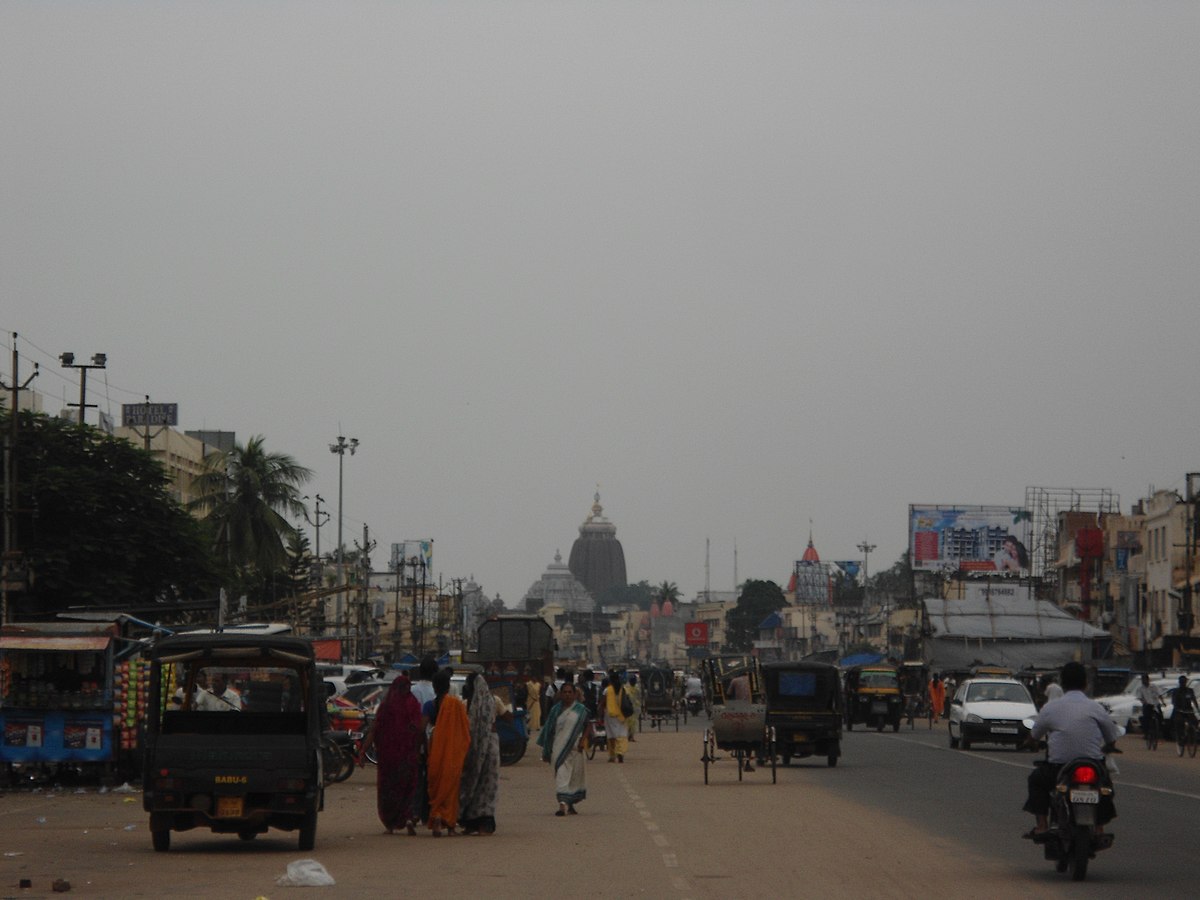
The Jagannath Temple at Puri, perched on the eastern coast of Odisha along the Bay of Bengal, is one of the most revered pilgrimage sites in all of Hinduism. Dedicated to Lord Jagannath --- a form of Lord Viṣṇu (or Kṛṣṇa) --- along with his elder brother Balabhadra and sister Subhadrā, the temple stands as a monumental testimony to centuries of devotion, architectural grandeur, and living spiritual tradition. It is one of the four sacred Char Dhāms established by Ādi Śaṅkarācārya, making it an essential stop in the pan-Indian pilgrimage circuit.
Historical Origins
The present temple structure dates to approximately the 12th century CE, commissioned by King Anantavarman Choḍagaṅga Deva of the Eastern Gaṅga dynasty (c. 1078—1150 CE) and completed during the reign of his successor Ananga Bhīma Deva III. However, the worship of Jagannath at Puri is far more ancient. The Skanda Purāṇa dedicates an entire section --- the Puruṣottama Kṣetra Māhātmya --- to glorifying this sacred site, describing it as the supreme abode (Puruṣottama Kṣetra) where Lord Viṣṇu chose to manifest in a unique wooden form.
According to legend recorded in the Skanda Purāṇa and local Odia traditions, King Indradyumna, a pious ruler, received a divine vision instructing him to retrieve a sacred log (dāru) floating in the ocean. The celestial architect Viśvakarmā (appearing as an aged carpenter named Ananta Mahārāṇā) agreed to carve the deities on the condition that no one disturb him during the process. When the king’s impatience led him to open the doors prematurely, the images remained unfinished --- with truncated limbs and large round eyes. The Lord declared that he wished to be worshipped in this very form, and thus the distinctive appearance of the Jagannath triad was divinely ordained.
The Temple Architecture
The Jagannath Temple complex is a masterpiece of Kaliṅga architecture (the traditional Odia temple-building style). The main temple tower, known as the Śrī Mandira, rises to approximately 65 meters (214 feet), dominating the Puri skyline. The temple complex covers roughly 400,000 square feet and is enclosed by two concentric walls --- the inner wall (Kuruṇā) and the outer wall (Meghanāda Prācīra).
The temple follows the classic four-part Kaliṅga plan:
- Vimāna (sanctum sanctorum housing the deities, crowned by the towering deul or spire)
- Jagamohana (assembly hall for worship)
- Nāṭa Mandira (hall of dance and music)
- Bhoga Maṇḍapa (hall of offerings)
The Nīlacakra
Crowning the apex of the main spire is the Nīlacakra (Blue Wheel), an eight-spoked wheel made of an alloy of eight metals (aṣṭadhātu). Standing roughly 3.5 meters (11.5 feet) in height, it is visible from a great distance and serves as the identifying emblem of the temple. Devotees consider the mere sighting of the Nīlacakra (cakra darśana) to be spiritually auspicious. Each day, a fresh cloth flag (patitāpāvana dhvaja) is tied to the Nīlacakra by a temple priest who climbs the spire without any safety equipment --- a tradition maintained for centuries.
The Four Gates
The temple has four imposing gates, each named after a guardian figure:
- Siṃhadvāra (Lion Gate) --- the main eastern entrance, facing the sea
- Aśvadvāra (Horse Gate) --- the southern entrance
- Vyāghradvāra (Tiger Gate) --- the western entrance
- Hastidvāra (Elephant Gate) --- the northern entrance
The Bada Danda (Grand Road) stretches from the Siṃhadvāra toward the Guṇḍicā Temple, forming the sacred route for the Rath Yātrā procession.
The Unique Wooden Deities and Nabakalebara
Unlike most Hindu temples where mūrtis are carved from stone or cast in metal, the Jagannath deities are fashioned from sacred neem wood (dāru). This makes Puri unique in the entire Hindu temple tradition. The three main deities --- Jagannath, Balabhadra, and Subhadrā --- along with the Sudarśana Cakra, are periodically replaced in a grand ceremony known as Nabakalebara (literally, “new body”).
Nabakalebara takes place at intervals determined by the occurrence of two months of Āṣāḍha (the month in the Hindu calendar during which Rath Yātrā falls) in a single year --- approximately every 12 to 19 years. The most recent Nabakalebara occurred in 2015, attracting millions of devotees.
The ritual involves:
- Identification of sacred trees: Special priests (daitāpatis) search for designated neem trees that bear specific divine markings (such as a conch, disc, mace, or lotus on the bark, proximity to a cremation ground, an anthill, and a snake hole nearby).
- Ceremonial felling and carving: The logs are brought to the temple, and a hereditary carpenter carves the new forms behind closed doors.
- Transfer of the Brahma Pādārtha: The innermost sacred substance of each old deity --- the Brahma Pādārtha, a mysterious object whose exact nature is a closely guarded secret, sometimes described as a fragment of the original dāru --- is ritually transferred to the new image by blindfolded priests.
- Burial of the old deities: The former images are buried with full funeral rites within the temple complex, a practice unique to Jagannath worship.
Rath Yātrā: The Festival of Chariots
The annual Rath Yātrā is arguably the most famous festival associated with the Jagannath Temple and among the oldest continuously observed religious festivals in the world. Held during the month of Āṣāḍha (June—July), the three deities are placed on massive, elaborately decorated wooden chariots and pulled along the Bada Danda by thousands of devotees to the Guṇḍicā Temple, about 3 kilometers away.
The three chariots have specific names and dimensions:
- Nandighośa (Jagannath’s chariot) --- 45 feet tall, 16 wheels, draped in red and yellow cloth
- Tāladhvaja (Balabhadra’s chariot) --- 44 feet tall, 14 wheels, draped in red and blue-green cloth
- Darpadālana (Subhadrā’s chariot) --- 43 feet tall, 12 wheels, draped in red and black cloth
The chariots are freshly constructed each year from specific types of wood by a guild of hereditary carpenters.
The English Word “Juggernaut”
The massive, seemingly unstoppable chariots of the Rath Yātrā gave rise to the English word “juggernaut”, derived from the Anglicized pronunciation of “Jagannath.” Colonial-era British accounts, often exaggerated and sensationalized, described the chariots as crushing devotees beneath their wheels. While accidental deaths did occasionally occur due to the enormous crowds, the image of deliberate self-sacrifice was largely a colonial misrepresentation. Today, the word “juggernaut” in English means an overwhelming, unstoppable force --- a testament, however distorted, to the awe-inspiring scale of the festival.
The Mahāprasād Tradition
Puri’s Mahāprasād (the great sanctified food offering) is one of the most remarkable aspects of the temple’s living tradition. The temple kitchen is reputed to be the largest in the world, employing nearly 1,000 cooks who prepare food for approximately 100,000 devotees daily. The cooking is done exclusively in earthen pots stacked in a pyramidal arrangement over wood fires --- the pot on top is said to cook first, a phenomenon devotees consider miraculous.
The Mahāprasād includes 56 varieties of offerings (chappana bhoga) prepared for the deities throughout the day. Once offered, the food is distributed to all devotees regardless of caste, creed, or social status. The Ānanda Bāzāra (marketplace of bliss) within the temple complex is where Mahāprasād is freely bought and shared. The breaking of caste distinctions through communal eating at Puri has been celebrated by Vaiṣṇava saints and reformers for centuries, including Śrī Caitanya Mahāprabhu, who spent the last 18 years of his life in Puri.
Ādi Śaṅkarācārya and the Govardhan Maṭha
In the 8th century CE, Ādi Śaṅkarācārya established four maṭhas (monastic seats) in the four cardinal directions of India to preserve and propagate Vedānta philosophy. The eastern seat, the Govardhan Maṭha (also called Govardhan Pīṭha), was established at Puri, linked to the Ṛg Veda and the mahāvākya “Prajñānam Brahma” (“Consciousness is Brahman”). The Śaṅkarācārya of the Govardhan Maṭha continues to play a significant role in the religious life of the temple and broader Hindu society.
This establishment cemented Puri’s position in the Char Dhām circuit:
- Badrinath (North) --- Uttarakhand
- Rameswaram (South) --- Tamil Nadu
- Dwarka (West) --- Gujarat
- Puri (East) --- Odisha
The Char Dhām pilgrimage tradition encourages every devout Hindu to visit all four sites at least once in a lifetime, symbolizing a spiritual circumambulation of the entire subcontinent.
Scriptural References and Theological Significance
The Jagannath cult draws from multiple scriptural traditions:
- The Skanda Purāṇa (Puruṣottama Kṣetra Māhātmya) provides the most extensive scriptural basis, describing the spiritual merit of pilgrimage to Puri and the story of the deities’ origin.
- The Brahma Purāṇa also contains passages glorifying Puruṣottama Kṣetra.
- Śrīmad Bhāgavatam (10.82) describes Kṛṣṇa’s reunion with the gopīs at Kurukṣetra, which Gauḍīya Vaiṣṇava tradition links to the Guṇḍicā Yātrā (the journey to the Guṇḍicā Temple during Rath Yātrā), interpreting it as Kṛṣṇa’s return to Vṛndāvana.
- The Gīta Govinda by the 12th-century Odia poet Jayadeva is recited daily in the temple as part of the liturgical service, celebrating the divine love of Rādhā and Kṛṣṇa.
Theologically, Lord Jagannath transcends sectarian boundaries. While primarily worshipped as a form of Viṣṇu or Kṛṣṇa, the deity has been embraced by Śaiva, Śākta, Buddhist, and Jain traditions at various points in history. The unfinished, abstract form of the deities has been interpreted as symbolizing the formless Brahman manifesting in an accessible, approachable form for all beings.
Śrī Caitanya Mahāprabhu and the Gauḍīya Vaiṣṇava Connection
The 15th—16th century saint Śrī Caitanya Mahāprabhu (1486—1533 CE) spent the final 18 years of his life in Puri, profoundly deepening the devotional (bhakti) culture surrounding Jagannath worship. Caitanya’s ecstatic kīrtana (congregational singing) before the Jagannath chariot during Rath Yātrā became legendary, and his theological interpretation of the festival as Kṛṣṇa’s longing to return to Vṛndāvana became central to Gauḍīya Vaiṣṇava understanding. His association made Puri a major center for the Gauḍīya Vaiṣṇava tradition, attracting devotees from Bengal and beyond.
Visiting Puri Today
The Jagannath Temple remains one of India’s most active and vibrant places of worship. The temple follows a rigorous daily schedule of rituals (nīti), including the morning maṅgala ārati, the afternoon madhyāhna dhūpa, and the grand evening sandhyā ārati. Major festivals beyond Rath Yātrā include:
- Snāna Yātrā (bathing festival of the deities)
- Anavasara (the 15-day period when deities are hidden from public view after Snāna Yātrā)
- Chandan Yātrā (sandalwood paste festival)
- Nīlādri Bije (return journey of the deities)
Puri, as one of the Char Dhāms, continues to draw millions of pilgrims annually. The town itself is a living sacred landscape, with the Svargadvāra (Gate of Heaven) cremation ground on the beach, numerous maṭhas and āśramas, and the memory of saints like Caitanya, Rāmānuja, and Śaṅkara woven into its very streets. For the devout Hindu, a pilgrimage to Puri and the darśana of Lord Jagannath remains one of the most profound spiritual experiences imaginable.