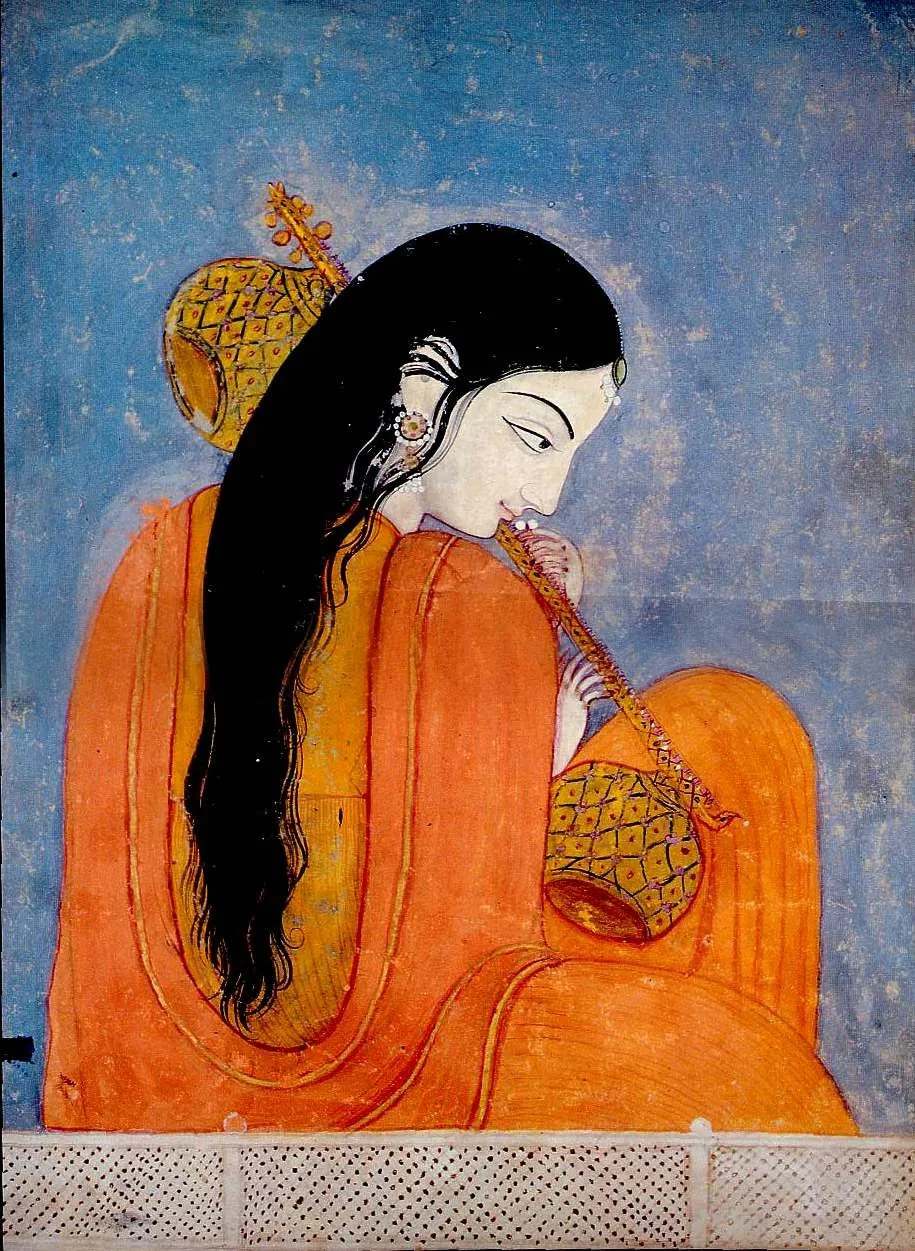
The Bhakti Movement (भक्ति आन्दोलन) stands as one of the most profound spiritual and social transformations in Indian history. Originating in Tamil Nadu around the 6th century CE, this devotional revolution swept across the subcontinent over the course of a millennium, fundamentally reshaping how millions of people understood and practised their relationship with the Divine. At its heart lay a radical and liberating idea: that sincere love and personal surrender to God transcend all barriers of caste, gender, learning, and ritual.
Scriptural Foundations of Bhakti
The concept of bhakti (भक्ति)—meaning devotion, love, and self-surrender to a personal God—has deep roots in Hindu scripture. The Bhagavad Gītā, particularly Chapter 12 (Bhakti Yoga), provides a foundational statement: Lord Kṛṣṇa declares that among all paths, those who worship Him with steadfast devotion and supreme faith are “the most perfect in yoga” (Gītā 12.2). He assures Arjuna that the path of devotion to a personal God is more accessible to embodied beings than meditation on the formless Absolute (Gītā 12.5).
Two later treatises systematised the philosophy of devotion. The Nārada Bhakti Sūtra, attributed to the sage Nārada, consists of 84 aphorisms that define bhakti as “supreme love for God” (parama-prema-rūpā, Sūtra 2) and describe its nature, practices, and fruits. The Śāṇḍilya Bhakti Sūtra, a more philosophical treatise by the sage Śāṇḍilya, approaches devotion through rigorous intellectual inquiry. Together, these texts established the theological framework that the later Bhakti saints would carry into every corner of India.
Origins in Tamil Nadu: The Ālvārs and Nāyanārs
The Bhakti movement first flowered in the Tamil-speaking lands of South India between the 6th and 9th centuries CE, during a period of intense religious ferment when Śaivism, Vaiṣṇavism, Buddhism, and Jainism competed for the hearts of the people.
The Ālvārs (ஆழ்வார்கள், “those immersed in God”) were twelve Vaiṣṇava poet-saints devoted to Lord Viṣṇu. Their Tamil hymns, collected as the Nālāyira Divya Prabandham (Four Thousand Sacred Compositions), are revered as the “Tamil Veda.” Among the most celebrated are Āṇḍāḷ (the only woman among the twelve, whose bridal mysticism to Lord Raṅganātha remains beloved), and Nammāḻvār, whose philosophical depth earned him the title “chief among the Ālvārs.”
The Nāyanārs (நாயன்மார்கள்) were sixty-three Śaiva saints who expressed fierce devotion to Lord Śiva. Figures such as Appar (Tirunāvukkaracar), Sundarar, and Māṇikkavācakar—whose Tiruvāçakam is considered among the finest devotional poetry ever composed—sang of direct, unmediated experience of Śiva’s grace. Crucially, both the Ālvārs and Nāyanārs came from diverse social backgrounds, and they composed in Tamil rather than Sanskrit, making sacred experience accessible to the common people. This vernacularisation of devotion set the template for every subsequent phase of the Bhakti movement.
Saguna and Nirguna: Two Streams of Devotion
As the movement spread across India, it crystallised into two broad philosophical streams:
-
Saguna Bhakti (“devotion to God with attributes”) centres on worship of a personal deity with name, form, and qualities—Rāma, Kṛṣṇa, Śiva, or the Divine Mother. Poets like Tulsīdās, Sūrdās, Mīrābāī, and the Ālvārs belong to this tradition. The devotee cultivates a loving relationship with God as master, friend, parent, or beloved.
-
Nirguna Bhakti (“devotion to God without attributes”) directs worship toward a formless, all-pervading Absolute beyond name and image. Kabīr, Ravidas, and Guru Nānak are its foremost exponents. They rejected idol worship and external ritual, insisting that the Divine dwells within every being and is reached through inner contemplation and the repetition of God’s Name.
Though distinct in emphasis, these two streams are not rigidly opposed. Many saints drew upon both traditions, and the Nārada Bhakti Sūtra itself does not insist on one form over the other, declaring simply that bhakti is its own reward.
The Saint-Poets Across India
Karnataka: Vachana and Haridāsa Traditions
In the 12th century, Basaveśvara (Basavaṇṇa, 1131—1167) launched the Vīraśaiva (Liṅgāyata) movement in Karnataka. His vachanas (prose poems in Kannada) attacked caste hierarchy and empty ritual with searing directness. Alongside him, Akka Mahādevī and Allama Prabhu contributed to a vibrant tradition of Kannada devotional literature (Vachana Sāhitya) that remains culturally central.
Later, the Haridāsa movement produced Purandaradāsa (c. 1484—1564), honoured as the “father of Carnatic music,” and Kanakadāsa, whose compositions challenged caste prejudice through Kṛṣṇa-bhakti. Their kīrtanas fused music, philosophy, and social commentary.
Maharashtra: The Vārkarī Tradition
The Vārkarī movement in Maharashtra revolves around the worship of Viṭhobā (a form of Kṛṣṇa) at Paṇḍharpur. Its founder-saint, Jñāneśvara (Dnyaneshwar, 1275—1296), composed the Jñāneśvarī, a luminous Marathi commentary on the Bhagavad Gītā, at the age of sixteen. Nāmdev (c. 1270—1350), whose devotional songs (abhaṅgas) transcended regional boundaries and appear in the Sikh Guru Granth Sāhib, carried the Vārkarī message across India. Eknāth (1533—1599) further democratised the tradition, and Tukārām (1608—1649), a Śūdra by birth, composed thousands of abhaṅgas that remain the living heartbeat of Marathi spiritual life.
North India: The Great Voices
North India witnessed an extraordinary flowering of Bhakti between the 15th and 17th centuries:
-
Kabīr (c. 1398—1518), a Muslim weaver from Varanasi, rejected both Hindu and Islamic orthodoxy with fierce iconoclasm. His dohas (couplets) and sākhīs (verses) proclaim the formless Divine within: “Moko kahān ḍhūṇḍhe re bande, maiṅ to tere pās meṅ” (“Where do you seek me, O devotee? I am right beside you”).
-
Ravidas (Ravidās, 15th century), born into an “untouchable” leather-working community, sang of divine equality and is revered as a guru by millions.
-
Mīrābāī (c. 1498—1547), a Rajput princess, defied family, court, and convention to devote herself entirely to Lord Kṛṣṇa as her divine beloved. Her songs of ecstatic longing are sung across India to this day.
-
Sūrdās (c. 1478—1583), the blind poet of Braj, composed the Sūrsāgar, celebrating Kṛṣṇa’s childhood and the love of the gopīs with exquisite tenderness.
-
Tulsīdās (c. 1532—1623) composed the Rāmcaritmānas, retelling the Rāmāyaṇa in Avadhī Hindi. This single work made Rāma-bhakti the dominant devotional current in much of North India and remains the most widely recited Hindu text in the Hindi-speaking world.
Bengal: Chaitanya Mahāprabhu
Śrī Chaitanya Mahāprabhu (1486—1534) ignited a devotional revolution in Bengal and Odisha through ecstatic congregational chanting (nāma-saṅkīrtana) of the names of Kṛṣṇa. He taught that the highest form of bhakti is selfless, passionate love (prema) modelled on the gopīs of Vṛndāvana. His movement, Gauḍīya Vaiṣṇavism, produced a sophisticated theology of divine love and spread globally in the 20th century through the International Society for Krishna Consciousness (ISKCON). Chaitanya’s influence on Bengali language, literature, music, and identity is immeasurable.
Social Revolution: Breaking Barriers
The Bhakti movement was not merely a spiritual phenomenon; it was a profound challenge to the social order. Its most radical contributions include:
-
Caste dissolution: Saints like Kabīr (a weaver), Ravidas (a leather-worker), Tiruppāṇ Ālvār (considered “untouchable”), Chokhamelā (a Mahār from Maharashtra), and Kanakadāsa proclaimed that devotion recognises no caste. Basaveśvara declared: “The rich will make temples for Śiva. What shall I, a poor man, do? My legs are pillars, the body the shrine, the head a cupola of gold.”
-
Women’s empowerment: Āṇḍāḷ, Mīrābāī, Akka Mahādevī, Jānābāī (maidservant of Nāmdev), and Lāl Ded of Kashmir defied patriarchal norms, composing devotional poetry and claiming spiritual authority in an age that denied women public religious roles.
-
Vernacular literature: By composing in Tamil, Kannada, Marathi, Hindi, Avadhī, Brajbhāṣā, and Bengali rather than Sanskrit, the Bhakti poets created the literary foundations of India’s modern regional languages. Much of what is considered classical literature in these languages originates directly from the Bhakti movement.
Influence on Sikhism and Beyond
The Bhakti movement’s emphasis on devotion, equality, and inner experience profoundly shaped Sikhism. Guru Nānak (1469—1539), the founder of the Sikh faith, shared the Nirguna tradition’s rejection of idol worship and caste, and the Gurū Granth Sāhib includes the hymns of Bhakti saints Kabīr, Nāmdev, Ravidas, and others alongside the Sikh Gurus’ own compositions. While Sikhism developed its own distinct theology and institutions, its devotional roots in the Bhakti milieu are openly acknowledged.
The movement also influenced the Sūfī traditions of Islam in India, fostering a culture of syncretic devotion at shared shrines, and contributed to the emergence of new religious communities, pilgrimage networks, and temple-building traditions across the subcontinent.
Enduring Legacy
The Bhakti movement’s legacy is woven into the fabric of Indian civilisation. Its songs are sung in homes, temples, gurdwārās, and concert halls. Its saint-poets are claimed by communities across caste and creed. The annual Vārkarī pilgrimage to Paṇḍharpur, the Rath Yātrā processions, and countless kīrtana and bhajana gatherings are living continuations of a tradition that insists on one transformative truth: that the door to the Divine stands open to every sincere heart.
From the Tamil hymns of the Ālvārs to the ecstatic chanting of Chaitanya, from Kabīr’s uncompromising couplets to Mīrābāī’s songs of love, the Bhakti movement remains India’s greatest testament to the power of devotion—a revolution not of swords but of song, not of doctrine but of love.