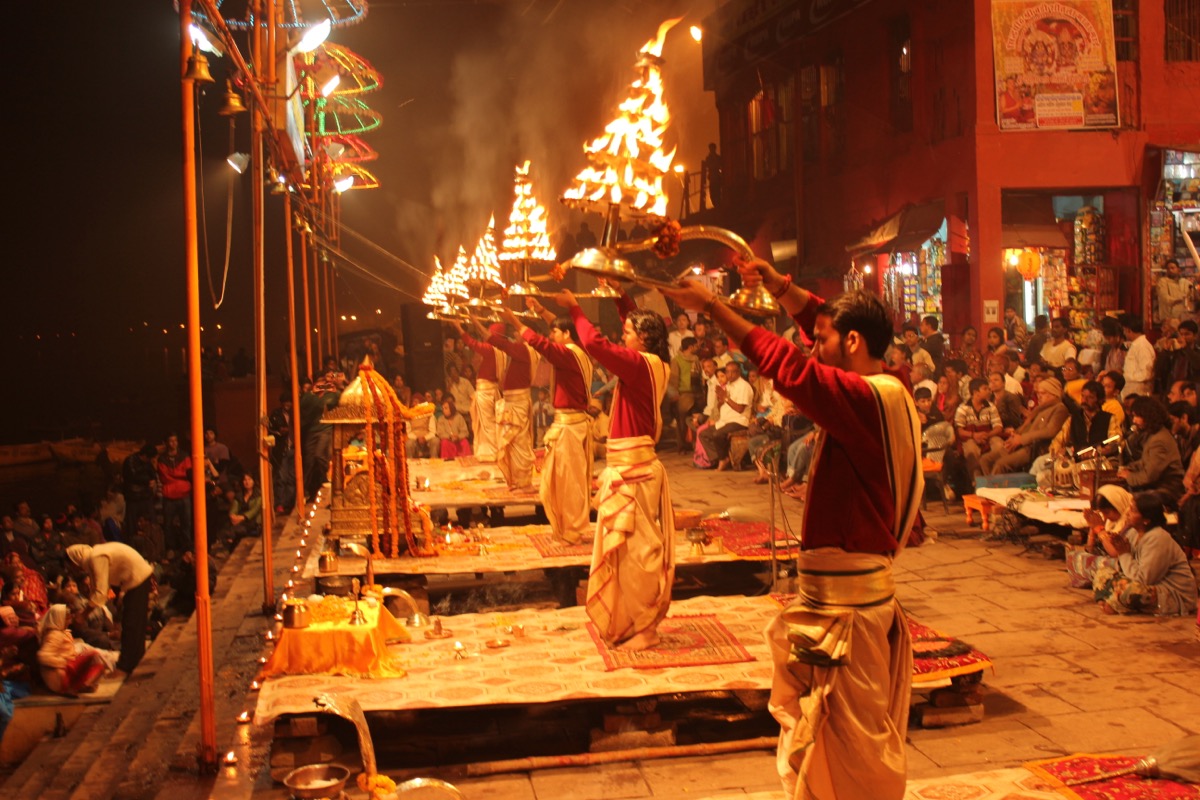
Gaṅgā Daśaharā (गंगा दशहरा) is one of the most revered Hindu festivals, celebrating the momentous occasion when the celestial River Gaṅgā descended from heaven to earth. Observed annually on the Daśamī (tenth day) of the Śukla Pakṣa (waxing moon phase) in the Hindu month of Jyeṣṭha (May–June), this festival marks the culmination of an extraordinary tale of devotion, penance, and divine grace that spans generations of the Solar Dynasty. The word Daśaharā itself encapsulates the festival’s promise: daśa (ten) and hara (to destroy) — the belief that Gaṅgā’s sacred waters have the power to wash away ten categories of sin from those who bathe in her waters on this auspicious day.
Unlike many Hindu festivals that centre on a single deity or mythological event, Gaṅgā Daśaharā weaves together the devotion of King Bhagīratha, the compassion of Lord Brahmā, the might of Lord Śiva, and the purifying grace of Goddess Gaṅgā herself. It is a festival that transforms the riverbanks of northern India — particularly at Haridwar, Vārāṇasī, and Prayāgraj — into vast amphitheatres of devotion, where millions gather for ritual bathing, grand āratī ceremonies, and the floating of countless dīpas (oil lamps) upon the sacred waters.
Etymology and Timing
The Sanskrit compound Daśaharā (दशहरा) derives from daśa (दश, “ten”) and hara (हर, from the root hṛ, “to take away, destroy”). The term thus means “the destroyer of ten [sins]” — a reference to Gaṅgā’s power to cleanse ten categories of impurities accumulated through body, speech, and mind. This Daśaharā should not be confused with the autumn festival Vijayādaśamī (also popularly called Dussehra/Dasara), which celebrates Rāma’s victory over Rāvaṇa; the two festivals are entirely distinct in theology, timing, and observance.
Gaṅgā Daśaharā falls on Jyeṣṭha Śukla Daśamī — the tenth day of the bright fortnight in the month of Jyeṣṭha. In the Gregorian calendar, this typically falls in late May or June. According to the Nirṇaya Sindhu and other dharmaśāstra texts, the festival is especially potent when the Daśamī tithi coincides with Hasta nakṣatra (the constellation Corvus) and a Wednesday — a convergence considered extremely rare and supremely auspicious. In 2026, Gaṅgā Daśaharā falls on Monday, 25 May.
The timing in the height of the Indian summer is itself significant. Jyeṣṭha is the hottest month of the year, and the rivers are at their lowest before the monsoon rains. Bathing in the Gaṅgā during this period — when the water is at its clearest and the heat makes the cool river an oasis — carries both spiritual and physical dimensions of renewal.
The Epic of Bhagīratha: Bringing Gaṅgā to Earth
The mythology behind Gaṅgā Daśaharā is one of the grandest narratives in Hindu scripture, narrated in extensive detail in the Vālmīki Rāmāyaṇa (Bāla Kāṇḍa, Sargas 38–44), the Bhāgavata Purāṇa (Skandha 9, Chapters 8–9), and the Viṣṇu Purāṇa. The story spans multiple generations of the Ikṣvāku dynasty and culminates in the superhuman penance of King Bhagīratha.
The Curse of Sage Kapila
The tale begins with King Sagara of Ayodhyā, an ancestor of Lord Rāma, who performed the Aśvamedha yajña (horse sacrifice) to assert his sovereignty. When the sacrificial horse was stolen by Indra and hidden in the subterranean hermitage of the great sage Kapila, Sagara dispatched his sixty thousand sons to find it. The princes, digging through the earth, eventually discovered the horse near the meditating sage. Mistaking Kapila for the thief, they rushed at him with weapons drawn.
The sage, disturbed from his deep meditation, opened his eyes — and the fire of his accumulated tapas (austerity) reduced all sixty thousand princes to ashes instantly. The Vālmīki Rāmāyaṇa (Bāla Kāṇḍa, 1.40.29–30) records that the ashes of Sagara’s sons could only be purified and their souls liberated by the waters of the celestial Gaṅgā — a river that at that time flowed only in the heavens (Svarga).
Generations of Effort
For generations, the descendants of Sagara attempted to bring Gaṅgā down to earth to liberate their ancestors. King Aṃśumān, Sagara’s grandson, performed severe penance but could not succeed. His son Dilīpa continued the effort throughout his lifetime, also without success. It was left to Dilīpa’s son, Bhagīratha, to accomplish what had eluded his forefathers.
Bhagīratha’s Supreme Penance
Bhagīratha, leaving the administration of his kingdom to his ministers, undertook two monumental penances. First, he went to Gokarṇa and practised extreme austerity for thousands of divine years — standing on one foot with arms raised above his head, subsisting on air alone, surrounded by the pañcāgni (five fires: four blazing fires on the cardinal directions and the scorching sun above).
The Vālmīki Rāmāyaṇa (Bāla Kāṇḍa, 1.42.6–9) describes his tapas in vivid terms: “ūrdhva-bāhuḥ” (arms raised aloft), “pañca-agni-madhye” (amidst five fires), “eka-pāda-sthitaḥ” (standing on one foot), subsisting on vāyu (wind) for nourishment. Pleased by such unparalleled devotion, Lord Brahmā appeared before Bhagīratha and granted his wish — Gaṅgā would descend to earth.
Śiva Receives Gaṅgā in His Locks
However, Brahmā warned Bhagīratha of a critical danger: Gaṅgā’s descent from heaven would carry such immense force that the earth could not withstand it. Only Lord Śiva (Maheśvara) could bear the impact of her fall. Bhagīratha then performed another year of severe penance, standing on the tip of his great toe (pādāṅguṣṭha-agra), to propitiate Śiva.
Śiva, pleased by Bhagīratha’s devotion, agreed to receive Gaṅgā on his head. As the mighty river plummeted from the celestial realm with thunderous velocity, Śiva positioned himself on Mount Himālaya and caught her torrential cascade in his dense, matted locks (jaṭā). The Rāmāyaṇa describes how Gaṅgā, proud of her power, intended to sweep Śiva down to the netherworld (Pātāla) with her force — but Śiva, the Supreme Ascetic, simply absorbed her infinite energy within the labyrinth of his hair. He then released her gently in seven streams, each flowing in a different direction — the most famous being the stream that Bhagīratha led across the plains of northern India.
Liberation of the Ancestors
Bhagīratha then guided Gaṅgā’s course on his chariot, leading her across the Indian subcontinent to the place where the ashes of his sixty thousand ancestors lay. As Gaṅgā’s purifying waters touched the ashes, the souls of the sixty thousand sons of Sagara were instantly liberated and ascended to Svarga (heaven). The Bhāgavata Purāṇa (9.9.16–17) celebrates this moment as a supreme act of filial devotion, noting that the river came to be called Bhāgīrathī — “she who was brought by Bhagīratha” — in honour of his extraordinary penance.
The Daśa-Hara: Ten Sins Destroyed
The central theological promise of Gaṅgā Daśaharā is encapsulated in its name: bathing in the Gaṅgā on this day destroys ten types of sin. According to Hindu dharmaśāstra tradition, these ten sins are categorized into three domains of human action:
Three Physical Sins (Kāyika Pāpa)
- Adattādāna — theft, taking what is not rightfully given
- Hiṃsā — violence, causing harm to living beings
- Paradāragamana — adultery, violating the sanctity of another’s marriage
Four Verbal Sins (Vācika Pāpa)
- Pāruṣya — harsh, cruel, or abusive speech
- Anṛta — falsehood, lying
- Parivāda — slander, speaking ill of others behind their backs
- Asambaddha-pralāpa — frivolous or meaningless talk, gossip
Three Mental Sins (Mānasika Pāpa)
- Paradravyābhipāsa — coveting another’s wealth or possessions
- Paradroha-cintana — harbouring ill will or malice toward others
- Vitathābhiniveśa — attachment to falsehood, clinging to wrong beliefs
This classification follows the broader Hindu ethical framework found in texts like the Manusmṛti (12.5–7) and the Yājñavalkya Smṛti, which categorize all human action into bodily, verbal, and mental domains. The belief is that the sacred waters of Gaṅgā, empowered by the divine grace of Goddess Gaṅgā herself, can purify all ten categories simultaneously when one bathes with sincere devotion and repentance on the Daśamī tithi.
The Dasha Pāpa Harā Gaṅgā Stuti, a devotional hymn recited on this day, invokes Gaṅgā as the destroyer of these ten sins, praising each of her purifying attributes in sequence.
Celebrations at the Sacred Tīrthas
Haridwar: Har Kī Pauṛī
Haridwar — literally “the Gateway to God” — is perhaps the most electrifying location for Gaṅgā Daśaharā celebrations. The ancient ghat of Har Kī Pauṛī (“Steps of the Lord”), where Gaṅgā first enters the plains after descending from the Himālayas, becomes the epicentre of devotion. In recent years, an estimated 15 lakh (1.5 million) devotees have gathered at Haridwar for the festival.
The day begins before dawn in the Brahma Muhūrta (approximately 4:00–4:30 AM), when devout pilgrims take their first dip in the icy Himalayan waters. The ritual requires ten immersions (daśa snāna), each accompanied by the recitation of Gaṅgā mantras. Throughout the day, the ghats resound with the chanting of the Gaṅgā Āratī, the Gaṅgā Stotram, and the Gaṅgā Sahasranāma (the thousand names of Gaṅgā).
As evening descends, the spectacular Gaṅgā Āratī transforms Har Kī Pauṛī into a scene of transcendent beauty. Priests holding massive multi-tiered brass lamps (dīpa-stambha), each blazing with dozens of oil flames, perform synchronized circular movements while hundreds of thousands of voices join in devotional songs. The ceremony, originally instituted by Paṇḍit Madan Mohan Mālavīya in the early twentieth century, has become one of the most iconic religious spectacles in India.
Vārāṇasī: Daśāśvamedha Ghāṭ
At Vārāṇasī (Kāśī), the world’s oldest continuously inhabited city and the spiritual capital of Hinduism, Gaṅgā Daśaharā is celebrated with equal fervour at the famed Daśāśvamedha Ghāṭ. The name of this ghat — “the place of ten horse sacrifices” — resonates with the festival’s theme of tenfold purification.
The evening Gaṅgā Āratī at Daśāśvamedha Ghāṭ is a daily occurrence, but on Gaṅgā Daśaharā it assumes extraordinary proportions. Additional priests join the ceremony, the lamps are larger, the crowds swell manifold, and the entire stretch of ghats from Maṇikarṇikā to Assi comes alive with floating dīpas (earthen oil lamps placed on leaf boats). The sight of thousands of flickering flames drifting downstream on the dark Gaṅgā waters, reflected in the ancient stone steps of the ghats, is one of the most moving spiritual experiences in Hinduism.
Devotees also perform dāna (charity) — particularly donations in multiples of ten — and offer pūjā to Goddess Gaṅgā with flowers, incense, sandalwood paste, and akṣata (unbroken rice grains).
Prayāgraj: Triveṇī Saṅgam
At Prayāgraj (formerly Allahabad), where the Gaṅgā, Yamunā, and the invisible Sarasvatī merge at the Triveṇī Saṅgam, Gaṅgā Daśaharā holds special significance. Bathing at the confluence of three sacred rivers on this day is believed to multiply the spiritual merit exponentially. Special boat services ferry pilgrims to the saṅgam point, where they perform the prescribed ten dips and offer prayers.
Rituals and Observances
Ritual Bathing (Snāna)
The primary ritual of Gaṅgā Daśaharā is the sacred bath in the Gaṅgā or, for those who cannot reach the river, in any natural water body. The devotee should ideally bathe at dawn, taking ten dips while reciting the Gaṅgā Daśaharā Stotra or the mantra: “Oṃ namaḥ Śivāya namaḥ Gaṅgāyai”. Each dip is said to wash away one category of sin.
For those far from the Gaṅgā, the tradition prescribes adding Gaṅgā water (Gaṅgājala) to one’s bathing water, invoking the river’s purifying presence through saṅkalpa (sacred intention).
Dīpa Dāna: Floating Oil Lamps
One of the most visually stunning rituals of Gaṅgā Daśaharā is the offering of dīpas (oil lamps) to the river. Devotees place small earthen lamps, often decorated with marigold flowers, on leaf boats or small wooden platforms and set them adrift on the water. The flickering lamps symbolize the surrender of one’s ego and sins to the divine current of Gaṅgā, seeking her grace and blessing.
Gaṅgā Pūjā and Dāna
Formal worship of Goddess Gaṅgā is performed using the ṣoḍaśopacāra (sixteen-step) ritual, including offerings of flowers, sandalwood, turmeric, vermilion, incense, and fruit. The number ten holds special importance throughout the day — donations in multiples of ten, recitation of mantras in sets of ten, and the offering of ten types of flowers or fruits are all considered auspicious.
Fasting and Vrata
Many devotees observe a fast (vrata) on Gaṅgā Daśaharā, consuming only fruits and milk. Some undertake the more rigorous nirjala (waterless) fast, particularly those who plan to combine it with the Nirjalā Ekādaśī fast on the following day.
Connection to Nirjalā Ekādaśī
A remarkable liturgical coincidence links Gaṅgā Daśaharā with Nirjalā Ekādaśī (also called Bhīma Ekādaśī), which falls on the very next day — Jyeṣṭha Śukla Ekādaśī (the eleventh day of the waxing moon). In some years, due to the tithi calculations, the two observances may even overlap.
Nirjalā Ekādaśī is the most austere of all Ekādaśī fasts, requiring complete abstention from both food and water for the entire day — a formidable undertaking in the scorching heat of Jyeṣṭha. The spiritual logic of the pairing is profound: Gaṅgā Daśaharā offers purification through the sacred waters of the river, while Nirjalā Ekādaśī offers purification through the complete renunciation of water. Together, they form a two-day period of intense spiritual cleansing that devout Hindus consider one of the most powerful opportunities for karmic purification in the entire liturgical year.
Scriptural Foundations
Vālmīki Rāmāyaṇa
The most detailed narrative of Gaṅgā’s descent appears in the Bāla Kāṇḍa of the Vālmīki Rāmāyaṇa (Sargas 38–44). Here, the sage Viśvāmitra narrates the entire history to the young Rāma and Lakṣmaṇa as they journey along the banks of the Gaṅgā. The Rāmāyaṇa account emphasizes Bhagīratha’s tapas as a model of unwavering devotion and persistence — the idea that even the impossible can be achieved through sustained spiritual effort. The Sanskrit phrase “Bhagīratha-prayatna” (भगीरथ प्रयत्न), meaning “an effort of Bhagīrathic proportions,” has entered common usage in Indian languages as an idiom for any heroic, seemingly impossible endeavour.
Bhāgavata Purāṇa
The Bhāgavata Purāṇa (Skandha 9, Chapters 8–9) provides a complementary account, placing greater emphasis on the cosmic origins of Gaṅgā. According to this text, when Lord Viṣṇu took the form of Vāmana (the Dwarf) and stretched his left foot across the cosmos to measure the universe, his toe pierced the covering of the material universe (brahmāṇḍa). Through this opening, the waters of the Causal Ocean (Kāraṇa Samudra) flowed in as the divine river Gaṅgā. Thus, Gaṅgā is described as originating from the feet of Viṣṇu — hence her epithet Viṣṇupadī (“she who flows from Viṣṇu’s feet”).
Other Purāṇic References
The Skanda Purāṇa contains the most extensive glorification of Gaṅgā among all Purāṇas, with entire sections (khaṇḍas) dedicated to the Gaṅgā Māhātmya — the greatness of the Gaṅgā. The Padma Purāṇa, Brahma Purāṇa, and Agni Purāṇa also contain significant passages extolling the purifying power of Gaṅgā and prescribing rituals for Gaṅgā Daśaharā.
Regional Celebrations Across India
While the festival is most grandly celebrated along the Gaṅgā’s course through Uttarakhand, Uttar Pradesh, Bihar, and West Bengal, its observance extends wherever the river touches or wherever devotees reside.
In Bihar and Jharkhand, where the Gaṅgā flows through the fertile plains, Gaṅgā Daśaharā is a major public holiday. Villages along the riverbank organize community bathing expeditions, and local priests conduct elaborate pūjā ceremonies at temporary altars erected on the ghats.
In West Bengal, where the river is known as the Padmā and Bhāgīrathī, the festival coincides with the pre-monsoon season. Bengali communities organize Gaṅgā pūjā at local rivers and ponds, with particular devotion shown at Nabadwīpa (the birthplace of Śrī Caitanya Mahāprabhu), where the Gaṅgā and Jalāṅgī rivers meet.
In Rajasthan, Madhya Pradesh, and other regions far from the physical Gaṅgā, devotees observe the festival by bathing in local rivers and water bodies while invoking the spiritual presence of Gaṅgā through mantras and saṅkalpa. Many families keep Gaṅgājala (sacred Gaṅgā water) at home throughout the year specifically for use on occasions like Gaṅgā Daśaharā.
The Environmental Dimension
In the contemporary era, Gaṅgā Daśaharā has acquired an additional dimension of environmental awareness. The Gaṅgā — revered as a goddess and mother (Gaṅgā Mātā) — faces severe pollution from industrial effluents, untreated sewage, and ritual waste. The paradox of worshipping a river while simultaneously polluting it has become a subject of increasing public discourse.
The Namāmi Gaṅge programme, launched by the Government of India in 2014 with a budget of over ₹20,000 crore, represents the largest river-cleaning initiative in Indian history. The programme encompasses sewage treatment infrastructure, industrial monitoring, biodiversity conservation, afforestation along the riverbanks, and public awareness campaigns.
Gaṅgā Daśaharā has become a focal point for environmental activists and religious leaders alike. Many maṭha (monastic institutions) and āśrama along the river now use the festival as an occasion for śrama-dāna (voluntary labour) — organizing river clean-up drives, tree-planting campaigns, and awareness programmes about reducing pollution. The message is both ecological and theological: if Gaṅgā is truly a goddess who purifies us, then it is our sacred duty (dharma) to purify her in return.
Several prominent Hindu leaders have called for replacing non-biodegradable ritual offerings with eco-friendly alternatives — using natural leaf boats instead of plastic, organic flowers instead of synthetic garlands, and biodegradable dīpas instead of petroleum-based candles. This “green Gaṅgā Daśaharā” movement reflects an evolving understanding that reverence for nature must include practical stewardship.
Spiritual Significance in Modern Life
Beyond the mythology and ritual, Gaṅgā Daśaharā carries a profound spiritual message that remains relevant across ages. The story of Bhagīratha teaches that the greatest achievements require patience across generations — his forefathers Aṃśumān and Dilīpa could not complete the task, yet their efforts were not wasted; they laid the spiritual groundwork for Bhagīratha’s eventual success. In a culture that values instant results, this is a powerful reminder of the value of sustained, multi-generational effort.
The image of Śiva absorbing Gaṅgā’s destructive force in his matted locks is rich in symbolism. Grace (anugraha), when it descends, can be overwhelming — even devastating — if received without adequate preparation. Śiva represents the spiritual discipline (sādhanā) necessary to receive and channel divine energy constructively. Without such discipline, even the greatest blessings can become destructive.
Finally, the concept of daśa-hara — the washing away of ten types of sin — invites self-examination. The ten sins encompass the entire range of human misconduct: physical, verbal, and mental. By naming them specifically, the tradition encourages devotees not merely to bathe mechanically in the river but to consciously reflect on their actions, words, and thoughts, using the festival as an occasion for genuine moral inventory and spiritual renewal.
Gaṅgā Daśaharā thus stands as a festival that unites cosmology and ethics, mythology and ecology, devotion and self-discipline — a celebration of the river that is, for hundreds of millions of Hindus, nothing less than liquid divinity flowing upon the earth.