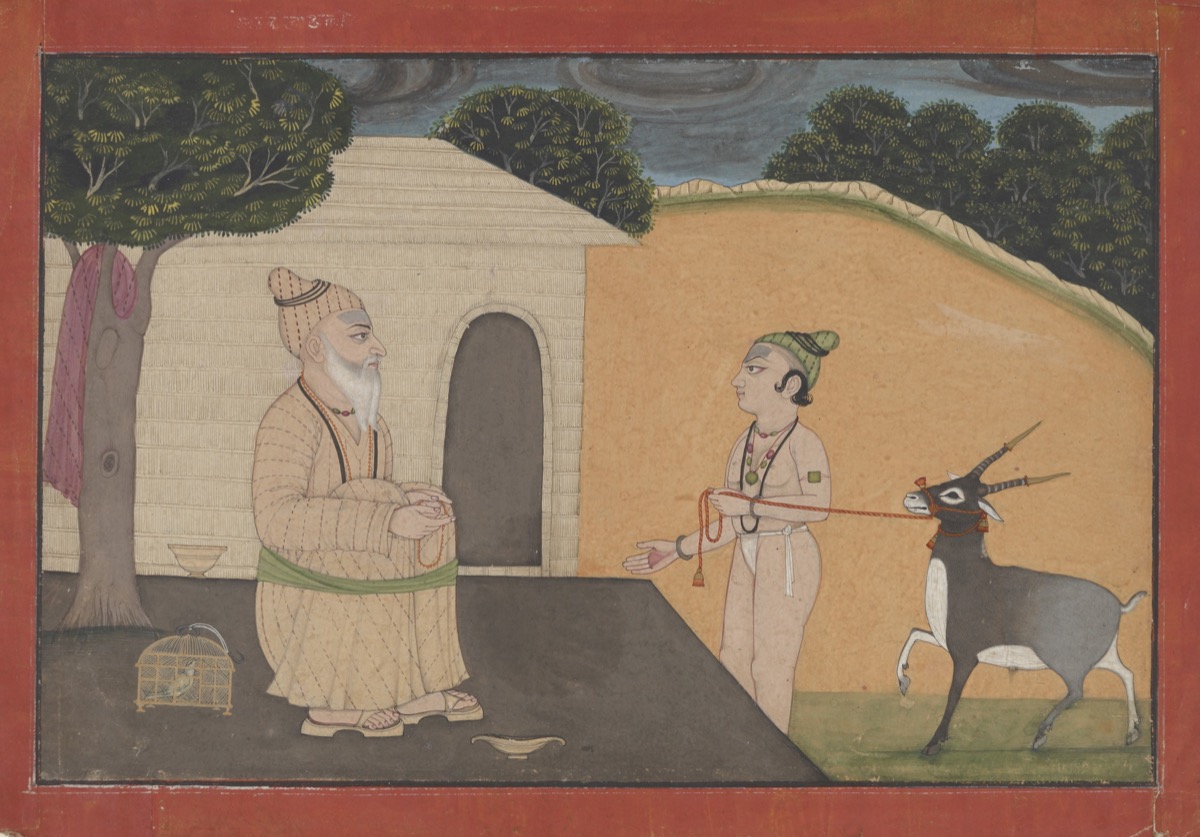
Guru Pūrṇimā (गुरु पूर्णिमा), also known as Vyāsa Pūrṇimā, is the Hindu festival dedicated to the veneration of the guru — the spiritual teacher who dispels the darkness of ignorance and guides the soul toward liberation. Celebrated on the pūrṇimā (full moon day) of the Hindu month of Āṣāḍha (June–July), this festival represents one of the most ancient and philosophically profound observances in Indian civilization, honouring a relationship that Hindu tradition regards as sacred, transformative, and indispensable for spiritual realization.
The very word guru (गुरु) encodes this teaching. The Advayatāraka Upaniṣad (verse 16) provides the classic etymology: “gukāras tv andhakārasya, rukāras tan nivartakaḥ; andhakāra-nivārakatvāt, guru ity abhidhīyate” — “The syllable gu signifies darkness, the syllable ru signifies its remover; because of the power to remove darkness, the teacher is called ‘guru.’” In this understanding, the guru is not merely a conveyor of information but a living embodiment of the light that dissolves spiritual ignorance (avidyā).
Vyāsa: The Ādi-Guru and His Birthday
Guru Pūrṇimā is also called Vyāsa Pūrṇimā because it commemorates the birth of Kṛṣṇa Dvaipāyana Vyāsa — the legendary sage who is regarded as the Ādi-Guru (first teacher) of the Hindu tradition. According to the Viṣṇu Purāṇa and the Mahābhārata (Ādi Parva), Vyāsa was born on the full moon day of Āṣāḍha on an island (dvaipa) in the Yamunā river, the son of the sage Parāśara and the fisher-woman Satyavatī. His skin was dark (kṛṣṇa), giving him his name Kṛṣṇa Dvaipāyana.
Vyāsa’s contributions to Hindu civilization are unparalleled. He is credited with:
- Compiling the Vedas: Dividing the single Veda into four — Ṛg, Yajur, Sāma, and Atharva — hence his title “Vyāsa” (व्यास, “one who divides or arranges”). He assigned each Veda to one of his four principal disciples: Paila (Ṛg Veda), Vaiśampāyana (Yajur Veda), Jaimini (Sāma Veda), and Sumantu (Atharva Veda)
- Authoring the Mahābhārata: The world’s longest epic poem (approximately 100,000 verses), which contains the Bhagavad Gītā — Hindu civilization’s most revered scripture
- Composing the eighteen Mahāpurāṇas: Including the Bhāgavata Purāṇa, the Viṣṇu Purāṇa, and the Śiva Purāṇa
- Founding the Brahma Sūtra tradition: The Vedānta Sūtras (Brahma Sūtras) attributed to Vyāsa form the foundational text of all Vedānta philosophical schools
The Skanda Purāṇa describes Vyāsa as an avatāra (incarnation) of Lord Viṣṇu, who descends in every dvāpara yuga to compile and preserve the Vedas for humanity. The Viṣṇu Purāṇa (3.3) lists the various Vyāsas of past and future ages, establishing the title as a divine office rather than merely a personal name.
By honouring Vyāsa on his birthday, Guru Pūrṇimā celebrates not just one teacher but the entire principle of teaching and knowledge transmission — the conviction that wisdom, to survive and flourish, must be passed from generation to generation through the sacred relationship of guru and śiṣya.
The Guru-Śiṣya Paramparā: A Civilizational Institution
The guru-śiṣya paramparā (गुरु-शिष्य परम्परा, “teacher-student lineage”) is one of the oldest and most distinctive institutions of Indian civilization. Unlike the modern Western educational model, where knowledge is transmitted impersonally through textbooks and standardized curricula, the Hindu tradition insists that the deepest wisdom can only be received through a living teacher — one who embodies that wisdom in their own being.
The Muṇḍaka Upaniṣad (1.2.12) describes the process with striking imagery: “tad-vijñānārthaṁ sa gurum evābhigacchet, samit-pāṇiḥ śrotriyaṁ brahma-niṣṭham” — “To know That (Brahman), one must approach a guru, carrying firewood in hand — a guru who is learned in the scriptures and established in Brahman.” The firewood symbolizes the student’s readiness to serve, the guru’s scriptural learning ensures intellectual authority, and his establishment in Brahman (brahma-niṣṭha) guarantees experiential, not merely theoretical, knowledge.
The Taittirīya Upaniṣad (1.11.2) records the guru’s convocation address to graduating students: “satyaṁ vada, dharmaṁ cara, svādhyāyān mā pramadaḥ, ācāryāya priyaṁ dhanam āhṛtya, prajātantuṁ mā vyavacchetsīḥ” — “Speak the truth, practise dharma, do not neglect your studies, bring to the teacher the wealth that is dear to him, and do not cut off the thread of progeny.” This passage reveals the guru-śiṣya relationship as simultaneously spiritual, ethical, intellectual, and social.
The gurukula (guru’s household) system was the primary mode of education in ancient India. Students would leave their parental homes at a young age (traditionally around seven or eight), undergo the upanayana (sacred thread) ceremony, and live with their guru for twelve years or more — learning not only the Vedas and the sciences but also the arts of righteous living through direct observation of the guru’s conduct.
Scriptural Verses on the Guru
Hindu scripture contains some of its most exalted language in praise of the guru. The Guru Gītā (part of the Skanda Purāṇa) contains the most celebrated verse:
“Gururbrahmā gururviṣṇuḥ gururdevo maheśvaraḥ, Guruḥ sākṣāt paraṁ brahma, tasmai śrī-gurave namaḥ”
“The guru is Brahmā (the creator), the guru is Viṣṇu (the sustainer), the guru is Maheśvara (Śiva, the transformer). The guru is verily the Supreme Brahman (the Absolute Reality) itself. To that glorious guru, I bow.”
This verse does not deify the human teacher in a literal sense but recognizes that the guru, in the moment of transmitting liberating knowledge, functions as the channel through which the divine operates. The guru creates (like Brahmā) by awakening new understanding; sustains (like Viṣṇu) by nurturing the student’s growth; and transforms (like Maheśvara) by destroying the student’s ignorance.
The Vivekacūḍāmaṇi of Ādi Śaṅkarācārya (verse 3) declares: “durlabhaṁ trayam evaitad devānugraha-hetukam: manuṣyatvaṁ mumukṣutvaṁ mahāpuruṣa-saṁśrayaḥ” — “Three things are rare and come only by divine grace: human birth, the desire for liberation, and the refuge of a great teacher.” Śaṅkara thus places the guru among the rarest and most precious gifts of divine providence.
Great Gurus of the Hindu Tradition
Guru Pūrṇimā celebrates the entire lineage of great teachers who have illuminated Hindu civilization. Among the most revered are:
- Vyāsa himself — the compiler of the Vedas, author of the Mahābhārata, and the archetypal guru
- Vasiṣṭha — the family priest of the Sūrya-vaṁśa (solar dynasty), guru to Lord Rāma, and one of the Saptaṛṣis (seven great sages)
- Droṇācārya — the legendary military teacher of the Pāṇḍavas and Kauravas in the Mahābhārata
- Ādi Śaṅkarācārya (788–820 CE) — the Jagadguru (“world-teacher”) who revived Advaita Vedānta and established the four great maṭhas (monasteries) at Śṛṅgeri, Dvārakā, Purī, and Jyotirmaṭh
- Rāmānujācārya (1017–1137 CE) — the āchārya of Viśiṣṭādvaita Vedānta and reformer of the Śrī Vaiṣṇava tradition
- Dattātreya — the divine guru who learned from twenty-four teachers in nature (earth, water, fire, sky, etc.), as described in the Bhāgavata Purāṇa (11.7-9)
- Paramahaṁsa Rāmakṛṣṇa (1836–1886) — the modern mystic of Dakṣiṇeśvara whose experiential realization across multiple spiritual paths embodied the universalism of Hindu dharma
In Maharashtra, Guru Pūrṇimā is particularly associated with Lord Dattātreya, the three-headed deity who is regarded as the guru of gurus. Devotees worship Dattātreya at his temples in Ganagapur, Narasimhavadi, and Girnar, and the Datta Saṁpradāya (Dattātreya tradition) conducts elaborate week-long celebrations leading up to the Āṣāḍha pūrṇimā.
Rituals and Celebrations
Pādapūjā: Worship of the Guru’s Feet
The central ritual of Guru Pūrṇimā is pādapūjā (पादपूजा, “worship of the feet”) — the ceremonial washing and worship of the guru’s feet or sandals (pādukā). In Hindu symbolism, the feet represent the guru’s grace (kṛpā) and the student’s humility — the willingness to bow before a higher wisdom. The water used to wash the guru’s feet — called caraṇāmṛta (“nectar of the feet”) — is distributed to devotees as prasāda (sacred offering).
Guru Pūjā and Vyāsa Pūjā
Disciples perform formal worship of their guru, offering flowers, fruits, sweets, and new clothes. In monastic traditions (maṭhas and āśramas), an elaborate Vyāsa Pūjā is conducted — a ritual worship of a symbolic seat (vyāsāsana) representing the lineage of gurus, beginning with Vyāsa and descending through the specific teacher-student chain of that tradition.
Scriptural Recitation and Bhajans
The Guru Gītā (from the Skanda Purāṇa) is recited in its entirety at many āśramas and temples on this day. Special bhajans (devotional songs) and kīrtans (congregational singing) focused on guru-praise are performed throughout the day. The Guru Stotram and Gurvaṣṭakam of Ādi Śaṅkarācārya are among the most commonly recited texts.
Dakṣiṇā and Guru Sevā
Disciples traditionally offer dakṣiṇā (दक्षिणा, “teacher’s fee”) to their gurus — a gift of money, food, or service that acknowledges the immeasurable debt owed to the teacher. The ancient tradition of offering samidha (firewood) or guḍa (jaggery) to the guru has evolved into more contemporary forms, but the underlying principle remains: the student expresses gratitude through tangible acts of devotion and service.
Havan and Dīkṣā
Many āśramas conduct havan (fire ceremonies) on Guru Pūrṇimā, invoking blessings for the guru-śiṣya relationship. In some traditions, Guru Pūrṇimā is also the day when new disciples receive dīkṣā (initiation) — the formal acceptance into a spiritual lineage through the bestowal of a mantra, sacred name, or spiritual practice by the guru.
Guru Pūrṇimā in Buddhist and Jain Traditions
The Buddhist Dhammacakkappavattana
In Buddhist tradition, Guru Pūrṇimā holds special significance because it commemorates the day when Siddhattha Gotama (the Buddha) delivered his first sermon — the Dhammacakkappavattana Sutta (“Setting in Motion the Wheel of Dharma”) — at the Deer Park in Sarnath (Isipatana) near Varanasi. On this full moon day of Āṣāḍha, the Buddha addressed the five ascetics (pañcavaggiya) who had been his former companions, teaching them the Four Noble Truths and the Noble Eightfold Path.
This event — the Āṣāḍha Pūrṇimā — marks the founding of the Buddhist Saṅgha (monastic community) and the beginning of the Vassā (rain retreat), during which monks remain in one place for three months of intensive meditation and study. In Theravāda countries, this day is celebrated as Āsāḷha Pūjā or Dhamma Day.
The Jain Guru Pūrṇimā
In Jain tradition, Guru Pūrṇimā commemorates the day when Lord Mahāvīra (the 24th Tīrthaṅkara) accepted Indrabhūti Gautama (also known as Gautama Svāmī) as his first disciple, establishing the Jain monastic order. This event, which occurred at Rajgriha (modern Rajgir in Bihar), marked the beginning of the guru-disciple lineage in Jainism.
Jain devotees observe the day by visiting their monks and nuns, performing caturvidha dāna (four types of giving: knowledge, fearlessness, food, and medicine), and studying the teachings of the Tīrthaṅkaras. The Jain Guru Vandana — “icchamī khamasamaṇo vandium…” — is recited as an expression of reverence for all spiritual teachers.
The Philosophy of Guru-Tattva
Beyond the personal teacher, Hindu philosophy speaks of guru-tattva (गुरु-तत्त्व, “the guru principle”) — an impersonal cosmic force of wisdom and guidance that operates through various channels. The Bhāgavata Purāṇa (11.7-9) illustrates this beautifully through the story of Dattātreya, who declared that he had twenty-four gurus, including:
- The earth, which taught him patience and forbearance
- Water, which taught purity and refreshment
- Fire, which taught him to consume all impurities
- The sun, which taught him to absorb and give without discrimination
- The moon, which taught him that the ātman is unaffected by the body’s changes
- The python, which taught contentment
- The ocean, which taught equanimity — remaining calm regardless of how many rivers flow into it
- The spider, which taught that the universe is projected and withdrawn by the Supreme Being, just as the spider creates and reabsorbs its web
This teaching reveals that for one who is truly attentive, the entire creation is a guru — every experience, every creature, every natural phenomenon offering lessons for the receptive mind. The Avadhoota Gītā attributed to Dattātreya expands on this principle, declaring that the ātman itself is the ultimate guru — the inner light that illuminates all external teachings.
Contemporary Observance
In modern India, Guru Pūrṇimā has evolved to honour teachers of all kinds — not only spiritual preceptors but also school teachers, university professors, music teachers, dance gurus, and mentors. India’s National Teachers’ Day (September 5) is a secular complement, but Guru Pūrṇimā retains its distinctive spiritual character as a day when the act of teaching itself is recognized as sacred.
Schools organize felicitation programmes for teachers. Classical music and dance students perform for their gurus. Spiritual organizations conduct public gatherings, meditation sessions, and discourses. The Chinmaya Mission, Ramakrishna Mission, ISKCON, and numerous other Hindu organizations hold special Guru Pūrṇimā celebrations that attract thousands of devotees.
The festival’s message — that the transmission of wisdom is the highest form of service, and that gratitude toward one’s teachers is the beginning of all spiritual growth — resonates as powerfully in the contemporary world as it did when Vyāsa first taught his disciples on the banks of the Sarasvatī river. As the Kaṭha Upaniṣad (1.2.8-9) warns: “the path is as sharp as the edge of a razor” — and it is the guru who guides the seeker safely along that razor’s edge, from darkness to light, from death to immortality.