Introduction
No civilisation on earth has revered its rivers with the depth and devotion that Hindu civilisation has. In the Hindu worldview, rivers are not merely bodies of water flowing from mountains to the sea — they are living goddesses, cosmic conduits of purification, and pathways to liberation (mokṣa). To bathe in a sacred river is to be cleansed of sin; to die upon its banks is to be released from the cycle of rebirth; to carry its waters is to carry the grace of the divine.
The daily prayer (prātaḥ-smaraṇa) recited by millions of Hindus invokes the sacred rivers by name: Gaṅge ca Yamune caiva Godāvarī Sarasvatī / Narmade Sindhu Kāverī jale’smin sannidhiṃ kuru — “O Gaṅgā, Yamunā, Godāvarī, Sarasvatī, Narmadā, Sindhu, and Kāverī — be present in this water.” This invocation transforms even a bucket of bath water into a sacred tīrtha.
The Sapta Sindhu: Seven Sacred Rivers
The concept of sacred rivers reaches back to the earliest layer of Hindu scripture. The Ṛg Veda (1.32.12, 2.12.12, 10.75) repeatedly references the Sapta Sindhu (सप्त सिन्धु, “Seven Rivers”) as the geographical and spiritual homeland of the Vedic people. The Nadīstuti Sūkta (“Hymn to the Rivers,” Ṛg Veda 10.75) is the most celebrated praise of rivers in world literature, invoking them from east to west:
“O Gaṅgā, Yamunā, Sarasvatī, Śutudrī, Paruṣṇī — hear my call! O Asiknī, Marudvṛdhā, Vitastā rich in horses, and Ārjīkīyā with Suṣomā — hear!”
While scholars debate the exact identification of all seven rivers, the tradition firmly establishes that the rivers of the Indian subcontinent are sacred from the most ancient period.
Gaṅgā: The River of Heaven
The Descent of Gaṅgā
The Gaṅgā (गङ्गा, the Ganges) is the most sacred river in Hinduism, personified as the goddess Gaṅgā Devī. Her mythological origin, narrated in the Rāmāyaṇa (1.38-44) and the Bhāgavata Purāṇa (9.8-9), is one of Hinduism’s most beloved stories.
King Sagara of the Ikṣvāku dynasty performed the Aśvamedha sacrifice, but his sixty thousand sons, searching for the sacrificial horse, disturbed the sage Kapila in meditation. Kapila’s wrathful gaze reduced them to ashes. Their souls could find no rest until purified by the waters of the celestial Gaṅgā.
After generations of penance, Sagara’s descendant Bhagīratha performed severe austerities to bring the Gaṅgā down from heaven. When she descended with tremendous force, Śiva caught her in his matted locks (jaṭā) to prevent the earth from being shattered, releasing her gently in streams. This event is celebrated as the Gaṅgā Avatāraṇa and commemorated annually during the festival of Gaṅgā Daśaharā (May-June).
Spiritual Significance
The Skanda Purāṇa (Kāśī Khaṇḍa, 27) declares: “There is no tīrtha like the Gaṅgā, no deity like Keśava, no place of learning like Kāśī.” The river is believed to possess the power to wash away all sins (pāpa-nāśinī), grant liberation to the deceased (mokṣa-dāyinī), and purify the entire world (jagat-pāvanī).
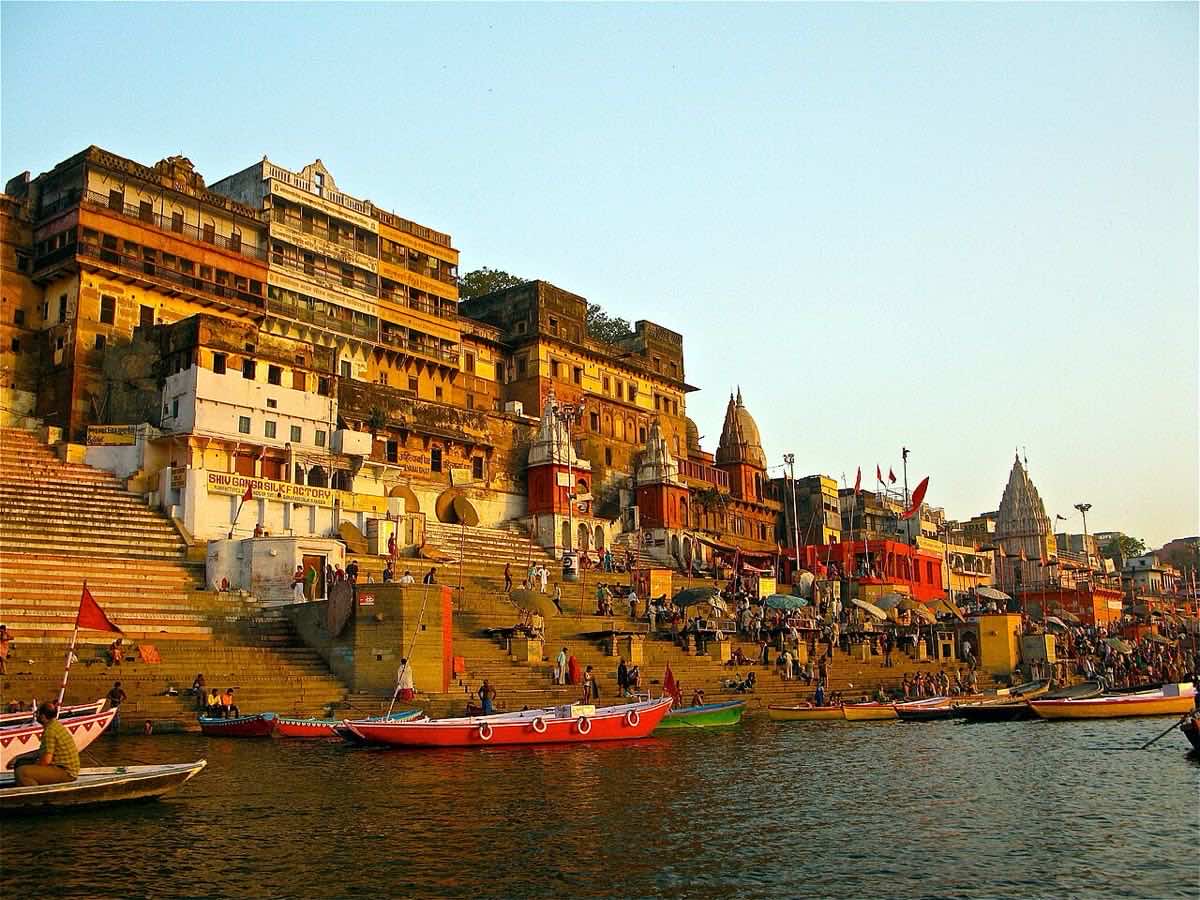
The ghāṭs of Vārāṇasī (Kāśī) represent the supreme tīrtha on the Gaṅgā. To die in Kāśī with one’s feet in the Gaṅgā is considered the most auspicious death, guaranteeing immediate liberation. The evening Gaṅgā Āratī at Daśāśvamedha Ghāṭ, where priests offer fire to the river with choreographed rituals, draws thousands nightly and has become an iconic image of Hindu devotion.
The Gaṅgā’s Course
The Gaṅgā rises as the Bhāgīrathī from the Gaumukh glacier at the base of the Gaṅgotrī group of peaks in Uttarakhand at an elevation of 3,892 metres. She flows 2,525 kilometres through the plains of North India before emptying into the Bay of Bengal in a vast delta. Along her course, the cities of Haridvār, Prayāgarāja (Allahabad), Vārāṇasī, and Paṭnā serve as major pilgrimage centres.
Yamunā: The Dark-Watered Beloved
Yamunā (यमुना), the second most sacred river, is the daughter of Sūrya (the Sun God) and sister of Yama (the God of Death). She is also called Kālindī (“daughter of Mount Kalinda,” her Himalayan source). The Bhāgavata Purāṇa celebrates her intimate association with Kṛṣṇa — the banks of the Yamunā in Vṛndāvana and Mathurā are the setting for the divine līlā (play) of Kṛṣṇa with the gopīs.
The Yamunāṣṭaka, attributed to Vallabhācārya, praises her: “O Yamunā! O daughter of the Sun! Your waves, playing in Vṛndāvana, have been touched by the lotus feet of Śrī Kṛṣṇa.” Bathing in the Yamunā, especially at Viśrāma Ghāṭ in Mathurā, is believed to free the devotee from the fear of death — for one washed by Sūrya’s daughter need not fear Yama.
Sarasvatī: The Lost River
Sarasvatī (सरस्वती) occupies a unique place as the most celebrated river of the Ṛg Veda yet one that has ceased to flow as a surface river. The Ṛg Veda (2.41.16) hails her as ambitame nadītame devitame Sarasvatī — “best of mothers, best of rivers, best of goddesses, O Sarasvatī.” She is described as flowing from the mountains to the sea, “pure in her course from the mountains to the ocean” (Ṛg Veda 7.95.2).
Geological and satellite evidence now confirms the existence of the Ghagghar-Hakra river system as the likely palaeochannel of the Vedic Sarasvatī, which dried up around 2000 BCE due to tectonic shifts and climate change. The Sarasvatī survives in Hindu consciousness as the goddess of knowledge, speech, and the arts, and as the invisible third river at the Trivēṇī Saṅgam at Prayāgarāja, where she is believed to flow underground.
Narmadā: The River of Penance
Narmadā (नर्मदा), also called Revā, is the holiest river of Central India and the only one that is circumambulated (parikramā) as a spiritual practice. The Narmadā Parikramā — walking the entire 2,600 km length of the river and back on the opposite bank — takes approximately three years and is considered one of the most meritorious pilgrimages in Hinduism.
The Skanda Purāṇa (Revā Khaṇḍa) declares that while the Gaṅgā purifies through bathing, the Narmadā purifies through mere sight (darśana): darśanād eva Narmadā. The river’s pebbles, naturally shaped into liṅgas by the current, are worshipped as self-manifested (svayambhū) Śivaliṅgas — known as Narmadeśvara or Bāṇaliṅga — and are among the most sacred objects in Śaivism.
According to mythology, Narmadā was born from the sweat of Lord Śiva’s body during his tapas (penance), hence her epithet Śaṅkara-sutā (“daughter of Śaṅkara/Śiva”). The Matsya Purāṇa records that Narmadā performed severe penance to become holier than the Gaṅgā, and Śiva granted her the boon that her very stones would be worshipped as liṅgas.
Godāvarī: The Gaṅgā of the South
Godāvarī (गोदावरी), at 1,465 km, is the longest river in peninsular India and is revered as the Dakṣiṇa Gaṅgā (“Gaṅgā of the South”). According to the Brahma Purāṇa, the sage Gautama brought the Gaṅgā to the Deccan through the power of his austerities, and she manifested as the Godāvarī.
The river’s source at Tryambakeśvara (near Nāsik, Maharashtra), one of the twelve Jyotirliṅgas, is a major pilgrimage site. Every twelve years, the Siṃhastha Kumbh Melā is held at Nāsik on the banks of the Godāvarī, drawing millions of pilgrims. The river passes through Bhadrachalam (Andhra Pradesh/Telangana), a major centre of Rāma worship, before entering the Bay of Bengal.
Kāverī: The Sacred River of the Dravidian South
Kāverī (कावेरी, Tamil: காவிரி) is the holiest river of South India, rising at Talakāverī in the Brahmagiri Hills of Kodagu (Coorg), Karnataka, and flowing through Tamil Nadu to the Bay of Bengal. She is personified as the daughter of Brahma and the consort of the sage Agastya.
The Śrīraṅgam temple, situated on an island formed by the Kāverī and its distributary the Kollidam, is the largest functioning Hindu temple in the world and the foremost among the 108 Divya Desams of Vaiṣṇavism. The annual Māhamaham festival at Kumbakonam, where the Kāverī meets several tributary channels, occurs every twelve years and draws hundreds of thousands.
Tamil Sangam literature (Puṛanāṉūṛu, Akanaṉūṛu) celebrates the Kāverī as the lifeline of the Chola kingdom: the fertile Kāverī Delta (Tañjāvūr district) has been called the “rice bowl of Tamil Nadu” for over two millennia.
Trivēṇī Saṅgam: The Sacred Confluence
The Trivēṇī Saṅgam (त्रिवेणी संगम, “Triple Braid Confluence”) at Prayāgarāja (Allahabad), where the Gaṅgā, Yamunā, and the invisible Sarasvatī meet, is the holiest pilgrimage site in Hinduism. The Matsya Purāṇa (104.12-14) declares: “He who bathes at Prayāga on Māgha Māsī [the full moon of Māgha] obtains the fruit of a thousand Aśvamedha sacrifices and a hundred Vājapeya sacrifices.”
The concept of saṅgam (confluence) is itself deeply sacred: wherever two or more rivers meet, the spiritual potency is believed to be multiplied. Besides the Trivēṇī at Prayāga, notable confluences include:
- Devaprayāga — where Bhāgīrathī and Alaknandā merge to form the Gaṅgā
- Rudraprayāga — where Alaknandā meets Mandākinī
- Haridvār — where the Gaṅgā enters the plains from the Himalayas
Kumbh Melā: The Great River Festival
The Kumbh Melā (कुम्भ मेला) is the largest periodic gathering of human beings on earth. Held in rotation at four river sites — Prayāgarāja (Gaṅgā-Yamunā-Sarasvatī), Haridvār (Gaṅgā), Ujjain (Kṣiprā), and Nāsik (Godāvarī) — the Kumbh cycle spans twelve years, corresponding to Jupiter’s transit through the zodiac.
The mythology traces the Kumbh to the Samudra Manthana (Churning of the Ocean), when drops of the amṛta (nectar of immortality) fell at these four locations as Garuḍa carried the kumbha (pitcher) to safety. The Mahā Kumbh at Prayāgarāja, occurring every 144 years (twelve complete Jupiter cycles), most recently held in 2025, is the apex of this tradition.
UNESCO inscribed the Kumbh Melā on its Representative List of Intangible Cultural Heritage of Humanity in 2017, recognising it as “the largest peaceful congregation of pilgrims on earth.”
River Worship Rituals
Daily and seasonal rituals centred on rivers include:
- Snāna (sacred bathing) — particularly at dawn (prātaḥ-snāna), believed to purify body and soul
- Tarpana — offering water to ancestors (pitṛ tarpana) and deities while standing in the river
- Dīpa-dāna — floating leaf-cups with oil lamps and flowers on the river, especially during Kārtika Pūrṇimā and Dev Dīpāvalī
- Gaṅgā Āratī — the elaborate evening fire-offering to the river, most famous at Vārāṇasī, Haridvār, and Ṛṣikeśa
- Asthi Visarjana — immersion of cremated remains in sacred rivers, believed to grant sadgati (good passage) to the deceased
- Puṣkara Snāna — bathing when Jupiter transits the zodiac sign associated with a particular river (a twelve-year cycle for each river)
Rivers as Goddesses: Personification and Iconography
In Hindu art and temple architecture, sacred rivers are personified as beautiful goddesses. Gaṅgā stands upon her vāhana (mount), the makara (a mythical aquatic creature), carrying a water-pot and lotus. Yamunā rides a tortoise (kūrma). Sculptural representations of Gaṅgā and Yamunā flanking temple doorways are standard in Gupta-period and medieval North Indian architecture, symbolising the purification of devotees as they enter sacred space.
The Agni Purāṇa (chapter 51) prescribes the iconography: Gaṅgā wears white garments, Yamunā wears blue, and both are adorned with divine ornaments. In the Devī Māhātmya, all sacred rivers are described as manifestations of the supreme Goddess.
Environmental Concerns and Sacred Duty
The veneration of rivers as goddesses carries a profound ecological implication: to pollute a sacred river is not merely an environmental offence but a spiritual transgression. The Manu Smṛti (4.56) prohibits contaminating water bodies. The Garuḍa Purāṇa (1.222.28) warns of hellish consequences for those who pollute rivers.
Today, the sacred rivers of India face unprecedented threats from industrial pollution, sewage, deforestation, and damming. The Gaṅgā, despite its spiritual centrality, is one of the most polluted rivers in the world. Government initiatives like Namāmī Gaṅge (launched 2014) and movements led by environmental activists and religious leaders seek to restore the health of these waters. Hindu religious organisations have increasingly framed river conservation as dharmic duty — the living tradition demanding that devotees who worship the river must also protect her.
Conclusion
The sacred rivers of Hinduism are far more than geographical features. They are living theologies — embodied in water, flowing through landscape and mythology simultaneously. The Gaṅgā falling from heaven through Śiva’s hair, the Yamunā witnessing Kṛṣṇa’s moonlit dance, the invisible Sarasvatī flowing beneath the sands, the Narmadā whose very stones become Śiva — each river carries a world of meaning in its current.
As the Mahābhārata (Anuśāsana Parva, 13.27.39) declares: “Those rivers that are tīrthas, those rivers in which water is holy, those rivers that flow from the mountains — by remembering them at dawn, one is freed from all sins.”