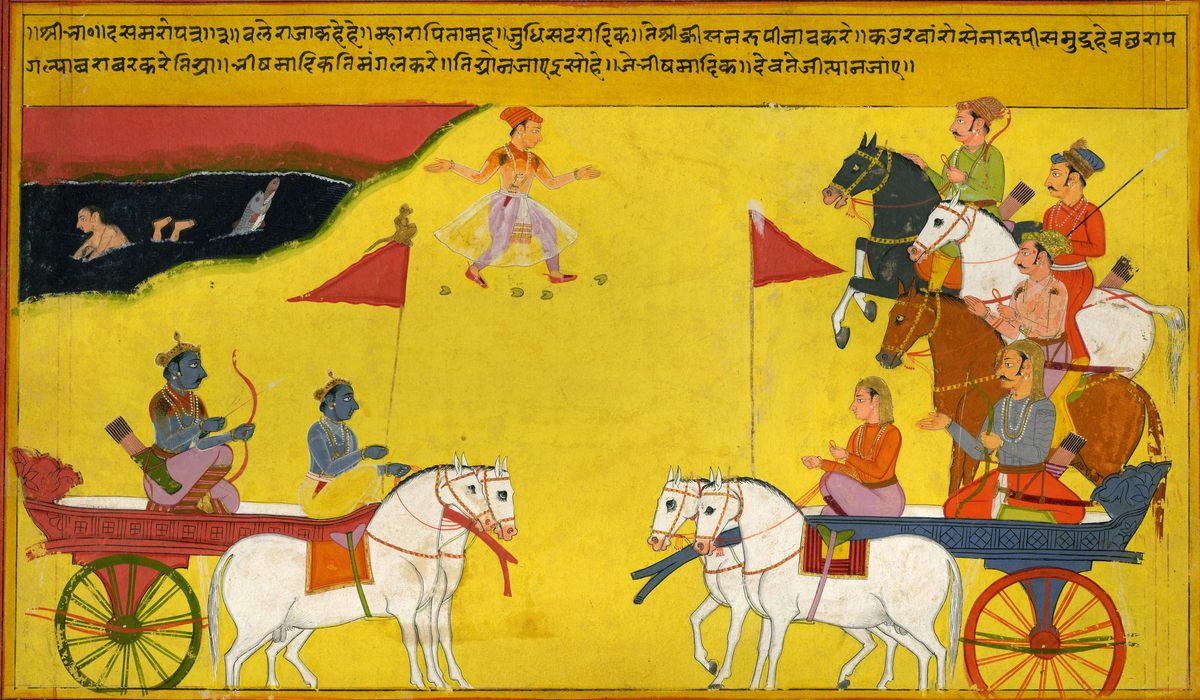
The Purāṇas (पुराण, “ancient, old”) are among the most important and influential texts in all of Hindu literature. Comprising vast encyclopedic collections of mythology, cosmology, genealogies, philosophy, and devotional teachings, the Purāṇas have served for centuries as the primary vehicle through which the profound truths of the Vedas reached the hearts and minds of ordinary people. While the Vedas represent the theological and philosophical backbone of Hinduism, it is the Purāṇas that transformed these abstract teachings into vivid narratives, accessible rituals, and living traditions that continue to shape Hindu religious life today.
Etymology and Definition
The Sanskrit word purāṇa (पुराण) literally means “ancient” or “old,” derived from the root purā (“formerly, of old”). The Purāṇas thus present themselves as accounts of ancient times — narratives that preserve the memory of creation, divine deeds, and the great dynasties of the past. The Viṣṇu Purāṇa (3.6.15) describes the Purāṇas as the “fifth Veda” (pañcama veda), highlighting their status alongside the four Vedas as essential repositories of sacred knowledge (Wisdom Library).
Within the hierarchy of Hindu scripture, the Purāṇas belong to the category of Smṛti (“that which is remembered”), as distinguished from Śruti (“that which is heard”), the revealed Vedic texts. Despite this secondary classification, the Purāṇas arguably shaped the practice of Hinduism more profoundly than the Vedas themselves, providing what scholars describe as a “cultural synthesis” that wove diverse local traditions into a coherent religious framework (Wikipedia - Puranas).
The Pañca-Lakṣaṇa: Five Defining Characteristics
The Matsya Purāṇa and Vāyu Purāṇa define a Purāṇa by its five characteristic topics, known as the pañca-lakṣaṇa (पञ्चलक्षण, “five marks”). These five subjects provide the structural framework expected in any Purāṇic text:
-
Sarga (सर्ग) — Primary creation: The original creation of the universe, including the emergence of the elements, cosmic principles, and the first beings.
-
Pratisarga (प्रतिसर्ग) — Secondary creation: The cycles of dissolution and re-creation, describing how the universe is periodically destroyed and reborn.
-
Vaṃśa (वंश) — Genealogies: The lineages of gods, sages (ṛṣis), and patriarchs, tracing divine and human ancestry.
-
Manvantara (मन्वन्तर) — Cosmic epochs: The great ages presided over by successive Manus (progenitors of humanity), describing the cyclical nature of time.
-
Vaṃśānucarita (वंशानुचरित) — Dynastic histories: The chronicles of royal dynasties, particularly the Solar (Sūryavaṃśa) and Lunar (Candravaṃśa) lines.
In practice, the Purāṇas far exceed these five topics, encompassing temple architecture, pilgrimage sites, festivals, medicine, grammar, astronomy, ethics, law, and much more. The pañca-lakṣaṇa framework thus represents a traditional ideal rather than a rigid structural requirement (Dharmawiki).
The Eighteen Mahāpurāṇas
Hindu tradition enumerates eighteen Mahāpurāṇas (Great Purāṇas), collectively containing over 400,000 verses. These texts are traditionally attributed to the sage Vyāsa (Vedavyāsa), who is also credited with compiling the Vedas and composing the Mahābhārata. According to the Viṣṇu Purāṇa, Vyāsa entrusted his Purāṇasaṃhitā to his disciple Lomaharṣaṇa (also called Romaharṣaṇa), who in turn transmitted it to his own disciples, from whose compilations the eighteen Purāṇas eventually emerged (Wisdom Library).
The eighteen Mahāpurāṇas, with their approximate verse counts and primary subjects, are:
| # | Purāṇa | Approx. Verses | Primary Focus |
|---|---|---|---|
| 1 | Brahma Purāṇa | 10,000 | Creation narratives, sacred geography, Jagannātha traditions |
| 2 | Padma Purāṇa | 55,000 | Cosmology, sacred sites, devotional stories of Viṣṇu |
| 3 | Viṣṇu Purāṇa | 23,000 | Viṣṇu’s avatāras, cosmology, royal genealogies |
| 4 | Śiva Purāṇa | 24,000 | Glory of Śiva, the liṅga, Śiva’s marriage and cosmic deeds |
| 5 | Bhāgavata Purāṇa | 18,000 | Kṛṣṇa’s life, bhakti philosophy, the ten avatāras |
| 6 | Nārada Purāṇa | 25,000 | Summaries of other Purāṇas, festivals, pilgrimage, Vedāṅgas |
| 7 | Mārkaṇḍeya Purāṇa | 9,000 | Devī Māhātmya (glory of the Goddess), ethics, dharma |
| 8 | Agni Purāṇa | 15,400 | Encyclopedic — rituals, iconography, grammar, medicine, warfare |
| 9 | Bhaviṣya Purāṇa | 14,500 | Prophecies, sun worship, rites, dharma for future ages |
| 10 | Brahmavaivarta Purāṇa | 17,000 | Kṛṣṇa and Rādhā, creation by Brahma, glorification of devīs |
| 11 | Liṅga Purāṇa | 11,000 | Symbolism and worship of the Śiva liṅga |
| 12 | Varāha Purāṇa | 10,000 | Varāha (boar) incarnation of Viṣṇu, dharma, sacred sites |
| 13 | Skanda Purāṇa | 81,000 | Largest Purāṇa — Skanda (Kārttikeya), pilgrimage, sacred geography |
| 14 | Vāmana Purāṇa | 10,000 | Vāmana avatāra, dharma, Śiva-Viṣṇu narratives |
| 15 | Kūrma Purāṇa | 17,000 | Kūrma (tortoise) avatāra, Śiva worship, philosophy |
| 16 | Matsya Purāṇa | 14,000 | Matsya (fish) avatāra, temple construction, iconography |
| 17 | Garuḍa Purāṇa | 19,000 | Afterlife, funeral rites, cosmology, dharma, gemology |
| 18 | Brahmāṇḍa Purāṇa | 12,000 | Cosmogony, Lalitā Sahasranāma, governance, ethics |
The Skanda Purāṇa, with approximately 81,000 verses, is the largest of all, while the Brahma Purāṇa is traditionally listed first, earning it the epithet Ādi Purāṇa (“the first Purāṇa”).
Classification by Guṇa
The Padma Purāṇa classifies the eighteen Mahāpurāṇas into three groups of six, corresponding to the three guṇas (qualities of nature) and their presiding deities:
Sāttvika Purāṇas (Goodness — associated with Viṣṇu): Viṣṇu, Bhāgavata, Nārada, Garuḍa, Padma, and Varāha Purāṇas. These emphasize devotion (bhakti), righteous conduct, and spiritual wisdom.
Rājasika Purāṇas (Passion — associated with Brahmā): Brahmāṇḍa, Brahmavaivarta, Mārkaṇḍeya, Bhaviṣya, Vāmana, and Brahma Purāṇas. These explore dynamic narratives of creation, heroic deeds, and cosmic activity.
Tāmasika Purāṇas (Darkness — associated with Śiva): Matsya, Kūrma, Liṅga, Śiva, Skanda, and Agni Purāṇas. These address themes of dissolution, transformation, and the primal forces of the cosmos.
This classification, while traditional, has been debated by scholars. Modern academics note that the guṇa assignment appears to reflect sectarian perspectives rather than a systematic content analysis, as many Purāṇas contain material glorifying multiple deities (Kaalchakra).
The Upa-Purāṇas
Alongside the eighteen Mahāpurāṇas, tradition also recognizes eighteen Upa-Purāṇas (minor or secondary Purāṇas). There is less consensus on which texts constitute this list; commonly cited Upa-Purāṇas include the Sanatkumāra, Narasiṃha, Bṛhannāradīya, Śivarahasya, Durvāsas, Kapila, Vāmana, Bhārgava, Varuṇa, Kālikā, Sāmba, Nandī, Sūrya, Parāśara, Vasiṣṭha, Gaṇeśa, and Mudgala Purāṇas.
These texts can be broadly grouped into six sectarian categories: Vaiṣṇava, Śākta, Śaiva, Saura (solar), Gāṇapatya (devoted to Gaṇeśa), and non-sectarian. Though styled as secondary, several Upa-Purāṇas are extensive and religiously significant in their own right (Wikipedia - Upapurana).
Historical Dating and Authorship
While tradition attributes the Purāṇas to the single sage Vyāsa, modern scholarship considers them the collective work of many authors over many centuries. As the scholar Ludo Rocher has noted, it is not possible to assign a definitive date to any Purāṇa as a whole, since each text is a composite of layers added across different historical periods.
The earliest Purāṇic material may date to as early as the 3rd-4th century CE, while significant composition, compilation, and expansion continued through the Gupta period (4th-6th century CE) — often called a Hindu renaissance — and well into the medieval period (up to approximately 1500 CE). Scholar Wendy Doniger proposes specific ranges for individual texts: the Mārkaṇḍeya Purāṇa to c. 250 CE, the Viṣṇu Purāṇa to c. 450 CE, and the Liṅga Purāṇa to c. 600-1000 CE (Wikipedia - Puranas).
The Purāṇas thus represent a living literary tradition that evolved over more than a millennium, absorbing regional traditions, responding to changing devotional movements, and continuously expanding in scope.
Relationship to Other Sacred Texts
The Purāṇas occupy a distinctive position within the broader landscape of Hindu scripture:
- Vedas (Śruti): The Purāṇas serve to “explicate, interpret, and adapt” the metaphysical truths of the Vedas, making abstract Vedic philosophy accessible through narrative and devotion.
- Itihāsas (Epics): Together with the Mahābhārata and the Rāmāyaṇa, the Purāṇas form the category of Itihāsa-Purāṇa, sometimes called the “fifth Veda.” The Purāṇas share genealogical and mythological material with the epics while expanding into cosmology and theology.
- Smṛti and Dharmaśāstra: The Purāṇas complement the law codes (Dharmasūtras and Dharmaśāstras) by providing narrative contexts for ethical and legal principles.
As the philosopher Swami Krishnananda has observed, “the religion that the common Hindu knows and practises is the religion of the Epics and the Purāṇas.” It is through these texts, rather than the Vedas directly, that most Hindus have encountered the stories of the gods, the principles of dharma, and the practices of worship (Swami Krishnananda).
The Bhāgavata Purāṇa: Crown Jewel of Purāṇic Literature
Among all the Purāṇas, the Śrīmad Bhāgavatam (Bhāgavata Purāṇa) stands as the most celebrated and widely studied. Comprising twelve books (skandhas), 335 chapters, and approximately 18,000 verses, it is the supreme text of Kṛṣṇa devotional (bhakti) literature (Britannica).
The tenth book, containing roughly 4,000 verses — a full quarter of the entire work — narrates the life of Kṛṣṇa in exquisite detail: his miraculous birth in Mathurā, his playful childhood among the cowherds of Vṛndāvana, his slaying of demons, his divine love play (rāsa-līlā) with the gopīs, and his later role as prince, philosopher, and guide. This narrative has inspired centuries of devotional poetry, music, dance, painting, and temple art across India and beyond.
The Bhāgavata Purāṇa promotes bhakti yoga — the path of loving devotion — as the supreme means of liberation (mokṣa). Its influence on Vaiṣṇava movements, from the Āḷvārs of South India to the Gauḍīya Vaiṣṇavism of Caitanya Mahāprabhu in Bengal, has been immeasurable. The text is ceremonially recited in seven-day festivals called saptāhas, a tradition that continues to draw thousands of devotees.
Legacy and Living Tradition
The Purāṇas are far more than ancient literary artifacts. They remain a living, breathing part of Hindu religious life:
- Temple traditions: The stories, rituals, and iconographic prescriptions found in the Purāṇas guide temple worship across India to this day.
- Festivals: Nearly every major Hindu festival — from Navarātri to Kṛṣṇa Janmāṣṭamī — has its mythological basis in the Purāṇas.
- Oral tradition: Village recitations of Purāṇic stories (kathā) continue to serve as a primary form of religious education, making sacred knowledge accessible to people of all social strata.
- Cultural unity: The Purāṇas catalyzed what scholars describe as a “cultural mosaic,” integrating diverse regional traditions into a shared Hindu identity across the subcontinent.
In an age when the Vedas were restricted to the learned elite, the Purāṇas opened the gates of spiritual wisdom to all — men and women, scholars and farmers, kings and servants alike. Their enduring power lies in this democratization of the sacred: the conviction that divine truth can be encountered not only through austere meditation or complex ritual, but through the simple act of hearing a story about the gods.