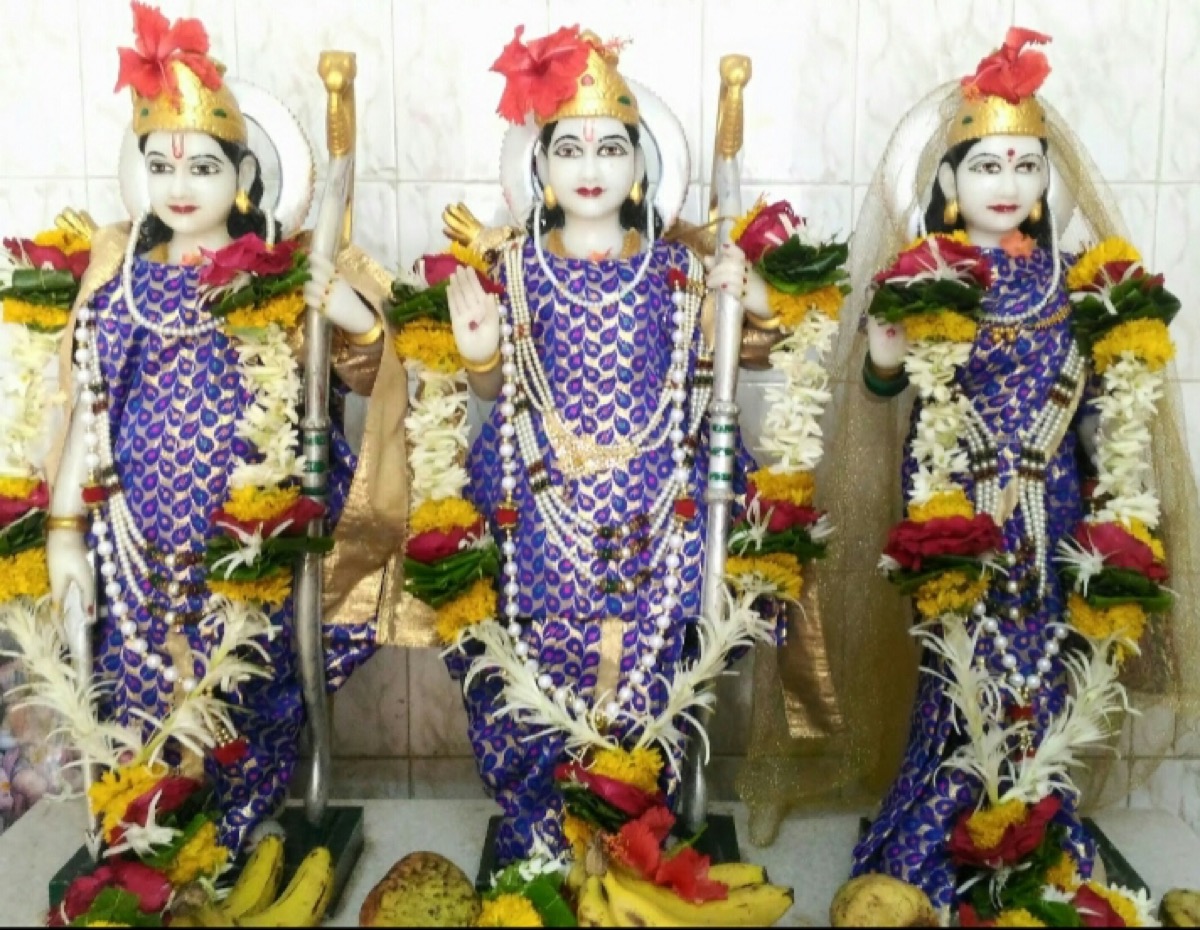
Ram Navami (रामनवमी, Rāmanavamī) is one of the most joyous and spiritually significant festivals in the Hindu calendar, celebrating the birth of Lord Rāma — the seventh avatāra of Viṣṇu, the ideal king (maryādā puruṣottama), and the embodiment of dharma in human form. Observed on the ninth day (navamī) of the bright fortnight (śukla pakṣa) of the Hindu month of Chaitra (March–April), Ram Navami marks the culmination of the nine-day spring festival of Chaitra Navarātri and draws millions of devotees to temples, rivers, and sacred sites across India and the global Hindu diaspora.
The festival commemorates the moment when Lord Rāma descended into the mortal world as the eldest son of King Daśaratha and Queen Kausalyā in the solar dynasty capital of Ayodhyā, an event narrated in exquisite detail in the Vālmīki Rāmāyaṇa, the Rāmacharitamānasa of Tulasīdāsa, and numerous Purāṇic texts. Ram Navami is not merely a celebration of a divine birth — it is an affirmation of the Hindu belief that the Supreme Being incarnates on earth whenever dharma declines and adharma rises, as promised by Kṛṣṇa in the Bhagavad Gītā (4.7–8): “yadā yadā hi dharmasya glānir bhavati bhārata…”
Scriptural Origins: The Birth of Rāma
The Vālmīki Rāmāyaṇa Account
The most authoritative account of Rāma’s birth appears in the Bāla Kāṇḍa of the Vālmīki Rāmāyaṇa (c. 5th century BCE), the oldest and most revered version of the Rāma narrative. The sage Vālmīki describes how King Daśaratha of Ayodhyā, despite his sixty thousand wives, had no heir to continue the Ikṣvāku solar dynasty. On the counsel of his guru Vasiṣṭha and the sage Ṛṣyaśṛṅga, Daśaratha performed the Putrakāmeṣṭi yajña — a powerful Vedic fire sacrifice specifically intended to beget sons (Bāla Kāṇḍa, chapters 14–16).
From the sacrificial fire emerged a divine being (agni-puruṣa) bearing a golden vessel filled with celestial pāyasa (sweet rice pudding), which was to be distributed among Daśaratha’s three principal queens. Kausalyā received half of the pāyasa, Sumitrā received a quarter (in two portions), and Kaikeyī received the remaining quarter. In due course, Kausalyā gave birth to Rāma, Kaikeyī to Bharata, and Sumitrā to the twins Lakṣmaṇa and Śatrughna (Bāla Kāṇḍa 18.8–18.16).
Vālmīki specifically records that Rāma was born on the navamī tithi of Chaitra māsa, during the Punarvasu nakṣatra, when the Sun was exalted in Aries (Meṣa rāśi) and five planets were in their positions of strength. This precise astrological configuration is repeatedly cited in Hindu tradition as marking a supremely auspicious moment for the descent of the divine (Bāla Kāṇḍa 18.8–10).
The Rāmacharitamānasa Account
Gosvāmī Tulasīdāsa’s Rāmacharitamānasa (1574 CE), the beloved Hindi retelling in the Awadhī dialect, expands the birth narrative with characteristic devotional warmth. In the Bāla Kāṇḍa of the Mānasa, Tulasīdāsa describes the cosmic anticipation preceding Rāma’s birth: the gods shower flowers from heaven, celestial musicians (gandharvas) sing, divine drums resound, and the earth itself trembles with joy. The poet describes the moment of birth in luminous chaupāī verses:
“Bhaye pragaṭa kṛpālā dīna dayālā Kausalyā hitakārī | Haraṣita mahatārī muni mana hārī adbhuta rūpa bichārī ||”
(“The merciful Lord, compassionate to the humble, appeared for the welfare of Kausalyā. The mother was overjoyed, the sages’ minds were captivated, beholding His wondrous form.”)
Tulasīdāsa emphasizes that the infant Rāma appeared with four arms bearing the conch, discus, mace, and lotus — the iconographic markers of Viṣṇu himself — before assuming the two-armed form of a human child at Kausalyā’s tearful request. This theological detail underscores the Vaiṣṇava doctrine that Rāma is not an ordinary prince who became divine, but the Supreme Godhead who chose to assume human limitations for the sake of dharma.
Purāṇic Elaborations
The Viṣṇu Purāṇa (4.4) and the Bhāgavata Purāṇa (9.10–11) provide the theological framework for understanding Rāma’s birth within the larger cycle of Viṣṇu’s avatāras. The Bhāgavata Purāṇa situates Rāma as the ideal king who demonstrates how a householder (gṛhastha) can live a life of perfect dharma while fulfilling worldly responsibilities — a model that has profoundly shaped Hindu social ethics.
The Agni Purāṇa (chapters 5–11) provides an abbreviated narrative of the Rāmāyaṇa and specifically identifies Chaitra Śukla Navamī as the tithi of Rāma’s birth, confirming the calendrical tradition that governs the observance of Ram Navami across Hindu communities.
Connection to Chaitra Navarātri
Ram Navami does not stand alone as an isolated festival — it forms the climactic conclusion of the nine-day spring festival of Chaitra Navarātri (also called Vasanta Navarātri or Rāma Navarātri). While the autumn Śāradīya Navarātri (September–October) is primarily devoted to the worship of Devī (the Divine Mother) in her nine forms, Chaitra Navarātri has a strong Vaiṣṇava dimension, particularly in North India.
During the nine days of Chaitra Navarātri, devotees observe fasts, perform pūjā, recite the Rāmāyaṇa, and engage in devotional singing (bhajana) in preparation for the grand celebration of Rāma’s birth on the ninth day. The theological connection between Devī worship and Rāma’s birth is deeply meaningful: in many traditions, the first eight days honour Goddess Durgā, whose grace is understood as the cosmic feminine power (śakti) that makes the avatāra possible. Rāma’s birth on the ninth day represents the fruit of this divine feminine grace.
In the Śrī Vaiṣṇava tradition, the nine days are observed as Śrī Rāma Navarātri, entirely dedicated to the recitation and contemplation of the Rāmāyaṇa, building up to the elaborate Śrī Rāma Navamī celebrations on the final day.
Rituals and Worship Practices
Rāma Kathā and Scriptural Recitation
The most universal Ram Navami observance across all Hindu communities is the recitation or listening to Rāma Kathā — the sacred story of Rāma. In North India, this primarily takes the form of reciting the Rāmacharitamānasa of Tulasīdāsa, often organized as multi-day akhaṇḍa pāṭha (unbroken reading) that begins several days before Navamī and concludes precisely at the auspicious hour of Rāma’s birth (usually around noon). In South India, the Vālmīki Rāmāyaṇa or the Adhyātma Rāmāyaṇa is preferred. In Maharashtra, Bhavartha Rāmāyaṇa by Eknāth is the traditional text.
Temples organize pravacana (discourses) by learned scholars and storytellers who narrate the life of Rāma with commentary, drawing moral and spiritual lessons for contemporary audiences. These discourses transform the ancient narrative into a living source of ethical guidance, emphasizing Rāma’s qualities of truthfulness (satya), compassion (karuṇā), marital devotion (pativratā dharma and patnī dharma), filial obedience, and selfless leadership.
Temple Rituals
On Ram Navami, temples housing Rāma idols perform elaborate abhiṣeka (ritual bathing of the deity) with milk, yoghurt, honey, sugar, and ghee — the five ingredients of pañcāmṛta. The deity is dressed in new garments and adorned with fresh flowers and jewellery. Special offerings (naivedya) include fruits, kośambari (sprouted-lentil salad, especially in South India), panakam (jaggery-ginger drink), and neer-mor (buttermilk).
A distinctive ritual is the Sūrya pūjā (Sun worship) performed at noon, the traditionally accepted time of Rāma’s birth. Since Rāma belongs to the Sūryavaṁśa (Solar Dynasty), the worship of the midday Sun is considered an integral part of Ram Navami celebrations. Devotees offer arghya (water oblation) to the Sun and recite the Āditya Hṛdayam, the solar hymn taught by Sage Agastya to Rāma before the battle with Rāvaṇa (Yuddhakāṇḍa 107).
Kalyāṇotsavam: The Divine Wedding
In South Indian temples, particularly in Andhra Pradesh, Telangana, and Tamil Nadu, Ram Navami is celebrated as Kalyāṇotsavam — the celestial wedding of Rāma and Sītā. This grand ceremonial re-enactment of the svayaṃvara described in the Bāla Kāṇḍa is the highlight of the day, when processional images (utsava mūrti) of Rāma and Sītā are brought together in a spectacular wedding ceremony conducted with full Vedic rites by temple priests.
The Kalyāṇotsavam at the Bhadrachalam Temple in Telangana is the most famous of these celebrations. According to tradition, the 17th-century devotee-administrator Bhakta Rāmadāsu (Kañcharla Gopanna) established this annual celebration after his vision of Rāma and Sītā, and it has been conducted without interruption for over three centuries. The Telangana state government officially sponsors the event, and it draws hundreds of thousands of devotees annually.
Regional Celebrations
Ayodhyā: The Birthplace
The grandest Ram Navami celebrations naturally occur at Ayodhyā in Uttar Pradesh, identified in Hindu tradition as Rāma’s birthplace. The city transforms during the festival, with elaborate decorations along the banks of the Sarayū River, thousands of oil lamps illuminating the ghāṭs, and massive processions (śobhā yātrā) featuring decorated chariots carrying tableaux of scenes from the Rāmāyaṇa.
The central event is the midday celebration at the Rāma Janmabhūmi site, where special pūjā is performed at the traditionally identified spot of Rāma’s birth. Pilgrims from across India converge on Ayodhyā, and the city’s population swells manifold during the festival. Community kitchens (bhaṇḍārā) offer free meals to all visitors, embodying the spirit of Rāma’s hospitality and generosity.
South Indian Traditions
In Karnataka, Ram Navami is celebrated with particular fervour at the Rāmacandra Temple in Hampi (the ancient Kiṣkindhā of the Rāmāyaṇa) and the Rāghavendra Swāmi Maṭha at Mantralayam. The nine-day festival features classical music concerts (Rāma Seva), Harikathā performances, and the distribution of kośambari and panakam.
In Tamil Nadu, the festival is known as Rāma Navami or Kalyāṇam, with emphasis on the divine wedding. Temples organize elaborate pūrvāṅga (preliminary) rituals over the preceding days, culminating in the Kalyāṇotsavam. The Parthasarathy Temple and the Ramar Pattabishekam Temple in Chennai are centres of major celebrations.
In Andhra Pradesh, the Kodandarama Temple at Vontimitta hosts a nationally renowned three-day festival. The Kalyāṇotsavam here follows the same Vedic procedures as described in the Vālmīki Rāmāyaṇa for the original wedding in Mithilā.
Maharashtra and Western India
In Maharashtra, Ram Navami is preceded by nine days of pārāyaṇa (continuous reading) of the Rāmacharitamānasa or the Marathi Bhavartha Rāmāyaṇa. The festival day features elaborate rath yātrā (chariot processions) through city streets, particularly in Nagpur, Pune, and Mumbai, where community organizations mount grand processional displays.
In Gujarat, the city of Vadodara hosts one of the most spectacular Ram Navami processions, a tradition established in the 19th century under the Gaekwad rulers, featuring decorated elephants, horses, and elaborate floats.
Caribbean and Global Diaspora
Ram Navami holds special significance for the Indo-Caribbean diaspora, particularly in Trinidad and Tobago, Guyana, Suriname, and Jamaica, where indentured labourers from Bihar and eastern Uttar Pradesh brought Rāma devotion in the 19th century. The festival is a public holiday in Trinidad and Tobago, where it is celebrated with yajña, bhajana, and dramatic recitations of the Rāmacharitamānasa in the Awadhī dialect.
In Mauritius, Fiji, South Africa, and Malaysia, the Hindu communities observe Ram Navami with temple ceremonies, community feasts, and cultural programmes that preserve and transmit the Rāmāyaṇa tradition in diaspora contexts.
Fasting and Vows
Many devotees observe a full-day upavāsa (fast) on Ram Navami, consuming only fruits, milk, and water until the evening pūjā. Some observe the fast for all nine days of Chaitra Navarātri. The fast is traditionally broken after the midday celebration of Rāma’s birth, with the consumption of prasāda (consecrated food offerings).
Devotees also undertake saṅkalpa (vows) on Ram Navami — resolving to read the entire Rāmāyaṇa within a fixed period, to observe certain ethical disciplines, or to make charitable donations in Rāma’s name. The giving of charity (dāna), especially food, clothing, and books, is considered especially meritorious on this day.
Music and Cultural Traditions
Ram Navami has inspired a vast body of devotional music across Indian linguistic traditions. In the Hindustani classical tradition, Ram Navami is associated with ragas like Darbari Kanada and Bhairav, and compositions by saint-poets such as Tulasīdāsa, Sūrdāsa, and Kabīr are performed in concerts and satsaṅgas. In the Carnatic tradition, the compositions of Tyāgarāja — who composed his entire oeuvre in devotion to Rāma — are central to Ram Navami celebrations, with the annual Tyāgarāja Ārādhana closely linked to the Rāma devotional tradition.
Theatrical performances of the Rāmāyaṇa, including Rām Līlā (North India), Yakṣagāna (Karnataka), Kathākali (Kerala), and Tērukkūttu (Tamil Nadu), reach their peak around Ram Navami, bringing the ancient narrative to life through dance, drama, and spectacle.
Theological Significance
Ram Navami encapsulates several foundational Hindu theological concepts. First, it affirms the doctrine of avatāra — the belief that the Supreme Being descends into the material world in various forms to restore cosmic order. Rāma’s birth on earth is not accidental or arbitrary but is a deliberate act of divine compassion (karuṇā) in response to the suffering caused by the demon king Rāvaṇa’s tyranny.
Second, the festival celebrates maryādā (propriety, decorum, ethical boundaries) as the highest expression of dharma. Unlike Kṛṣṇa, whose līlā (divine play) often transcends conventional morality, Rāma embodies the ideal of living within the established norms of duty, truth, and social responsibility — even at immense personal cost. His willing acceptance of fourteen years of forest exile to honour his father’s word, his unwavering fidelity, and his just and compassionate rule (Rāma Rājya) serve as the moral compass for Hindu ethical life.
Third, Ram Navami reaffirms the accessibility of the divine. The Rāmacharitamānasa repeatedly emphasizes that the name of Rāma (Rāma-nāma) is even more powerful than Rāma himself — anyone, regardless of caste, gender, or learning, can attain liberation through the simple, sincere chanting of the divine name. This democratizing theology of nāma-saṅkīrtana has made Rāma worship the most widespread devotional tradition in North India.
Modern Observances and Cultural Impact
In contemporary India, Ram Navami is a gazetted national holiday. The festival has grown in scale, particularly since the inauguration of the Rāma Mandir at Ayodhyā in January 2024, which has made Ayodhyā a focal point of national devotion. Government institutions, schools, and cultural organizations host programmes celebrating Rāma’s ideals of justice, truth, and compassionate governance.
Television and digital media have amplified the reach of Ram Navami, with live-streamed temple ceremonies, dramatic serials based on the Rāmāyaṇa, and social media campaigns spreading the festival’s message globally. The annual re-broadcast of Ramanand Sagar’s Ramayan television series (1987–1988) around Ram Navami has become a national cultural phenomenon, drawing record viewership.
Ram Navami ultimately reminds Hindus that the divine is not distant or abstract — it enters the world as a human being, walks among us, suffers as we suffer, and through that suffering demonstrates the path of righteous living that leads to the triumph of dharma over adharma, light over darkness, and truth over falsehood.