Introduction
Among the great traditions of Hinduism, Shaktism (Sanskrit: शाक्तम्, Śāktam) stands as the path that recognises the supreme reality as feminine. For the Śākta, the ultimate ground of existence is not an abstract principle but a living, dynamic power — Śakti (शक्ति), the primordial cosmic energy that creates, sustains, and dissolves the universe. Without Śakti, the texts declare, even Śiva is inert — a śava (corpse). The celebrated verse from the Saundaryalaharī (1) attributed to Śaṅkarācārya affirms: “If Śiva is united with Śakti, He is able to create; otherwise He is unable even to stir.”
Shaktism is not merely a theological abstraction. It is a living, breathing tradition practised by hundreds of millions across the Indian subcontinent — from the Kālī temples of Bengal to the Amman shrines of Tamil Nadu, from the Kāmākhyā Pīṭha in Assam to the Vaiṣṇo Devī cave shrine in Kashmir. This article explores the philosophical foundations, scriptural sources, and diverse regional expressions of Goddess worship in Hinduism.
The Concept of Śakti
The word śakti derives from the Sanskrit root śak-, meaning “to be able” or “to have power.” In Hindu metaphysics, Śakti is the dynamic, creative aspect of the divine. While the male principle (Śiva, Viṣṇu, or Brahman) represents pure consciousness (cit), Śakti represents the power (kriyā) that manifests consciousness into the phenomenal world.
The Devī Bhāgavata Purāṇa (1.5.51-54) declares that Śakti is the root cause of creation, preservation, and destruction. She is māyā (the creative illusion), prakṛti (primordial nature), and parā vidyā (supreme knowledge) simultaneously. In the Śākta worldview, consciousness and energy, Śiva and Śakti, are not two separate realities but two aspects of one indivisible whole — like fire and its heat, or a word and its meaning.
Scriptural Foundations
Devī Māhātmya
The Devī Māhātmya (देवी माहात्म्य, “Glory of the Goddess”), also known as the Durgā Saptaśatī or Caṇḍī Pāṭha, is the central scripture of Shaktism. Composed around the 5th-6th century CE and embedded within the Mārkaṇḍeya Purāṇa (chapters 81-93), it recounts the Goddess’s cosmic battles against demonic forces in three major episodes:
- Madhu-Kaiṭabha episode (Chapter 1): Mahāmāyā awakens Viṣṇu to slay the demons Madhu and Kaiṭabha
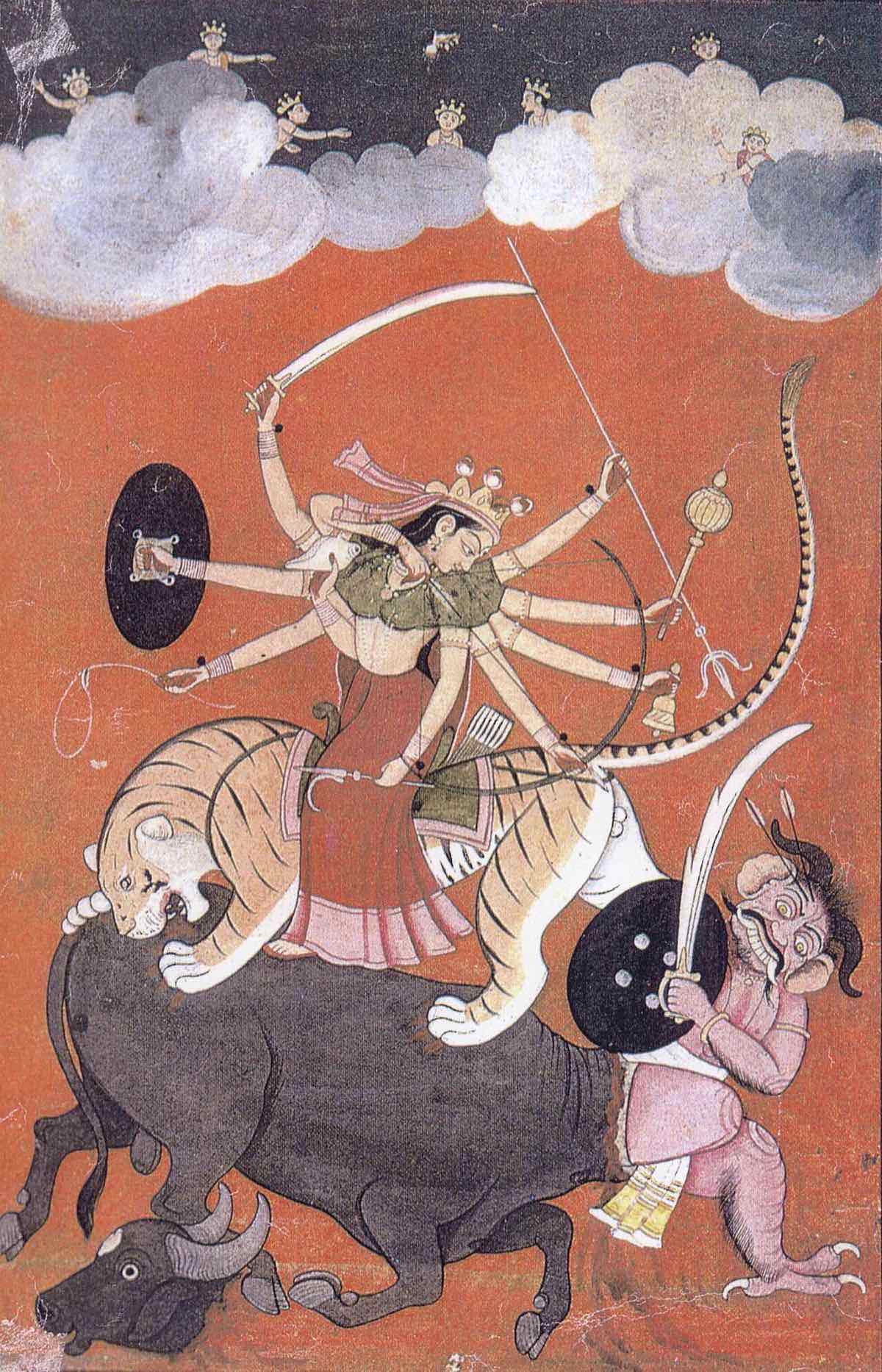
- Mahiṣāsura episode (Chapters 2-4): The Devī, born from the combined radiance (tejas) of all the gods, slays the buffalo-demon Mahiṣāsura
- Śumbha-Niśumbha episode (Chapters 5-13): The Goddess in her various forms destroys Śumbha, Niśumbha, Raktabīja, and their armies
The text’s theological climax is the Devī Stuti (11.3-35), where the gods hymn the Goddess as the supreme power pervading all existence: “By you this universe is borne, by you this world is created; by you it is protected, O Devī, and you always consume it at the end.”
Devī Bhāgavata Purāṇa
The Devī Bhāgavata Purāṇa (9th-14th century CE) is the Śākta counterpart to the Vaiṣṇava Bhāgavata Purāṇa. Running to twelve skandhas (books) and 18,000 verses, it presents the Devī as the supreme Brahman. The seventh skandha contains the celebrated Devī Gītā (7.31-40), modelled on the Bhagavad Gītā, where the Goddess reveals her universal form and teaches the paths of knowledge, devotion, and action.
Tantric Texts
The Śākta tradition draws extensively from Tantric literature, including the Kulārṇava Tantra, Mahānirvāṇa Tantra, Yoginī Tantra, and Kāmakalā Vilāsa. These texts elaborate ritual practices (sādhana), mantra systems, yantra meditation (especially the Śrī Yantra), and the esoteric physiology of kuṇḍalinī.
Śakti Pīṭhas: Geography of the Sacred Feminine
The Śakti Pīṭhas (शक्ति पीठ) are pilgrimage sites where, according to mythology, the body parts of Satī (Śiva’s consort) fell when Viṣṇu dismembered her corpse with his Sudarśana Cakra to stop Śiva’s devastating dance of grief (tāṇḍava). Different traditions enumerate varying numbers — the most common counts being 51 (corresponding to the letters of the Sanskrit alphabet) and 108.
The major Śakti Pīṭhas include:
- Kāmākhyā (Assam) — where the yoni (creative organ) of Satī fell; the foremost centre of Śākta Tantra
- Kālīghāṭ (Kolkata, West Bengal) — where the toes of Satī’s right foot fell; origin of the name “Calcutta”
- Vaiṣṇo Devī (Jammu & Kashmir) — a cave shrine housing three natural rock formations (piṇḍīs) of Mahākālī, Mahālakṣmī, and Mahāsarasvatī
- Tārā Tārīṇī (Odisha) — breast of Satī; one of the oldest Śakti Pīṭhas
- Nainadevi (Himachal Pradesh) — where Satī’s eyes fell
- Hīṅglāj Mātā (Balochistan) — the head of Satī; revered across sectarian lines
Each Pīṭha is home to a specific form of the Goddess (Śaktī) and her consort (Bhairava), and pilgrimage to all the Pīṭhas constitutes one of the most meritorious circuits in Hindu tradition.
The Daśamahāvidyās: Ten Great Wisdom Goddesses
The Daśamahāvidyās (दशमहाविद्या, “Ten Great Wisdoms”) are ten Tantric forms of the Devī, each representing a distinct cosmic function and a specific path to liberation. According to the Mahābhāgavata Purāṇa and Bṛhaddharma Purāṇa, Satī manifested these ten forms to prevent Śiva from leaving when he refused her permission to attend Dakṣa’s sacrifice:
- Kālī — Time and transformation; the ultimate dissolution of the ego
- Tārā — The saving, guiding star; compassion that liberates
- Ṣoḍaśī (Tripurasundarī) — Supreme beauty and the fullness of creation; the Śrī Vidyā tradition
- Bhuvaneśvarī — The sovereign of the worlds; space and expansion
- Bhairavī — The fierce aspect; tapas (spiritual heat) and purification
- Chinnamastā — Self-decapitation; self-sacrifice and the transformation of sexual energy (ojas)
- Dhūmāvatī — The widow-goddess; void, poverty, and the unsatisfied
- Bagalāmukhī — The paralyser; the power to stupefy enemies and silence negativity
- Mātaṅgī — The outcaste goddess; speech, music, and knowledge
- Kamalā — The lotus-goddess; abundance, beauty, and sovereign grace
The Daśamahāvidyās collectively represent the full spectrum of reality — from the beautiful to the terrifying, from the auspicious to the inauspicious — teaching the aspirant to recognise the divine in all manifestations without discrimination.
Kuṇḍalinī: The Śakti Within
Central to Śākta Tantra is the doctrine of Kuṇḍalinī (कुण्डलिनी, “the coiled one”), the dormant spiritual energy visualised as a serpent coiled three and a half times at the base of the spine (mūlādhāra cakra). Through yogic practice — including prāṇāyāma, mantra, mudrā, and meditation — the practitioner awakens Kuṇḍalinī, which then ascends through the suṣumnā nāḍī (central energy channel), piercing six cakras (energy centres):
- Mūlādhāra (root) — earth element, survival
- Svādhiṣṭhāna (sacral) — water element, creativity
- Maṇipūra (solar plexus) — fire element, will
- Anāhata (heart) — air element, love
- Viśuddha (throat) — space element, expression
- Ājñā (third eye) — mind, intuition
When Kuṇḍalinī reaches the Sahasrāra (crown), the thousand-petalled lotus, she unites with Śiva in a state of non-dual bliss (samādhi). This internal union of Śakti and Śiva is the microcosmic counterpart of the cosmic union that sustains the universe.
Regional Śākta Traditions
Bengal: The Homeland of Kālī Worship
Bengal holds a special place in the Śākta world. The worship of Kālī as the supreme deity reached its philosophical and devotional zenith here through figures like Rāmprasād Sen (1718-1775), whose songs to Kālī as the tender yet terrible Mother remain cornerstones of Bengali devotional literature, and Śrī Rāmakṛṣṇa Paramahaṃsa (1836-1886), the priest of the Dakṣiṇeśvar Kālī temple whose ecstatic visions of the Goddess inspired a global spiritual movement.
The annual Kālī Pūjā on the new moon night of Kārtika (October-November) transforms Bengal into a landscape of open-air pandals, midnight rituals, and ecstatic devotion. Durgā Pūjā, celebrating the Goddess’s victory over Mahiṣāsura, is Bengal’s greatest festival — a five-day spectacle of art, community, and devotion that UNESCO recognised as Intangible Cultural Heritage in 2021.
South India: The Amman Tradition
In Tamil Nadu, Kerala, and Karnataka, the Goddess manifests as Amman (அம்மன், “Mother”) — Māriyammaṇ (goddess of rain and disease), Draupadī Amman, Reṇukā, and countless village deities (grāma devatā). The Amman tradition preserves pre-Sanskritic, Dravidian goddess worship that predates the Purāṇic synthesis. The Mīnākṣī temple in Madurai, where the Goddess is the primary deity and Śiva her consort Sundarēśvara, embodies the South Indian emphasis on the Goddess’s sovereignty.
Kāmākhyā and Assam
The Kāmākhyā temple atop Nīlācala Hill in Guwahati, Assam, is the premier centre of Śākta Tantra in India. The sanctum contains no anthropomorphic image but a natural rock fissure that fills with water and is worshipped as the yoni of the Goddess. The annual Ambubācī Melā, coinciding with the monsoon season when the temple remains closed for three days to honour the Goddess’s menstruation, draws hundreds of thousands of pilgrims and sādhus from across India.
Tantra and Shaktism
The relationship between Tantra and Shaktism is intimate. While not all Tantric traditions are Śākta (Śaiva and Vaiṣṇava Tantra also exist), the Śākta Tantric path is arguably the most developed. Tantra approaches the divine not through world-renunciation but through world-engagement — the body, the senses, and the phenomenal world are instruments of liberation, not obstacles.
Key Tantric practices in the Śākta tradition include:
- Mantra — sacred syllables, especially bīja mantras (seed syllables) such as hrīṃ (māyā bīja), klīṃ (kāma bīja), and aiṃ (vāgbīja)
- Yantra — geometric diagrams, particularly the Śrī Yantra (nine interlocking triangles representing the union of Śiva and Śakti)
- Nyāsa — ritual placement of mantras on the body
- Pūjā to the Devī with the pañcamakāra (five M’s) in vāmācāra (left-hand path) traditions
- Śrī Vidyā — the “auspicious knowledge,” the most sophisticated and widespread Śākta Tantric system, centred on the worship of Tripurasundarī with the fifteen-syllable Pañcadaśī mantra
Philosophical Significance
Shaktism makes a revolutionary theological claim: the ultimate reality is feminine, dynamic, and relational. In contrast to paths that seek liberation through the negation of the world, Shaktism affirms that saṃsāra itself is the playground (līlā) of the Goddess. The Devī Māhātmya (1.64) describes her as simultaneously mahāmāyā (the great illusion that binds) and mahāvidyā (the great knowledge that liberates).
This dual nature reflects the Śākta understanding that bondage and liberation are not ultimately different — they are both expressions of Śakti. As the Kulārṇava Tantra (1.110) declares: “By what one falls, by that one rises” (yena yena patatyādho tenaivoddhriyate punaḥ).
Conclusion
From the cosmic hymns of the Devī Māhātmya to the silent meditation of the Kuṇḍalinī yogi, from the blood-red hibiscus offered at Kāmākhyā to the grand paṇḍāls of Bengal’s Durgā Pūjā, Shaktism weaves together philosophy, ritual, art, and daily life into a single fabric of devotion to the Divine Mother. It reminds us that power and compassion, creation and dissolution, the beautiful and the terrible, are all faces of one Goddess — the Śakti that is the heartbeat of the cosmos.