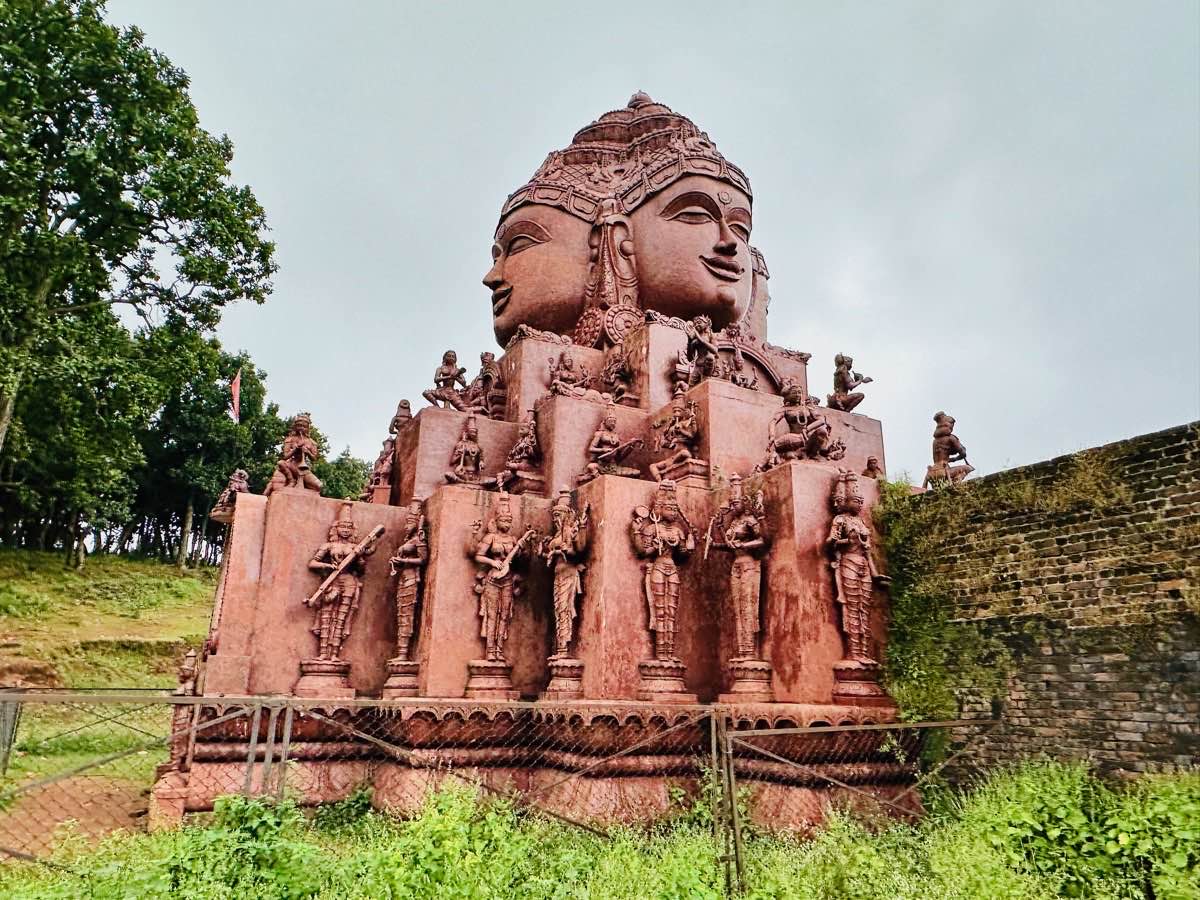
Tantra (तन्त्र, “loom, weave, system, framework”) represents one of the most profound, complex, and frequently misunderstood traditions in Hinduism. Far from the reductive popular image of mere sexual mysticism, Tantra is a vast philosophical, ritual, and soteriological system that has fundamentally shaped Hindu worship, theology, temple culture, mantra science, yoga, and iconography for over fifteen hundred years. It is, in the words of the great scholar Abhinavagupta, a path that “weaves together” (tanoti) all aspects of existence — body and spirit, mundane and sacred, individual and cosmic — into a unified vision of reality as divine.
Etymology and Scope
The Sanskrit word tantra derives from the root tan, meaning “to stretch, to weave, to expand.” It carries multiple connotations: a loom (the instrument of weaving), a system or framework, a treatise, and a practice of expansion. The Kāmikāgama defines tantra as that which “elaborates great knowledge concerning tattva (reality) and mantra (sacred syllable), and thereby protects” (tanyate vistāryate jñānaṃ tattvamantrasama nvitam).
In its broadest sense, Tantra encompasses:
- A body of sacred literature — the Āgamas and Tantras — distinct from but complementary to the Vedas
- A set of spiritual practices (sādhanā) involving mantra, yantra, mudrā, and meditation
- A philosophical framework centring on the dynamics of Śiva (consciousness) and Śakti (power/energy)
- A theology that affirms the essential divinity of the body, the world, and all experience
- A ritual system incorporating initiation (dīkṣā), worship (pūjā), and yogic discipline
Historical Origins: The Āgamic Revelation
While elements of what would later be called Tantra can be traced to the Vedic period — the Atharva Veda contains mantras, ritual diagrams, and invocations that prefigure Tantric practice — the tradition as a distinct, self-conscious system emerged around the 5th to 8th centuries CE in India.
The sacred texts of Tantra are called Āgamas (आगम, “that which has come down” — i.e., revealed scripture). Unlike the Vedas, which are classified as apauruṣeya (authorless, eternal), the Āgamas are presented as dialogues between Śiva and Śakti (or, in the Vaiṣṇava tradition, between Viṣṇu and Lakṣmī). Traditionally, when Śiva teaches Śakti, the text is called an Āgama; when Śakti teaches Śiva, it is called a Nigama.
The Āgamic literature is vast. Three major classes are recognized:
-
Śaiva Āgamas — 28 principal texts (with numerous subsidiary Upāgamas), centred on the worship of Śiva. These form the scriptural basis of Śaiva Siddhānta, Kashmir Śaivism, and other Śaiva traditions.
-
Śākta Tantras — 77 texts focused on the worship of the Goddess (Devī/Śakti) in her various forms — Kālī, Tripurasundarī, Tārā, and others. These are the foundational scriptures of Śāktism.
-
Vaiṣṇava Saṃhitās — 108 texts (also called Pāñcarātra Saṃhitās) devoted to the worship of Viṣṇu and his avatāras. These govern the ritual practice of most South Indian Vaiṣṇava temples.
Each Āgama typically contains four sections (pāda): jñāna (knowledge/philosophy), yoga (spiritual practice), kriyā (ritual worship and temple procedures), and caryā (conduct and ethical discipline).
Core Philosophical Vision: Śiva and Śakti
At the heart of Tantric philosophy lies the understanding that ultimate reality is not a static, abstract Absolute but a dynamic, creative, self-aware Consciousness that eternally expresses itself as the universe. This reality is understood through the inseparable pair of Śiva and Śakti.
Śiva (शिव) — in Tantric theology, Śiva is not merely a deity among others but the supreme principle of pure Consciousness (cit), the unchanging ground of all existence, the “light” (prakāśa) by which everything is known.
Śakti (शक्ति) — Śakti is the dynamic creative power of Śiva, the energy that manifests as the entire universe. She is vimarśa — the self-reflective awareness, the power of Consciousness to know itself and to create. Without Śakti, Śiva is inert (śava — a corpse, as the famous Tantric maxim declares); without Śiva, Śakti has no ground to stand upon.
The universe, in this view, is not an illusion (māyā in the Advaita Vedānta sense) to be renounced, but a real expression of divine creative power. The body is not an obstacle to liberation but a vehicle for it. Matter is not opposed to spirit; it is spirit in its manifested form. This world-affirming theology is perhaps the most distinctive contribution of Tantra to Hindu thought.
The Vijñānabhairava Tantra (verse 15) expresses this non-dual vision:
śaktiśaktimator yadvat abhedaḥ sarvadā sthitaḥ / atas taddharmadharmitvāt parā śaktiḥ parātmanaḥ — “Just as there is no separation between Śakti and the possessor of Śakti, so the supreme Śakti is of the nature of the Supreme Self.”
The Major Tantric Traditions
Śaiva Tantra and Kashmir Śaivism
The non-dual Śaiva traditions of Kashmir represent the philosophical pinnacle of Tantric thought. Emerging after 850 CE, the schools collectively known as Kashmir Śaivism (Kaśmīra Śaivadārśana) produced some of the most sophisticated philosophical literature in the entire Hindu tradition.
The key schools include:
-
Spanda (स्पन्द, “vibration”) — Founded on the Śivasūtra of Vasugupta (c. 9th century CE) and the Spandakārikā of Kallaṭa, this school teaches that reality is a ceaseless creative vibration (spanda) of divine Consciousness. The entire universe is the pulsation of Śiva’s awareness — a continuous “throb” of creation and dissolution.
-
Pratyabhijñā (प्रत्यभिज्ञा, “recognition”) — Systematized by Utpaladeva (c. 925 CE) in his Īśvarapratyabhijñākārikā, this school teaches that liberation is not the attainment of something new but the “recognition” of what has always been the case — that one’s own Self is identical with Śiva. Bondage is simply the failure to recognize one’s divine nature; liberation (mukti) is the joyful act of recognition.
-
Trika (त्रिक, “triad”) — The most comprehensive synthesis, integrating Śaiva, Śākta, and Kaula elements into a unified system. The “triad” refers to Śiva, Śakti, and Nara (the individual soul), or alternatively to the three goddesses Parā, Parāparā, and Aparā, representing transcendent, intermediate, and immanent levels of reality.
Śākta Tantra: The Way of the Goddess
Śāktism (शाक्तदर्शन) — the worship of the Supreme Goddess as the ultimate reality — is perhaps the most distinctively Tantric of all Hindu traditions. Śākta philosophy holds that Śakti is not merely the power of Śiva but the Supreme Being herself — the creator, sustainer, and destroyer of the universe.
Two major paths are distinguished within Śākta Tantra:
-
Dakṣiṇācāra (दक्षिणाचार, “right-hand path”) — The conventional path of worship through vegetarian offerings, mantra recitation, and orthodox ritual. The Śrī Vidyā tradition, centring on the worship of Goddess Tripurasundarī (Lalitā) through the Śrī Yantra — the supreme geometric diagram of interlocking triangles — is the most refined expression of this approach. The Śrī Yantra’s nine interlocking triangles (four pointing upward representing Śiva, five pointing downward representing Śakti) create 43 smaller triangles that map the entire cosmic hierarchy.
-
Vāmācāra (वामाचार, “left-hand path”) — The heterodox path that deliberately transgresses orthodox boundaries through the ritual use of the pañcamakāra (five “M”s): madya (wine), māṃsa (meat), matsya (fish), mudrā (parched grain or ritual gesture), and maithuna (sexual union). These are understood symbolically or literally depending on the tradition, but always as means of transforming ordinary experience into divine awareness. The Kālī Kula and Kaula traditions are associated with this path.
Vaiṣṇava Tantra: Pāñcarātra
The Pāñcarātra (पाञ्चरात्र) tradition represents Tantric worship within the Vaiṣṇava fold. Its 108 Saṃhitās — including the Ahirbudhnya Saṃhitā, Jayākhya Saṃhitā, and Pādma Saṃhitā — provide the liturgical framework for most South Indian Viṣṇu temples, including the great temple of Śrī Veṅkaṭeśvara at Tirupati. The Pāñcarātra theology describes the manifestation of Viṣṇu through four successive vyūhas (emanations): Vāsudeva, Saṅkarṣaṇa, Pradyumna, and Aniruddha.
Key Tantric Practices
Mantra: The Science of Sacred Sound
Mantra (mantra, मन्त्र) is the backbone of all Tantric practice. The Tantric understanding of mantra goes far beyond mere prayer or recitation. In the Tantric view, the universe itself is composed of sound (nāda), and each mantra is a sonic body of the divine — a concentration of cosmic energy in syllabic form.
The most fundamental category of Tantric mantras is the bīja (बीज, “seed syllable”) — single-syllable sounds charged with specific divine energies: Oṃ (the universal sound), Hrīṃ (the māyā bīja of the Goddess), Śrīṃ (the Lakṣmī bīja of abundance), Klīṃ (the Kāma bīja of desire/attraction), Aiṃ (the Sarasvatī bīja of wisdom).
Mantras are transmitted from guru to disciple through dīkṣā (दीक्षा, “initiation”) — the foundational rite of all Tantric traditions. Without dīkṣā, a mantra is considered dormant; initiation “awakens” its power. The Kulārṇava Tantra (14.3) declares: na guruṃ prāpya yaḥ mochayet sa pāpī narakam vrajet — without receiving initiation from a guru, one remains bound.
Yantra: Sacred Geometry
A yantra (यन्त्र, “instrument, device”) is a geometric diagram that serves as a visual representation of a mantra and a concentration point for meditation and worship. While a mantra is the sonic body of the divine, a yantra is its geometric body. The most celebrated is the Śrī Yantra (also called Śrī Cakra), composed of nine interlocking triangles surrounded by two lotus circles and a square enclosure — representing the totality of cosmic creation and the Goddess Lalitā Tripurasundarī in diagrammatic form.
Kuṇḍalinī: The Serpent Power
Kuṇḍalinī (कुण्डलिनी, “the coiled one”) is the dormant spiritual energy described as residing at the base of the spine in the mūlādhāra cakra. Tantric yoga aims to awaken this energy and guide it upward through the central channel (suṣumnā nāḍī) of the subtle body, piercing each of the seven cakras (energy centres):
- Mūlādhāra (मूलाधार) — Root; base of spine; element Earth
- Svādhiṣṭhāna (स्वाधिष्ठान) — Sacral; below navel; element Water
- Maṇipūra (मणिपूर) — Solar plexus; navel; element Fire
- Anāhata (अनाहत) — Heart; chest; element Air
- Viśuddha (विशुद्ध) — Throat; purification; element Ether
- Ājñā (आज्ञा) — Third eye; between eyebrows; command centre
- Sahasrāra (सहस्रार) — Crown; top of head; the thousand-petalled lotus
When kuṇḍalinī reaches the sahasrāra, individual consciousness merges with universal Consciousness — the union of Śakti with Śiva — and the practitioner attains liberation (mokṣa) while still embodied (jīvanmukti).
Abhinavagupta: The Supreme Synthesizer
Abhinavagupta (अभिनवगुप्त, c. 950-1016 CE) stands as the greatest philosopher-practitioner of the Tantric tradition. Born into a learned Brahmin family in Kashmir, he studied under numerous masters and produced approximately forty works spanning philosophy, aesthetics, and spiritual practice.
His magnum opus, the Tantrāloka (“Light on Tantra”), is a monumental encyclopaedia of Tantric philosophy and practice in 37 chapters and over 5,800 verses. It systematically expounds the Trika philosophy, integrating diverse lineages — Śaiva, Śākta, and Kaula — into a coherent, graduated path from external ritual to the highest non-dual recognition.
Abhinavagupta’s philosophy centres on several transformative insights:
-
Universal Consciousness (saṃvit): All reality is the self-expression of one infinite Consciousness. There is nothing outside it, nothing that is not divine.
-
The Five Divine Acts (pañcakṛtya): Śiva continuously performs creation (sṛṣṭi), maintenance (sthiti), dissolution (saṃhāra), concealment (tirodhāna), and grace (anugraha). These five acts occur not only at the cosmic level but in every moment of individual experience.
-
Aesthetic Rapture (rasa) as Spiritual Experience: In his Abhinavabhāratī (commentary on Bharata’s Nāṭyaśāstra), Abhinavagupta equates the experience of aesthetic bliss in art with the bliss of spiritual realization — both involve a momentary dissolution of the ego-bound self into a larger, universal awareness.
-
The Path of Grace (śaktipāta): The ultimate cause of liberation is divine grace — the spontaneous “descent of power” (śaktipāta) from Śiva to the individual soul. While practice and effort are necessary, they culminate in a moment of divine gift that cannot be manufactured or earned.
Tantra’s Influence on Hindu Worship
The influence of Tantra on mainstream Hindu worship is so pervasive that it is often invisible. The vast majority of Hindu temple rituals practised today — from the daily worship (pūjā) in South Indian temples following Āgamic prescriptions to the saṃskāras (life-cycle rites) performed in North Indian households — are Tantric in origin or structure.
Specific Tantric contributions include:
- Temple worship (arcana): The elaborate rituals of deity worship in temples — bathing (abhiṣeka), decoration (alaṃkāra), offering (naivedya), and hymning (stuti) — are prescribed by the Āgamas, not the Vedas
- Mantra-based worship: The use of bīja mantras, specific deity mantras, and kavaca (protective hymns) is Tantric in origin
- Yantra and maṇḍala: The use of geometric diagrams in worship, the installation of yantras beneath temple icons, and the drawing of maṇḍalas for specific rites
- Kuṇḍalinī yoga: The cakra system, nāḍī channels, and subtle body cosmology that underlie haṭha yoga and prāṇāyāma are Tantric developments
- Festival rituals: Many major Hindu festivals incorporate Tantric elements — the Navarātri worship of the nine forms of Durgā, the Kālī Pūjā rituals of Bengal, and the Śrī Cakra worship in Śaṅkarācārya’s monastic tradition
Misconceptions and Authentic Understanding
Tantra has been subject to deep misunderstanding, both in Western popular culture (which reduces it to sexuality) and in certain strands of Hindu orthodoxy (which condemns it as heterodox). Neither perspective captures the tradition’s depth.
The sexual symbolism in Tantra is real but represents one facet of a vast tradition. The Tantric understanding of sexuality is always symbolic, sacramental, and subordinate to the larger goal of spiritual liberation. The union of male and female, in Tantric cosmology, symbolizes the union of Consciousness (Śiva) and Power (Śakti) — the fundamental dynamic of all reality. The Vijñānabhairava Tantra offers 112 meditation techniques (dhāraṇā), of which only one involves sexual practice; the others encompass breath, sound, vision, touch, space, and contemplation.
The authentic Tantric path demands rigorous discipline, ethical purity, devotion to the guru, mastery of mantra and meditation, and ultimately, a radical transformation of consciousness. As Abhinavagupta writes in the Tantrāloka (1.18): anuttara, the supreme reality, is not distant or difficult — it is the very heart of awareness itself, always present, always accessible to the one who truly sees.
The Weave of the Infinite
Tantra remains one of Hinduism’s most vital and creative philosophical traditions — a path that affirms the world as divine, the body as a temple, and every experience as a potential doorway to liberation. From the sophisticated non-dualism of Kashmir Śaivism to the ecstatic devotion of Śākta worship, from the precision of Āgamic ritual to the radical freedom of Kaula practice, Tantra offers a vision of spiritual life that embraces the totality of human existence.
As the Kulārṇava Tantra (1.110) declares: na gatir yoginām dūre na ca tat sādhanaṃ mahat / svacittam eva tat sthānaṃ yat tyajanti vimūḍhāḥ — “The destination of yogis is not distant, nor is the means of attainment great. It is one’s own consciousness — that which the deluded abandon.” In the Tantric understanding, the sacred is not elsewhere; it is here, in this body, in this breath, in this very moment of awareness.