Introduction
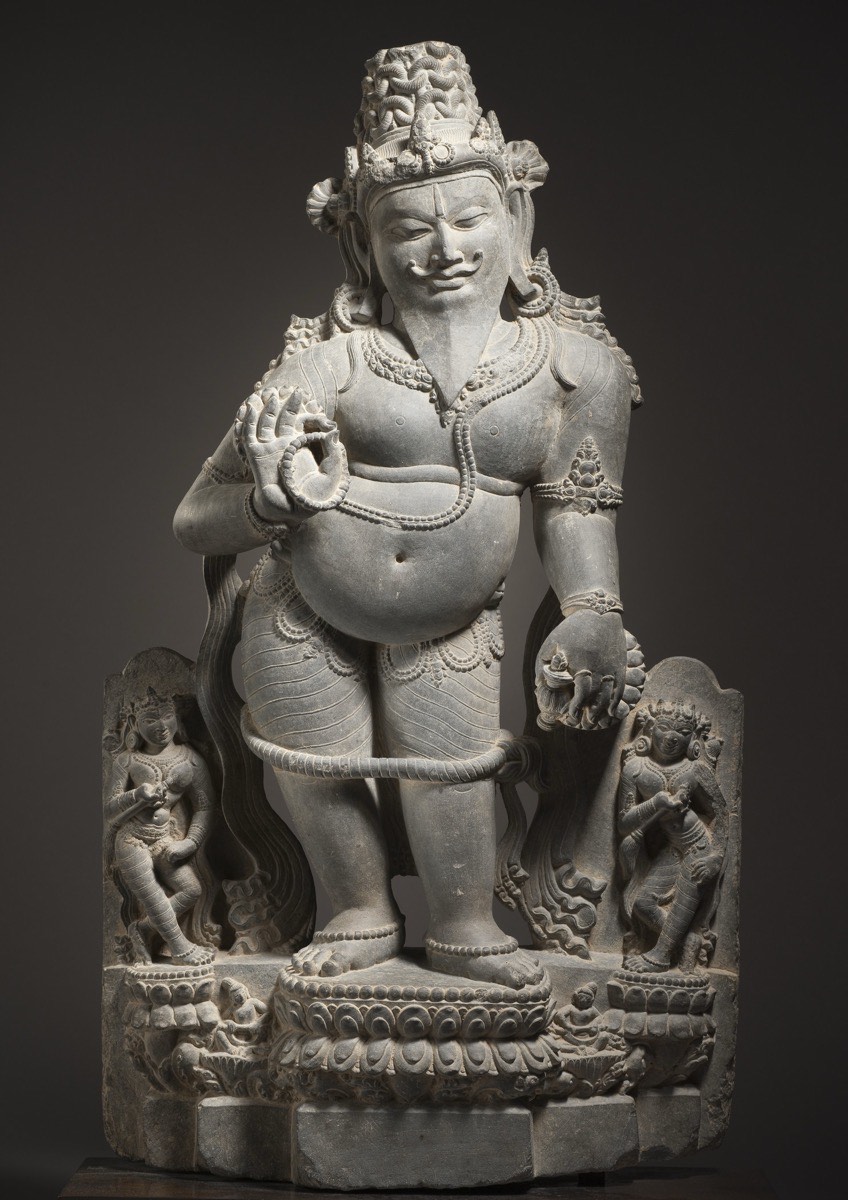
Maharṣi Agastya (IAST: Agastya; Sanskrit: अगस्त्य; Tamil: அகத்தியர், Agattiyar) is one of the most extraordinary and far-reaching figures in Hindu tradition — a sage whose influence spans the entirety of Indian civilisation from the earliest layers of the Ṛg Veda to the living Siddha medical traditions of Tamil Nadu, and from the Himalayan hermitages of Vedic lore to the medieval Śaiva temples of Java and Cambodia. He is counted among the Saptarṣis (seven great sages) of the Vedic tradition, revered as the author of numerous Ṛg Vedic hymns (1.165–1.191), the sage who tamed the Vindhya mountains, drank the ocean, and carried the light of Vedic knowledge southward across the Vindhyas to the Dravidian lands (Wikipedia, “Agastya”; Britannica, “Agastya”).
In the Tamil tradition, Agastya is known as Agattiyar or Agathiyar — the founding father of Tamil grammar, the originator of Siddha medicine, and the first of the eighteen Siddhars (perfected beings) of the Śaiva spiritual lineage. In the Sanskrit epics, he appears as a powerful ascetic who gifts divine weapons to Rāma and teaches him the sacred Āditya Hṛdayam hymn on the battlefield of Laṅkā. Across Southeast Asia, he is venerated in temple sculpture from Prambanan to Angkor. No other single figure so completely embodies the cultural unity of India — the meeting of Sanskritic and Dravidian, Vedic and Āgamic, north and south (VedicFeed, “Sage Agastya”; Cultural Heritage of India, “Sage Agathiyar”).
Vedic Origins and Birth
Agastya’s origins are shrouded in the mythic grandeur typical of the great Vedic ṛṣis. According to the Ṛg Veda and later Purāṇic accounts, he was born not of a human womb but from a sacred vessel (kumbha). The Viṣṇu Purāṇa and the Mahābhārata (Vana Parva 94–97) relate that during a great sacrifice, the gods Mitra and Varuṇa beheld the celestial apsarā Urvaśī, and their combined creative energy fell into a water pitcher (kumbha). From this vessel, two sages were born: Agastya and Vasiṣṭha. Because of this mode of birth, Agastya is called Kumbhasambhava (“born from a pot”) and Maitra-Varuṇi (“son of Mitra and Varuṇa”) (Wikipedia, “Agastya”; Vyasa Mahabharata, “Agastya”).
His father in the genealogical lists is the sage Pulastya, one of the Prajāpatis and mind-born sons of Brahmā, making Agastya a direct spiritual descendant of the creator. This exalted lineage — coupled with his miraculous birth — signals the tradition’s understanding that Agastya is no ordinary mortal but a being of cosmic significance, born to fulfil a divine mission.
Agastya and Lopāmudrā
The Ṛg Veda itself preserves a celebrated dialogue between Agastya and his wife Lopāmudrā in hymn 1.179 — one of the most remarkable husband-wife dialogues in world literature. Lopāmudrā, a princess of the Vidarbha kingdom, was renowned for her beauty, learning, and spiritual accomplishment. According to the Purāṇic tradition, Agastya fashioned her from the most beautiful parts of various creatures — hence her name, which some etymologists connect to the loss (lopa) of beauty from all beings to form one perfect woman (Wikipedia, “Lopamudra”).
In Ṛg Veda 1.179, Lopāmudrā approaches Agastya after years of austere celibacy and reminds him of the duty of a householder to produce offspring. The hymn captures the tension between ascetic renunciation and domestic obligation — a perennial theme in Hindu thought:
Lopāmudrā vṛṣaṇaṃ nir atakṣad, dharmaṇā patim aha sūktena — “Lopāmudrā induced the bull [Agastya]; the exhausted wife drew forth the husband by her hymn.” (Ṛg Veda 1.179.4)
Their union produced a son, Dṛḍhāsyu (also called Idhmavāha in some accounts), who continued the sage’s lineage. The tradition celebrates Lopāmudrā as an accomplished ṛṣikā (female seer) in her own right — she is credited with composing two hymns of the Ṛg Veda (1.179.1–2) and is honoured in the Lalitā Sahasranāma as a manifestation of the Goddess (Wikipedia, “Lopamudra”).
Ṛg Vedic Hymns
Agastya is traditionally credited as the seer (draṣṭā) of the entire first maṇḍala cycle spanning hymns 1.165 to 1.191 of the Ṛg Veda — a substantial body of 27 hymns that places him among the most prolific Vedic poets. These hymns are addressed primarily to Indra, the Maruts (storm gods), and Agni, and are noted by scholars for their verbal virtuosity, striking similes, philosophical depth, and a distinctive tension between the poet and the gods.
Hymn 1.170 is especially celebrated — it records a dramatic confrontation between Indra and the Maruts, with Agastya serving as mediator. The hymn cycle as a whole reveals a sage deeply engaged with the cosmic forces of nature and comfortable in dialogue with the divine powers, neither servile nor overawed but standing as an equal partner in the maintenance of ṛta (cosmic order) (Wikipedia, “Agastya”).
The Taming of the Vindhya Mountains
One of the most famous legends associated with Agastya concerns the Vindhya mountain range. According to the Vāmana Purāṇa and the Mahābhārata, the Vindhya mountains, jealous of Mount Meru (the cosmic axis), began to grow ever taller, threatening to obstruct the path of the sun and plunge the world into darkness. The gods, unable to halt Vindhya’s pride, appealed to Agastya for help.
The sage, travelling from his northern hermitage to the south, approached the Vindhya range. Out of reverence for the great ṛṣi, the mountains bowed low to let him pass. Agastya then asked the Vindhyas to remain bowed until his return. The sage, however, settled permanently in the south and never returned — and so the Vindhya mountains remain low to this day. This charming aetiological myth encodes a profound cultural memory: the movement of Vedic civilisation from the Indo-Gangetic plains to peninsular India, with Agastya as its carrier (Wikipedia, “Agastya”; VedicFeed, “Sage Agastya”).
Drinking the Ocean
Another celebrated myth demonstrates Agastya’s cosmic power. During a war between the gods and the demons (asuras), the defeated asuras hid beneath the ocean, emerging at night to attack the gods and retreating to the depths by day. The gods, unable to pursue their enemies into the sea, beseeched Agastya for aid.
The sage, drawing upon his immense ascetic power (tapas), drank the entire ocean in a single draught, exposing the demons who were then slain by the gods. However, the ocean remained dry. It was only later, when King Bhagīratha brought the celestial Gaṅgā down to earth, that the ocean was refilled — connecting the Agastya legend with the Bhagīratha-Gaṅgā cycle in an elegant mythological continuity (Mahābhārata, Vana Parva 101–104; Wikipedia, “Agastya”).
This myth of drinking the ocean has been interpreted as symbolising the drainage and cultivation of southern marshlands, the building of irrigation systems, or the taming of the sea for maritime trade — all accomplishments associated with the southward expansion of civilisation that Agastya represents.
Slaying of Vātāpi and Ilvala
The legend of the demon brothers Vātāpi and Ilvala further illustrates Agastya’s power. Ilvala possessed the ability to revive the dead, while Vātāpi could assume the form of a goat. Their trick was to offer hospitality to Brahmin guests: Ilvala would cook Vātāpi (in goat form) and serve the meat; after the guest had eaten, Ilvala would call out to Vātāpi, who would burst forth from the guest’s stomach, killing him. The brothers had slain many sages this way.
When they attempted this on Agastya, the great sage, having consumed the meal, simply patted his stomach and said, “Vātāpi, jīrṇo bhava” — “Vātāpi, be digested!” The demon was instantly destroyed within the sage’s stomach, and Ilvala was slain by the fire of Agastya’s gaze. This story appears in both the Mahābhārata (Vana Parva 96–97) and the Rāmāyaṇa (Araṇya Kāṇḍa 11–12) and is one of the most popular Agastya legends across India (Vyasa Mahabharata, “Agastya”).
Agastya in the Rāmāyaṇa
Agastya plays a pivotal role in Vālmīki’s Rāmāyaṇa. During their forest exile, Rāma, Sītā, and Lakṣmaṇa visit Agastya’s hermitage in the Daṇḍaka forest (Araṇya Kāṇḍa 11–13). The sage receives them with great honour and gifts Rāma three divine weapons of extraordinary power: the bow of Viṣṇu (Vaiṣṇava Dhanus), an inexhaustible quiver of celestial arrows, and a divine sword with a golden hilt. These weapons would prove essential in the war against Rāvaṇa.
Most significantly, in the Yuddha Kāṇḍa (Book of War), chapter 107, Agastya appears on the battlefield of Laṅkā at the moment when Rāma is exhausted and faltering in his combat with Rāvaṇa. The sage teaches Rāma the Āditya Hṛdayam — the “Heart of the Sun” — a powerful hymn of devotion to Sūrya, the Sun God:
Ādityahṛdayaṃ puṇyaṃ sarva-śatru-vināśanam / Jayāvahaṃ japet nityaṃ akṣayyaṃ paramaṃ śivam — “This holy Āditya Hṛdayam, destroyer of all enemies, bestower of victory — reciting it always brings eternal auspiciousness.” (Yuddha Kāṇḍa 107.4)
Reinvigorated by the hymn’s power, Rāma defeats and slays Rāvaṇa. The Āditya Hṛdayam remains one of the most widely recited Hindu devotional texts, chanted daily across India and particularly in South Indian temples (Wikipedia, “Ādityahṛdayam”).
Father of Tamil Culture and Language
In Tamil tradition, Agastya (Agattiyar) occupies a position of unparalleled reverence. He is regarded as the father of the Tamil language itself — tradition credits him with composing Agattiyam, the earliest grammar of Old Tamil, which predates even Tolkāppiyam, the oldest extant Tamil grammatical work. While the Agattiyam itself has not survived, numerous later Tamil works refer to it as the foundational text of the language.
The medieval Tamil literary tradition places Agastya at the heart of the legendary Sangam (academy) tradition. According to the commentator Nakkīrar (8th century CE) in the Iraiyaṉār Akapporuḷ, Agastya presided over the first Sangam at Then Madurai (Southern Madurai), which lasted 4,440 years. He is also said to have participated in the second Sangam, lasting 3,700 years. While modern scholarship regards the Sangam legends as mythological, they express an important cultural truth: the Tamil literary tradition traces its ultimate origin to the Vedic sage Agastya, thereby affirming the unity of the Sanskritic and Dravidian intellectual worlds (Wikipedia, “Agastya”; Cultural Heritage of India, “Sage Agathiyar”).
The Siddha Medical Tradition
Agastya is revered as the founder and first master of the Siddha system of medicine — one of the oldest medical traditions in the world, predating even classical Āyurveda in some accounts. Siddha medicine, practised primarily in Tamil Nadu and parts of Sri Lanka, employs herbs, minerals, metals, and alchemical preparations for healing, and is intimately connected with yoga, prāṇāyāma, and spiritual practice.
As the first of the eighteen Siddhars (Siddhas) in the Tamil Śaiva tradition, Agastya is credited with discovering and systematising knowledge of medicinal plants, mineral compounds, and therapeutic techniques. The Agastya Vaithiya Kaviyam, Agastya Vaithiya Vallathi, and numerous other Tamil medical texts are attributed to him. He is also associated with the development of varmam — the Tamil martial and healing art that identifies 108 vital pressure points on the body (VedicFeed, “Sage Agastya”; Cultural Heritage of India).
In Tamil Nadu, Siddha medical colleges and practitioners continue to invoke Agastya as the ādi siddhar (primordial perfected being) from whom their entire lineage descends.
Agastya in Southeast Asia
Perhaps no other Indian sage has had a wider geographical reach than Agastya. His veneration extends far beyond the Indian subcontinent into Southeast Asia, where he was a central figure in the Hindu-Buddhist civilisations of Java, Sumatra, Bali, Cambodia, and mainland Southeast Asia.
In Java, Agastya is prominently featured in the great Śaiva temples of the early medieval period. At the 9th-century Prambanan temple complex (Candi Śiva), a magnificent stone sculpture of Agastya occupies the southern niche — depicted as a bearded sage holding a water vessel and prayer beads, with a trident beside him. Similar representations are found at Candi Singasari, Candi Jago, and numerous other Javanese temples. The Javanese venerated Agastya as the sage who brought Śaiva Siddhānta philosophy and Vedic learning to their islands.
In Cambodia, inscriptions from the Angkor period reference Agastya as one of the founding sages of the Khmer religious tradition. His cult was closely associated with the southward dissemination of Indian civilisation — fitting, given his mythological role as the sage who crossed the Vindhyas (Wikipedia, “Agastya”).
Agastya in the Mahābhārata
In the Mahābhārata, Agastya appears in numerous episodes scattered across the epic. The Vana Parva (Forest Book) contains the most extensive Agastya narratives, including the stories of the ocean-drinking and the slaying of Vātāpi and Ilvala. During the Pāṇḍavas’ twelve-year exile, the sage Lomaśa narrates the legends of Agastya to Yudhiṣṭhira as they visit the sage’s sacred sites in the south.
The Mahābhārata also describes Agastya’s role in pacifying the southern regions, clearing the Daṇḍaka forest of rākṣasas (demons), and establishing hermitages that became centres of Vedic learning in the Deccan. In this sense, the epic preserves a cultural memory of the historical process by which Brahmanical culture spread southward — with Agastya as its symbolic and perhaps historical pioneer (Vyasa Mahabharata, “Agastya”).
The Star Canopus
In Indian astronomy, the star Canopus — the second brightest star in the night sky — is known as Agastya Nakṣatra (the Star of Agastya). This star is visible only from southern latitudes and becomes visible in India only south of the Vindhya mountains, making its astronomical identification with the sage who journeyed south singularly appropriate. The first sighting of Canopus each year is considered auspicious in the Hindu calendar and marks the beginning of the Agastya Pūjā period in parts of South India (Wikipedia, “Agastya”).
The association of Agastya with a southern star further reinforces the mythological-astronomical symbolism: as the sage brought Vedic knowledge south, so his celestial counterpart illuminates the southern sky.
Sacred Sites
Agastya’s presence is commemorated across the Indian landscape:
- Agastyamalai (Agastya Mala) in the Western Ghats of Kerala-Tamil Nadu border — a peak of 1,868 metres believed to be the sage’s southern hermitage and home to extraordinary biodiversity.
- Agastya Āśrama near Nasik, Maharashtra — associated with his hermitage in the Daṇḍaka forest described in the Rāmāyaṇa.
- Pothigai Hills (Podigai Malai) in Tamil Nadu — revered in Tamil tradition as the place where Agastya received the Tamil language from Lord Śiva.
- Agastyakūṭam in Sri Lanka — connected to the sage’s wider southern mission.
- Temples dedicated to Agastya are found across Tamil Nadu, Kerala, Karnataka, and Andhra Pradesh, as well as in Java, Bali, and Cambodia.
Legacy and Influence
Agastya’s significance in Hindu civilisation is unique and multidimensional:
- Vedic: As a Saptarṣi and the seer of 27 Ṛg Vedic hymns, he stands at the very foundation of the śruti tradition.
- Epic: His role in both the Rāmāyaṇa (gifting weapons and teaching the Āditya Hṛdayam) and the Mahābhārata (the southern legends narrated in the Vana Parva) makes him a connecting thread across the two great epics.
- Cultural: More than any other figure, Agastya symbolises the transmission of Vedic-Sanskritic culture to the Dravidian south — a process of cultural synthesis rather than imposition, in which the sage is depicted as learning from and contributing to local traditions.
- Medical: As the founder of Siddha medicine, Agastya’s legacy lives on in the clinics and pharmacopoeias of Tamil Nadu.
- Linguistic: His association with the origins of Tamil grammar makes him the symbolic father of one of the world’s oldest and richest literary traditions.
- Trans-national: His veneration in Java, Bali, Cambodia, and beyond makes him one of the most internationally significant figures of Hindu tradition.
Conclusion
Maharṣi Agastya is the great bridge-builder of Indian civilisation — the sage who connected the Vedic north with the Dravidian south, the Sanskritic tradition with the Tamil, the ascetic’s hermitage with the king’s court, the world of the Ṛg Veda with the world of Siddha alchemy. His legends — taming the Vindhyas, drinking the ocean, digesting Vātāpi, arming Rāma, teaching the Āditya Hṛdayam — are not merely entertaining stories but cultural memories of a vast civilisational process: the integration of the Indian subcontinent into a single, diverse, yet interconnected religious and intellectual world.
As the Tamil tradition honours him:
Agattiyar mudalāna Siddhar patiṉeṇmar — “Agattiyar is the first among the eighteen Siddhars.”
In that primacy lies the essence of Agastya: he is the beginning — the sage from whom all southern spiritual lineages flow, the star that illuminates the southern sky, the immortal teacher whose wisdom continues to heal, inspire, and unite.