Introduction
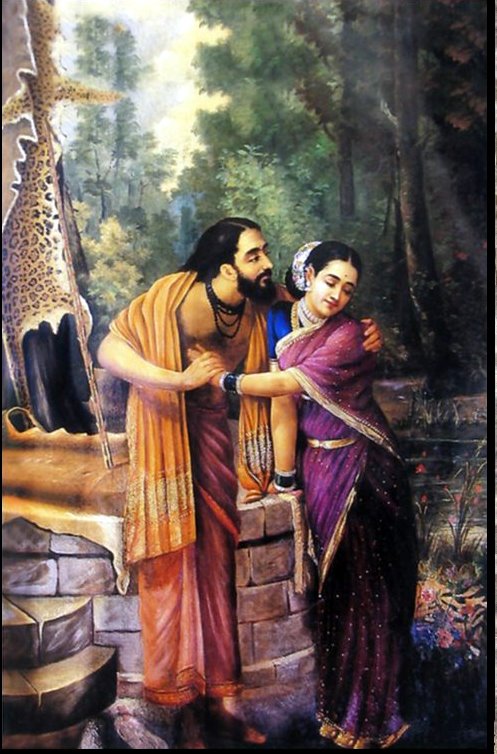
Arjuna (IAST: Arjuna; Sanskrit: अर्जुन, meaning “bright,” “shining,” or “silver”) is one of the central heroes of the Mahābhārata, the great Indian epic attributed to the sage Vyāsa. The third of the five Pāṇḍava brothers, Arjuna is celebrated as the supreme archer (Dhanurdharī) of his age — a warrior whose skill with the bow was unmatched in the three worlds. Yet Arjuna’s significance extends far beyond martial prowess: he is the devoted friend and disciple of Lord Kṛṣṇa, and it is his profound spiritual crisis on the eve of the Kurukṣetra war that occasions the revelation of the Bhagavad Gītā, one of the most revered philosophical texts in human history (Britannica, “Arjuna”).
Arjuna embodies the ideal of the kṣatriya — the righteous warrior who struggles not merely against external enemies but against his own doubt, attachment, and moral confusion. His journey from bewildered despair to resolute action under Kṛṣṇa’s guidance represents the universal human quest for dharma (right action), jñāna (knowledge), and ultimate liberation.
Birth and Divine Parentage
Arjuna was born to Queen Kuntī (Pṛthā), wife of King Pāṇḍu of Hastinapura, through the grace of Indra, the king of the gods and lord of heaven. Because Pāṇḍu was cursed to die if he engaged in conjugal relations, Kuntī invoked divine mantras granted to her by the sage Durvāsā to beget children from the gods. Arjuna’s elder brothers Yudhiṣṭhira and Bhīma were born from Dharma (Yama) and Vāyu respectively, while Arjuna was the son of Indra, the mightiest of the Vedic deities (Mahābhārata, Ādi Parva).
This divine parentage bestowed upon Arjuna extraordinary qualities: valour, celestial beauty, keen intelligence, and an inherent connection to the realm of the gods. The name “Arjuna” itself — meaning “bright” or “silver-white” — reflects his radiant, heroic nature.
Training under Droṇa
The Pāṇḍava and Kaurava princes received their martial education from Droṇācārya (Droṇa), a Brahmin master of warfare and one of the greatest teachers in the epic. From the very beginning, Arjuna distinguished himself as Droṇa’s most gifted and dedicated student. The Mahābhārata recounts that while other princes would rest, Arjuna practised archery even in complete darkness, having once noticed that his hand could find his mouth while eating in the dark — thus proving that aim could be perfected through discipline rather than sight alone (Mahābhārata, Ādi Parva 130).
The famous episode of the bird’s eye test illustrates Arjuna’s singular concentration. When Droṇa placed a wooden bird on a tree and asked each prince what he saw, the others described the tree, the branches, the sky. Arjuna alone replied: “I see only the eye of the bird.” Droṇa commanded him to shoot, and the arrow struck the eye perfectly (Mahābhārata, Ādi Parva 132). This episode has become proverbial in Indian culture for the power of focused attention (ekāgratā).
Droṇa declared Arjuna to be the finest archer in the world. The guru’s devotion to Arjuna was so complete that he is said to have demanded the thumb of the tribal prince Ekalavya — who had independently mastered archery by meditating upon Droṇa’s image — so that no one might surpass his favoured pupil (Mahābhārata, Ādi Parva 131).
The Winning of Draupadī
Arjuna’s archery prowess won him not only fame but also a wife. At the svayaṁvara (self-choice ceremony) of Princess Draupadī of Pāñcāla, contestants were required to string a massive bow and shoot an arrow through a revolving mechanism to hit the eye of a golden fish placed high above, while looking only at its reflection in water below. When all the assembled kings and princes failed, Arjuna — disguised as a Brahmin during the Pāṇḍavas’ exile — accomplished the feat with effortless precision (Mahābhārata, Ādi Parva 185–186).
Upon returning to their mother Kuntī, Arjuna announced that he had won a “prize.” Kuntī, without looking, instructed her sons to share whatever they had brought equally among themselves. Bound by their mother’s word, all five Pāṇḍavas married Draupadī — an extraordinary arrangement that is one of the most debated episodes in the epic.
Exile, Pilgrimage, and Divine Weapons
Marriage to Subhadrā
During a period of voluntary exile from Indraprastha, Arjuna undertook an extensive pilgrimage across the Indian subcontinent. At Dvārakā, he met and fell in love with Subhadrā, the sister of Lord Kṛṣṇa. With Kṛṣṇa’s blessing and encouragement, Arjuna eloped with Subhadrā, and their union produced Abhimanyu, the valiant young warrior who would play a tragic role in the Kurukṣetra war (Mahābhārata, Ādi Parva 218–220).
Burning of the Khāṇḍava Forest
Arjuna and Kṛṣṇa together assisted the fire-god Agni in consuming the Khāṇḍava forest, battling Indra himself (Arjuna’s divine father) who tried to protect the forest with rain. During this event, Arjuna received the celestial bow Gāṇḍīva from Agni — a divine weapon of immense power that would serve him throughout the great war. He also received two inexhaustible quivers and a celestial chariot bearing the banner of Lord Hanumān (Mahābhārata, Ādi Parva 225–227).
Penance and the Pāśupatāstra
During the Pāṇḍavas’ thirteen-year exile, Arjuna was sent to obtain divine weapons (divyāstra) for the coming war. He performed severe austerities in the Himalayas and encountered Lord Śiva disguised as a tribal hunter (Kirāta). The two fought over a slain boar, and Arjuna discovered that his opponent was invincible. When Śiva revealed his true form, Arjuna fell at his feet in devotion. Pleased by his courage and devotion, Śiva granted him the fearsome Pāśupatāstra, the most powerful weapon in existence, capable of destroying the three worlds (Mahābhārata, Vana Parva 40–41). This episode inspired the classical Sanskrit poem Kirātārjunīya by Bhāravi, one of the mahākāvyas of Indian literature (Wikipedia, “Kirātārjunīya”).
Arjuna then ascended to Indraloka (Indra’s heaven), where he spent years training under his father and the celestial teachers. There he acquired numerous celestial weapons from the gods and fought alongside the devas against their enemies the dānavas and nivātakavacas.
The Bhagavad Gītā: Arjuna’s Crisis and Kṛṣṇa’s Teaching
The supreme moment of Arjuna’s story — and indeed of the entire Mahābhārata — comes on the first day of the Kurukṣetra war. As the two vast armies stand arrayed for battle, Arjuna asks Kṛṣṇa, his charioteer, to drive their chariot between the armies so he might survey the opposing forces.
What Arjuna sees shatters him: his own grandfather Bhīṣma, his beloved teacher Droṇa, his cousins, uncles, and friends arrayed against him. Overcome by grief, compassion, and moral paralysis, Arjuna drops his Gāṇḍīva bow and declares that he will not fight. His words echo with anguish:
“O Kṛṣṇa, seeing my own kinsmen gathered here, eager to fight, my limbs fail, my mouth dries, my body trembles, and my hair stands on end… I do not desire victory, nor kingdom, nor pleasures. Of what use is kingdom to us, O Govinda?” (Bhagavad Gītā 1.28–32)
Kṛṣṇa’s response is the Bhagavad Gītā — 700 verses of profound teaching on the nature of the self, action, devotion, and reality. Through the paths of Karma Yoga (selfless action), Jñāna Yoga (knowledge), and Bhakti Yoga (devotion), Kṛṣṇa leads Arjuna from despair to understanding. He reveals the immortality of the ātman, the duty of the kṣatriya, the illusion of attachment, and finally his own supreme divine nature in the awe-inspiring Viśvarūpa (Universal Form) (Wikipedia, “Bhagavad Gita”).
Arjuna’s role in the Gītā is not merely passive. He asks the searching questions that every sincere spiritual seeker faces: What is the nature of the self? How should one act in the face of moral ambiguity? What is the relationship between knowledge and action? Is renunciation superior to engagement? His doubts are the doubts of all humanity, and Kṛṣṇa’s answers, given through Arjuna, are addressed to all beings for all time.
At the discourse’s conclusion, Arjuna declares:
“Naṣṭo mohaḥ smṛtir labdhā — My delusion is destroyed, my memory is restored. I stand firm, with doubts dispelled. I shall act according to Your word.” (Bhagavad Gītā 18.73)
The Kurukṣetra War
In the eighteen-day war, Arjuna was the foremost warrior of the Pāṇḍava side. His major exploits include:
-
Defeating Bhīṣma: Though reluctant to fight his grandsire, Arjuna fought Bhīṣma for ten days, ultimately using Śikhaṇḍī as a shield — Bhīṣma had vowed not to fight one who was born female — to bring the patriarch to his bed of arrows.
-
Slaying Jayadratha: When Jayadratha enabled the killing of Arjuna’s beloved son Abhimanyu by blocking the other Pāṇḍavas from entering the Cakravyūha formation, Arjuna vowed to kill Jayadratha before sunset the next day or immolate himself. With Kṛṣṇa’s divine aid — who obscured the sun to lure Jayadratha out of hiding — Arjuna fulfilled his vow in one of the most dramatic episodes of the war (Mahābhārata, Droṇa Parva).
-
Battle with Karṇa: The climactic duel between Arjuna and Karṇa — his unknown elder brother, the son of Sūrya — is one of the epic’s most poignant confrontations. When Karṇa’s chariot wheel sank into the earth (a consequence of past curses), Arjuna, urged by Kṛṣṇa, slew him — a morally complex act that haunted Arjuna (Mahābhārata, Karṇa Parva 91).
Names and Epithets
Arjuna is known by ten principal names, each earned through a specific deed or quality:
- Arjuna — The bright, the pure one
- Phalguna — Born under the star Uttara Phālgunī
- Jishnu — The irresistible conqueror
- Kīrīṭī — Wearer of the celestial diadem given by Indra
- Śvetavāhana — He whose horses are white
- Bībhatsu — He who fights nobly, without cruelty
- Vijaya — The ever-victorious
- Pārtha — Son of Pṛthā (Kuntī)
- Savyasācī — The ambidextrous archer
- Dhanañjaya — Winner of wealth (from the Rājasūya campaign)
Iconography and Symbols
Arjuna is traditionally depicted as a handsome, youthful warrior of radiant complexion. His primary attributes include:
- Gāṇḍīva — The divine bow, gifted by Agni, producing a thunderous sound when drawn
- Two inexhaustible quivers — Symbolising endless spiritual resources
- The Hanumān banner (Kapi Dhvaja) — Lord Hanumān seated atop his chariot flag, providing divine protection
- The celestial chariot — Driven by Kṛṣṇa himself, symbolising the body guided by the divine Self
In temple art and miniature paintings across India, the most iconic image of Arjuna is alongside Kṛṣṇa on the Kurukṣetra battlefield — the Pārthasārathi (Kṛṣṇa as Arjuna’s charioteer) motif — representing the soul guided by God through the battle of life.
Philosophical Significance
Arjuna represents the ideal adhikārī (qualified seeker) in Hindu philosophical tradition. He is not a renunciate or a scholar but a man of action thrust into the most extreme moral dilemma. His willingness to question, his honesty about his confusion, and his ultimate surrender to divine guidance make him the archetype of the sincere spiritual aspirant.
The Gītā’s teaching through Arjuna establishes that spiritual liberation is available not only to monks and scholars but to all who perform their duties selflessly, with knowledge and devotion. Arjuna’s transformation from a despairing warrior to an enlightened instrument of dharma is the Gītā’s central narrative — demonstrating that true wisdom is not withdrawal from the world but right engagement with it.
Cultural Legacy
Arjuna remains one of the most celebrated figures in Indian and Southeast Asian culture. His story is retold in the classical Sanskrit mahākāvyas, in regional epics across Indonesia (where the Javanese Wayang shadow puppet tradition centres heavily on Arjuna), in Thai, Cambodian, and Balinese art, and in countless modern novels, films, television serials, and comic books. The phrase “Arjuna’s focus” (Arjuna kī ekāgratā) remains a byword for single-pointed concentration in Indian languages.
Conclusion
Arjuna’s life, as narrated in the Mahābhārata, is a mirror for the human condition: gifted with extraordinary abilities yet assailed by doubt; called to difficult duty yet paralysed by love and compassion; victorious in war yet burdened by its moral weight. It is precisely this complexity that makes him the perfect vessel for the Gītā’s teaching. In Arjuna, the seeker finds not a distant ideal but a fellow traveller — one who questioned, struggled, wept, and finally, through the grace of his divine friend, found the courage to act rightly. As Kṛṣṇa says to him: “tasmād uttiṣṭha kaunteya yuddhāya kṛta-niścayaḥ” — “Therefore arise, O son of Kuntī, and resolve to fight” (Gītā 2.37).