Introduction
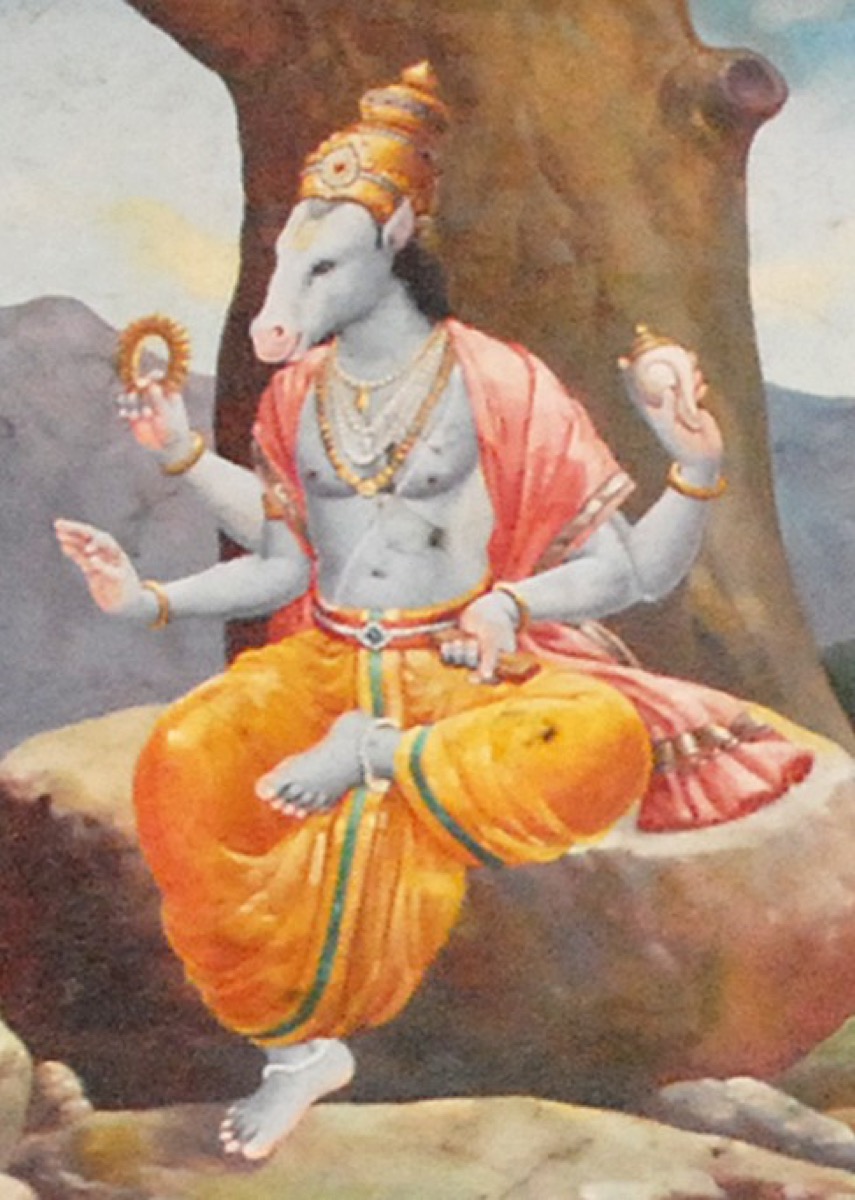
Hayagrīva (Sanskrit: हयग्रीव, IAST: Hayagrīva, literally “horse-necked”) is one of the most profound and spiritually significant avatāras of Lord Viṣṇu — the horse-headed incarnation who descended to rescue the sacred Vedas from the depths of the cosmic ocean and restore them to Brahmā, thereby ensuring the continuity of divine knowledge and the order of creation. As the deity of knowledge, wisdom, and learning, Hayagrīva occupies a position of supreme importance in the Śrī Vaiṣṇava tradition of South India, where he is worshipped as the fountainhead of all sacred learning and the divine teacher (vidyā-devatā) par excellence (Wikipedia, “Hayagriva”; Britannica, “Hayagriva”).
Unlike the more widely known avatāras of Viṣṇu — such as Rāma and Kṛṣṇa, whose narratives centre on martial valour and divine play — Hayagrīva’s mythology is centred on the rescue and restoration of knowledge. His descent is a cosmic affirmation that in Hindu theology, wisdom (jñāna) and sacred scripture (śruti) are not merely human intellectual achievements but divine realities that require divine protection. When the Vedas were stolen or lost, the very foundation of cosmic order (ṛta) was threatened; Hayagrīva’s intervention restored not just texts but the ontological basis of the universe itself (Temple Purohit, “Lord Hayagriva”; Wisdom Library, “Bhāgavata Purāṇa”).
The celebration of Hayagrīva reached its literary zenith in the exquisite Hayagrīva Stotram composed by the great fourteenth-century Śrī Vaiṣṇava ācārya Vedānta Deśika (1268–1369 CE), which remains one of the most widely recited devotional hymns in South Indian Vaishnavism and is chanted daily by students, scholars, and devotees seeking wisdom and intellectual clarity (Vedānta Deśika, Wikipedia; Stotra Nidhi).
The Mythology of Hayagrīva: Rescuer of the Vedas
The Madhu-Kaiṭabha Narrative
The most widely known version of the Hayagrīva myth, found in the Bhāgavata Purāṇa (Canto 2, Chapter 7 and Canto 8, Chapter 24), the Matsya Purāṇa, and the Devī Bhāgavatam, runs as follows:
At the end of a cosmic cycle (kalpa), when Brahmā the Creator was about to enter a period of cosmic sleep (yoga-nidrā), the sacred Vedas — which constitute the eternal blueprint of creation — emerged from his mouth as he yawned. Two powerful asuras (demons) named Madhu and Kaiṭabha, who had been lurking in the cosmic waters, seized the Vedas and plunged with them into the depths of the primordial ocean (kāraṇa-sāgara).
Without the Vedas, creation could not be renewed at the dawn of the next cycle. The universe faced the prospect of permanent dissolution. In response to this cosmic crisis, Lord Viṣṇu assumed the form of Hayagrīva — a resplendent being with a human body and a horse’s head, brilliant white in colour, radiating the light of a thousand suns. Hayagrīva plunged into the cosmic ocean, located the demons, and in a fierce battle, slew Madhu and Kaiṭabha, recovering the Vedas and restoring them to Brahmā.
The Bhāgavata Purāṇa (2.7.11) describes this avatāra:
Taptaṃ tapo vividha-loka-sisṛkṣayā me / Ādau sanāt sva-tapasaḥ sa catuḥ-mukho ‘bhūt / Prāṅ nāsya me mukha-saroruha-āsavena / Jñānaṃ tubhyam abhimata-arthena dadāti devam — describing how Hayagrīva restored the Vedic knowledge to the four-faced Brahmā.
The Alternative Narrative: Hayagrīva the Demon
A parallel mythological strand, found in the Devī Bhāgavatam and the Mārkaṇḍeya Purāṇa, features a different Hayagrīva — a demon (asura) with a horse’s head who obtained a boon from the Goddess (Devī) that he could only be killed by another being with a horse’s head. This demonic Hayagrīva stole the Vedas, prompting Viṣṇu to assume an identical horse-headed form to defeat him. This narrative adds a layer of mirroring — the divine and the demonic both manifesting as horse-headed beings, with the divine ultimately prevailing through its superior nature.
Some scholars view these two narratives as originally distinct traditions that were later harmonized in the Purāṇic literature. The Pāñcarātra Āgamas, the primary liturgical texts of Śrī Vaishnavism, consistently present Hayagrīva as a purely benevolent form of Viṣṇu, without reference to the demonic counterpart (Wikipedia, “Hayagriva”; Temple Purohit).
Connection to the Matsya Avatāra
In some Purāṇic accounts, the Hayagrīva narrative is intertwined with the Matsya (fish) avatāra of Viṣṇu. The Matsya Purāṇa relates that Viṣṇu first appeared as a fish (matsya) to warn King Manu of the impending deluge and to guide his boat to safety, and subsequently assumed the Hayagrīva form to battle the demons who had seized the Vedas during the dissolution. This intertwining of the two avatāras — the fish who preserves life and the horse-head who preserves knowledge — creates a powerful mythological diptych: physical survival and intellectual-spiritual survival as twin divine gifts (Wisdom Library, “Bhāgavata Purāṇa”).
Iconography
Hayagrīva’s iconographic representation is among the most distinctive in the Hindu pantheon. The standard description, drawn from the Pāñcarātra Āgamas and the Viṣṇudharmottara Purāṇa, portrays him as follows:
- Form: A divine figure with a human body and a horse’s head — the horse symbolizing speed, power, intelligence, and the vital breath (prāṇa)
- Complexion: Brilliant white (śuddha-sphaṭika-saṅkāśam), symbolizing the purity of transcendent knowledge, or sometimes golden
- Hands: Four hands (caturbhuja), holding the śaṅkha (conch), cakra (discus), a book (pustaka — representing the Vedas), and a jñāna-mudrā (gesture of knowledge) or akṣamālā (rosary)
- Posture: Seated in padmāsana (lotus posture) on a white lotus, or standing
- Garments: White clothes and garlands, emphasizing purity and sattva (goodness)
- Consort: Lakṣmī Hayagrīva — when depicted with his consort Lakṣmī seated on his lap, the image represents the union of knowledge (jñāna) and prosperity (śrī)
The Parakāla Maṭha in Mysore, founded by Vedānta Deśika’s disciple Brahmatantra Swatantra Jīyar, houses one of the most revered Lakṣmī Hayagrīva vigrahas (sacred images) in India, said to have been personally worshipped by Vedānta Deśika himself (Wikipedia, “Hayagriva”).
Hayagrīva in the Vedic and Upaniṣadic Tradition
The horse-headed deity has ancient roots that predate the Purāṇic narratives. References to Hayagrīva appear in the Taittirīya Āraṇyaka (a Vedic text appended to the Yajur Veda), where a horse-headed form of the divine is associated with the transmission of knowledge. The Śatapatha Brāhmaṇa (13.1–2) contains an important narrative in which the head of the sacrifice (yajña) is restored through a horse’s head (aśva-śiras), creating a mythological link between the horse, sacrifice, and the restoration of divine order.
In the Chāndogya Upaniṣad (3.19.1–2), the sun is described as “honey” (madhu) that the gods extracted from the Vedas, and some commentators have linked this to the Hayagrīva-Madhu-Kaiṭabha narrative, seeing the horse-headed deity as the guardian of this cosmic honey — the distilled essence of Vedic wisdom.
These Vedic and Upaniṣadic antecedents suggest that the Hayagrīva concept is far older than the Purāṇic period and may represent one of the most ancient layers of Hindu theological imagination concerning the divine guardianship of sacred knowledge (Wikipedia, “Hayagriva”).
Vedānta Deśika and the Hayagrīva Stotram
The devotion to Hayagrīva reached its supreme literary expression in the Hayagrīva Stotram of Vedānta Deśika (1268–1369 CE), the towering Śrī Vaiṣṇava philosopher, poet, and logician who is one of the greatest intellectual figures of medieval India. Vedānta Deśika was a devoted worshipper of Hayagrīva, and the Stotram — consisting of 33 luminous Sanskrit verses — is his most beloved composition.
The opening verse sets the tone of the entire poem:
Jñānānanda-mayaṃ devam nirmala-sphaṭikākṛtim / Ādhāraṃ sarva-vidyānāṃ Hayagrīvam upāsmahe — “We meditate upon the divine Hayagrīva, who is the embodiment of knowledge and bliss, who has the form of a spotless crystal, and who is the foundation of all learning.”
Another celebrated verse (verse 6) captures the theological essence of Hayagrīva worship:
Svāmin bhavad-īya-vaibhava-paripūrṇe parabrahmani / Kiñcid-asmadanugrahāya viṣayīkṛtya dṛśyaḥ katham / Mandas-smita-manda-mandara-galat-pīyūṣa-mādhvī-rasair / Manthāna-mahatām manaḥsu viharaṃs tvam siddhim adhyāsyasi — “O Lord, how is it that You, the Supreme Brahman complete in all glory, have become visible for our benefit? With the nectar of Your gentle smile, churned like the divine honey from the Mandara mountain, You dance in the hearts of the great and bestow perfection.”
Vedānta Deśika established the tradition of commencing all learning and scholarly activity with a prayer to Hayagrīva. To this day, students in Śrī Vaiṣṇava families and institutions begin their studies by reciting the Hayagrīva Stotram, and the deity is invoked before examinations, academic discussions, and philosophical debates (Vedānta Deśika, Wikipedia; Stotra Nidhi).
Worship in South Indian Vaishnavism
Hayagrīva worship is particularly prominent in the Śrī Vaiṣṇava tradition of South India, where he holds a position of unique importance as the deity of knowledge and the divine preceptor. Major centres of Hayagrīva worship include:
Tirumala (Tirupati)
The Tirumala temple complex — India’s most visited pilgrimage site — contains a Hayagrīva shrine within the larger Veṅkaṭeśvara temple. Devotees visiting Tirumala often worship Hayagrīva as part of the temple circuit, invoking his blessings for wisdom and scholarly success.
Mysore (Parakāla Maṭha)
The Parakāla Maṭha, one of the two principal monastic institutions of the Thenkalai (southern) school of Śrī Vaishnavism, is centred on the worship of Lakṣmī Hayagrīva. The vigraha worshipped here is believed to have been the personal deity of Vedānta Deśika. The annual Hayagrīva Jayantī celebration at the Parakāla Maṭha is a major religious event.
Devanayaka Temple, Tiruvahindrapuram
This ancient temple near Cuddalore, Tamil Nadu, houses a celebrated Hayagrīva shrine and is associated with the legendary sage Athri. It is one of the 108 Divya Desams (sacred Vaiṣṇava sites) celebrated by the Āḻvārs (Tamil Vaiṣṇava poet-saints).
Other Centres
Hayagrīva temples and shrines are found at Chidambaram (Tamil Nadu), Srirangam, and various Vaiṣṇava maṭhas across Karnataka, Andhra Pradesh, and Tamil Nadu. In recent decades, Hayagrīva worship has also spread to Vaiṣṇava communities in North India and the global Hindu diaspora (Wikipedia, “Hayagriva”).
Hayagrīva Jayantī: The Festival
Hayagrīva Jayantī — the celebration of Hayagrīva’s appearance — is observed on the full moon day (pūrṇimā) of the month of Śrāvaṇa (August). This day coincides with the Upākarma ceremony (the annual renewal of the sacred thread and the commencement of Vedic study), creating a powerful liturgical connection between the deity who rescued the Vedas and the annual human commitment to studying them.
On Hayagrīva Jayantī, devotees:
- Recite the Hayagrīva Stotram of Vedānta Deśika
- Perform special pūjās to Hayagrīva images
- Offer jaggery mixed with Bengal gram (chana-guḍa) — the characteristic prasāda of Hayagrīva, symbolizing the sweetness of knowledge
- Begin or renew their study of sacred texts
- Fast and observe utsava (festival) celebrations in temples
The choice of chana-guḍa as Hayagrīva’s characteristic offering has given rise to the South Indian sweet hayagrīva undé — a confection of jaggery, Bengal gram, and ghee that is specifically prepared on this day and distributed as prasāda (Wikipedia, “Hayagriva”; Temple Purohit).
Hayagrīva in Buddhist Tradition
The horse-headed deity appears in Buddhist tradition as well, particularly in Vajrayāna (Tantric) Buddhism, where Hayagrīva is a wrathful emanation of Avalokiteśvara (the Bodhisattva of Compassion). In Tibetan Buddhism, Hayagrīva (Tibetan: rta-mgrin) is a fierce protector deity depicted with a red or dark body, three faces, six arms, and a small horse head emerging from his hair. This Buddhist Hayagrīva is a protector against obstacles and evil spirits and is widely worshipped in Tibetan, Mongolian, Japanese (as Batō Kannon), and Nepalese Buddhism.
The Hindu and Buddhist Hayagrīva traditions likely share a common ancient source — the Vedic and pre-Vedic horse-deity complex that associates the horse with solar power, cosmic energy, and divine intelligence. The divergent development of the deity in Hindu and Buddhist contexts illustrates how a single mythological archetype can generate profoundly different theological elaborations while retaining a common core symbolism (Wikipedia, “Hayagriva”; Britannica, “Hayagriva”).
Symbolism of the Horse Head
The horse (aśva) holds a position of extraordinary significance in Vedic and Hindu symbolism:
- Speed and Power: The horse represents the swiftness of thought and the power of the intellect — Hayagrīva as the horse-headed deity embodies the idea that divine knowledge moves with the speed of thought across all realms of existence.
- The Vedic Sacrifice: The Aśvamedha (horse sacrifice) was the supreme Vedic ritual of sovereignty. The horse in this context represents cosmic dominion, and Hayagrīva as the horse-headed Viṣṇu represents divine sovereignty over all knowledge.
- Prāṇa (Vital Breath): In the Bṛhadāraṇyaka Upaniṣad (1.1), the sacrificial horse is identified with the cosmic breath (prāṇa). Hayagrīva thus represents the vital breath of wisdom that sustains the universe.
- The Sun: The Vedic Aśvinau (Ashvin twins) are horse-headed solar deities, and the horse is consistently associated with the sun in Vedic mythology. Hayagrīva’s brilliant white complexion reinforces this solar symbolism — knowledge as the light that dispels the darkness of ignorance.
The choice of the horse as the form for the deity of knowledge is therefore not arbitrary but deeply rooted in the Vedic symbolic vocabulary, where the horse represents the highest manifestation of divine energy and intelligence (Wikipedia, “Hayagriva”).
Hayagrīva Worship and Student Traditions
In contemporary Hindu practice, Hayagrīva is the pre-eminent deity invoked by students, scholars, and seekers of knowledge:
- Before Examinations: South Indian students commonly recite the Hayagrīva Stotram or the opening verse before examinations for divine aid in recollection and clarity of thought.
- Vidyārambha: The ceremony of initiating a child’s education (vidyārambha or akṣarābhyāsa) sometimes includes prayers to Hayagrīva alongside Sarasvatī and Gaṇeśa.
- Academic Invocations: Śrī Vaiṣṇava educational institutions typically begin each day with the Hayagrīva Stotram, establishing the deity as the patron of all learning undertaken in the institution.
- Philosophical Study: Before commencing the study of the Brahmasūtras, Upaniṣads, or other Vedāntic texts, Śrī Vaiṣṇava scholars traditionally invoke Hayagrīva as the divine source of the wisdom they seek to comprehend.
Legacy and Significance
Hayagrīva’s significance in Hindu tradition is multidimensional:
- Theological: He embodies the teaching that sacred knowledge is not a human invention but a divine reality that God Himself descends to protect and restore when it is threatened.
- Philosophical: His association with Vedānta Deśika links him to one of the most sophisticated philosophical traditions in world history — the Viśiṣṭādvaita school of Rāmānuja, as further developed by Deśika.
- Cultural: The Hayagrīva Stotram and the traditions of student worship create a living bridge between the ancient mythological world and the daily experience of millions of Hindu students and scholars.
- Pan-Asian: His presence in both Hindu and Buddhist traditions demonstrates the remarkable fluidity of religious symbols across Asian civilizations.
Conclusion
Hayagrīva stands as the divine guardian of humanity’s highest treasure — knowledge. In a tradition that counts among its supreme values the truth that vidyā (knowledge) liberates the soul from the bondage of avidyā (ignorance), the deity who rescues the Vedas from the cosmic deep is not merely a mythological figure but a living symbol of the eternal divine commitment to the illumination of consciousness.
As Vedānta Deśika opens his immortal hymn:
Jñānānanda-mayaṃ devam nirmala-sphaṭikākṛtim / Ādhāraṃ sarva-vidyānāṃ Hayagrīvam upāsmahe — “We meditate upon Hayagrīva, the divine embodiment of knowledge and bliss, pure as crystal, the foundation of all learning.”
In that meditation lies the promise that knowledge, once rescued by the divine, is never truly lost — it awaits each generation as a gift from the horse-headed Lord, brilliant and eternal, at the dawn of every new creation.