Introduction
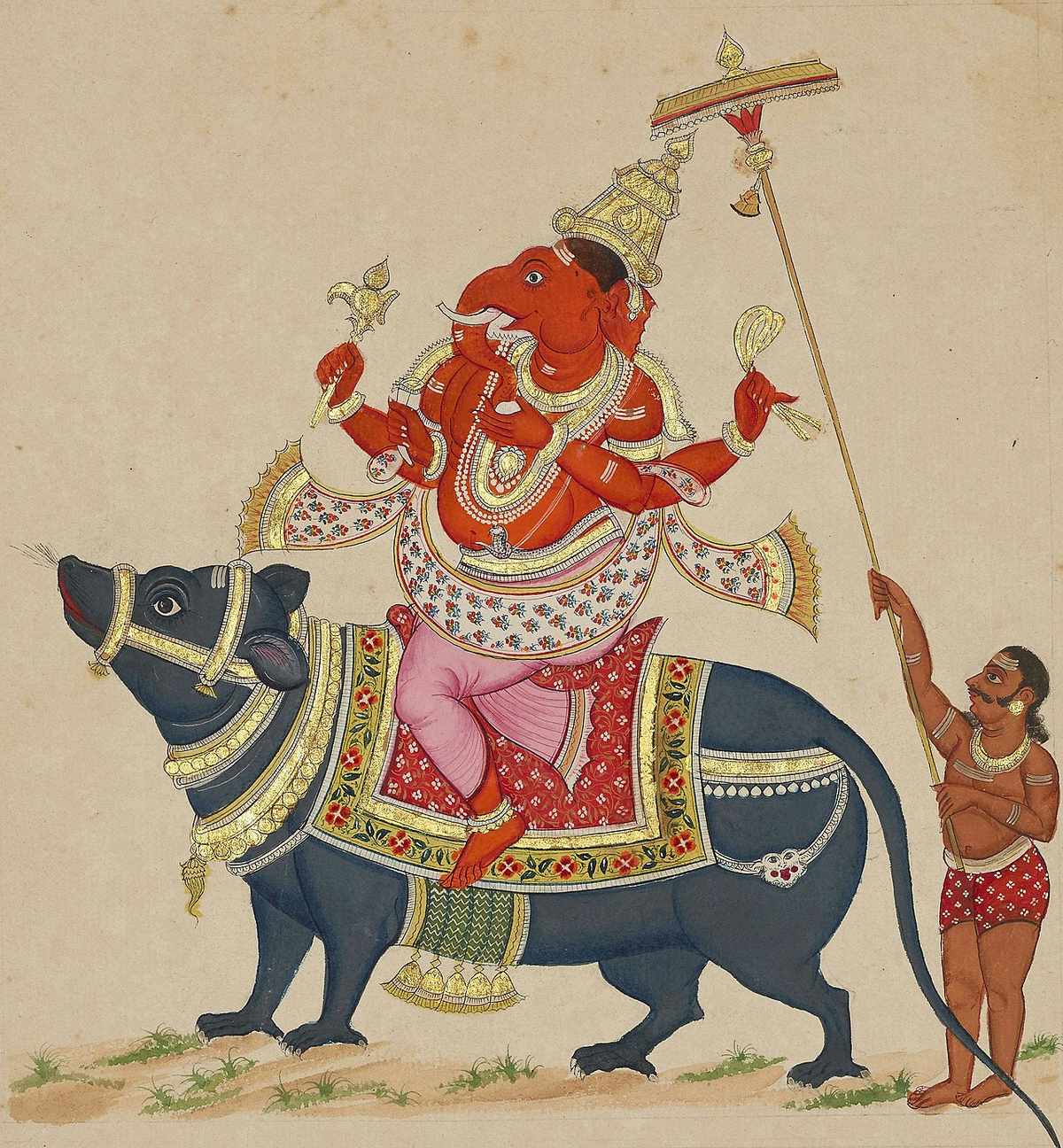
Lord Gaṇeśa (गणेश), also known as Vināyaka (विनायक), Vighnahartā (विघ्नहर्ता), and Lambodara (लम्बोदर), is one of the most widely worshipped deities in Hinduism and across much of Asia. The elephant-headed son of Lord Śiva and Goddess Pārvatī, he is revered as the god of beginnings, wisdom, intellect, and the removal of obstacles. No Hindu ceremony, pilgrimage, or undertaking commences without first invoking his blessings, and his image adorns the entrance of temples, homes, and businesses throughout the Indian subcontinent and beyond.
Gaṇeśa’s appeal transcends sectarian boundaries. Though he is venerated as the supreme deity by the Gāṇapatya sect, he is equally honoured within Śaiva, Vaiṣṇava, and Śākta traditions. In the ninth century, the great philosopher Ādi Śaṅkarācārya formally included Gaṇeśa among the five primary deities of the Smārta tradition (pañcāyatana pūjā), alongside Śiva, Viṣṇu, Devī, and Sūrya (Wikipedia, “Ganesha”). Today, his worship extends far beyond the borders of India — from the temples of Nepal and Sri Lanka to Thailand, Cambodia, Japan, and the global Hindu diaspora.
Vedic Origins and Textual History
The evolution of Gaṇeśa as a distinct deity unfolds across several strata of Hindu scripture. In the earliest Vedic literature, the term Gaṇapati (“Lord of the gaṇas”) appears not as an elephant-headed figure but as an abstract principle of divine leadership. Ṛg Veda 2.23.1 invokes Gaṇānāṃ tvā gaṇapatim havāmahe — “We call upon you, the Gaṇapati of the gaṇas” — though scholars debate whether this refers to the later Gaṇeśa or to Bṛhaspati, the priest of the gods.
The elephant-headed form begins to crystallize in later texts. Two verses in the Black Yajurveda (Taittirīya Āraṇyaka 10.1) appeal to a deity described as “the tusked one” (Dantiḥ), “elephant-faced” (Hastimukha), and “with a curved trunk” (Vakratuṇḍa) — epithets that the fourteenth-century commentator Sāyaṇa explicitly identifies with Gaṇeśa. By the time of the Purāṇic literature (c. 4th-10th century CE), Gaṇeśa had acquired his fully developed mythology, iconography, and cultic identity (Wikipedia, “Ganesha”).
The Gaṇapati Atharvaśīrṣa, a late Upaniṣadic text entirely devoted to Gaṇeśa, represents the most philosophically mature statement of his divinity. This text declares: Tvaṃ Brahmā, tvaṃ Viṣṇus, tvaṃ Rudras, tvaṃ Indras, tvaṃ Agnis, tvaṃ Vāyus, tvaṃ Sūryas, tvaṃ Candramās, tvaṃ Brahma — “You are Brahmā, you are Viṣṇu, you are Rudra, you are Indra, you are Agni, you are Vāyu, you are Sūrya, you are the Moon, you are Brahman.” The Atharvaśīrṣa thus identifies Gaṇeśa not merely as one deity among many but as the supreme reality, the Brahman of Vedānta philosophy manifest in elephant-headed form (Sanatana Faith, “Ganapati Atharvashirsha”).
Mythological Origins: The Birth of Gaṇeśa
The birth of Gaṇeśa is recounted in several Purāṇas with remarkable consistency. According to the Śiva Purāṇa and Gaṇeśa Purāṇa, Goddess Pārvatī created a boy from the turmeric paste (haridrā) she used during her bath while Śiva was engaged in deep meditation on Mount Kailāsa. She breathed life into the figure and assigned him the task of guarding the entrance to their abode.
When Lord Śiva returned, the boy — not recognising his creator’s husband — refused him entry. A fierce battle ensued, during which Śiva, aided by his gaṇas (divine attendants), severed the boy’s head. Upon discovering that the child was Pārvatī’s beloved creation, Śiva was filled with remorse. He sent his gaṇas northward to bring back the head of the first living creature they encountered sleeping with its head facing north. They returned with the head of an elephant, which Śiva attached to the boy’s body, restoring him to life (Wisdomlib, “Shiva Purana”).
Śiva then declared the resurrected child as Gaṇeśa — “Lord of the Gaṇas” — and proclaimed that he would be worshipped before all other deities at the commencement of any new endeavour, ceremony, or ritual. This primacy (agrapūjā) remains one of Gaṇeśa’s most distinctive attributes to this day.
The Avatāras of Gaṇeśa
Unlike Viṣṇu’s well-known daśāvatāra (ten incarnations), Gaṇeśa’s incarnations are less widely recognized but are elaborated in two major texts.
The Gaṇeśa Purāṇa: Four Avatāras
The Gaṇeśa Purāṇa, an upapurāṇa (minor Purāṇa) composed approximately between the 12th and 16th centuries, presents Gaṇeśa as a supreme deity who incarnates across the four cosmic ages (yugas) to restore dharma:
- Mohotkaṭa in the Satya Yuga — with ten arms, riding a lion, possessing a red complexion
- Mayūreśvara in the Tretā Yuga — with six arms, white complexion, riding a peacock
- Gajānana in the Dvāpara Yuga — with four arms, red complexion, riding a mouse
- Dhūmraketu in the Kali Yuga — with two arms, smoke-coloured complexion, riding a horse
Each avatāra descends to vanquish a specific demonic threat and re-establish cosmic order (Wisdomlib, “Ganesha Purana”).
The Mudgala Purāṇa: Eight Avatāras
The Mudgala Purāṇa describes eight incarnations (aṣṭāvatāra), each conquering a demon who personifies a doṣa (flaw) of human nature:
- Vakratuṇḍa (“Curved Trunk”) — defeats Matsarāsura (the demon of jealousy)
- Ekadanta (“Single Tusk”) — defeats Madāsura (the demon of arrogance)
- Mahodara (“Great Belly”) — defeats Mohāsura (the demon of delusion)
- Gajānana (“Elephant-faced”) — defeats Lobhāsura (the demon of greed)
- Lambodara (“Pendant Belly”) — defeats Krodhāsura (the demon of anger)
- Vikaṭa (“Unusual Form”) — defeats Kāmāsura (the demon of lust)
- Vighnarāja (“Lord of Obstacles”) — defeats Mamāsura (the demon of attachment)
- Dhūmravarṇa (“Smoke-coloured”) — defeats Abhimānāsura (the demon of pride)
This framework is profoundly psychological. Each demon represents an inner vice that obstructs spiritual progress, and Gaṇeśa’s triumph over each one serves as a devotional model for the aspirant’s own inner purification (Wikipedia, “Mudgala Purana”).
Divine Symbolism and Iconography
Gaṇeśa’s distinctive form is among the most recognizable in world religious art. Every element of his iconography carries layered symbolic meaning rooted in Vedic and Purāṇic tradition.
The Elephant Head
- Large ears symbolise keen listening (śravaṇa), the ability to discern truth from falsehood, and receptivity to the prayers of devotees
- Small eyes represent concentration and focused vision
- The trunk (śuṇḍā) embodies discrimination (viveka) and adaptability — it can uproot a tree or pick up a needle with equal ease, symbolising the balance of strength and subtlety
- One broken tusk (ekadanta) represents the sacrifice of the mundane for the pursuit of knowledge (see below)
The Broken Tusk (Ekadanta)
According to the Mahābhārata, the sage Vyāsa sought a scribe capable of writing down his epic without pause. Gaṇeśa agreed, on the condition that Vyāsa would dictate without stopping. When his pen broke during the dictation, Gaṇeśa snapped off his own tusk and continued writing. This act demonstrates the primacy of knowledge over physical perfection and establishes Gaṇeśa as the patron deity of letters and learning.
The Mouse (Mūṣaka)
Gaṇeśa’s vāhana (mount) is the mouse — a seemingly incongruous pairing that carries deep meaning:
- The mouse represents the ego (ahaṃkāra), which, if left unchecked, gnaws through everything; Gaṇeśa riding the mouse symbolises mastery over the ego
- The mouse also represents desire (kāma), which moves quickly and stealthily; it must be kept under the control of wisdom
- Together, the massive deity atop the tiny creature embodies the paradox that true power lies in the control of subtlest forces
The Modaka Sweet
Gaṇeśa is invariably depicted holding or reaching for a modaka (sweet dumpling), his favourite offering. The modaka symbolises the sweetness of spiritual realisation (ānanda) — the reward that comes from inner purification and the removal of obstacles on the path to mokṣa.
Other Iconographic Elements
- Four arms — symbolising omnipotence and the four goals of human life (puruṣārtha): dharma, artha, kāma, and mokṣa
- Pot belly (lambodara) — contains the entire universe, representing the cosmos and the ability to digest all experience, good and ill
- Axe (paraśu) — to sever attachments and cut through obstacles
- Noose (pāśa) — to capture and bind difficulties, and to draw the devotee closer to truth
- Snake belt — control over the serpent of desire; in some traditions, the snake represents kuṇḍalinī śakti
- Red and saffron garments — auspiciousness, prosperity, and the radiance of divine energy
The Vighnahartā: Remover of Obstacles
Gaṇeśa’s primary theological function is his role as Vighnahartā — the remover of obstacles (vighna). This role operates on multiple levels: he removes material obstacles to worldly success, but more fundamentally, he removes the inner obstacles of ignorance (avidyā), attachment (rāga), and ego (ahaṃkāra) that impede the soul’s journey toward liberation.
Devotees invoke his blessing before:
- Beginning new ventures, businesses, or projects
- Starting journeys or pilgrimages
- Performing sacred rituals and saṃskāras (life-cycle rites)
- Commencing education or examinations
- Buying new property, vehicles, or entering a new home
- Writing books, composing music, or undertaking creative endeavours
The most celebrated mantras associated with Gaṇeśa include:
ॐ गणेशाय नमः Oṃ Gaṇeśāya Namaḥ — “Obeisance to Lord Gaṇeśa”
And the widely recited invocation:
वक्रतुण्ड महाकाय सूर्य कोटि समप्रभ। निर्विघ्नं कुरु मे देव सर्व कार्येषु सर्वदा।। “O Lord with the curved trunk and mighty body, radiant as a crore of suns, may you make all my endeavours free of obstacles, always.”
Sacred Literature
Gaṇeśa occupies a distinguished place across a wide range of Hindu scripture:
- Gaṇeśa Purāṇa — an upapurāṇa entirely devoted to his mythology, theology, and worship; describes his four avatāras across the yugas
- Mudgala Purāṇa — narrates the eight incarnations of Gaṇeśa, each overcoming a specific vice
- Gaṇapati Atharvaśīrṣa — a late Upaniṣadic text identifying Gaṇeśa with Brahman, the ultimate reality
- Mahābhārata — presents Gaṇeśa as the scribe of the epic, dictated by Vyāsa
- Ṛg Veda (2.23.1) — contains early invocations to Gaṇapati
- Śiva Purāṇa and Liṅga Purāṇa — narrate the birth legend
- Gaṇeśa Sahasranāma — the thousand names of Gaṇeśa, each describing an attribute or power
Regional and Global Worship
India
Gaṇeśa worship varies richly across the subcontinent:
- Maharashtra — The spiritual heartland of Gaṇeśa devotion, home to the Aṣṭavināyak pilgrimage circuit: eight ancient temples within a 100-kilometre radius of Pune (Morgaon, Siddhatek, Pali, Mahad, Theur, Lenyadri, Ozar, Ranjangaon), each enshrining a distinct form of Gaṇapati. Maharashtrian worship centres on offerings of modaka and lāḍḍu.
- South India — Known as Piḷḷaiyār in Tamil Nadu, Gaṇeśa is worshipped with coconut-breaking rituals and is the most popular deity at village crossroads. The Rockfort Ucchi Piḷḷaiyār temple in Tiruchirappalli is among the most revered.
- Bengal — Gaṇeśa is venerated prominently during Durgā Pūjā, where he is part of the parivāra (divine family) installed alongside Durgā, Lakṣmī, Sarasvatī, and Kārttikeya.
- Kerala — The Gaṇapati temple at Kasaragod and the Mallikārjuna temple tradition maintain distinctive South Indian Āgamic worship.
Beyond India
Gaṇeśa is one of the few Hindu deities whose worship has spread extensively beyond the subcontinent:
- Japan — Worshipped as Kangiten (or Shōten), Gaṇeśa has been venerated since 806 CE, with over 200 temples across Japan. He is associated with prosperity and marital harmony.
- Thailand — Known as Phra Phikkanet, he is the deity of fortune and success, and his image is ubiquitous in Thai businesses and government buildings.
- Cambodia and Indonesia — Archaeological remains from the Khmer and Majapahit empires include numerous Gaṇeśa sculptures, often placed beside Śiva sanctuaries.
- Nepal — Gaṇeśa Chaturthi is celebrated as Vināyaka Chaturthi, and the four Vināyaka temples of the Kathmandu Valley form a sacred circuit.
- Buddhism — Gaṇeśa appears as a Buddhist deity (Vināyaka) in Tibetan, Chinese, and Japanese Buddhist traditions, often in dancing form (Nṛtta Gaṇapati).
- Jainism — Some Jain traditions venerate Gaṇeśa, particularly in his function as a god of prosperity and auspicious beginnings (Wikipedia, “Ganesha in world religions”).
Ganesh Chaturthi: The Great Festival
Gaṇeśa Chaturthi (विनायक चतुर्थी), celebrated on the fourth day of the bright half of Bhādrapada (August-September), marks Gaṇeśa’s birthday. The festival spans up to ten days and involves:
- Installing clay Gaṇeśa idols in homes and public paṇḍāls
- Performing the Ṣoḍaśopacāra Pūjā (sixteen-step worship)
- Offering modaka, dūrvā grass (Cynodon dactylon), red hibiscus, and coconut
- Community gatherings with devotional songs (bhajans), cultural performances, and processions
- The grand finale of visarjana — immersion of the idol in water, symbolising the return of form to the formless
The public celebration of Gaṇeśa Chaturthi was transformed into a vehicle for national unity and anti-colonial resistance by Lokmānya Bāl Gaṅgādhar Tilak in 1893. In contemporary India, the festival is the grandest public celebration in Maharashtra, with Mumbai’s Lālbāugcā Rājā and Pune’s Dagaḍūśeṭh Halvāī Gaṇapatī drawing millions of devotees annually.
Names and Epithets
Gaṇeśa is known by numerous names, each illuminating an aspect of his nature. Among the most celebrated:
- Vighnahartā — Remover of obstacles
- Vināyaka — Supreme leader, the one without a master
- Lambodara — One with a pendant belly, containing the universe
- Ekadanta — The one-tusked, embodying sacrifice for knowledge
- Siddhi-Vināyaka — Bestower of accomplishments and spiritual attainments
- Heramba — Protector of the weak and helpless
- Bhālacandra — Moon-crested, bearing the crescent moon upon his forehead
- Gajavadana — Elephant-faced
- Modakapriya — Lover of modaka sweets
- Vighneśvara — Lord of obstacles, who both creates and removes them
- Dhūmraketu — Smoke-bannered, his form in the Kali Yuga
- Sumukha — One with a beautiful face
Conclusion
For devotees across the world, Lord Gaṇeśa represents the wisdom to identify true obstacles — both external and internal — and the strength to overcome them. His elephant head teaches the value of listening and discernment; his broken tusk, the willingness to sacrifice for knowledge; his great belly, the capacity to absorb all experience without being disturbed; and his mouse, the mastery over desire and ego.
From the philosophical heights of the Atharvaśīrṣa, where he is identified with Brahman itself, to the joyful intimacy of a child offering a modaka to a clay idol on Gaṇeśa Chaturthi, the worship of Gaṇeśa spans the entire spectrum of Hindu devotion — from the formless absolute to the most tangible, approachable form of the divine. As the tradition teaches: begin with Gaṇeśa, and all that follows will be blessed.