Introduction
Lord Jagannāth (जगन्नाथ, “Lord of the Universe”) is one of the most beloved and enigmatic deities of Hinduism, enshrined in the great temple at Purī in Odisha, eastern India. Unlike the polished stone or bronze mūrtis that characterize most Hindu worship, Jagannāth is venerated as a dāru vigraha — a sacred image carved from wood — whose large, round eyes and limbless form defy the conventions of classical Indian iconography. Together with his elder brother Balabhadra (Balarāma) and sister Subhadrā, the Jagannāth triad occupies the sanctum of the Śrī Mandira, one of the four sacred dhāmas (abodes) of pilgrimage established by Ādi Śaṅkarācārya.
The cult of Jagannāth is remarkable for its ability to harmonize multiple religious currents. Vaiṣṇavas worship him as Kṛṣṇa; Śaivas see in him the essence of Śiva; Śāktas identify Subhadrā with the Devī; and tribal traditions of Odisha regard the dāru (wood) deity as an ancient indigenous god assimilated into the Purāṇic pantheon. The Skanda Purāṇa and the Brahma Purāṇa devote extensive chapters to Jagannāth’s legends and the establishment of Purī as a supreme tīrtha (sacred site). The Gīta Govinda of Jayadeva, composed in the twelfth century at the Jagannāth temple itself, weaves the themes of Rādhā-Kṛṣṇa love into an exalted literary offering to the Lord of the Universe.
Mythological Origins
The Legend of King Indradyumna
The most widely narrated origin story of Jagannāth is found in the Skanda Purāṇa (Vaiṣṇava Khaṇḍa, Purī Māhātmya). According to this account, King Indradyumna of Avantī (Ujjain) was a devout worshipper of Viṣṇu. He learned of a mysterious deity called Nīla Mādhava (the Blue Viṣṇu) worshipped secretly by the Śabara (tribal) chief Viśvāvasu in a remote forest. The king dispatched his priest Vidyāpati to find this deity. After many trials, Vidyāpati discovered Nīla Mādhava in a cave, but the image vanished before the king could arrive.
Distraught, Indradyumna performed intense austerities. A divine voice instructed him: “Build a great temple on the blue mountain (Nīlācala). You will find a fragrant log (dāru) floating in the sea. Have that log carved into my image.” The king found the miraculous log as foretold. The celestial architect Viśvakarman (some traditions say an old carpenter who was Viśvakarman in disguise) agreed to carve the images on one condition: he must not be disturbed for twenty-one days. But the queen, unable to bear the silence and fearing the carpenter had died, persuaded the king to open the doors. The images of Jagannāth, Balabhadra, and Subhadrā were found incomplete — without hands or feet — yet radiating divine glory. Lord Brahmā himself descended to install prāṇa (life-breath) in these unfinished forms and consecrate the temple (Skanda Purāṇa; Britannica, “Jagannatha”).
Connection to Kṛṣṇa
The theological identification of Jagannāth with Kṛṣṇa is central to Vaiṣṇava understanding. The Bhāgavata Purāṇa (1.14) narrates that when Kṛṣṇa departed from the mortal world, his body was cremated at Dvārakā. A hunter named Jarā, who had accidentally shot Kṛṣṇa’s foot (the only vulnerable spot, recalling the curse of the sage Durvāsā), was overcome with remorse. The divine bone (asthi) from Kṛṣṇa’s heart was preserved and enshrined within the wooden image of Jagannāth. This relic, known as the Brahma Padārtha, is believed to be transferred from old to new images during each Nabakalebara (body-renewal) ceremony, ensuring an unbroken continuity of divine presence.
In Gauḍīya Vaiṣṇava theology, Jagannāth is Kṛṣṇa in the mood of vipralambha (love-in-separation), his large, tear-filled eyes expressing the anguish of separation from the gopīs of Vṛndāvana. Śrī Caitanya Mahāprabhu (1486-1534 CE), who spent the last eighteen years of his life in Purī, experienced ecstatic bhāva before the Jagannāth mūrti, seeing in those wide eyes the very face of Kṛṣṇa at Kurukṣetra when he met the Vraja gopīs after a long separation.
The Jagannāth Temple of Purī
Architectural Grandeur
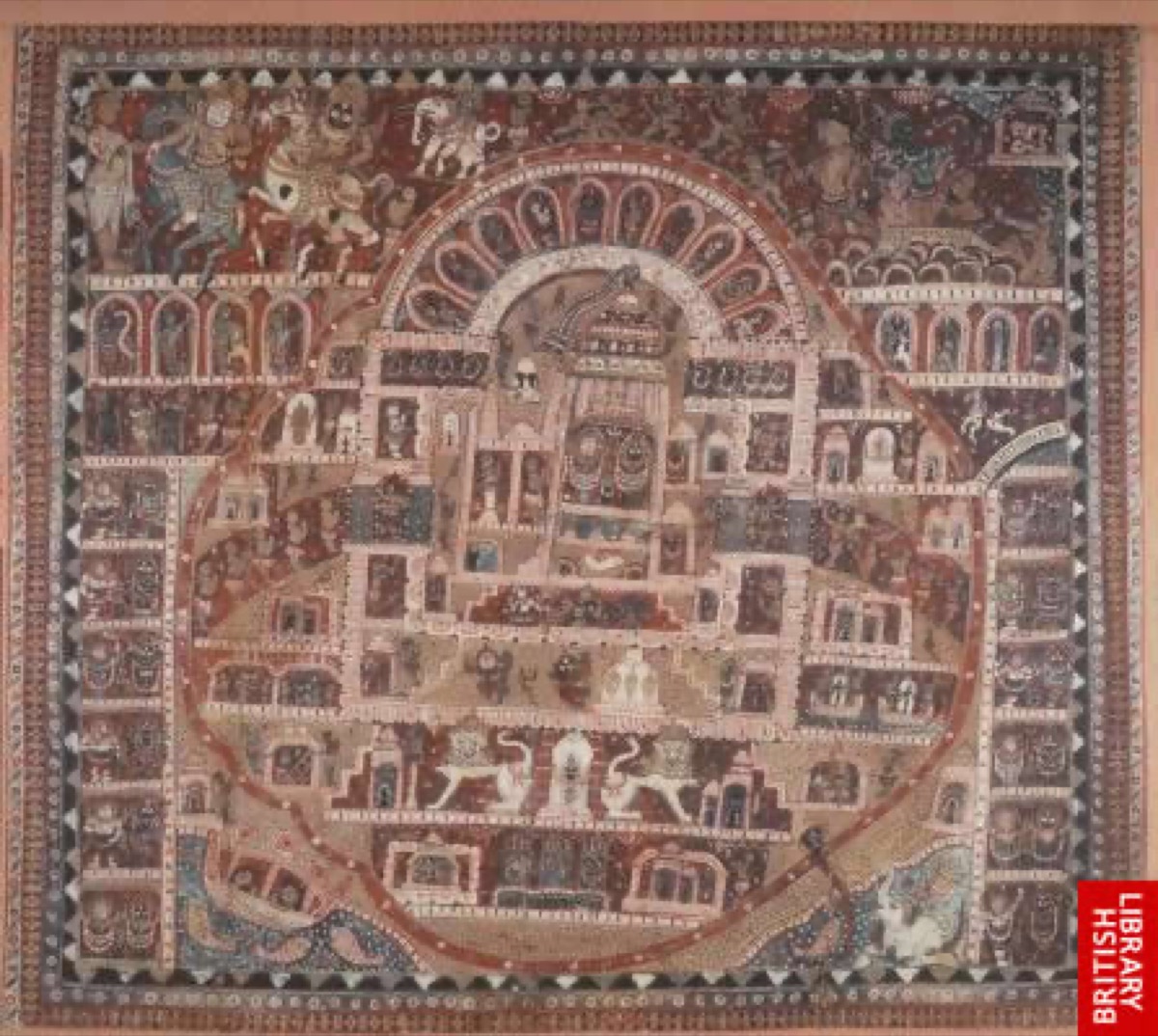
The Śrī Jagannāth Mandir at Purī, built in the twelfth century by King Anantavarman Coḍagaṅgadeva of the Eastern Gaṅga dynasty, is one of the most magnificent temple complexes in India. The main temple (vimāna) rises to a height of 65 metres (214 feet), crowned by the Nīla Cakra (Blue Wheel), a massive metal wheel atop which flies the flag (patitapāvana dhvajā, the flag that purifies the fallen). The temple complex encompasses an area of over 10 acres and contains more than 120 shrines.
The temple follows the classical Kaliṅga style of architecture with four distinct structures along its central axis: the Deula (sanctum), Jagamohana (assembly hall), Naṭamaṇḍira (dance hall), and Bhogamaṇḍapa (offering hall). The walls are adorned with sculptures depicting scenes from Kṛṣṇa-līlā, the daśāvatāra (ten incarnations of Viṣṇu), and celestial musicians and dancers. The temple’s kitchen is reputed to be the largest in the world, with over 500 cooks preparing the daily Mahāprasāda for the deity and thousands of devotees (Wikipedia, “Jagannath Temple, Puri”).
The Four Sacred Gates
The temple has four gates, each facing a cardinal direction: the Siṃha Dvāra (Lion Gate, east, the main entrance), Aśva Dvāra (Horse Gate, south), Vyāghra Dvāra (Tiger Gate, west), and Hāthī Dvāra (Elephant Gate, north). Tradition holds that passing through each gate destroys a specific category of sin, and circumambulating the temple through all four gates constitutes a complete purification.
The Ratha Yātrā: Festival of Chariots
The Ratha Yātrā is the most celebrated festival associated with Jagannāth and one of the oldest known chariot festivals in the world, drawing millions of devotees annually. It takes place on the second day (dvitīyā) of the bright fortnight of the month of Āṣāḍha (June-July). The three deities — Jagannāth, Balabhadra, and Subhadrā — are brought out of the inner sanctum in a grand procession and placed on colossal wooden chariots to travel to the Guṇḍicā temple, approximately 3 kilometres away.
The chariots are freshly constructed each year from specific types of wood. Jagannāth’s chariot, called Nandighōṣa, stands 45 feet tall with 16 wheels and is draped in red and yellow cloth. Balabhadra’s chariot, Tāladhvaja, is 44 feet tall with 14 wheels and decorated in red and green. Subhadrā’s chariot, Darpadālana (also called Devadālana), has 12 wheels and stands 43 feet tall. Thousands of devotees pull the chariots with thick ropes through the broad Grand Road (baḍa ḍāṇḍa) of Purī, chanting “Jai Jagannāth!” The English word “juggernaut” derives from this festival, a testament to the overwhelming spectacle of the massive chariots rolling through the streets (Wikipedia, “Ratha Yatra”; Britannica, “Jagannatha”).
The return journey, called Bahudā Yātrā, takes place nine days later. One of the most intimate moments of the festival is the Suṇā Beśa (Golden Attire), when all three deities are adorned with gold ornaments on the chariots before the return journey.
The Mahāprasāda Tradition
The concept of Mahāprasāda (Great Sacred Food) is central to Jagannāth worship and unparalleled in Hinduism. The temple kitchen (Roṣā Ghara) prepares 56 varieties of food offerings (chhappan bhoga) daily using earthen pots stacked in a pyramid over wood fires. The cooking method is unique: the pot at the top cooks first, defying ordinary physics — a phenomenon devotees attribute to divine grace.
The Mahāprasāda holds extraordinary theological significance. The Skanda Purāṇa declares: annaṃ Jagannāthasya prasādaṃ sarva-pāpa-haraṃ — “The prasāda of Jagannāth destroys all sins.” Once offered to the deity, the food is believed to transcend all distinctions of caste, class, and ritual purity. All devotees, regardless of social status, sit together and eat from the same plate at the Ānanda Bāzāra (Market of Bliss) within the temple complex — a radical expression of spiritual equality that predates modern egalitarian movements by centuries. This practice profoundly influenced Śrī Caitanya’s theology of jīvadayā (compassion for all beings) and the Vaiṣṇava ideal of universal brotherhood.
Nabakalebara: The Sacred Body-Renewal
One of the most mysterious and sacred rituals in Hinduism is Nabakalebara (literally, “New Body”), the periodic renewal of the wooden images of Jagannāth, Balabhadra, Subhadrā, and the Sudarśana Cakra. This occurs at intervals of 8, 12, or 19 years, whenever an extra month (adhika māsa) of Āṣāḍha falls in the Hindu calendar. The most recent Nabakalebara took place in 2015.
The process begins with a secret search party of priests (daitāpatis) who venture into forests seeking the sacred nīm (neem) trees that will provide the new dāru (wood). The tree for Jagannāth must be found near a cremation ground, beside water, at a crossroads, near an anthill, and must bear specific marks — including the natural impression of a conch (śaṅkha) and discus (cakra) on its bark. When found, the tree is felled with golden and silver axes in a secret midnight ceremony.
The most sacred moment comes during the transfer of the Brahma Padārtha — the divine essence believed to reside within the old image — to the new one. This ritual is performed in absolute darkness by blindfolded priests whose hands are wrapped in cloth. No one alive claims to know exactly what the Brahma Padārtha is; tradition identifies it with the bone-relic of Kṛṣṇa. The old images are buried in a sacred grove within the temple compound called the Koili Vaikuṇṭha (Wikipedia, “Nabakalebara”).
Significance in Vaiṣṇavism
Jagannāth occupies a unique position in Vaiṣṇava theology. For the Gauḍīya Vaiṣṇava tradition founded by Caitanya Mahāprabhu, Purī is one of the four holiest dhāmas. Caitanya’s ecstatic dances before the Ratha Yātrā chariot became the model for congregational chanting (saṅkīrtana), and his commentaries on the eight verses of the Śikṣāṣṭaka were composed during periods of intense devotion before Jagannāth. The ISKCON (International Society for Krishna Consciousness) movement has carried the Ratha Yātrā tradition worldwide, with chariot festivals now held in London, New York, Sydney, and dozens of other cities.
For the Rāmānuja (Śrī Vaiṣṇava) tradition, Jagannāth represents the arcāvatāra (deity form) of Viṣṇu accessible to all. The Oḍiā Vaiṣṇava poets — notably Jayadeva (author of the Gīta Govinda), Sāralā Dāsa (who composed the Oḍiā Mahābhārata), and the pañcasakha saints (Balarāma Dāsa, Jagannātha Dāsa, Acyutānanda Dāsa, Yaśovanta Dāsa, and Ānanta Dāsa) — created a vast devotional literature centred on Jagannāth that forms the foundation of Oḍiā literary culture.
Jagannāth and Social Equality
The Jagannāth tradition has been a powerful force for social inclusivity within Hinduism. The temple’s Mahāprasāda tradition, where all castes eat together, challenged the rigid hierarchies of Brahminical orthodoxy. The deity’s tribal (Śabara) origins — Viśvāvasu the tribal chief was the original worshipper of Nīla Mādhava — ensure that indigenous communities retain a sacred role in temple rituals to this day. The daitāpati servitors who handle the deities during major festivals are descendants of these tribal communities.
Caitanya Mahāprabhu’s famous embrace of Haridāsa Ṭhākura, a Muslim-born saint, outside the Jagannāth temple — and his declaration that devotion transcends birth — drew directly from the inclusive spirit of Jagannāth worship. The temple’s sēvā (service) system involves over 36 categories of servitors (sēvaka) from diverse communities, each with hereditary duties ranging from cooking and sweeping to conducting the most intimate rituals of the deity’s daily routine.
Cultural Impact in Odisha and Beyond
Jagannāth is not merely a deity in Odisha — he is the cultural identity of the region. The Oḍiā people often refer to their land as Jagannāth Dhāma or Utkal (the land of excellence in art). The Pattachitra painting tradition, the Gotipuā dance form (precursor to Odissi classical dance), the gitagovinda singing tradition, and the elaborate sēvā pūjā rituals of the temple have all shaped Oḍiā art, music, and literature for a millennium.
The influence extends throughout eastern India. In Bengal, the Ratha Yātrā is celebrated with great enthusiasm, and Jagannāth images carved from nīm wood are found in many Bengali households. The town of Māhesh (Serampore, West Bengal) hosts the second-oldest Ratha Yātrā in the world, dating to 1396 CE. In Assam, Manipur, and Jharkhand, Jagannāth worship reflects local cultural inflections while maintaining the core theology of universal divine love.
Iconography and Symbolism
The distinctive form of Jagannāth — large circular eyes, a broad flat face, stubby arms without hands, and a brightly painted body — has inspired centuries of theological interpretation. Some scholars see in it an ancient tribal icon predating classical Hindu sculpture. Others interpret the form symbolically: the large eyes represent the all-seeing nature of the Lord (viśvarūpa); the absence of hands signifies that God receives offerings through love, not physical grasping; and the unfinished form reminds devotees that the divine cannot be contained within any finite shape.
The colours of the three deities carry symbolic weight: Jagannāth is black (representing Kṛṣṇa, the dark-complexioned), Balabhadra is white (representing Balarāma, the fair brother), and Subhadrā is yellow (representing the feminine divine, śakti). The Sudarśana pillar, placed beside the triad, represents Viṣṇu’s discus — the weapon of cosmic order.
Conclusion
Lord Jagannāth stands as a living testament to Hinduism’s capacity for synthesis — weaving together Vedic ritual, Purāṇic mythology, tribal devotion, Vaiṣṇava theology, and radical social inclusivity into a single, vibrant tradition. His wide eyes gaze out from the sanctum of the Purī temple as they have for over eight centuries, inviting all beings — regardless of caste, creed, or origin — to partake of his grace. As the Skanda Purāṇa declares: Jagannāthaḥ svayaṃ Viṣṇuḥ, sākṣād Nārāyaṇaḥ paraḥ — “Jagannāth is Viṣṇu himself, the Supreme Nārāyaṇa in person.” In the rolling of the mighty chariots, in the fragrance of the Mahāprasāda, and in the joyous cry of “Jai Jagannāth!” that echoes through the streets of Purī, the Lord of the Universe continues to draw millions into the embrace of unconditional divine love.