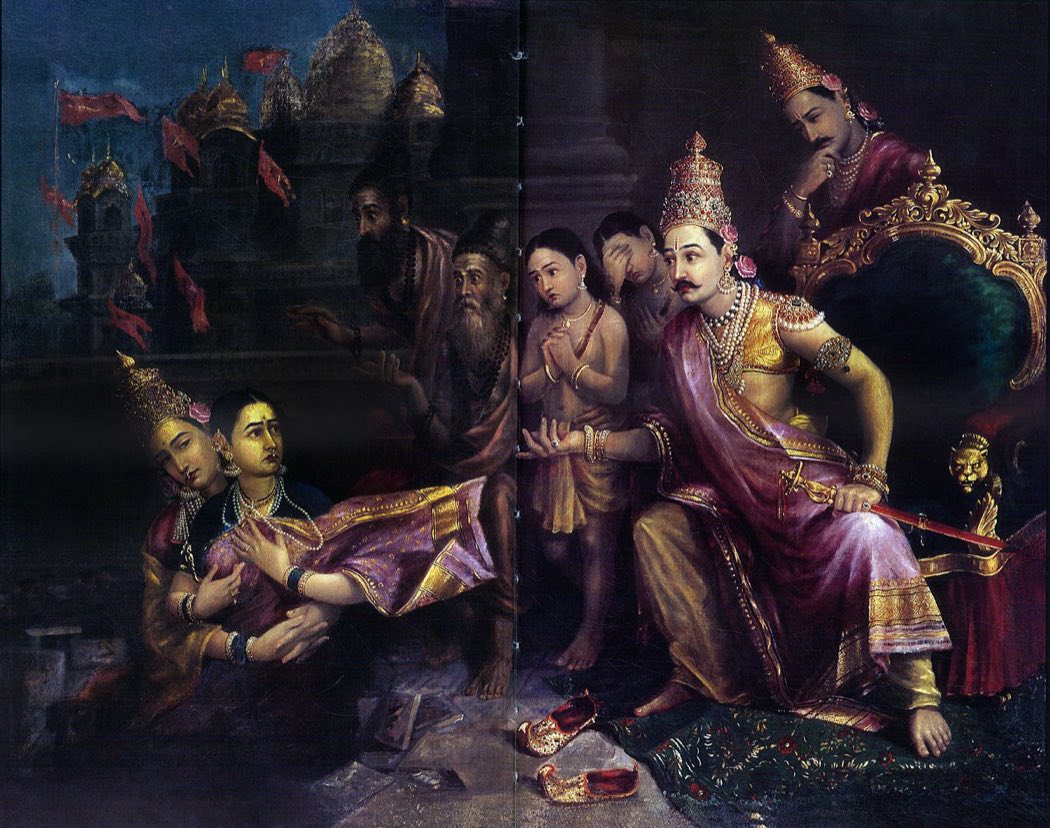
Sītā (सीता), also known as Jānakī, Vaidehī, and Maithilī, is one of the most revered figures in Hinduism. As the consort of Lord Rāma and the central heroine of the Rāmāyaṇa, she embodies the highest ideals of devotion (bhakti), inner strength (śakti), virtue (satītva), and sacrifice. Far from being a passive figure, Sītā is celebrated across Hindu tradition as a powerful embodiment of the divine feminine — a daughter of the Earth (Bhūmijā) whose life exemplifies both extraordinary resilience and transcendent spiritual grace.
In the Vālmīki Rāmāyaṇa, Sītā is described as possessing beauty that rivals the celestial apsarās, wisdom that matches the sages, and a moral fortitude that surpasses even the gods. She is venerated not merely as Rāma’s wife but as an independent divine figure — an avatāra of Goddess Lakṣmī, the consort of Lord Viṣṇu, who descends to earth to accompany her lord in his mission to restore dharma.
Divine Origins: Daughter of the Earth
Unlike other figures in the Rāmāyaṇa who are born through conventional means, Sītā’s birth is miraculous. According to the Vālmīki Rāmāyaṇa (Bāla Kāṇḍa, Sarga 66), King Janaka of Mithilā discovered her while ploughing a sacred field as part of a yajña (fire sacrifice) to end a devastating drought. As he turned the earth with his plough, a golden casket emerged from the furrow (sītā in Sanskrit), and within it lay a radiant infant girl.
King Janaka, who had been childless, adopted her with great joy and named her Sītā — meaning “furrow” — after the manner of her discovery. She is therefore also called Bhūmijā (born of the Earth) and Dharaṇī-sūtā (daughter of the Earth). This origin connects her intrinsically to Bhūmi Devī (the Earth Goddess), establishing her as a terrestrial manifestation of divine feminine power.
The Viṣṇu Purāṇa and the Śrī Rāmāyaṇa of Tulsīdāsa both affirm that Sītā is an incarnation of Lakṣmī, who chose to be born on earth to accompany Viṣṇu in his avatar as Rāma. This dual identity — simultaneously a human princess and a divine goddess — defines Sītā’s unique position in Hindu theology.
Svayaṁvara: The Breaking of Śiva’s Bow
Sītā’s marriage to Rāma is one of the most celebrated episodes in Hindu literature. King Janaka possessed a mighty bow that had once belonged to Lord Śiva — the Śiva Dhanush (also called Pināka). It was so massive that it required 300 men to carry it on a wheeled platform. Janaka declared that whoever could string this divine bow would win Sītā’s hand in marriage.
Princes and warriors from across the known world attempted the feat but failed. According to the Vālmīki Rāmāyaṇa (Bāla Kāṇḍa, Sarga 67), when the young prince Rāma stepped forward at the urging of Sage Viśvāmitra, he not only lifted the enormous bow with ease but bent it so powerfully that it broke in two with a thunderous crack that echoed across the earth. The assembled kings stood in awe as the gods showered flowers from heaven.
Sītā, who according to tradition had already offered her heart to Rāma upon first seeing him in a garden at Mithilā, joyfully placed the jayamālā (victory garland) around his neck. Their marriage, described in the Bāla Kāṇḍa (Sarga 73), was solemnized with full Vedic rites and remains the archetypal Hindu wedding — a union of dharma and devotion, power and grace.
The Forest Exile: Unwavering Companionship
When Rāma was unjustly exiled for fourteen years due to the machinations of Queen Kaikeyī, Sītā’s response revealed her extraordinary character. Despite Rāma’s insistence that she remain in the comfort and safety of Ayodhya, Sītā firmly refused. In one of the most powerful speeches in the Rāmāyaṇa (Ayodhyā Kāṇḍa, Sarga 27), she declared:
“The shadow never departs from the form; so does Sītā not part from Rāma. Without you, even heaven has no charm for me. A wife’s place is beside her husband — in palace or forest, in joy or sorrow.”
This was not mere wifely submission but an assertion of her own agency and dharma. Sītā chose hardship over comfort, companionship over safety, and spiritual duty over worldly pleasure. In the forest, she adapted to the ascetic life with remarkable grace, gathering fruits, tending to their hermitage, and serving as a source of strength and counsel for both Rāma and Lakṣmaṇa.
The Abduction by Rāvaṇa
The pivotal crisis of the Rāmāyaṇa occurs in the Āraṇya Kāṇḍa when the demon king Rāvaṇa devises a scheme to abduct Sītā. His ally Mārīca takes the form of a golden deer to lure Rāma away from the hermitage. When Lakṣmaṇa also departs after hearing a cry mimicking Rāma’s voice, Sītā is left alone.
Rāvaṇa, disguised as a wandering ascetic (sannyāsī), approaches Sītā and reveals his true form. Despite his threats and entreaties, Sītā rebukes him fearlessly (Āraṇya Kāṇḍa, Sarga 47):
“You are as incomparable to Rāma as a jackal to a lion. You seek to steal the wife of Rāma? You will surely perish.”
Even during her captivity in Aśoka Vāṭikā (the grove of Aśoka trees in Laṅkā), Sītā demonstrated extraordinary moral courage. For nearly a year, she endured Rāvaṇa’s threats, the torments of his rākṣasa guards, and the anguish of separation from Rāma — yet she never wavered in her devotion. She refused to even look upon Rāvaṇa, placing a blade of grass between herself and him as a symbolic barrier. The Sundara Kāṇḍa (Sarga 22) records her words to Rāvaṇa: “I am devoted to Rāma alone, as the śruti is devoted to truth.”
Hanumān’s Arrival and the War for Laṅkā
When Hanumān crossed the ocean and found Sītā in the Aśoka grove, she initially doubted whether this was another of Rāvaṇa’s deceptions. Only after Hanumān presented Rāma’s signet ring did she believe. In a moment of great emotional depth, Sītā gave Hanumān her cūḍāmaṇi (hair ornament) to carry back to Rāma as proof of her survival and fidelity.
When Hanumān offered to carry her back to Rāma on his shoulders, Sītā refused, explaining that she wished Rāma himself to come and defeat Rāvaṇa, thereby restoring his honor and demonstrating his valor. This decision reflects Sītā’s deep understanding of dharma — she understood that Rāma’s mission required him to confront the forces of adharma directly.
The great war of Laṅkā, narrated in the Yuddha Kāṇḍa, culminated in Rāvaṇa’s defeat and death at Rāma’s hands. Sītā was liberated, but the most challenging test still awaited her.
The Agni Parīkṣā: Trial by Fire
After the victory, Rāma expressed doubt about Sītā’s purity, stating that public perception required her to prove her chastity. Sītā, wounded by these words but resolute in her faith, called upon Agni (the fire god) as her witness. She stepped into the blazing fire without hesitation (Yuddha Kāṇḍa, Sarga 116).
The flames did not touch her. Agni himself emerged from the fire, bearing Sītā in his arms, and testified before gods and men that she was entirely pure and untouched by sin. Brahmā, Śiva, and the assembled deities praised her virtue.
This episode — the Agni Parīkṣā — has been the subject of extensive theological commentary. Many scholars interpret it not as a test imposed on Sītā but as a public declaration of what was already divinely known: that Sītā’s spiritual purity was absolute and beyond question. Some commentators, including Rāmānuja and later Vaiṣṇava ācāryas, hold that it was actually an illusory Sītā (Māyā Sītā or Chāyā Sītā) who was abducted, while the true Sītā remained under Agni’s protection throughout the period of captivity.
The Final Departure: Return to the Earth
The Uttara Kāṇḍa narrates the most poignant chapter of Sītā’s story. After their triumphant return to Ayodhya, malicious gossip arose among the citizens questioning Sītā’s purity despite the Agni Parīkṣā. Rāma, torn between his love for Sītā and his duty as king to uphold public trust, made the agonizing decision to exile her to the forest.
Sītā, then pregnant, was left near the hermitage of Sage Vālmīki, where she gave birth to twin sons — Lava and Kuśa. Vālmīki raised them in the ways of dharma and taught them the story of the Rāmāyaṇa itself.
Years later, when Rāma learned of his sons and invited Sītā to return, she chose instead to make her final statement. Before the assembled court, Sītā called upon her mother — the Earth — declaring (Uttara Kāṇḍa, Sarga 97): “If I have been true to Rāma in thought, word, and deed, may the Earth open and receive me.” The ground parted, a golden throne rose from the earth, and Bhūmi Devī appeared to receive her daughter. Sītā descended into the earth, returning to her divine origin.
This moment — the Bhūmi Praveśa — is among the most powerful in all of Hindu literature. It represents Sītā’s ultimate vindication: the Earth itself testifies to her purity.
Sacred Names and Epithets
Sītā is known by many names, each reflecting an aspect of her identity:
- Sītā — Born from the furrow of the ploughed earth
- Jānakī — Daughter of King Janaka
- Vaidehī — Princess of the Videha kingdom
- Maithilī — Of Mithilā, Janaka’s capital
- Bhūmijā — Born of the Earth
- Rāmapriyā — Beloved of Rāma
- Dharaṇī-sūtā — Daughter of the Earth
Worship and Enduring Significance
Sītā is worshipped alongside Rāma in virtually every Rāma temple across India and the Hindu diaspora. The combined form Sītā-Rāma is among the most popular devotional focuses in Vaishnavism. Key aspects of her significance include:
- Ideal of Pativratā Dharma — Her absolute devotion to her husband embodies the highest form of conjugal fidelity, though modern scholars emphasize this also reflects her own spiritual sovereignty
- Symbol of Inner Strength — Her endurance through exile, captivity, and public humiliation demonstrates a resilience that transcends physical power
- Embodiment of the Earth — As Bhūmijā, she represents the nurturing, patient, and life-giving power of the earth
- Model of Moral Courage — Her fearless confrontation with Rāvaṇa and her final act of calling upon the earth demonstrate a woman who acts from a place of supreme self-knowledge
- Avatāra of Lakṣmī — In Vaiṣṇava theology, Sītā is the earthly form of the goddess of prosperity, grace, and spiritual liberation
The festival of Sītā Navamī (also called Jānakī Navamī), celebrated on the ninth day of the bright half of Vaiśākha (April-May), honours her birth. The Sītā Upaniṣad, a minor Upanishadic text, extols her as the supreme Śakti — the primordial feminine power underlying all creation.
Across centuries and cultures, Sītā has been reimagined and reinterpreted — from Kamban’s Tamil Rāmāvatāram to the Bengali Kṛttivāsī Rāmāyaṇa to modern feminist retellings. In every version, she remains what she has always been: not merely a devoted wife, but a divine being of extraordinary strength, wisdom, and spiritual authority, whose story continues to illuminate the path of dharma for millions.