Introduction
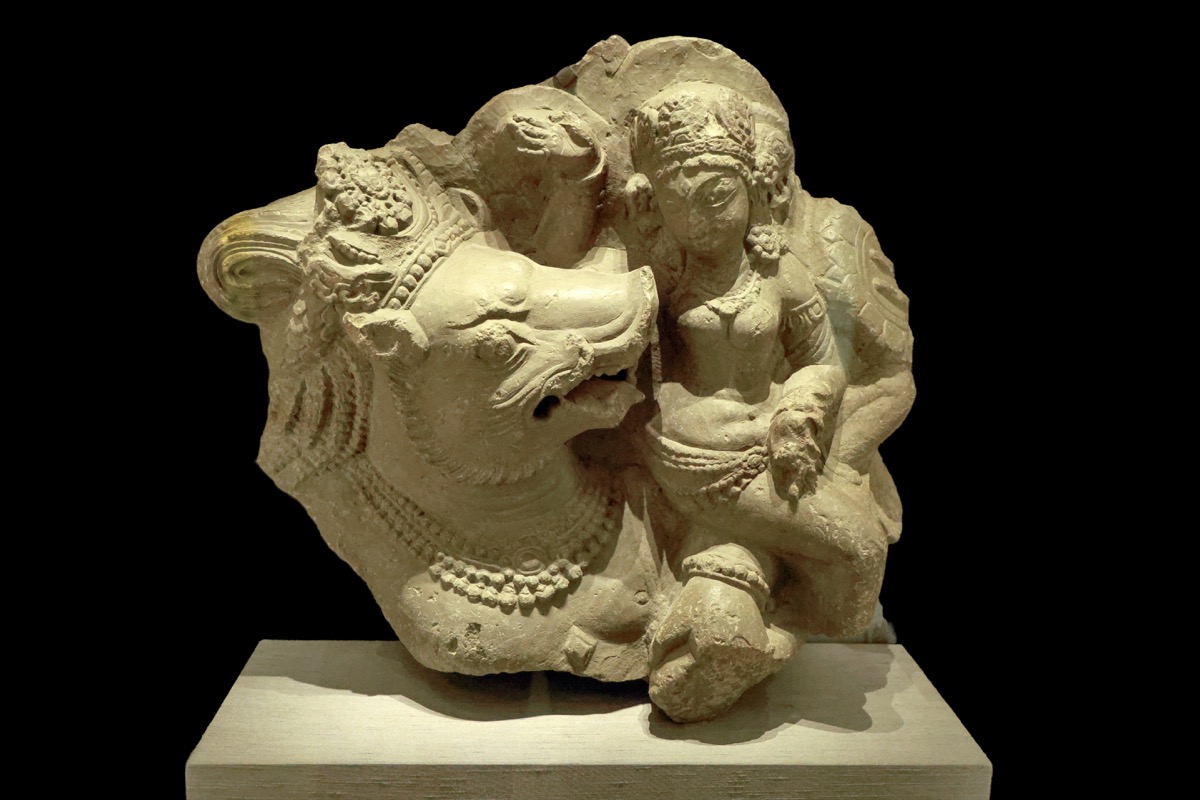
Varāha (Sanskrit: वराह, IAST: Varāha, “boar”) is the third of the ten principal avatāras (daśāvatāra) of Lord Viṣṇu and one of the most visually striking and theologically profound incarnations in the Hindu tradition. In this avatāra, Viṣṇu assumed the form of a colossal cosmic boar — an animal of immense strength and tenacity — to rescue the Earth (personified as the goddess Bhūdevī or Pṛthivī) from the depths of the cosmic ocean (garbhodaka), where she had been dragged by the demon Hiraṇyākṣa (Wikipedia, “Varaha”; Britannica). The image of the mighty boar lifting the Earth on his single tusk from the primordial waters is one of the most iconic and frequently reproduced motifs in Hindu art, sculpture, and temple architecture, spanning over two millennia from the Gupta period to the present day.
The Varāha avatāra narrative carries multiple layers of meaning: it is simultaneously a creation myth (the emergence of solid earth from primordial waters), a rescue narrative (the saving of the helpless from demonic oppression), and a theological statement about the intimate relationship between God and the natural world. The Earth is not merely inert matter to be used — she is a goddess, a beloved of Viṣṇu, deserving of divine protection and care.
The Purāṇic Narrative
Bhāgavata Purāṇa Account (Canto 3, Chapters 13–19)
The most elaborate and theologically rich account of the Varāha avatāra appears in the Śrīmad Bhāgavata Purāṇa, Canto 3, chapters 13 through 19. The narrative unfolds within the larger context of creation: the sage Maitreya narrates the story to Vidura as part of a vast cosmological discourse.
At the dawn of a new cycle of creation (kalpa), the creator Brahmā (himself born from the lotus growing from Viṣṇu’s navel) was meditating on how to raise the Earth, which lay submerged in the cosmic ocean (Garbhodaka). As Brahmā contemplated, a tiny boar — no larger than the tip of a thumb — emerged from his nostril. Before the astonished creator’s eyes, this diminutive creature expanded to cosmic proportions, its body filling the entire space between earth and sky. Its roar resounded through all the worlds, and the Vedic sages recognized it as the Supreme Lord Himself, incarnate in the form of a boar (Bhāgavata Purāṇa 3.13.18–22).
The Bhāgavata describes the cosmic Varāha in luminous detail: His body was the colour of dark rain clouds. His tusks were white and terrible. His eyes blazed like the sun and moon. The Vedic hymns emanated from His body — the bhūr from His feet, the bhuvaḥ from His knees, the svaḥ from His loins. The sacrificial fire (agni) was His mouth, the sacrificial ladle (sruk) His tongue, and the sacred kuśa grass His body hair. The entire Vedic sacrificial order was embodied in His divine boar form (Bhāgavata Purāṇa 3.13.34–40).
The Rescue of Bhūdevī
With a thunderous roar that shook the three worlds, Varāha plunged into the cosmic ocean, parting the waters with his mighty body. At the ocean floor He found the Earth — beautiful, helpless, and terrified — lying in darkness. With infinite tenderness, He lifted her upon His single great tusk. The Bhāgavata Purāṇa (3.13.40) describes this moment with sublime poetry: the Lord raised the Earth as effortlessly as an elephant lifts a lotus from a lake.
As Varāha rose from the depths bearing the Earth, the demon Hiraṇyākṣa blocked His path. Hiraṇyākṣa — whose name means “golden-eyed” — was one of the two sons born from the doorkeepers of Viṣṇu’s heavenly abode, Jaya and Vijaya, who had been cursed by the Kumāra sages to be born as demons three times before returning to Vaikuṇṭha. Hiraṇyākṣa, drunk with power from a boon granted by Brahmā, had been terrorizing the worlds, challenging the gods to combat, and had finally dragged the Earth into the cosmic deep (Bhāgavata Purāṇa 3.17–18).
The Battle with Hiraṇyākṣa
The confrontation between Varāha and Hiraṇyākṣa is narrated in Bhāgavata Purāṇa 3.18–19 with the epic grandeur characteristic of Purāṇic battle narratives. Hiraṇyākṣa taunted Varāha, mocking him as a mere beast and challenging him to fight. Varāha, having first gently placed the Earth on the surface of the cosmic waters, turned to face the demon.
The battle raged across the cosmic ocean. Hiraṇyākṣa wielded his mace (gadā) with devastating power, and the two combatants clashed like mountains colliding. The demon employed māyā (illusion), conjuring storms of blood, pus, excrement, hair, and bones to confuse and disgust the Lord — but Varāha, the master of all māyā, was unperturbed. After a prolonged and terrible combat, Varāha struck Hiraṇyākṣa beneath the ear with His mighty fist — a blow that shattered the demon’s body and sent his life-breath flying from his form (Bhāgavata Purāṇa 3.19.21–27).
Viṣṇu Purāṇa Account
The Viṣṇu Purāṇa (1.4) provides an alternative account where the Varāha avatāra is more directly connected to the creation narrative. Here, Viṣṇu assumes the boar form spontaneously — not through Brahmā’s nostril but as a direct manifestation of His creative will — and dives into the primordial waters to retrieve the Earth. The Viṣṇu Purāṇa places less emphasis on the battle with Hiraṇyākṣa and more on the cosmogonic significance of the act: the raising of solid ground from undifferentiated waters as the first step of ordered creation.
The Matsya Purāṇa (247–248) offers yet another variant, where Varāha is explicitly identified as a form of Brahmā (Brahma-Varāha), reflecting an older Vedic tradition in which the boar is associated with Prajāpati, the creator deity. This diversity of accounts reflects the evolution of the Varāha myth across different Purāṇic traditions and theological schools.
Two Traditions: Ādi Varāha and Mahā Varāha
Hindu theological tradition recognizes two distinct manifestations of the Varāha avatāra:
-
Ādi Varāha (“the primordial boar”): This is the cosmic, creative manifestation — the boar who emerges from Brahmā’s contemplation and raises the Earth as part of the primal act of creation. In this form, Varāha is a cosmogonic deity, and the myth functions as a creation narrative. The Earth is not threatened by a demon but simply needs to be raised from the waters so that creation can proceed.
-
Mahā Varāha (“the great boar”): This is the warrior manifestation — the heroic boar who battles and slays Hiraṇyākṣa to rescue the Earth from demonic captivity. In this form, the emphasis is on Viṣṇu’s role as protector (pālaka) and destroyer of evil.
Many temples and sculptural traditions distinguish between these two forms, with Ādi Varāha depicted in a serene posture with the Earth resting on his tusk, and Mahā Varāha shown in a dynamic battle pose confronting the demon.
Iconography and Visual Tradition
The Classical Iconographic Type
The most widespread iconographic representation of Varāha depicts a therianthropomorphic (half-animal, half-human) figure: a massive humanoid body with a boar’s head, standing erect, with one foot on a serpent or the cosmic waters, and the Earth goddess Bhūdevī seated on his upraised left elbow or clinging to his tusk. The right hand often holds a discus (cakra) or mace (gadā), while additional hands may carry the conch (śaṅkha) and lotus (padma).
In fully zoomorphic depictions, Varāha appears as a colossal boar — often with a body covered in tiny figures representing the gods, sages, and all living beings — bearing the Earth on a single massive tusk. This imagery powerfully conveys the idea that the entire cosmos resides within the divine body.
Udayagiri Caves: The Masterpiece
The most celebrated sculptural representation of Varāha in all of Indian art is the monumental rock-cut relief at the Udayagiri Caves near Vidisha, Madhya Pradesh, dating to the early Gupta period (c. 401–402 CE, during the reign of Chandragupta II Vikramāditya). This masterpiece, carved on the wall of Cave 5, depicts Varāha in his anthropomorphic form — a towering figure with a boar’s head and a powerful human body — lifting the tiny figure of Bhūdevī on his tusk.
The relief is remarkable for its cosmic scope: the body of Varāha is surrounded by gods, sages, nāgas (serpent deities), celestial musicians, and the personified rivers Gaṅgā and Yamunā, all witnessing the rescue of the Earth. The serpent Śeṣa supports the scene from below, while attendant figures suggest a royal audience. Art historians have interpreted this relief as a political allegory: just as Varāha rescued the Earth, so Chandragupta II — whose title Vikramāditya means “sun of valour” — was understood to have rescued the land from barbarian invaders (ASI; Wikipedia, “Udayagiri Caves”).
Khajurāho and Other Temple Traditions
The Khajurāho group of temples (10th–11th century CE) features outstanding Varāha sculptures, including the famous monolithic Varāha sculpture in the Varāha Temple (Temple No. 1) — a massive standing boar carved from a single block of sandstone, its entire body covered with hundreds of tiny carved figures representing the gods and all created beings. This extraordinary work of art visualizes the theological concept that the cosmos is contained within the divine body.
At Mahabalipuram (7th century CE, Pallava dynasty), the Varāha Cave Temple contains a celebrated relief panel depicting Varāha lifting Bhūdevī, flanked by Brahmā and other celestial beings. The Badami Cave Temples (6th century CE, Chalukya dynasty) in Karnataka contain similarly powerful Varāha panels that demonstrate the spread of Varāha iconography across the Deccan.
The Eran inscription and Varāha sculpture (c. 5th century CE) in Madhya Pradesh is one of the earliest free-standing colossal Varāha images, predating even the Udayagiri relief and demonstrating the popularity of the Varāha cult in the Gupta heartland.
The Varāha Purāṇa
The Varāha Purāṇa is one of the eighteen major Mahāpurāṇas, classified as a Vaiṣṇava Purāṇa in the sāttvika (pure/goodness) category. The text takes its name from the fact that it is framed as a discourse by Lord Viṣṇu in his Varāha form to Bhūdevī (the Earth goddess) — a dialogue between the cosmic rescuer and the rescued, between God and His beloved Earth.
The Varāha Purāṇa contains approximately 24,000 verses across 215 chapters, covering cosmology, geography (including a detailed description of India’s sacred geography), mythology, dharma-śāstra (rules of righteous conduct), vrata-kathā (stories associated with religious observances), and pilgrimage (tīrtha-māhātmya). The Purāṇa places particular emphasis on the sacred geography of Mathurā and the Braja region, and on the worship of Viṣṇu in his various forms (WisdomLib, “Varaha Purana”).
Theological Significance
The Earth as Goddess
The Varāha narrative is foundational to the Hindu understanding of the Earth as a divine being — not inert matter but a living goddess deserving of reverence, protection, and love. Bhūdevī (the Earth) is one of the two consorts of Viṣṇu (the other being Śrīdevī/Lakṣmī), and her rescue by Varāha establishes the paradigm that the divine purpose of God’s incarnation includes the protection of the natural world.
In the Śrī Vaiṣṇava tradition, Bhūdevī’s relationship with Varāha is a central theological motif. The Śrī Bhāṣya of Rāmānuja and the hymns of the Āḻvārs (Tamil Vaiṣṇava poet-saints) celebrate the Varāha-Bhūdevī relationship as an expression of God’s unconditional love (vātsalya) for the world — a love so great that the Supreme Being takes the form of an animal and plunges into the darkest depths to rescue His beloved.
Cosmogonic Symbolism
The Varāha myth functions as a creation narrative in which ordered reality (solid earth, mountains, rivers, continents) emerges from undifferentiated chaos (the cosmic ocean). The boar, an animal associated with ploughing and rooting in the earth, is the perfect symbol for this act of cosmic agriculture — the divine ploughman who turns the primordial soil and makes it habitable for life. Vedic antecedents for this symbolism appear in the Taittirīya Saṃhitā (7.1.5) and the Śatapatha Brāhmaṇa (14.1.2.11), where Prajāpati assumes the form of a boar to raise the Earth from the waters.
The Daśāvatāra Sequence
Within the daśāvatāra (ten avatāra) sequence, Varāha occupies the third position — after Matsya (fish) and Kūrma (tortoise) — representing the evolutionary progression from aquatic to amphibian to terrestrial life forms. This sequence has been noted by modern scholars as a remarkably apt parallel to biological evolution, though Hindu tradition understands it as a theological statement about the progressive revelation of divine purpose in creation.
Worship and Temples
Major Varāha Temples
Several important temples across India are dedicated to Lord Varāha:
- Śrī Varadarāja Perumāḷ Temple, Kanchipuram, Tamil Nadu — one of the 108 Divya Desams of Śrī Vaiṣṇavism, where Viṣṇu is worshipped in his Varāha form.
- Varāha Lakṣmī Narasiṃha Temple, Simhachalam, Andhra Pradesh — combining Varāha and Narasiṃha worship.
- Adi Varāha Perumāḷ Temple, Mahabalipuram — an ancient Pallava-era shrine.
- Bhū Varāha Svāmi Temple, Srimushnam, Tamil Nadu — one of the most important Varāha temples, regarded as a svayaṃ vyakta kṣetra (self-manifested sacred site).
- Varāha Temple, Pushkar, Rajasthan — one of the few temples in northern India dedicated specifically to Varāha.
Varāha in Daily Worship
In Vaiṣṇava temples, particularly those following the Pāñcarātra Āgama tradition, Varāha is worshipped as one of the vibhava (incarnation) forms of Viṣṇu. The Varāha Kavacham (armour prayer) and Varāha Dvādaśī (the twelfth day of the bright fortnight) are associated with special worship of this avatāra.
The Varāha avatāra continues to inspire Hindu devotion and artistic creation, reminding believers that the Supreme Being, out of boundless compassion, will assume any form — even that of a humble beast — to rescue those who call upon Him in distress. As the Bhāgavata Purāṇa declares, the Lord who upholds the Earth on His tusk is the same Lord who upholds all beings in His heart.