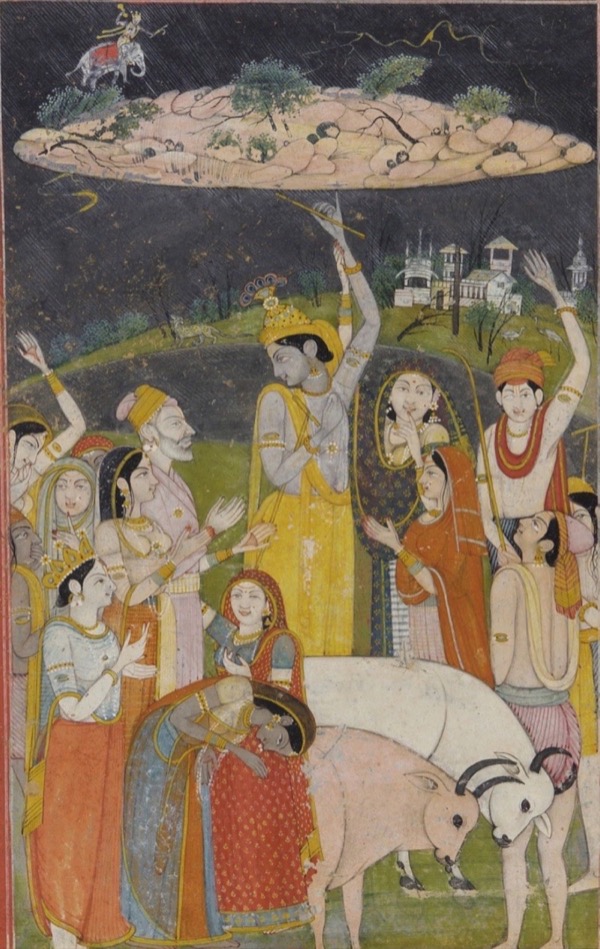
Achyutam Keśavam is one of the most beloved devotional hymns in the Hindu bhajan tradition. Formally known as the Achyutāṣṭakam (“Eight verses to the Infallible One”), this composition weaves together the sacred names of Lord Viṣṇu and Lord Kṛṣṇa into a tapestry of devotional praise that has been sung in temples, homes, and festivals across India for centuries. The hymn is attributed to Ādi Śaṅkarācārya, though its exact provenance remains debated among scholars.
The Complete First Verse
The hymn opens with a cascade of divine names that immediately establishes its devotional character:
अच्युतम् केशवम् रामनारायणम् कृष्णदामोदरम् वासुदेवम् हरिम् श्रीधरम् माधवम् गोपिकावल्लभम् जानकीनायकम् रामचन्द्रम् भजे
Achyutam Keśavam Rāmanārāyaṇam Kṛṣṇadāmodaram Vāsudevam Harim Śrīdharam Mādhavam Gopikāvallabham Jānakīnāyakam Rāmacandram Bhaje
“I worship Achyuta, Keśava, Rāma, Nārāyaṇa, Kṛṣṇa, Dāmodara, Vāsudeva, Hari, Śrīdhara, Mādhava, the Beloved of the Gopīs, and Rāmacandra, the Lord of Jānakī (Sītā).”
The Significance of Each Divine Name
The power of the Achyutam Keśavam lies in its systematic invocation of Viṣṇu’s sacred names. Each name (nāma) is not merely a label but a revelation of a specific divine attribute, a theological statement condensed into a single word. The Viṣṇu Sahasranāma (the Thousand Names of Viṣṇu) from the Mahābhārata’s Anuśāsana Parva provides the foundational theology for understanding these names.
Achyuta (अच्युत) — “The Infallible One”
The name Achyuta means “one who never falls” or “the imperishable.” Derived from the prefix a- (not) and cyuta (fallen, moved), it denotes the Lord who never deviates from His nature, who never fails His devotees, and who is never diminished by the cosmic processes of creation and dissolution. Śaṅkarācārya, in his commentary on the Viṣṇu Sahasranāma, explains: “He who has never fallen from His own nature is Achyuta.”
In the Bhagavad Gītā (18.73), Arjuna addresses Kṛṣṇa as “Achyuta” at the very moment of his spiritual transformation, recognising the Lord’s unchanging reality amidst the flux of the battlefield.
Keśava (केशव) — “The Beautiful-Haired One”
Keśava has multiple etymologies in the traditional commentaries:
- From keśa (hair): “the one with beautiful, flowing hair” — referring to Kṛṣṇa’s iconic dark locks
- From ka (Brahmā) + īśa (Śiva): “the Lord of Brahmā and Śiva” — signifying Viṣṇu’s supremacy over the trimūrti
- The slayer of the demon Keśin, as narrated in the Bhāgavata Purāṇa (10.37)
The Amarakośa, the classical Sanskrit thesaurus, lists Keśava as one of the primary names of Viṣṇu, and it is the name most intimately associated with Kṛṣṇa’s youthful form in Vṛndāvana.
Rāma (राम) — “The Source of Delight”
Rāma derives from the root ram (to delight, to rejoice). In this hymn, the name carries a dual reference: to Rāmacandra, the prince of Ayodhyā and hero of the Rāmāyaṇa, and to the universal quality of divine bliss (ānanda) that characterises Viṣṇu in all his forms. The Rāma Tāpanīya Upaniṣad explains: “He in whom the yogis find delight (ramante) is Rāma.”
Nārāyaṇa (नारायण) — “The Refuge of All Beings”
Nārāyaṇa is perhaps the most philosophically charged name of Viṣṇu. The Nārāyaṇa Upaniṣad offers the etymology: nārāṇām ayanam — “the resting place (ayana) of all beings (nāra).” Alternatively, nāra refers to the cosmic waters, and Nārāyaṇa is “He who moves upon the waters” — a reference to the primordial Viṣṇu reclining on the serpent Śeṣa upon the cosmic ocean before creation.
In the Mahābhārata (Śānti Parva 341.41), Nārāyaṇa is identified as the supreme Puruṣa from whom all creation emerges and into whom it returns.
Kṛṣṇa (कृष्ण) — “The All-Attractive One”
The name Kṛṣṇa is traditionally derived from the root kṛṣ (to attract, to draw) combined with ṇa (bliss), meaning “the one who attracts all beings through supreme bliss.” The Mahābhārata (Udyoga Parva 71.4) provides this etymology: “Because I am dark (kṛṣṇa) and because I attract (karṣaṇāt), I am called Kṛṣṇa.”
Kṛṣṇa is the most personal, most intimate name of the Divine in the Hindu tradition — the name that evokes the flute-playing cowherd of Vṛndāvana, the charioteer of Arjuna, and the supreme teacher of the Gītā.
Dāmodara (दामोदर) — “The One Bound by a Rope”
Dāmodara means “one whose belly (udara) is bound by a rope (dāma).” This name refers to the beloved childhood episode narrated in the Bhāgavata Purāṇa (10.9), where the young Kṛṣṇa, having been caught stealing butter, is bound to a mortar by his mother Yaśodā. The theological paradox is profound: the infinite Lord, whom neither the cosmos nor the Vedas can contain, allows Himself to be bound by the rope of a mother’s love.
The Dāmodarāṣṭakam by Satyavrata Muni celebrates this theme: “O Lord Dāmodara, I worship You, bound by Your mother’s rope, Your eyes full of tears.”
Vāsudeva (वासुदेव) — “The Son of Vasudeva / The Indweller”
Vāsudeva carries two meanings: the patronymic “son of Vasudeva” (Kṛṣṇa’s earthly father), and the philosophical “He who dwells (vāsayati) in all beings.” The Bhagavad Gītā (7.19) declares: “Vāsudevaḥ sarvam iti” — “Vāsudeva is everything.”
Hari (हरि) — “The Remover of Sorrows”
Hari derives from the root hṛ (to take away), meaning “He who removes the sins and sorrows of His devotees.” The Viṣṇu Purāṇa (1.1) opens with the invocation “Oṃ Namo Bhagavate Vāsudevāya” and identifies Hari as the supreme cause of all.
Śrīdhara (श्रीधर) — “The Bearer of Śrī (Lakṣmī)”
Śrīdhara means “He who bears Śrī (Lakṣmī) on His chest.” This name denotes Viṣṇu as the eternal consort of Lakṣmī, the goddess of prosperity, grace, and auspiciousness. The Śrī Sūktam from the Ṛgveda describes Śrī as inseparable from the Lord.
Mādhava (माधव) — “The Lord of Knowledge / Spouse of Mā”
Mādhava has been interpreted as: “He who is the Lord of Mā (Lakṣmī)” or “He who is known through Madhuvidyā (the honey-doctrine of the Upaniṣads).” In the Bṛhadāraṇyaka Upaniṣad (2.5), the Madhuvidyā teaches that the Lord is the honey (madhu) or essence of all things.
Gopikāvallabha (गोपिकावल्लभ) — “The Beloved of the Gopīs”
This name evokes the intimate devotional relationship between Kṛṣṇa and the cowherd women (gopīs) of Vṛndāvana. The Bhāgavata Purāṇa (10.29-33), in its famous Rāsa Līlā chapters, describes the gopīs’ love as the highest form of parā bhakti (supreme devotion) — love without any expectation of return, love that seeks only the beloved’s happiness.
Jānakīnāyaka and Rāmacandra — “The Lord of Sītā” and “The Moon-like Rāma”
These names bring the hymn full circle from Kṛṣṇa back to Rāma, affirming the Vaiṣṇava teaching that both are manifestations of the same Parabrahman. Rāmacandra, the “moon-like Rāma,” represents the ideal of maryādā puruṣottama — the perfect man who upholds dharma in every circumstance.
The Theology of Divine Names
The practice of reciting divine names (nāma-saṅkīrtana) is the foundational spiritual discipline of the Bhakti movement. The Kali-Santaraṇa Upaniṣad declares:
हरे कृष्ण हरे कृष्ण कृष्ण कृष्ण हरे हरे। हरे राम हरे राम राम राम हरे हरे॥
“In the age of Kali, the supreme means of liberation is the chanting of the divine names.”
The Bhāgavata Purāṇa (6.2.14) narrates how even the inadvertent utterance of Nārāyaṇa’s name by the sinner Ajāmila at the moment of death secured his liberation: “The holy name of Hari, uttered even unknowingly, burns away sins as fire burns dry grass.”
The Power of Nāma in Each Tradition
The three major Vaiṣṇava traditions each affirm the supreme efficacy of the divine name:
- Rāmānuja (Viśiṣṭādvaita): The name is the Lord Himself in sonic form; chanting it with prapatti (surrender) guarantees divine grace
- Madhva (Dvaita): The name is the nearest means for the dependent soul to approach the independent Lord
- Caitanya (Gauḍīya Vaiṣṇavism): The name is svarūpa-śakti — it is non-different from Kṛṣṇa’s own essential nature
The Bhajan Tradition
The Achyutam Keśavam has become one of the most popular bhajans (devotional songs) in the Hindi devotional repertoire. Its simple, repetitive structure — listing divine names in a singable melody — makes it accessible to congregational singing (saṅkīrtana), the primary devotional practice established by Śrī Caitanya Mahāprabhu (1486-1534 CE) in Bengal and popularised across India.
The bhajan is commonly performed at:
- Satsaṅg gatherings and temple kīrtanas
- Janmāṣṭamī celebrations (Kṛṣṇa’s birthday)
- Rāma Navamī festivals
- Ekādaśī observances and Vaiṣṇava festivals
- Evening ārati ceremonies in homes and temples
Its popularity in modern India was greatly amplified by devotional music artists who set the text to accessible, melodic compositions. The hymn has been recorded in numerous regional styles — from the classical rāga-based renditions of South India to the folk-inspired melodies of North Indian bhajan singers.
Philosophical Synthesis
The Achyutam Keśavam achieves a remarkable theological synthesis by weaving together names associated with different avatāras and forms of Viṣṇu:
- The names of majesty: Nārāyaṇa, Vāsudeva, Hari — pointing to Viṣṇu’s cosmic sovereignty
- The names of intimacy: Kṛṣṇa, Dāmodara, Gopikāvallabha — evoking the Lord’s accessibility and tenderness
- The names of dharma: Rāmacandra, Jānakīnāyaka — representing the Lord as the upholder of righteousness
- The names of beauty: Keśava, Mādhava, Śrīdhara — celebrating the Lord’s inherent attractiveness and grace
This synthesis reflects the core Vaiṣṇava conviction that the Supreme Lord is simultaneously aiśvarya (majestic) and mādhurya (sweet), infinitely transcendent and intimately personal.
Living Devotion
The Achyutam Keśavam continues to resonate with millions of devotees worldwide. Whether chanted softly in morning prayer, sung exuberantly in a kīrtana, or whispered as a final prayer, each divine name carries the fullness of the Lord’s presence. As the Padma Purāṇa declares: “The name of Viṣṇu, uttered once with faith, is superior to a thousand Vedic sacrifices.” In the simple act of chanting Achyutam Keśavam, the devotee participates in an ancient and living tradition that affirms the divine presence at the heart of every name, every sound, and every breath.