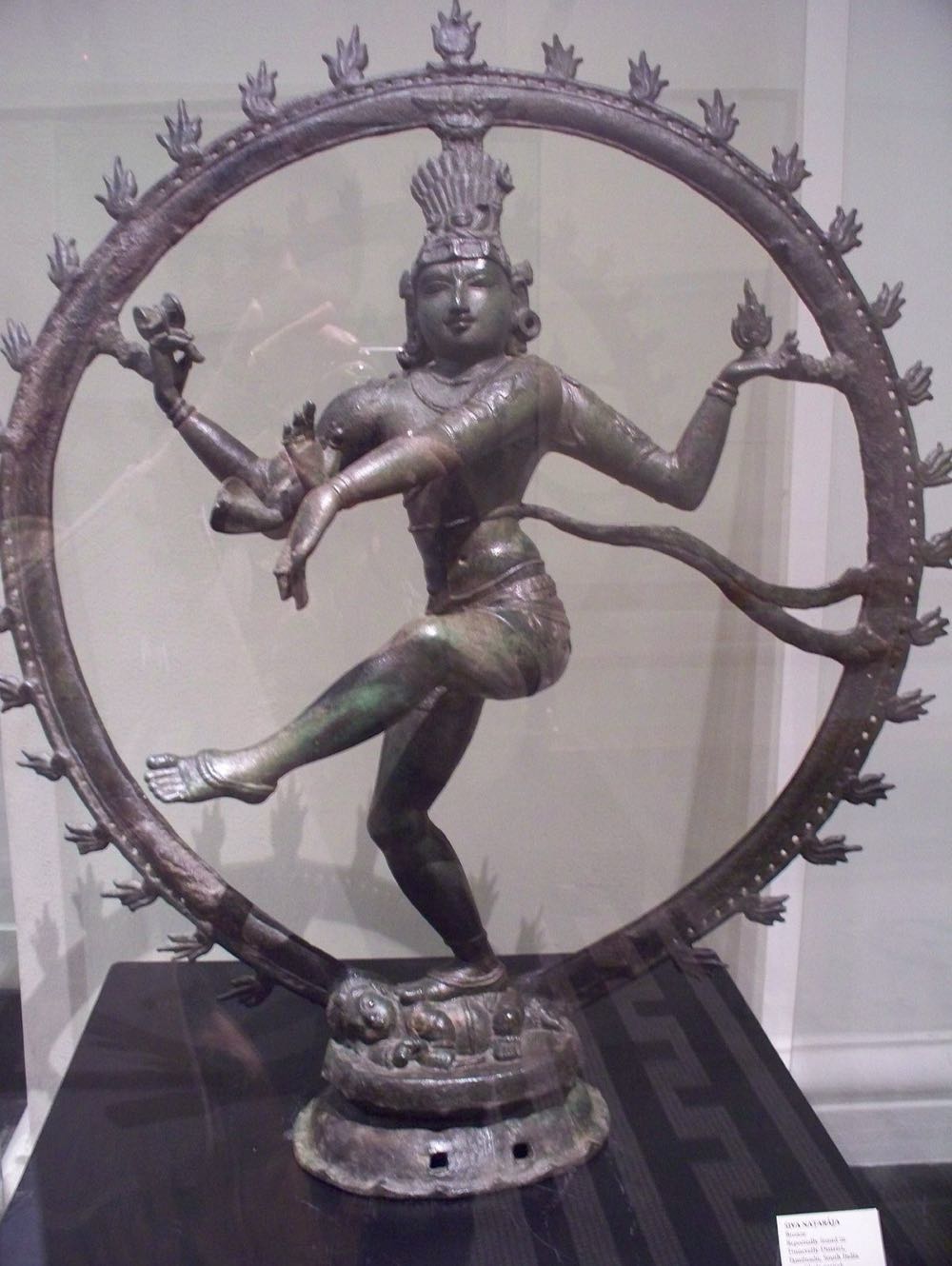
The Chamakam (Sanskrit: Camakam) is one of the most remarkable prayers in the entire Vedic corpus — a systematic, all-encompassing invocation of blessings that spans the full range of human aspiration, from basic sustenance to the highest spiritual realisation. Found in the Kṛṣṇa Yajurveda (Taittirīya Saṃhitā 4.5-4.7), the Chamakam serves as the companion and complement to the Namakam (also known as Śrī Rudram), together forming the complete Rudra Praśna — the most important Vedic hymn addressed to Lord Rudra-Śiva.
The Name “Chamakam”
The word Chamakam derives from the refrain “ca me” (च मे), meaning “and to me” or “may this be granted to me,” which appears throughout the hymn. Just as the Namakam (“the chapter of namaḥ”) takes its name from the repeated salutation namaḥ (“I bow”), the Chamakam takes its name from this insistent, rhythmic petition ca me — “and to me, and to me, and to me.”
This structural naming reflects the Vedic understanding of sound as constitutive of reality: the very refrain becomes the identity of the prayer, and the repeated ca me becomes a mantra in itself — a rhythmic pulse of desire directed toward the Divine.
Relationship to the Namakam (Śrī Rudram)
The Chamakam is inseparable from the Namakam (Śrī Rudram). Together, they form a complete liturgical unit:
- Namakam (Taittirīya Saṃhitā 4.5.1-11): Eleven anuvākas of salutation (namaḥ) to Rudra in all his forms — as the lord of animals, mountains, forests, battlefields, market squares, and cosmic dissolution. The Namakam acknowledges Rudra’s terrifying sovereignty and begs his mercy.
- Chamakam (Taittirīya Saṃhitā 4.7.1-11): Eleven anuvākas of petition (ca me) for every conceivable blessing — from food and progeny to cosmic harmony and spiritual liberation.
The relationship is often described as: the Namakam appeases Rudra’s wrath through praise and surrender, while the Chamakam requests his blessings once favour has been won. In traditional ritual, the two are never separated — to recite the Namakam without the Chamakam is considered incomplete, like approaching a king with flattery but failing to present one’s petition.
The Śatapatha Brāhmaṇa describes this complementary relationship: Rudra, having been propitiated through the Namakam, becomes the beneficent Śiva (“the auspicious one”) who grants the blessings enumerated in the Chamakam. This theological dynamic — from the terrible (ghora) to the auspicious (śiva) — is fundamental to the Vedic understanding of Rudra.
Structure: The Eleven Anuvākas
The Chamakam consists of eleven anuvākas (sections or cantos), each addressing a different category of blessings. The structure is remarkably systematic:
Anuvāka 1: Basic Sustenance and Strength
The first anuvāka requests the most fundamental needs of life:
वाजश्च मे प्रसवश्च मे प्रयतिश्च मे प्रसितिश्च मे धीतिश्च मे क्रतुश्च मे
“May food (vāja) be mine, and impetus (prasava), and effort (prayati), and continuity (prasiti), and thought (dhīti), and intention (kratu)…”
Anuvāka 2: Prosperity and Social Wellbeing
Requests honour, glory, fame, wealth, good fortune, and harmonious relationships.
Anuvāka 3: Progeny and Lineage
Petitions for children, cattle, agricultural abundance, and the continuity of the family line — reflecting the Vedic emphasis on gṛhastha dharma (the duty of the householder).
Anuvāka 4: Cosmic Elements and Forces
Requests mastery over fire (Agni), rain (Indra), earth, sky, and the natural forces:
अग्निश्च मे इन्द्रश्च मे सोमश्च मे इन्द्रश्च मे
“May Agni be mine, and Indra, and Soma, and Indra…”
This anuvāka pairs each deity with Indra, the king of gods, reflecting the Vedic ritual structure where offerings pass through Agni to reach their respective deities.
Anuvāka 5: Ritual and Spiritual Capacities
Requests the capacities needed for Vedic ritual — the dakṣiṇā (ritual fee), the yajña (sacrifice), and the specific ritual implements and offerings.
Anuvāka 6: Agricultural Abundance
A detailed petition for every form of grain, harvest, and agricultural prosperity — rice, barley, sesame, beans, wheat, millet, and wild grains.
Anuvāka 7: Cosmic Waters and Vital Forces
Requests the blessings of various forms of water — rain, rivers, ponds, springs — and the vital forces (prāṇa) they sustain.
Anuvāka 8: Animals and Pastoral Wealth
Petitions for cattle, horses, goats, sheep, and other animals central to Vedic pastoral life.
Anuvāka 9: Vedic Knowledge and Ritual Mastery
Requests mastery of the Vedas, the metres (chandas), the ritual fires, and the various forms of sacred knowledge:
ऋचश्च मे साम च मे स्तोमश्च मे
“May the Ṛc (hymns) be mine, and the Sāma (melodies), and the Stoma (praise)…”
Anuvāka 10: Numbers and Cosmic Order
This mathematically structured anuvāka requests blessings in ascending odd numbers from 1 to 33:
एका च मे तिस्रश्च मे पञ्च च मे सप्त च मे
“May one be mine, and three, and five, and seven, and nine, and eleven… and thirty-three.”
The odd numbers hold special significance in Vedic numerology. The number 33 corresponds to the Trayastriṃśat Devas (33 principal deities) of the Vedic pantheon — 12 Ādityas, 11 Rudras, 8 Vasus, and 2 Aśvins. By requesting each number, the devotee invokes the cosmic order (ṛta) that these divine beings sustain.
Anuvāka 11: The Culmination — Spiritual Fulfilment
The final anuvāka returns to the highest spiritual aspirations:
शं च मे मयश्च मे प्रियं च मे अनुकामश्च मे कामश्च मे
“May peace (śam) be mine, and happiness (mayas), and that which is dear (priya), and the fulfilment of desires (anukāma), and desire itself (kāma)…”
This culmination is significant: after traversing the entire spectrum of worldly needs, the Chamakam concludes with śam (peace) and spiritual contentment — suggesting that all desires, when properly offered to the Divine, ultimately lead to tranquillity.
The “Ca Me” Refrain: Theology of Desire
The relentless repetition of “ca me” (“and to me”) raises a profound theological question: Is the Chamakam simply a catalogue of material desires? The Vedic tradition answers with a resounding no.
The Śaṅkara Bhāṣya tradition interprets the Chamakam’s desires as operating on multiple levels simultaneously:
- Adhidaivika (cosmic/divine level) — Each item represents a cosmic principle or deity whose blessing is sought for universal harmony
- Adhyātmika (spiritual/inner level) — Each item corresponds to an inner quality or spiritual capacity needed for self-realisation
- Adhibhautika (material/physical level) — The literal meaning, requesting physical sustenance and wellbeing
For example, when the Chamakam requests “food” (anna), this simultaneously means physical nourishment, the capacity to “digest” (assimilate) spiritual knowledge, and the cosmic principle of sustenance that maintains all life. The Vedic tradition does not reject material desire but sanctifies it by directing it toward God — this is the profound principle of iṣṭāpūrta (the integration of desire and worship).
The Taittirīya Upaniṣad (3.10.1) echoes this same synthesis when the realised sage exclaims: “I am food! I am food! I am the eater of food!” — recognising that the material and the spiritual are not opposed but are different facets of the one Brahman.
Role in Rudra Abhiṣeka
The Chamakam plays an indispensable role in Rudra Abhiṣeka — the ceremonial bathing of the Śivaliṅga, which is among the most important and elaborate rituals in Śaiva worship.
The Mahārudra and Atirudra
In a standard Ekādaśinī (single cycle), the Namakam is chanted 11 times, each followed by one anuvāka of the Chamakam:
- Namakam recitation 1 + Chamakam anuvāka 1
- Namakam recitation 2 + Chamakam anuvāka 2
- …continuing through all 11 anuvākas
A Rudram cycle consists of 11 such complete recitations (121 Namakam + 11 Chamakam). A Mahārudram consists of 11 Rudram cycles (1,331 Namakam + 121 Chamakam). The supreme Atirudram consists of 11 Mahārudram cycles (14,641 Namakam + 1,331 Chamakam) — a monumental ritual typically performed over 11 days by a congregation of 121 Vedic priests.
During each recitation, the Śivaliṅga is bathed (abhiṣeka) with different sacred substances — water, milk, yoghurt, ghee, honey, sugarcane juice, coconut water, sandalwood paste, sacred ash (vibhūti), and others — corresponding to the blessings being requested.
Vedic Yajña Context
The Chamakam was originally composed for use within the elaborate Vedic yajña (fire sacrifice) system. Specifically, it forms part of the Agnicayana (fire-altar construction) and Somayāga (Soma sacrifice) rituals described in the Taittirīya Saṃhitā.
In the yajña context, the Chamakam serves as the āśīrvāda (benedictory) portion of the Rudra worship. After the Hotṛ (invoking priest) has recited the Namakam to propitiate Rudra and the Adhvaryu (officiating priest) has performed the offerings, the Chamakam is chanted as the formal petition for Rudra’s blessings to flow into every dimension of the sacrificer’s life and the community’s welfare.
The Āpastamba Śrauta Sūtra prescribes the Chamakam’s use in the Agniṣṭoma and other Soma sacrifices. The Baudhāyana Śrauta Sūtra further specifies that the Chamakam should be recited at the conclusion of the Rudra offerings, signifying the transition from propitiation to benediction.
The Material-Spiritual Synthesis
Perhaps the most profound teaching of the Chamakam is its refusal to create a dichotomy between material and spiritual life. Unlike some ascetic traditions that view worldly desire as inherently opposed to spiritual growth, the Vedic vision embodied in the Chamakam integrates both:
The hymn moves seamlessly from requesting food and progeny (material) to requesting Vedic knowledge and cosmic harmony (spiritual), treating both as legitimate, divinely ordained aspects of human existence. This reflects the Vedic concept of puruṣārtha — the four legitimate goals of human life: dharma (righteousness), artha (prosperity), kāma (pleasure), and mokṣa (liberation).
The Īśāvāsya Upaniṣad (verse 1) captures this synthesis perfectly: “Whatever exists in this changing universe is enveloped by the Lord. Enjoy what has been granted to you by Him; do not covet another’s portion.” The Chamakam is the ritual expression of this philosophy — asking the Divine for everything, not out of greed, but out of the recognition that all blessings flow from one Source and must be received with gratitude and offered back in worship.
Living Tradition
Today, the Chamakam continues to be chanted daily in thousands of Śiva temples across India, particularly in the great temples of Tamil Nadu (Cidambaram, Tiruvānaikkāval, Śrī Kālahasti), Andhra Pradesh, Karnataka, and beyond. It is an essential part of:
- Pradoṣa Kāla Pūjā — Evening worship of Śiva during the pradoṣa (twilight) period
- Mahāśivarātri — The great night of Śiva, when the Rudra Praśna is chanted throughout the night
- Kārttikā Somavāra — Monday worship during the month of Kārttika
- Temple Abhiṣeka — Daily and special-occasion bathing of the Śivaliṅga
The Chamakam stands as a testament to the Vedic sages’ holistic vision of human life — a vision in which asking God for daily bread and asking God for cosmic consciousness are not contradictory acts but two expressions of the same fundamental truth: that all existence flows from, is sustained by, and returns to the one Divine Reality whom the Vedas call Rudra, the howling, healing, all-pervading Lord.