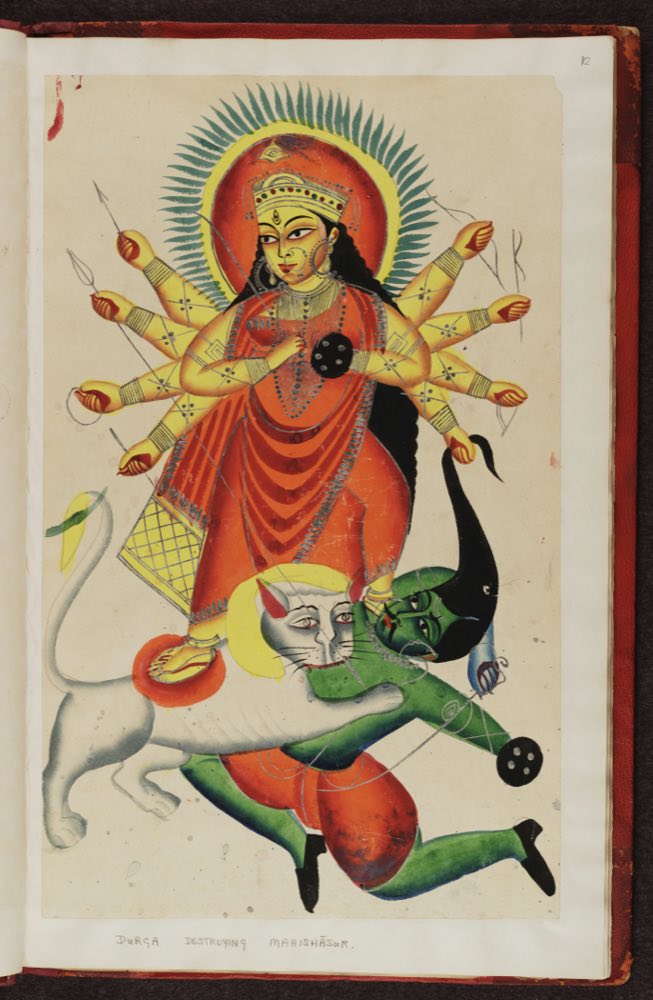
The Devī Kavacam (“The Armor of the Goddess”) is a powerful protective hymn (rakṣā stotra) that forms one of the essential preliminary recitations (aṅgas) of the Durgā Saptaśatī (also known as the Devī Māhātmya or Caṇḍī Pāṭha), found within the Mārkaṇḍeya Purāṇa. Consisting of 47 verses, this sacred text invokes the Goddess in her many forms to protect every part of the devotee’s body, mind, and spirit — functioning as a spiritual suit of armor against all forms of harm, both material and spiritual.
The Opening Verse
ॐ नमश्चण्डिकायै। मार्कण्डेय उवाच। ॐ यद्गुह्यं परमं लोके सर्वरक्षाकरं नृणाम्। यन्न कस्यचिदाख्यातं तन्मे ब्रूहि पितामह॥१॥
IAST Transliteration: Oṃ namaścaṇḍikāyai | Mārkaṇḍeya uvāca | Oṃ yad guhyaṃ paramaṃ loke sarvarakṣākaraṃ nṛṇām | Yan na kasyacid ākhyātaṃ tan me brūhi pitāmaha ||1||
Translation: “Oṃ! Salutations to Caṇḍikā! Mārkaṇḍeya said: O Grandfather (Brahmā), tell me that supreme secret which protects all beings in the world, and which has not been told to anyone.”
Context Within the Durgā Saptaśatī
The Devī Kavacam belongs to the set of six aṅgas (limbs or ancillary texts) that are traditionally recited before and after the main 700 verses of the Durgā Saptaśatī. These aṅgas form a complete ritual framework:
- Kavacam (Armor) — Bīja (seed) of the Saptaśatī
- Argalā Stotram (The Bolt) — Śakti (power) of the Saptaśatī
- Kīlakam (The Pin/Lock) — Kīlaka (linchpin) of the Saptaśatī
- Navārṇa Mantra — The nine-syllable root mantra
- Rātri Sūktam — The Vedic hymn to Night
- Devī Sūktam — The Vedic hymn to the Goddess (Ṛgveda 10.125)
The Kavacam is considered the bīja (seed) of the entire Saptaśatī, meaning it contains in concentrated form the protective energy of all 700 verses. Just as a seed contains the full potential of a tree, the Kavacam encapsulates the power of the complete text.
The Dialogue: Brahmā and Mārkaṇḍeya
The Kavacam is structured as a dialogue between Lord Brahmā, the creator, and the sage Mārkaṇḍeya, one of the great immortal sages (cirañjīvins) of Hindu tradition. Mārkaṇḍeya asks Brahmā to reveal the supreme secret that grants protection to all human beings. Brahmā, moved by the sage’s devotion, reveals the Devī Kavacam — the divine armor that has been guarded as a mystery.
ब्रह्मोवाच। विष्णुमाया हि सा देवी यया तत्त्वमिदं जगत्। स्मृता चैव हरत्याशु पीडां तस्याश्च संस्मृता॥
“Brahmā said: The Devī is indeed Viṣṇumāyā, by whom this entire world is deluded. When she is remembered (worshipped), she instantly removes all afflictions.”
The Nine Forms of the Devī
The Kavacam invokes the Goddess in nine primary forms, each associated with specific protective functions. These nine forms correspond to the Navadurgā — the nine manifestations of Durgā worshipped during the nine nights of Navarātri:
- Śailaputrī (“Daughter of the Mountain”) — The first form, embodying purity and devotion
- Brahmacāriṇī (“The Ascetic”) — The form of tapas (austerity) and spiritual discipline
- Candraghaṇṭā (“She of the Moon-Bell”) — The warrior form, bestowing courage
- Kūṣmāṇḍā (“Creator of the Cosmic Egg”) — The creative power who formed the universe
- Skandamātā (“Mother of Skanda/Kārttikeya”) — The maternal, nurturing form
- Kātyāyanī (“Daughter of Katyāyana”) — The fierce form born from the anger of the gods
- Kālarātri (“Dark Night”) — The terrible destroyer of evil
- Mahāgaurī (“The Great White One”) — The form of peace and forgiveness
- Siddhidātrī (“Bestower of Perfections”) — The form granting all supernatural powers
Brahmā instructs Mārkaṇḍeya:
नवदुर्गाः स्मृताश्चैताः शक्तयः सर्वकामिकाः। नाम्ना ब्रह्माणि नामोक्तिमात्रेण पापसंक्षयः॥
“These nine Durgās are remembered as the Śaktis that fulfil all desires. By merely uttering the name Brāhmaṇī, sins are destroyed.”
The Principle of Bodily Protection
The central section of the Kavacam is a systematic invocation requesting the Devī’s protection for every part of the body. This is the defining feature of a kavaca (armor) text — a point-by-point spiritual fortification. The text moves through the entire body:
Head and Face
उमा मूर्ध्नि व्यवस्थिता। मालाधरी ललाटे च भ्रुवौ रक्षेद्यशस्विनी। त्रिनेत्रा च भ्रुवोर्मध्ये यमघण्टा च नासिके॥
“May Umā protect my head. May Mālādharī protect my forehead. May Yaśasvinī protect my eyebrows. May Trinetrā (the Three-Eyed One) protect the space between the brows. May Yamaghaṇṭā protect my nose.”
Eyes and Ears
शङ्खिनी चक्षुषोर्मध्ये श्रोत्रयोर्द्वारवासिनी। कपोलौ कालिका रक्षेत् कर्णमूले तु शाङ्करी॥
“May Śaṅkhinī protect the area between the eyes. May Dvāravāsinī protect the ears. May Kālikā protect the cheeks. May Śāṅkarī protect the ear-roots.”
Vital Organs
नासिकायां सुगन्धा च उत्तरोष्ठे च चर्चिका। अधरे चामृतकला जिह्वायां च सरस्वती॥
“May Sugandhā protect the nostrils. May Carcikā protect the upper lip. May Amṛtakalā protect the lower lip. May Sarasvatī protect the tongue.”
Full Body Coverage
The text continues systematically through:
- Throat — protected by Caṇḍikā
- Arms — protected by Varāhī and other warrior forms
- Heart — protected by Lalitā Devī
- Navel — protected by Kāminī
- Hips and thighs — protected by Bhagavatī
- Knees — protected by Vindhyavāsinī
- Feet — protected by Nārāyaṇī
No part of the body is left unprotected. This comprehensive approach reflects the Hindu understanding that spiritual protection must be total — covering the physical body, the subtle body (sūkṣma śarīra), and the causal body (kāraṇa śarīra).
Protection in All Directions
Beyond the body, the Kavacam also invokes protection in all ten directions (daśa diśā):
रक्षाहीनं तु यत्स्थानं वर्जितं कवचेन तु। तत्सर्वं रक्ष मे देवि जयन्ती पापनाशिनी॥
“Whatever place has been left unprotected, not covered by this armor — may Jayantī, the destroyer of sins, protect all of that, O Devī!”
This “catch-all” verse ensures that even any gaps inadvertently left by the specific invocations are sealed by the Goddess’s comprehensive grace.
The ten directional protections are:
- East — Jayā
- South — Vijayā
- West — Ajitā
- North — Aparājitā
- Above — Dyau (the Celestial)
- Below — Vasudhā (the Earth)
- And the intermediate directions each assigned a specific Śakti
The Phalashruti: Fruits of Recitation
The concluding section describes the benefits (phala) of reciting the Kavacam:
यः पठेत्प्रयतो नित्यं त्रिसन्ध्यं श्रद्धयान्वितः। दैवी कला भवेत्तस्य त्रैलोक्ये चापराजितः॥
“He who recites this with devotion at the three junction-times (dawn, noon, dusk) daily, becomes endowed with divine arts and becomes invincible in the three worlds.”
The text promises:
- Protection from enemies, wild animals, thieves, and weapons
- Immunity from fire, water, and natural disasters
- Freedom from diseases and premature death
- Victory in disputes, legal matters, and warfare
- Spiritual progress toward the four puruṣārthas: dharma, artha, kāma, and mokṣa
Ritual Practice
During Navarātri
The Devī Kavacam is recited daily during Navarātri as part of the complete Durgā Saptaśatī pāṭha (recitation). The prescribed order is:
- Nyāsa (ritual placement of mantras on the body)
- Kavacam recitation
- Argalā Stotram recitation
- Kīlakam recitation
- Navārṇa Mantra japa
- Main Saptaśatī chapters 1-13
Daily Practice
Many devotees recite the Kavacam independently as a daily protective practice, particularly:
- Before undertaking journeys
- When facing danger or difficulty
- During illness or medical treatment
- At the three sandhyā times
Nyāsa: Ritual Placement
Before reciting the Kavacam, practitioners perform nyāsa — the ritual act of “placing” specific mantras on different parts of the body through touch. This sanctifies the body and prepares it to receive the divine armor. The specific nyāsa for the Kavacam involves touching:
- The head (śikhā nyāsa)
- The heart (hṛdaya nyāsa)
- The five aṅgas (limbs) with the corresponding bīja mantras
Theological Significance
The Devī as Universal Protector
The Kavacam reveals a fundamental dimension of the Goddess: she is not only the creator and destroyer of the universe but also its protector and sustainer. The Devī’s protective power is not abstract or distant — it is intimate, detailed, and comprehensive, extending to every cell of the devotee’s physical body and every faculty of the mind.
The Body as Sacred
The systematic protection of every bodily part reflects the Hindu understanding that the body is sacred — a temple (deha devālaya) in which the divine resides. Unlike ascetic traditions that denigrate the body, the Kavacam affirms that the physical form is worthy of divine attention and protection because it is the instrument through which the soul (ātman) pursues its spiritual evolution.
Surrender and Grace
The Kavacam is ultimately an act of complete surrender (śaraṇāgati) to the Divine Mother. By invoking the Goddess’s protection for every part of the body, the devotee acknowledges that they cannot protect themselves by their own power alone. This humility — this recognition of dependence on divine grace — is the heart of Śākta devotion.
The Kavacam in the Broader Tradition
The concept of a kavaca (spiritual armor) appears throughout Hindu literature. Other famous kavacas include:
- Nārāyaṇa Kavacam (from the Bhāgavata Purāṇa, 6.8)
- Śiva Kavacam (from various Śaiva texts)
- Gaṇeśa Kavacam (for Gaṇapati protection)
The Devī Kavacam stands among the most popular and widely recited of all kavaca texts, owing to the Goddess’s reputation as the most accessible and compassionate of all deities — the Mother who never refuses a child’s cry for help.
As Brahmā declares to Mārkaṇḍeya at the conclusion of the Kavacam:
विष्णुमाया समुत्पन्ना वैष्णवी विष्णुरूपिणी। तस्यै देव्यै नमो नित्यं सा मां पातु सर्वतः॥
“She who has arisen as Viṣṇumāyā, who is Vaiṣṇavī, who has the form of Viṣṇu — to that Devī I bow eternally. May She protect me from all sides.”