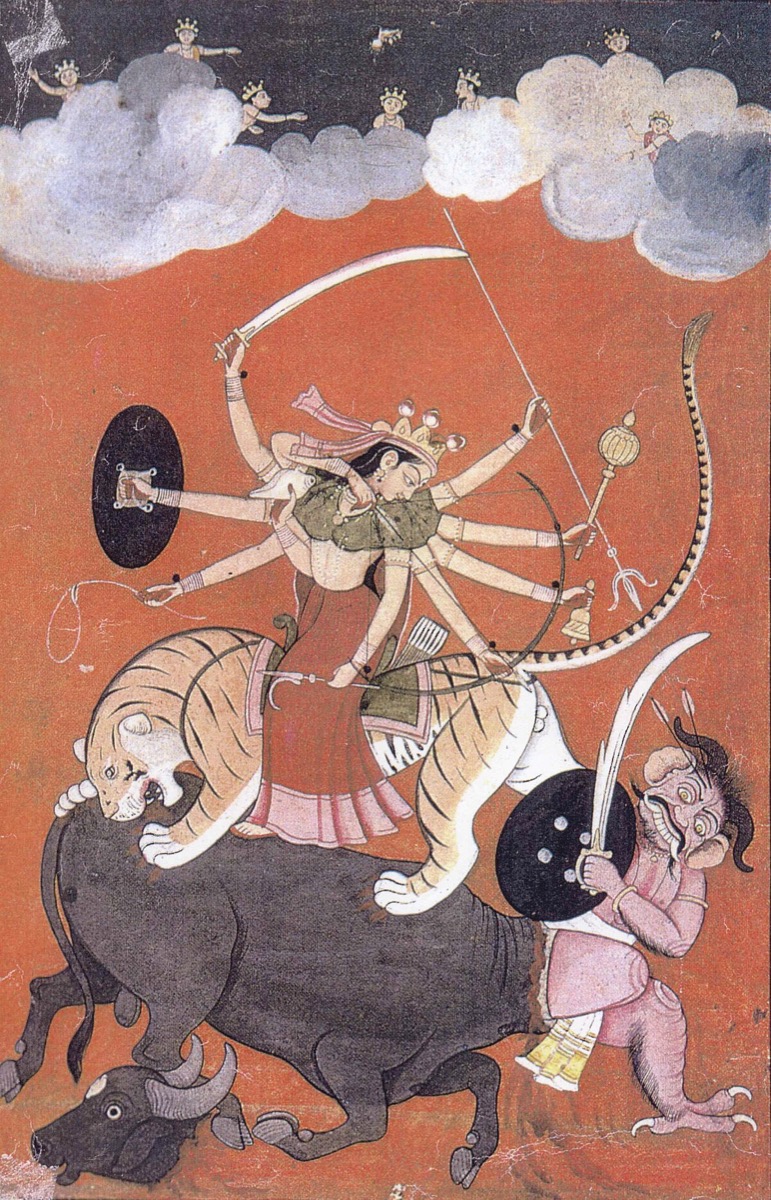
The Durgā Aṣṭottara Śatanāmāvalī (दुर्गा अष्टोत्तर शतनामावली, “the garland of 108 names of Durgā”) is one of the most powerful and widely recited devotional hymns in the Śākta tradition of Hinduism, enumerating 108 sacred names of Goddess Durgā — the invincible warrior goddess who embodies the supreme feminine power (śakti) of the cosmos. Each name in this sacred litany unveils a distinct dimension of the Goddess — her sovereignty over the universe, her terrifying wrath against evil, her tender compassion for devotees, and her identity as the ultimate reality (Brahman) in feminine form. The tradition of chanting these 108 names is rooted in the ancient belief that each divine name carries a specific vibrational energy (nāma-śakti) capable of invoking the corresponding aspect of the deity into the devotee’s consciousness and life.
The Aṣṭottara Tradition and Its Scriptural Roots
The Significance of 108 Names
The number 108 occupies a position of exceptional sacredness in Hindu cosmology and spiritual practice. The Sūrya Siddhānta, the foundational astronomical text, records that the distance between the Sun and the Earth is approximately 108 times the Sun’s diameter. The Sanskrit alphabet comprises 54 letters, each with a masculine (śiva) and feminine (śakti) dimension, yielding 108. The 27 nakṣatras (lunar mansions) multiplied by their 4 pādas (quarters) produce 108. The traditional japa mālā (prayer rosary) contains 108 beads. This number thus represents the totality of cosmic experience, and the recitation of 108 names constitutes a complete circumambulation of the divine reality.
The aṣṭottara śatanāma (108-name) tradition exists for virtually every major Hindu deity — Viṣṇu, Śiva, Gaṇeśa, Lakṣmī, Sarasvatī, and many others. These name-lists function simultaneously as theological catalogues defining the deity’s attributes, devotional aids for meditative repetition, and protective incantations (kavaca) believed to shield the devotee from misfortune. The Durgā Aṣṭottara, however, holds a special position within the Śākta tradition as the primary means of invoking the Goddess’s protective and transformative power.
Connection to the Devī Māhātmya
The theological foundation of the Durgā Aṣṭottara Śatanāmāvalī lies in the Devī Māhātmya (also known as the Durgā Saptaśatī or Caṇḍī Pāṭha), a celebrated scripture of 700 verses (sapta-śatī) embedded within chapters 81–93 of the Mārkaṇḍeya Purāṇa. Composed between the 5th and 6th centuries CE, the Devī Māhātmya is the foundational text of Śāktism — the Hindu tradition that reveres the Goddess as the Supreme Reality.
The 13 chapters of the Devī Māhātmya narrate three great cosmic battles in which the Goddess vanquishes powerful demonic forces:
- Chapters 1: The story of Mahākālī slaying the demons Madhu and Kaiṭabha (61 verses)
- Chapters 2–4: The story of Mahālakṣmī slaying the buffalo-demon Mahiṣāsura (252 verses) — this is the central narrative that established Durgā’s identity as Mahiṣāsuramardinī, “the slayer of the buffalo-demon”
- Chapters 5–13: The story of Mahāsarasvatī slaying Śumbha and Niśumbha (387 verses)
Many of the 108 names in the Aṣṭottara directly reference epithets and attributes of the Goddess as described in these narratives. Names such as Caṇḍikā (the fierce one), Mahiṣāsuramardinī (slayer of Mahiṣa), Mahāmāyā (the great cosmic illusion), and Kālikā (the dark destroyer) derive directly from the Devī Māhātmya’s theological vocabulary.
Key Names Grouped by Theme
The 108 names of Durgā can be organized into thematic clusters that reveal the multifaceted nature of the Goddess:
Names of Supreme Sovereignty
- Durgā (दुर्गा) — “She who is difficult to approach” — the primary name, derived from the Sanskrit root durg (fortress, difficulty), indicating the Goddess who is an impregnable citadel of protection and who rescues devotees from the fortress of worldly suffering. The Devī Māhātmya (11.28) explains: durgāsu bhavatasārēṣu — “In all dire circumstances, she is Durgā.”
- Mahēśvarī (महेश्वरी) — “The great sovereign Goddess” — affirming her status as the supreme ruler of all existence.
- Sarvalōkēśā (सर्वलोकेशा) — “The ruler of all worlds” — she who governs the fourteen planes of existence described in Hindu cosmology.
- Sarvajñā (सर्वज्ञा) — “The omniscient one” — she whose knowledge encompasses all that was, is, and will be.
- Sarvakarmaphalapradā (सर्वकर्मफलप्रदा) — “The bestower of the fruits of all actions” — she who presides over the cosmic law of karma.
Names of Cosmic Power and Creation
- Ādhāraśakti (आधारशक्ति) — “The foundational power” — she who is the substratum upon which the entire universe rests.
- Mahāmāyā (महामाया) — “The great cosmic illusion” — the power by which the formless Brahman manifests as the multiplicity of the phenomenal world. The Devī Māhātmya (1.58) states: mahāmāyā hareścaitaṣā yayā sammōhyate jagat — “She is the Mahāmāyā of Viṣṇu, by whom the entire world is deluded.”
- Jagatsṛṣṭyadhikāriṇī (जगत्सृष्ट्यधिकारिणी) — “She who presides over the creation of the universe.”
- Brahmāṇḍakōṭisaṃsthānā (ब्रह्माण्डकोटिसंस्थाना) — “She who is established in crores of universes” — affirming her infinite cosmic presence.
- Nirguṇā (निर्गुणा) — “She who is beyond the three guṇas (qualities)” — identifying the Goddess with the attributeless Brahman of Advaita Vedānta.
Names of Fierce and Protective Forms
- Caṇḍikā (चण्डिका) — “The fierce and wrathful one” — the name by which the Supreme Goddess is most frequently addressed in the Devī Māhātmya. Caṇḍikā represents the terrifying aspect of the divine feminine that annihilates cosmic evil.
- Kālikā (कालिका) — “The dark one / She who is Time” — connecting Durgā with her fearsome manifestation as Kālī, who emerged from Durgā’s forehead during the battle with Śumbha and Niśumbha (Devī Māhātmya, Chapter 7).
- Karāḻī (कराळी) — “The terrifying one” — she whose form inspires dread in the forces of adharma.
- Sarvagarvavimardanī (सर्वगर्वविमर्दिनी) — “She who crushes all pride” — a reference to the destruction of the arrogant demons who challenged divine order.
- Kālasaṃhārakāriṇī (कालसंहारकारिणी) — “She who brings about the dissolution of Time itself” — identifying Durgā with the power of cosmic dissolution (pralaya).
Names of Benevolence and Grace
- Śivā (शिवा) — “The auspicious one” — connecting Durgā with auspiciousness, well-being, and the gentle, nurturing aspect of the divine feminine. This name also affirms her identity as the consort of Lord Śiva.
- Mahālakṣmī (महालक्ष्मी) — “The great Goddess of fortune” — recognizing the aspect of Durgā that bestows material and spiritual prosperity.
- Mahāgaurī (महागौरी) — “The great fair-complexioned one” — she whose radiance illuminates the three worlds, one of the nine forms of Navadurgā.
- Sarvalōkapriyā (सर्वलोकप्रिया) — “She who is beloved in all worlds.”
- Bhaktābhīṣṭaphalapradā (भक्ताभीष्टफलप्रदा) — “She who grants devotees their desired fruits” — affirming the Goddess’s responsiveness to sincere prayer.
Names Related to Knowledge and Dharma
- Vāṇī (वाणी) — “She who is speech/learning” — identifying Durgā with Sarasvatī, the goddess of knowledge.
- Sarvavidyādhidēvatā (सर्वविद्याधिदेवता) — “The presiding deity of all knowledge.”
- Jñānarūpā (ज्ञानरूपा) — “She whose form is knowledge.”
- Dharmajñānā (धर्मज्ञाना) — “She who is the knowledge of dharma.”
- Dharmanisṭhā (धर्मनिष्ठा) — “She who is established in dharma.”
- Śāstramayyī (शास्त्रमयी) — “She who is the embodiment of all scriptures.”
Names Related to Yogic and Spiritual Attainment
- Yōganisṭhā (योगनिष्ठा) — “She who is established in yoga.”
- Yōgigamyā (योगिगम्या) — “She who is accessible to yogis.”
- Yōgidhyēyā (योगिध्येया) — “She who is the object of yogic meditation.”
- Tapasvinī (तपस्विनी) — “She who is the embodiment of austerity.”
- Nirākārā (निराकारा) — “She who is formless” — pointing to the ultimate nature of the Goddess beyond all forms and images.
Durgā’s Mythology: Mahiṣāsuramardinī
The central mythological narrative that underlies the Durgā Aṣṭottara is the story of the Goddess’s battle with the buffalo-demon Mahiṣāsura, narrated in chapters 2–4 of the Devī Māhātmya. According to this account, Mahiṣāsura had obtained a boon from Brahmā that he could not be killed by any god or demon — but in his arrogance, he failed to consider that a goddess might be his slayer.
When Mahiṣāsura conquered the three worlds and dethroned Indra, the gods gathered in despair. From their collective tejas (divine radiance), a magnificent goddess emerged — Durgā, resplendent with the combined powers of all the gods. Each god contributed a weapon: Śiva’s trident, Viṣṇu’s discus, Indra’s thunderbolt, Varuṇa’s conch, Agni’s spear, Vāyu’s bow, and the Himālaya’s lion as her mount. Thus armed, the Goddess engaged Mahiṣāsura in a cosmic battle that shook the foundations of the universe.
After a fierce battle in which Mahiṣā changed form multiple times — appearing as a buffalo, lion, elephant, and warrior — Durgā finally pinned him down with her foot, pierced him with her trident, and severed his head with her sword. This victory is celebrated as Vijayādaśamī (the tenth day of victory) and is the climactic event of both Navarātri and Durgā Pūjā.
The names in the Aṣṭottara such as Kōṭisūryasamaprabhā (“she whose radiance equals a crore of suns”), Vahnirūpā (“she whose form is fire”), and Chandrasūryāgnilōcanā (“she whose eyes are the moon, sun, and fire”) recall the cosmic magnificence of the Goddess as she appeared before the demons.
The Navadurgā: Nine Forms within the 108
Several names in the Aṣṭottara correspond to the Navadurgā — the nine forms of the Goddess worshipped on the nine nights of Navarātri. According to the Devī Kavaca section of the Caṇḍīpāṭha, these nine forms represent stages of the Goddess’s cosmic evolution:
- Śailaputrī — “Daughter of the Mountain” (worshipped on Day 1)
- Brahmacāriṇī — “She who practises sacred austerity” (Day 2)
- Candraghaṇṭā — “She with the moon-bell” (Day 3)
- Kūṣmāṇḍā — “She who created the cosmic egg” (Day 4)
- Skandamātā — “Mother of Skanda (Kārtikēya)” (Day 5)
- Kātyāyanī — “Daughter of sage Katyāyana” (Day 6) — this name appears directly in the Aṣṭottara as Kātyāyanī (कात्यायनी)
- Kālarātrī — “The dark night of dissolution” (Day 7)
- Mahāgaurī — “The great white one” (Day 8) — appears in the Aṣṭottara as Mahāgaurī (महागौरी)
- Siddhidātrī — “She who bestows supernatural powers” (Day 9)
The Aṣṭottara also includes names like Pārvatī (पार्वती, “daughter of the mountain Parvata”), Śāṅkarī (शाङ्करी, “consort of Śaṅkara”), and Śāmbhavī (शाम्भवी, “consort of Śambhu”), which link Durgā to her identity as Pārvatī, the wife of Lord Śiva.
Archanā: The Ritual of Name-Recitation
What is Kumkum Archanā?
The primary liturgical context for the Durgā Aṣṭottara Śatanāmāvalī is the archanā ritual — the systematic worship of the deity through the recitation of sacred names accompanied by the offering of flowers, kumkum (red turmeric powder), or other auspicious substances. The word archanā derives from the Sanskrit root arc (to honour, to worship) and denotes one of the sixteen traditional acts of worship (ṣōḍaśōpacāra pūjā).
Kumkum archanā (कुंकुम अर्चना) is a particularly popular form of Devī worship in South Indian and Śākta traditions. Kumkum — a red powder made primarily from turmeric (haridrā) mixed with slaked lime and sometimes saffron — symbolizes the saubhāgya (auspiciousness) and śakti (power) of the Goddess. During the archanā, each of the 108 names is recited with the prefix “Oṃ” and the suffix “Namaḥ” (I bow), accompanied by the offering of a pinch of kumkum or a flower petal onto the deity’s image or yantra.
Procedure for Durgā Aṣṭottara Archanā
The traditional procedure for performing the Durgā Aṣṭottara archanā during Navarātri or other auspicious occasions follows these steps:
- Ācamana — Ritual sipping of water for purification, reciting “Oṃ Keśavāya Namaḥ, Oṃ Nārāyaṇāya Namaḥ, Oṃ Mādhavāya Namaḥ.”
- Saṅkalpa — Formal declaration of intent, stating one’s name, gōtra (family lineage), nakṣatra (birth star), and the purpose of the worship.
- Gaṇapati Prārthanā — Invocation of Lord Gaṇeśa, the remover of obstacles, to ensure the smooth completion of the worship.
- Dhyāna — Meditation on the form of Durgā: multi-armed, golden-complexioned, mounted on a lion, holding various weapons, with serene yet powerful countenance, adorned with divine ornaments.
- Nāmāvalī Pāṭha — Recitation of the 108 names, each preceded by “Oṃ” and followed by “Namaḥ,” with the offering of kumkum, flowers (red hibiscus, red lotus, or jasmine), or akṣata (unbroken rice grains) with each name.
- Phala-śruti — Recitation of the promised benefits of the worship.
- Āratī — Waving of the camphor flame before the Goddess, accompanied by devotional songs.
- Prasāda Vitaraṇa — Distribution of the kumkum, flowers, and naivedya (food offering) as blessed prasāda.
Use in Navarātri Worship
Navarātri (literally “nine nights”) is the foremost festival dedicated to Goddess Durgā, observed twice a year — the Vasanta Navarātri (spring, Chaitra month) and the Śāradīya Navarātri (autumn, Āśvina month), with the latter being the grander celebration, especially in Bengal, Odisha, Assam, and Bihar where it is known as Durgā Pūjā.
During Navarātri, the Durgā Aṣṭottara Śatanāmāvalī is chanted daily as part of the morning and evening worship. Many devotees undertake the discipline of reciting the 108 names nine times during the nine nights — once for each night — accumulating a total of 972 recitations of each divine name. Some observe a more intensive practice of chanting the Aṣṭottara 108 times during the festival, creating a koṭi-archanā (ten-million recitation) through collective effort.
In South Indian temples, particularly in Tamil Nadu, Andhra Pradesh, Telangana, and Karnataka, the Durgā Aṣṭottara is performed as a public kumkum archanā with elaborate ritual accompaniments — including the decoration of the Goddess’s image with thousands of flowers, the chanting of the Devī Māhātmya, and the performance of special homas (fire rituals).
In the Bengali Durgā Pūjā tradition, the Aṣṭottara is incorporated into the broader liturgical framework of the Caṇḍīpāṭha (the complete recitation of the Devī Māhātmya), which is the central scriptural recitation of the five-day festival (Ṣaṣṭhī through Daśamī).
Comparison with the Lalitā Sahasranāma
The Durgā Aṣṭottara Śatanāmāvalī is often compared with the Lalitā Sahasranāma (1,000 names of Goddess Lalitā), another monumental Śākta hymn found in the Brahmāṇḍa Purāṇa. While both texts enumerate divine names of the supreme Goddess, they differ in significant ways:
- Scale: The Lalitā Sahasranāma contains 1,000 names versus 108 in the Durgā Aṣṭottara, making it far more extensive but also more demanding for daily recitation.
- Theological emphasis: The Lalitā Sahasranāma is oriented toward the Śrī Vidyā tradition and presents the Goddess primarily as Lalitā Tripurasundarī — the beautiful, gracious sovereign of the three worlds. The Durgā Aṣṭottara emphasizes the warrior and protective aspects of the Goddess.
- Ritual context: The Lalitā Sahasranāma is typically chanted during Friday Devī worship and Lalitā-specific festivals. The Durgā Aṣṭottara is specifically associated with Navarātri, Durgā Pūjā, and Tuesdays and Fridays dedicated to Devī worship.
- Accessibility: The shorter 108-name format of the Aṣṭottara makes it more accessible for daily worship, especially for householders with limited time. The Sahasranāma, requiring 30–45 minutes for recitation, is often reserved for special occasions.
Both texts, however, share the fundamental Śākta theological conviction that the Goddess is not merely a consort or subordinate deity but the Supreme Reality (Para-Brahman) in feminine form — the source, sustainer, and dissolver of the entire cosmos.
The Phala-śruti: Promised Benefits
The traditional phala-śruti (recitation of fruits/benefits) appended to the Durgā Aṣṭottara states that one who recites the 108 names with devotion — especially during Navarātri, on Tuesdays, or during Durgāṣṭamī (the eighth day of Navarātri) — obtains the following blessings:
- Protection (rakṣā) from enemies, negative forces, and all forms of danger — the name Durgā itself means “she who removes suffering (durgati)”
- Victory (vijaya) in all endeavours, as promised by the names Vijayā and Jayabhūmiṣṭhā
- Destruction of sins (pāpa-nāśana) accumulated over lifetimes
- Fulfilment of desires (manōratha-siddhi) through the grace of Bhaktābhīṣṭaphalapradā
- Spiritual knowledge (jñāna) leading ultimately to liberation (mōkṣa)
The Devī Māhātmya (12.24–30) itself promises: “sarveṣām eva duḥkhānāṃ hāniḥ” — “the destruction of all sorrows” for those who worship the Goddess with devotion through the recitation of her sacred names.
Significance of Name-Categories in the Aṣṭottara
A close study of the 108 names reveals that they fall into several theological categories that together present a comprehensive portrait of the Goddess:
Names Affirming Transcendence
Names such as Nirguṇā (beyond qualities), Nirākārā (formless), Nirahaṅkārā (without ego), Anantā (infinite), and Satyā (truth) identify Durgā with the attributeless Brahman of the Upaniṣadic tradition. This is a crucial theological statement: the fierce warrior goddess who slays demons is simultaneously the formless, infinite, absolute Reality.
Names Affirming Immanence
Conversely, names such as Bhūtātmikā (the soul of all beings), Bhūtamātā (the mother of all beings), Bhūtēśī (the ruler of all beings), and Bhūtadhāriṇī (the bearer of all beings) affirm the Goddess’s intimate presence within every creature. She is not a distant, transcendent abstraction but the living, breathing essence of all existence.
Names of the Mātṛkā (Mother Goddess) Tradition
Several names — Brāhmī (the power of Brahmā), Nārāyaṇī (the power of Nārāyaṇa/Viṣṇu), Raudrī (the power of Rudra/Śiva) — correspond to the Saptamātṛkā (Seven Mother Goddesses) tradition described in the Devī Māhātmya (Chapter 8), where the śaktis of the male gods emerge as independent warrior goddesses to assist Durgā in battle. These names affirm that the powers attributed to the male gods are ultimately manifestations of the one supreme Śakti.
The Durgā Aṣṭottara Śatanāmāvalī thus stands as far more than a simple devotional catalogue — it is a condensed theological treatise that encodes the entire Śākta worldview within 108 sacred syllables. To chant these names with understanding and devotion is to participate in the cosmic drama of the Goddess’s eternal triumph over ignorance, injustice, and suffering — and to invite her transformative presence into one’s own life.