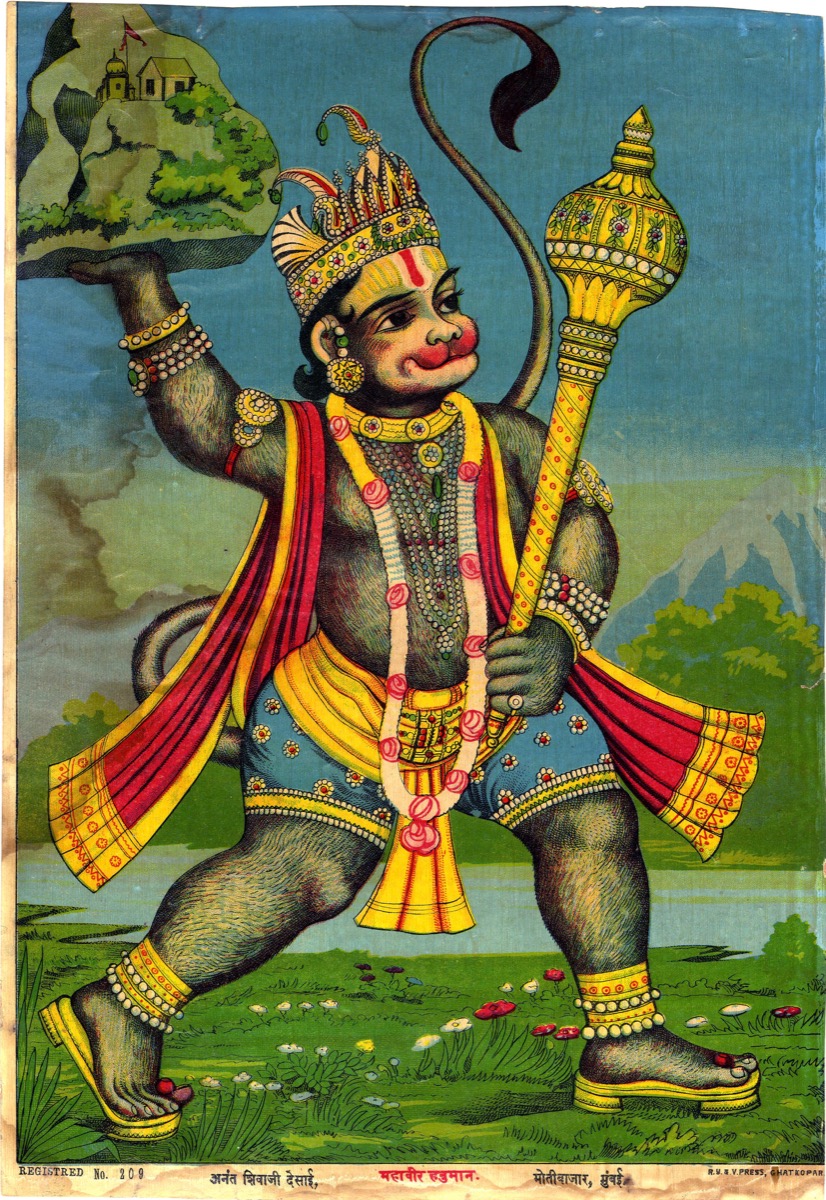
The Hanumān Aṣṭak (हनुमान अष्टक, “Eight Verses to Hanumān”) is one of the most cherished devotional hymns in the North Indian Bhakti tradition. Attributed to the great poet-saint Goswāmī Tulasīdāsa (c. 1532—1623 CE), this compact yet intensely powerful stotra distills the essence of Hanumān’s glory into eight verses of extraordinary poetic beauty. Each verse celebrates a different facet of Hanumān’s divine character — his childhood mischief, his invincible strength, his unfailing devotion to Śrī Rāma, and his role as the remover of afflictions (Saṅkaṭamocana). Recited daily by millions across North India, the Hanumān Aṣṭak holds a special place alongside the more widely known Hanumān Chālīsā in the liturgy of Hanumān worship.
Tulasīdāsa: The Poet-Saint of Rāma Bhakti
Goswāmī Tulasīdāsa was born around 1532 CE, most likely in Rājāpur in present-day Uttar Pradesh. He is universally celebrated as the author of the Śrī Rāmacharitamānasa, the monumental retelling of the Rāmāyaṇa in the Awadhī dialect of Hindi that transformed the devotional landscape of northern India. Tulasīdāsa’s literary output was vast — encompassing the Vinaya Patrikā, Kavitāvalī, Gītāvalī, Dohāvalī, and numerous shorter stotras, of which the Hanumān Aṣṭak is among the best known.
Tulasīdāsa was a lifelong and single-minded devotee of Śrī Rāma, and through Rāma, he venerated Hanumān as the supreme exemplar of dāsya bhakti (devotion through service). Traditional hagiographies (Gosāīṃ Carita, Mūla Gosāīṃ Caritā) record that Tulasīdāsa had a personal vision of Hanumān at the Saṅkaṭamocana Ghāṭ in Varanasi, an encounter that is said to have deepened his already fervent devotion. The Hanumān Aṣṭak may well have been composed during or after this transformative experience.
Structure and Poetic Form
The Hanumān Aṣṭak consists of exactly eight stanzas (aṣṭaka literally means “a group of eight”), each composed in a four-line metre typical of Awadhī devotional poetry. The rhyme scheme is consistent throughout — the last word of each line rhymes with the others in the same stanza, creating a musical cadence ideally suited for congregational recitation (kīrtana) and personal devotion (japa).
Each stanza is self-contained in its theme yet contributes to a cumulative portrait of Hanumān’s greatness. The hymn progresses from childhood exploits to Rāmāyaṇa heroism to cosmic powers and finally to a prayer for grace. This arc mirrors the narrative structure of the Sundara Kāṇḍa of the Rāmāyaṇa, where Hanumān’s character is revealed in progressively more extraordinary deeds.
Verse-by-Verse Commentary
Verse 1: The Child Who Swallowed the Sun
बाल समय रवि भक्षि लियो तब तीनहुँ लोक भयो अँधियारो। ताहि सों त्रास भयो जग को यह संकट काहु सों जात न टारो॥ देवन आनि करे बिनती तब छाँड़ि दियो रवि कष्ट निवारो। को नहिं जानत है जग में कपि संकटमोचन नाम तिहारो॥
In childhood you swallowed the sun, and the three worlds were plunged into darkness. The world was seized by terror — no one could avert this crisis. The gods came and made supplication, and then you released the sun and removed their distress. Who in this world does not know, O Monkey-Lord, that your name is Saṅkaṭamocana — the Remover of Afflictions?
This opening verse references the famous Purāṇic episode in which the infant Hanumān, mistaking the rising sun for a ripe fruit, leapt into the sky and swallowed it. The three worlds (tīnahũ loka — heaven, earth, and the netherworld) were plunged into total darkness. The gods rushed to intervene and implored the child to release the sun. Tulasīdāsa uses this playful yet cosmic episode to establish Hanumān’s title Saṅkaṭamocana (“Remover of Calamities”), a name by which he is worshipped at the famous temple in Varanasi.
Verse 2: Might That Stuns the Gods
The second verse celebrates Hanumān’s physical invincibility. It recounts how even Indra, the king of the gods, struck the child Hanumān with his thunderbolt (vajra), yet the blow merely grazed Hanumān’s jaw (hanu) — giving him the name “Hanumān” (one with a prominent jaw). This verse establishes a theological point: Hanumān’s body is vajrāṅga (diamond-bodied), impervious to weapons both divine and demonic.
Verse 3: The Leap Across the Ocean
The third verse turns to the central narrative of the Sundara Kāṇḍa — Hanumān’s great leap across the ocean to Laṅkā in search of Sītā. Tulasīdāsa describes the ocean as vast and terrifying, yet Hanumān crossed it in a single bound as effortlessly as one might step over a puddle. The verse celebrates Hanumān as mahābīra (the great hero) whose courage knows no limit.
Verse 4: The Burning of Laṅkā
Having found Sītā in the Aśoka grove and delivered Rāma’s message, Hanumān allowed himself to be captured by Rāvaṇa’s forces, who set fire to his tail. In one of the Rāmāyaṇa’s most dramatic episodes, Hanumān expanded his tail to enormous size and leapt from building to building, setting all of Laṅkā ablaze. This verse exults in the destruction of the demon-king’s golden city as a display of Hanumān’s righteous fury and his complete fearlessness in enemy territory.
Verse 5: The Sañjīvanī Mountain
When Lakṣmaṇa lay mortally wounded on the battlefield by Rāvaṇa’s son Meghanāda (Indrajit), the physician Suṣeṇa declared that only the Sañjīvanī herb, found on a mountain in the distant Himalayas, could save him. Hanumān flew northward with the speed of thought, but unable to identify the specific herb, he uprooted the entire mountain (Droṇāgiri) and carried it back to the battlefield before dawn. This verse celebrates that extraordinary feat — Hanumān’s devotion was so intense that he carried an entire mountain rather than risk even a moment’s delay in serving his Lord.
Verse 6: Devotion as Cosmic Power
The sixth verse shifts from narrative exploits to theological reflection. It describes Hanumān’s bhakti as the source of all his powers. Hanumān’s strength is not merely physical — it is the strength born of absolute surrender to Śrī Rāma. Tulasīdāsa echoes a theme found throughout the Rāmacharitamānasa: that the greatest power in the universe is selfless devotion, and Hanumān embodies this truth more perfectly than any other being.
Verse 7: The Protector of Devotees
The seventh verse addresses Hanumān directly as the unfailing protector of all who take refuge in him. Those who remember Hanumān are freed from fear, disease, demonic afflictions, and worldly sorrows. This verse contains the practical spiritual promise of the hymn: that regular recitation of Hanumān’s name and this stotra will bring rakṣā (protection) and kalyāṇa (welfare) to the devotee.
Verse 8: The Closing Prayer
The final verse is a direct appeal from the poet to Hanumān. Tulasīdāsa, speaking with characteristic humility, acknowledges his own weakness and spiritual poverty, and entreats Hanumān to extend his grace (kṛpā). The verse concludes with the assertion that there is no refuge equal to Hanumān for those who walk the path of Rāma-bhakti. This closing is typical of Tulasīdāsa’s devotional style — combining profound theological conviction with deeply personal vulnerability.
Theological Significance
Hanumān as the Ideal Bhakta
The Hanumān Aṣṭak presents Hanumān not merely as a powerful deity to be propitiated but as the supreme model of devotion. In Hindu devotional theology, five forms of bhakti are classically recognized: śānta (peaceful contemplation), dāsya (servitude), sakhya (friendship), vātsalya (parental love), and mādhurya (romantic love). Hanumān is the paramount exemplar of dāsya bhakti — devotion expressed through tireless, selfless service to the Lord. Every superhuman feat described in the Aṣṭak flows not from personal ambition but from Hanumān’s all-consuming desire to serve Rāma.
Saṅkaṭamocana — The Theological Core
The refrain of the first verse — Saṅkaṭamocana nāma tihāro (“your name is the Remover of Afflictions”) — articulates the central theological claim of the hymn. Hanumān’s power to remove suffering (saṅkaṭa) is not separate from his devotion to Rāma; it is a direct consequence of it. Because Hanumān is perfectly aligned with the divine will, he becomes the channel through which divine grace flows to those in distress. This understanding is foundational to the practice of Hanumān worship across North India.
The Tradition of Aṣṭaka Hymns
The aṣṭaka is a well-established genre in Sanskrit and vernacular devotional literature. Notable examples include the Śivāṣṭakam, the Kṛṣṇāṣṭakam, and the Lakṣmyaṣṭakam. The eight-verse format is considered auspicious — the number eight is associated with completeness in Hindu cosmology (the aṣṭa-dikpāla, eight directional guardians; the aṣṭa-lakṣmī, eight forms of Lakṣmī). By composing an aṣṭaka to Hanumān, Tulasīdāsa placed his hero within this venerable tradition while making the text compact enough for daily recitation.
Recitation Practice and Ritual Context
When to Recite
The Hanumān Aṣṭak is traditionally recited at the following times:
- Tuesday and Saturday mornings: These days are sacred to Hanumān. Devotees visit Hanumān temples, offer sindūra (vermillion) and jasmine oil, and recite the Aṣṭak along with the Hanumān Chālīsā.
- During personal crisis: The hymn’s emphasis on Hanumān as Saṅkaṭamocana makes it a natural choice during times of fear, illness, or danger.
- Before commencing a difficult task: Just as Hanumān faced seemingly impossible challenges and overcame them through faith and effort, devotees recite the Aṣṭak to invoke courage and perseverance.
- During Hanumān Jayantī: The annual celebration of Hanumān’s birth (typically in Chaitra month) features extensive recitation of all Hanumān stotras, with the Aṣṭak occupying a central place.
Method of Recitation
Traditional practice prescribes the following:
- Sit facing east or north in a clean place, preferably before an image or mūrti of Hanumān.
- Begin with an invocation: Oṃ Śrī Hanumāṃ namaḥ (three times).
- Recite the eight verses with focused attention, maintaining awareness of each verse’s meaning.
- Conclude with a prayer: Devotees often close by reciting the Hanumān Chālīsā or by offering aarti.
- Frequency: A single recitation is considered beneficial; traditional practice recommends reciting it seven times (saptāvṛtti) or eleven times (ekādaśāvṛtti) for specific spiritual goals.
The Hanumān Aṣṭak in North Indian Culture
Temples and Pilgrimage
The Saṅkaṭamocana Temple in Varanasi — associated with Tulasīdāsa’s own vision of Hanumān — is among the most important Hanumān temples in India. Here, the Aṣṭak is recited daily during the evening aarti. Other major centres of Hanumān worship where the Aṣṭak features prominently include the Hanumān Gaṛhī in Ayodhya, the Salāsar Bālājī temple in Rajasthan, and the Mehavān temple near Mathura.
Relationship to the Hanumān Chālīsā
While the Hanumān Chālīsā (40 verses) is arguably the most popular Hindu devotional text in existence, the Aṣṭak serves a complementary role. The Chālīsā provides a comprehensive, narrative account of Hanumān’s qualities and deeds; the Aṣṭak distills these into a concentrated, emotionally intense form. Many devotees recite both together — the Aṣṭak first as an invocation, followed by the fuller Chālīsā.
Musical Traditions
The Hanumān Aṣṭak is frequently set to music in the bhajan and kīrtana traditions of North India. Its rhythmic structure lends itself naturally to group singing, especially during satsaṅga gatherings and temple festivals. Notable renditions by classical and devotional musicians have ensured its continued popularity in the modern era.
Spiritual Benefits According to Tradition
The traditional phala-śruti (declaration of benefits) associated with the Hanumān Aṣṭak states that sincere recitation:
- Removes fear and anxiety (bhaya-nāśana)
- Grants physical strength and courage (bala-vṛddhi)
- Protects against malefic planetary influences, especially those of Saturn (Śani) — Hanumān is traditionally regarded as the deity who can mitigate the effects of Śani’s displeasure
- Cures diseases and removes obstacles (vighna-nāśana)
- Deepens devotion to Śrī Rāma and leads the devotee toward mokṣa (liberation)
These benefits are understood within the framework of bhakti theology: it is not the mechanical repetition of words that produces results, but the sincere turning of the heart toward the divine, for which the words serve as a vehicle.
Conclusion
The Hanumān Aṣṭak stands as a jewel in the devotional literature of North India. In just eight verses, Tulasīdāsa captures the full sweep of Hanumān’s divine character — from the mischievous child who swallowed the sun to the cosmic hero who carried a mountain for love of his Lord. The hymn’s enduring popularity testifies to the depth of the bond between the Hindu devotee and Hanumān, the ever-present protector, the tireless servant of Rāma, and the remover of all afflictions. For those who recite it with faith, the Hanumān Aṣṭak remains what Tulasīdāsa intended it to be: a doorway to divine grace.