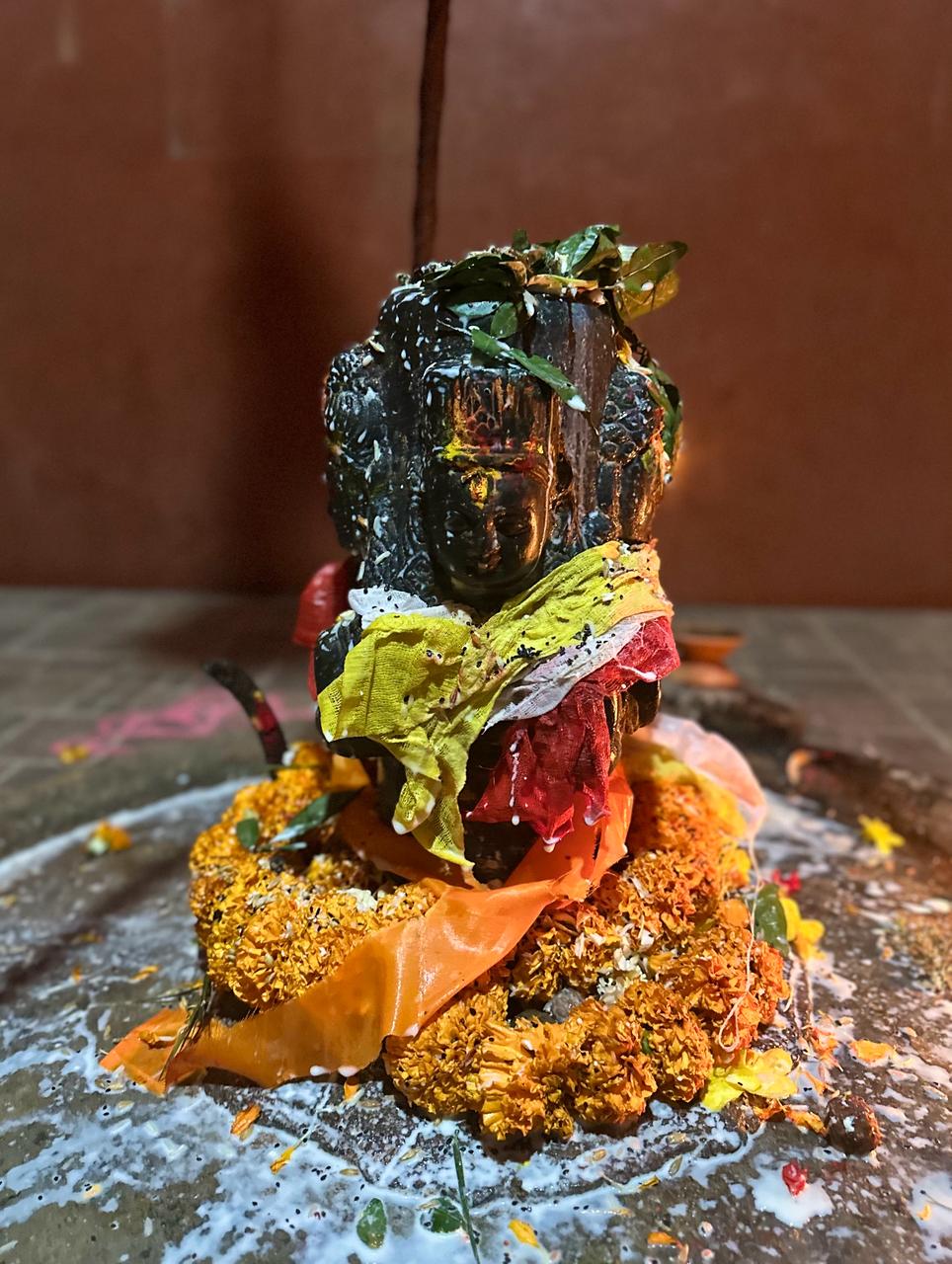
The Liṅgāṣṭakam (लिङ्गाष्टकम्, “Eight Verses on the Liṅga”) is one of the most beloved devotional hymns in the Śaiva tradition. Composed of eight exquisitely crafted Sanskrit verses, each concluding with the refrain “tat praṇamāmi sadāśiva-liṅgam” (“I bow to that Liṅga of Sadāśiva”), this stotra celebrates the Śiva Liṅga as the supreme symbol of the formless, infinite, and all-pervading Lord Śiva. Traditionally attributed to Ādi Śaṅkarācārya (8th century CE), the Liṅgāṣṭakam is recited daily by millions of Śiva devotees, particularly during Mahā Śivarātri, Pradoṣa, and Somavāra (Monday) worship.
Authorship and Tradition
The Liṅgāṣṭakam is widely attributed to Ādi Śaṅkarācārya, the great Advaita Vedānta philosopher and prolific composer of devotional hymns. Śaṅkara is credited with composing numerous stotras to Śiva, including the Śivānandalaharī, Dakṣiṇāmūrtistotram, and Śiva Mānasa Pūjā. While modern scholars debate the precise authorship of many stotras attributed to Śaṅkara, the Liṅgāṣṭakam’s theological depth, metrical elegance, and Advaitic undertones are consistent with his literary corpus.
The hymn belongs to the broader genre of aṣṭaka — devotional compositions of eight verses — a form favoured by Śaṅkara for its conciseness and meditative rhythm. Each verse encapsulates a distinct aspect of the Liṅga’s spiritual significance while maintaining the unifying refrain that anchors the devotee’s consciousness in Sadāśiva.
The Complete Hymn with Verse-by-Verse Meaning
Verse 1
ब्रह्ममुरारिसुरार्चितलिङ्गं निर्मलभासितशोभितलिङ्गम्। जन्मजदुःखविनाशकलिङ्गं तत्प्रणमामि सदाशिवलिङ्गम्॥
Brahma-murāri-surārcita-liṅgaṃ nirmala-bhāsita-śobhita-liṅgam | Janmaja-duḥkha-vināśaka-liṅgaṃ tat praṇamāmi sadāśiva-liṅgam ||
Meaning: I bow to that Liṅga of Sadāśiva, which is worshipped by Brahmā, Viṣṇu (Murāri), and the celestial gods; which shines with a pure, stainless radiance; and which destroys the sorrows born of worldly existence.
This opening verse establishes the Liṅga’s supreme status — worshipped even by the greatest gods of the Hindu trinity. The word nirmala (pure, stainless) points to the Liṅga as a symbol of transcendent purity beyond the guṇas.
Verse 2
देवमुनिप्रवरार्चितलिङ्गं कामदहनकरुणाकरलिङ्गम्। रावणदर्पविनाशनलिङ्गं तत्प्रणमामि सदाशिवलिङ्गम्॥
Deva-muni-pravarārcita-liṅgaṃ kāma-dahana-karuṇākara-liṅgam | Rāvaṇa-darpa-vināśana-liṅgaṃ tat praṇamāmi sadāśiva-liṅgam ||
Meaning: I bow to that Liṅga of Sadāśiva, which is worshipped by gods and the greatest sages; which burned Kāma (the god of desire) yet is an ocean of compassion; and which destroyed the pride of Rāvaṇa.
This verse highlights Śiva’s paradoxical nature: He who reduced Kāmadeva to ashes with His third eye is simultaneously the supremely compassionate one (karuṇākara). The reference to Rāvaṇa alludes to the Purāṇic episode where Rāvaṇa, despite his devotion, was humbled by Śiva when he attempted to uproot Mount Kailāsa.
Verse 3
सर्वसुगन्धिसुलेपितलिङ्गं बुद्धिविवर्धनकारणलिङ्गम्। सिद्धसुरासुरवन्दितलिङ्गं तत्प्रणमामि सदाशिवलिङ्गम्॥
Sarva-sugandhi-sulepita-liṅgaṃ buddhi-vivardhana-kāraṇa-liṅgam | Siddha-surāsura-vandita-liṅgaṃ tat praṇamāmi sadāśiva-liṅgam ||
Meaning: I bow to that Liṅga of Sadāśiva, which is anointed with every fragrant substance; which is the cause of the growth of wisdom; and which is revered by Siddhas, gods, and demons alike.
The worship of the Liṅga with fragrant pastes (chandana, sandalwood) and unguents is a core element of Śiva pūjā. The phrase buddhi-vivardhana (“increasing wisdom”) reflects the Upaniṣadic teaching that Śiva is the source of all discriminative knowledge (viveka).
Verse 4
कनकमहामणिभूषितलिङ्गं फणिपतिवेष्टितशोभितलिङ्गम्। दक्षसुयज्ञविनाशनलिङ्गं तत्प्रणमामि सदाशिवलिङ्गम्॥
Kanaka-mahāmaṇi-bhūṣita-liṅgaṃ phaṇipati-veṣṭita-śobhita-liṅgam | Dakṣa-suyajña-vināśana-liṅgaṃ tat praṇamāmi sadāśiva-liṅgam ||
Meaning: I bow to that Liṅga of Sadāśiva, which is adorned with gold and great jewels; which shines beautifully encircled by the king of serpents (Vāsuki); and which destroyed the sacrifice of Dakṣa.
The serpent Vāsuki coiled around the Liṅga symbolizes kuṇḍalinī śakti — the dormant spiritual energy. The destruction of Dakṣa’s sacrifice is one of the most dramatic episodes in the Purāṇas (Śiva Purāṇa, Rudra Saṃhitā), where Śiva’s wrath manifested as Vīrabhadra to punish the arrogant Dakṣa who had insulted Śiva by excluding Him from the great yajña.
Verse 5
कुङ्कुमचन्दनलेपितलिङ्गं पङ्कजहारसुशोभितलिङ्गम्। सञ्चितपापविनाशनलिङ्गं तत्प्रणमामि सदाशिवलिङ्गम्॥
Kuṅkuma-candana-lepita-liṅgaṃ paṅkaja-hāra-suśobhita-liṅgam | Sañcita-pāpa-vināśana-liṅgaṃ tat praṇamāmi sadāśiva-liṅgam ||
Meaning: I bow to that Liṅga of Sadāśiva, which is anointed with saffron and sandalwood; which is beautifully adorned with garlands of lotus flowers; and which destroys all accumulated sins.
The term sañcita-pāpa specifically refers to the accumulated karmic burden from past lives — one of the three types of karma in Vedāntic philosophy (alongside prārabdha and āgāmi). Worship of the Śiva Liṅga is held to burn away this accumulated karmic load, liberating the devotee from the cycle of rebirth.
Verse 6
देवगणार्चितसेवितलिङ्गं भावैर्भक्तिभिरेव च लिङ्गम्। दिनकरकोटिप्रभाकरलिङ्गं तत्प्रणमामि सदाशिवलिङ्गम्॥
Deva-gaṇārcita-sevita-liṅgaṃ bhāvair bhaktibhir eva ca liṅgam | Dinakara-koṭi-prabhākara-liṅgaṃ tat praṇamāmi sadāśiva-liṅgam ||
Meaning: I bow to that Liṅga of Sadāśiva, which is worshipped and served by the hosts of gods; which is approached through devotion and spiritual feeling alone; and which radiates the brilliance of ten million suns.
The phrase bhāvair bhaktibhir eva ca is doctrinally significant: true worship of the Liṅga requires not merely external ritual but genuine inner devotion (bhāva and bhakti). The imagery of ten million suns echoes the Śvetāśvatara Upaniṣad’s (6.14) description of Brahman as self-luminous.
Verse 7
अष्टदलोपरिवेष्टितलिङ्गं सर्वसमुद्भवकारणलिङ्गम्। अष्टदरिद्रविनाशनलिङ्गं तत्प्रणमामि सदाशिवलिङ्गम्॥
Aṣṭa-dalopari-veṣṭita-liṅgaṃ sarva-samudbhava-kāraṇa-liṅgam | Aṣṭa-daridra-vināśana-liṅgaṃ tat praṇamāmi sadāśiva-liṅgam ||
Meaning: I bow to that Liṅga of Sadāśiva, which is seated upon an eight-petalled lotus; which is the cause of the origin of all creation; and which destroys the eight forms of poverty.
The eight-petalled lotus (aṣṭadala padma) represents the eight directions of space, symbolising the Liṅga’s cosmic centrality. The aṣṭa daridra (eight poverties) are traditionally enumerated as poverty of wealth, grain, knowledge, strength, appearance, lineage, courage, and virtue.
Verse 8
सुरगुरुसुरवरपूजितलिङ्गं सुरवनपुष्पसदार्चितलिङ्गम्। परमपदं परमात्मकलिङ्गं तत्प्रणमामि सदाशिवलिङ्गम्॥
Sura-guru-sura-vara-pūjita-liṅgaṃ sura-vana-puṣpa-sadārcita-liṅgam | Parama-padaṃ paramātmaka-liṅgaṃ tat praṇamāmi sadāśiva-liṅgam ||
Meaning: I bow to that Liṅga of Sadāśiva, which is worshipped by Bṛhaspati (the guru of the gods) and the foremost among the devas; which is perpetually adorned with flowers from the celestial garden; and which is the supreme abode, the essence of the Paramātman (Supreme Self).
The concluding verse reaches the theological apex: the Liṅga is not merely a symbol but the parama-pada — the supreme state — and is identified with the Paramātman Himself. This reflects the Advaitic view that the Liṅga is ultimately a pointer to formless Brahman.
The Phala Śruti (Fruit of Recitation)
लिङ्गाष्टकमिदं पुण्यं यः पठेच्छिवसन्निधौ। शिवलोकमवाप्नोति शिवेन सह मोदते॥
Liṅgāṣṭakam idaṃ puṇyaṃ yaḥ paṭhec chiva-sannidhau | Śiva-lokam avāpnoti śivena saha modate ||
Meaning: Whoever recites this meritorious Liṅgāṣṭakam in the presence of Lord Śiva attains the abode of Śiva and rejoices with Śiva forever.
The phala śruti promises that recitation performed śiva-sannidhau (in the presence of Śiva — i.e., before a Liṅga or in a state of deep contemplation) leads to Śiva-loka, the highest spiritual attainment. In Advaitic interpretation, this signifies complete identity with Śiva-Brahman.
The Theology of the Śiva Liṅga: The Infinite Pillar of Light
The word liṅga in Sanskrit derives from the root lī (“to dissolve”) and gam (“to go forth”) — thus the Liṅga is “that into which all beings dissolve at the end of the cosmic cycle and from which all beings emerge at the beginning of creation.” Far from being a mere icon, the Liṅga represents the nirguṇa (formless) aspect of Śiva — the Absolute beyond all attributes and form.
The most celebrated account of the Liṅga’s origin is found in the Liṅga Purāṇa (chapters 17-22) and the Śiva Purāṇa (Vidyeśvara Saṃhitā). When Brahmā and Viṣṇu disputed over who was supreme, an immense pillar of blazing light (jyotir-stambha) appeared between them, stretching infinitely upward and downward. Brahmā took the form of a swan and flew upward to find its top; Viṣṇu became a boar and dug downward to find its base. Neither could discover the end. This limitless column of fire was the Śiva Liṅga — the self-manifested (svayambhū) form of Sadāśiva, proclaiming His nature as the Infinite beyond all comprehension.
This cosmogonic narrative establishes the Liṅga as the anādi-ananta (beginningless and endless) form of the Supreme — a cosmic axis (axis mundi) connecting all planes of existence.
The Twelve Jyotirliṅgas
The Purāṇic tradition identifies twelve Jyotirliṅgas — self-manifested Liṅgas of light — across the Indian subcontinent, each marking a site where Śiva revealed Himself as the infinite column of luminance:
- Somnātha — Prabhāsa Pāṭan, Gujarat
- Mallikārjuna — Śrīśailam, Andhra Pradesh
- Mahākāleśvara — Ujjain, Madhya Pradesh
- Omakāreśvara — Māndhātā Island, Madhya Pradesh
- Kedāranātha — Kedārnāth, Uttarākhaṇḍ (Himalayas)
- Bhīmaśaṅkara — near Pune, Maharashtra
- Viśvanātha — Vārāṇasī (Kāśī), Uttar Pradesh
- Tryambakaśvara — Nāsik, Maharashtra
- Vaidyanātha — Deoghar, Jhārkhaṇḍ
- Nāgeśvara — Dvārakā, Gujarat
- Rāmeśvara — Rāmeśvaram, Tamil Nāḍu
- Ghṛṣṇeśvara — near Ellora, Maharashtra
The Śiva Purāṇa (Koṭirudra Saṃhitā, 1.21-22) records the famous verse enumerating them:
Saurāṣṭre Somanāthaṃ ca Śrīśaile Mallikārjunam…
Pilgrimage to all twelve Jyotirliṅgas is considered one of the most meritorious spiritual journeys a Śaiva devotee can undertake.
Symbolism of the Three Parts of the Liṅga
The Śiva Liṅga as typically installed in temples consists of three sections:
- Brahma-bhāga (the square base) — represents Brahmā, the creator, and the element of earth
- Viṣṇu-bhāga (the octagonal middle section, or pīṭha) — represents Viṣṇu, the preserver, and the element of water
- Rudra-bhāga (the cylindrical upper portion) — represents Rudra-Śiva, the transcendent reality, and the element of fire
This tripartite structure symbolises the unity of the Hindu trinity (trimūrti) within the single form of Sadāśiva, with Śiva as the transcendent apex encompassing both creation and preservation.
Method of Recitation and Worship
The Liṅgāṣṭakam is traditionally recited in the following contexts:
- During Śiva Pūjā — after the abhiṣeka (ritual bathing) of the Liṅga with water, milk, honey, yogurt, and ghee (the pañcāmṛta)
- On Somavāra (Mondays) — the day sacred to Lord Śiva
- During Pradoṣa Kāla — the auspicious twilight period, especially on Pradoṣa Trayodaśī
- On Mahā Śivarātri — the great night of Śiva, when devotees observe an all-night vigil with continuous chanting
- Before Bilva Patra offering — the three-lobed leaf of the Bilva (Aegle marmelos) tree, sacred to Śiva, representing His three eyes
For maximum spiritual benefit, the hymn should be recited with:
- Śuddha bhāva — a pure and concentrated mind
- Correct pronunciation — honouring the Sanskrit syllables and their inherent power (mantra-śakti)
- Contemplation of meaning — meditating on the significance of each verse rather than mere mechanical repetition
- Physical presence before a Śiva Liṅga — the phala śruti specifically mentions recitation śiva-sannidhau (in Śiva’s presence)
Devotional and Philosophical Significance
The Liṅgāṣṭakam achieves a remarkable synthesis of bhakti (devotion) and jñāna (knowledge). While its language is devotional — bowing, praising, adoring — its content systematically leads the mind from the external worship of a physical form to the contemplation of the Liṅga as the formless Absolute.
Each verse follows an ascending trajectory:
- The early verses describe the Liṅga’s external beauty and the Purāṇic narratives associated with it
- The middle verses emphasize the Liṅga’s role in destroying sin and bestowing wisdom
- The final verse identifies the Liṅga with the paramātman — the Supreme Self beyond all form
This progression mirrors the Advaitic path from saguṇa upāsanā (worship of the divine with qualities) to nirguṇa jñāna (knowledge of the formless Absolute), making the Liṅgāṣṭakam not merely a prayer but a complete spiritual journey in eight verses.
The Śvetāśvatara Upaniṣad (4.18) provides the philosophical foundation: “That God who is in fire, who is in water, who has entered the whole world, who is in plants, who is in trees — to that God be adoration.” The Liṅgāṣṭakam brings this Upaniṣadic vision to life through devotional poetry, revealing the Śiva Liṅga as the meeting point of the personal and the cosmic, the formed and the formless, the devotional and the philosophical.