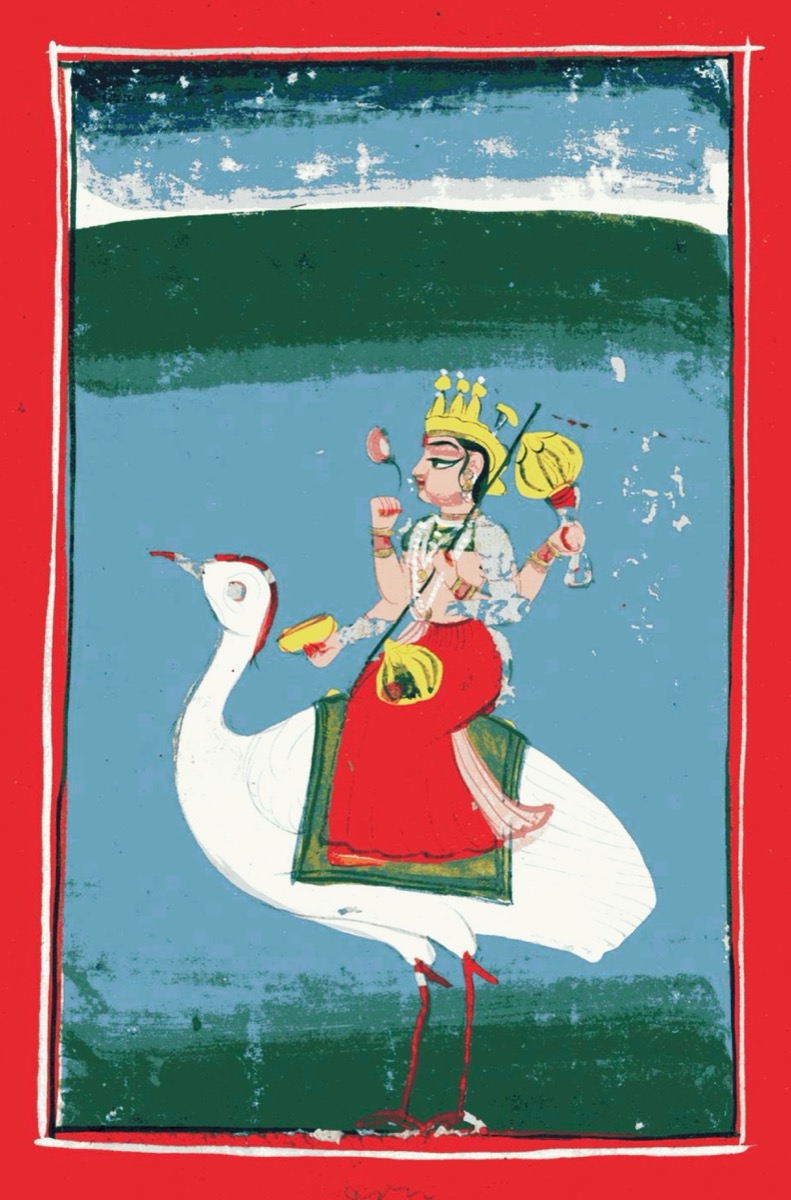
The Medhā Sūktam (मेधासूक्तम्) is one of the most revered Vedic hymns dedicated to the invocation of medhā — a Sanskrit term encompassing intelligence, wisdom, retentive memory, and the discriminative faculty of the mind. Found in the Taittirīya Āraṇyaka (Prapāṭhaka 10, Anuvāka 41–44) of the Kṛṣṇa Yajurveda, and forming an integral part of the Mahānārāyaṇa Upaniṣad, this hymn addresses Goddess Medhā — personified intellectual brilliance identified with Sarasvatī, the supreme deity of knowledge and learning.
For millennia, the Medhā Sūktam has been chanted by students before examinations, by scholars seeking deeper understanding, by priests during Vedic rituals, and by all who seek the divine gift of a sharp and illuminated mind. Its opening invocation — “Yaścchandasāmṛṣabho viśvarūpaḥ” (“He who is the bull among the metres, the universal form”) — establishes the hymn’s cosmic scope: it seeks not merely worldly cleverness, but the supreme wisdom that emerges from the immortal Vedas themselves.
The Complete Hymn in Sanskrit
The Medhā Sūktam consists of two principal sections. The first (Anuvāka 41–42) is an invocation to Indra and the Vedic deities for the bestowal of medhā. The second (Anuvāka 43–44) is addressed directly to Goddess Medhā Devī, personified as a benevolent, golden-hued divinity who grants intelligence, eloquence, and wealth.
Section I: Invocation to Indra for Medhā
यश्छन्दसामृषभो विश्वरूपः। छन्दोभ्योऽध्यमृतात्सम्बभूव। स मेन्द्रो मेधया स्पृणोतु। अमृतस्य देवधारणो भूयासम्॥
IAST: Yaścchandasāmṛṣabho viśvarūpaḥ | Chandobhyo’dhyamṛtātsambabhūva | Sa mendro medhayā spṛṇotu | Amṛtasya devadhāraṇo bhūyāsam ||
शरीरं मे विचर्षणम्। जिह्वा मे मधुमत्तमा। कर्णाभ्यां भूरिविश्रुवम्। ब्रह्मणः कोशोऽसि मेधया पिहितः। श्रुतं मे गोपाय॥
IAST: Śarīraṃ me vicarṣaṇam | Jihvā me madhumattamā | Karṇābhyāṃ bhūriviśruvam | Brahmaṇaḥ kośo’si medhayā pihitaḥ | Śrutaṃ me gopāya ||
Section II: Hymn to Medhā Devī
ॐ मेधादेवी जुषमाणा न आगाद्विश्वाची भद्रा सुमनस्यमाना। त्वया जुष्टा नुदमाना दुरुक्तान् बृहद्वदेम विदथे सुवीराः॥
IAST: Oṃ medhādevī juṣamāṇā na āgādviśvācī bhadrā sumanasyamānā | Tvayā juṣṭā nudamānā duruktān bṛhadvadema vidathe suvīrāḥ ||
त्वया जुष्ट ऋषिर्भवति देवि त्वया ब्रह्माऽगतश्रीरुत त्वया। त्वया जुष्टश्चित्रं विन्दते वसु सा नो जुषस्व द्रविणो न मेधे॥
IAST: Tvayā juṣṭa ṛṣirbhavati devi tvayā brahmā’gataśrīruta tvayā | Tvayā juṣṭaścitraṃ vindate vasu sā no juṣasva draviṇo na medhe ||
Section III: Invocation to Multiple Deities
मेधां म इन्द्रो ददातु मेधां देवी सरस्वती। मेधां मे अश्विनावुभावाधत्तां पुष्करस्रजा॥
IAST: Medhāṃ ma indro dadātu medhāṃ devī sarasvatī | Medhāṃ me aśvināvubhāvādhattāṃ puṣkarasrajā ||
अप्सरासु च या मेधा गन्धर्वेषु च यन्मनः। दैवी मेधा सरस्वती सा मां मेधा सुरभिर्जुषताम्॥
IAST: Apsarāsu ca yā medhā gandharveṣu ca yanmanaḥ | Daivī medhā sarasvatī sā māṃ medhā surabhirjuṣatām ||
Section IV: Prayer for Wisdom and Radiance
आमां मेधा सुरभिर्विश्वरूपा हिरण्यवर्णा जगती जगम्या। ऊर्जस्वती पयसा पिन्वमाना सा मां मेधा सुप्रतीका जुषताम्॥
IAST: Āmāṃ medhā surabhirviśvarūpā hiraṇyavarṇā jagatī jagamyā | Ūrjasvatī payasā pinvamānā sā māṃ medhā supratīkā juṣatām ||
मयि मेधां मयि प्रजां मय्यग्निस्तेजो दधातु। मयि मेधां मयि प्रजां मयीन्द्र इन्द्रियं दधातु। मयि मेधां मयि प्रजां मयि सूर्यो भ्राजो दधातु॥
IAST: Mayi medhāṃ mayi prajāṃ mayyagnistejo dadhātu | Mayi medhāṃ mayi prajāṃ mayīndra indriyaṃ dadhātu | Mayi medhāṃ mayi prajāṃ mayi sūryo bhrājo dadhātu ||
ॐ शान्तिः शान्तिः शान्तिः॥
IAST: Oṃ śāntiḥ śāntiḥ śāntiḥ ||
Verse-by-Verse Translation and Commentary
Verse 1: The Universal Form of the Vedas
Yaścchandasāmṛṣabho viśvarūpaḥ | Chandobhyo’dhyamṛtātsambabhūva | Sa mendro medhayā spṛṇotu | Amṛtasya devadhāraṇo bhūyāsam ||
Word-by-word:
- Yaḥ — He who
- chandasām — among the Vedic metres (chandas)
- ṛṣabhaḥ — the bull, the foremost, the chief
- viśvarūpaḥ — of universal form, all-pervading
- chandobhyaḥ — from the metres
- adhi — above, from
- amṛtāt — from the immortal (nectar)
- sambabhūva — was born, arose
- saḥ — He
- me — to me
- indraḥ — Indra (lord of the gods, presiding deity of the mind)
- medhayā — with intelligence, with wisdom
- spṛṇotu — may he fill, may he inspire
- amṛtasya — of the immortal
- deva — divine
- dhāraṇaḥ — upholder, vessel, receptacle
- bhūyāsam — may I become
Translation: “He who is the foremost among the Vedic metres, who is of universal form, who arose from the immortal essence above all metres — may that Indra fill me with wisdom. May I become a vessel for the divine and immortal truth.”
The hymn opens by invoking Indra — not merely as the king of the celestial gods, but as the presiding deity of the mind (manas) and intellectual capacity. In Vedic cosmology, Indra represents the power of perception and cognitive mastery. The verse identifies him with the very essence of the Vedas, establishing that true medhā flows from the immortal source of all knowledge.
Verse 2: The Prayer for an Active Body and Sweet Speech
Śarīraṃ me vicarṣaṇam | Jihvā me madhumattamā | Karṇābhyāṃ bhūriviśruvam | Brahmaṇaḥ kośo’si medhayā pihitaḥ | Śrutaṃ me gopāya ||
Word-by-word:
- Śarīram — body
- me — my
- vicarṣaṇam — active, vigorous, discerning
- jihvā — tongue
- madhumattamā — most honey-sweet, eloquent
- karṇābhyām — through (both) ears
- bhūri — abundantly
- viśruvam — may I hear
- brahmaṇaḥ — of Brahman (the Supreme, or the Veda)
- kośaḥ — sheath, treasury
- asi — you are
- medhayā — by intelligence
- pihitaḥ — covered, sealed, protected
- śrutam — what has been heard (sacred learning)
- me — my
- gopāya — protect, preserve
Translation: “May my body be vigorous and active. May my tongue be most sweet in speech. May I hear abundantly through both ears. You are the sheath of Brahman, sealed by intelligence. Protect what I have learned.”
This verse is remarkable for its holistic approach to education. It does not pray merely for abstract knowledge but for the complete psycho-physical apparatus of learning: an active body (the discipline of the student), a sweet tongue (eloquent expression), keen hearing (the receptive capacity), and above all, the prayer that the mind serve as a sacred treasury (kośa) in which all that is learned is preserved. The phrase “Brahmaṇaḥ kośo’si” — “you are the sheath of Brahman” — elevates the mind itself to a sacred vessel.
Verse 3: The Arrival of Medhā Devī
Oṃ medhādevī juṣamāṇā na āgādviśvācī bhadrā sumanasyamānā | Tvayā juṣṭā nudamānā duruktān bṛhadvadema vidathe suvīrāḥ ||
Word-by-word:
- medhādevī — Goddess Medhā
- juṣamāṇā — being pleased, favouring
- naḥ — to us
- āgāt — has come, may she come
- viśvācī — all-pervading, universal
- bhadrā — auspicious, gracious
- sumanasyamānā — well-disposed, benevolent in mind
- tvayā — by you
- juṣṭāḥ — favoured, blessed
- nudamānāḥ — driving away, repelling
- duruktān — evil speech, ill words, ignorance
- bṛhat — great, lofty
- vadema — may we speak
- vidathe — in the assembly (of the learned)
- suvīrāḥ — possessing noble heroes, with valiant offspring
Translation: “May Goddess Medhā, pleased with us, come to us — She who is all-pervading, auspicious, and well-disposed. Favoured by You, driving away all evil speech and ignorance, may we speak nobly in the assembly of the wise, blessed with valiant offspring.”
This is the central verse of the Medhā Devī section. The Goddess is not merely invoked but welcomed as an honoured guest (āgāt — “may she arrive”), reflecting the Vedic conception of knowledge as a living divine presence that must be invited with reverence. The prayer to “speak nobly in the assembly” (bṛhadvadema vidathe) recalls the ancient Vedic vidatha — the scholarly assembly where knowledge was debated, tested, and transmitted.
Verse 4: The Blessings of Medhā Devī
Tvayā juṣṭa ṛṣirbhavati devi tvayā brahmā’gataśrīruta tvayā | Tvayā juṣṭaścitraṃ vindate vasu sā no juṣasva draviṇo na medhe ||
Translation: “Favoured by You, O Goddess, one becomes a seer (ṛṣi). Favoured by You, one becomes a brāhmaṇa endowed with splendour. Favoured by You, one obtains manifold wealth. O Medhā, be pleased with us, as with wealth.”
The verse establishes a hierarchy of blessings: the highest gift of medhā is not material but spiritual — to become a ṛṣi, a seer of truth. The word ṛṣi derives from dṛś (to see), meaning one whose inner vision has been opened by wisdom. Next comes the splendour (śrī) of a learned brāhmaṇa, and finally material wealth (vasu). The sequence reveals the Vedic value system: insight ranks above status, and status above wealth.
Verse 5: Invocation to Indra, Sarasvatī, and the Aśvins
Medhāṃ ma indro dadātu medhāṃ devī sarasvatī | Medhāṃ me aśvināvubhāvādhattāṃ puṣkarasrajā ||
Translation: “May Indra grant me medhā. May Goddess Sarasvatī grant me medhā. May the twin Aśvins, garlanded with lotuses, bestow medhā upon me.”
This verse explicitly names the three divine sources of intellectual power in Vedic theology: Indra, the lord of cognitive faculty; Sarasvatī, the goddess of knowledge, speech, and learning; and the Aśvins (Aśvinī Kumāras), the divine twin physicians who represent practical wisdom, healing knowledge, and the application of learning to life. The epithet puṣkarasrajā (“garlanded with lotuses”) evokes purity and spiritual beauty.
Verse 6: The Divine Medhā Among Celestials
Apsarāsu ca yā medhā gandharveṣu ca yanmanaḥ | Daivī medhā sarasvatī sā māṃ medhā surabhirjuṣatām ||
Translation: “That medhā which resides among the Apsarās, that mental power which dwells among the Gandharvas — that divine medhā, Sarasvatī, that fragrant medhā, may she be pleased with me.”
The verse locates medhā not only in the human realm but throughout the celestial hierarchy. The Apsarās (celestial dancers) embody creative artistry; the Gandharvas (celestial musicians) embody aesthetic genius. The hymn acknowledges that intelligence manifests in many forms — not only in scriptural learning but in art, music, and creative expression.
Verse 7: The Golden Goddess of Wisdom
Āmāṃ medhā surabhirviśvarūpā hiraṇyavarṇā jagatī jagamyā | Ūrjasvatī payasā pinvamānā sā māṃ medhā supratīkā juṣatām ||
Word-by-word highlights:
- surabhiḥ — fragrant, sweet-smelling
- viśvarūpā — of universal form
- hiraṇyavarṇā — golden-hued
- jagatī — moving through the world, all-pervading
- jagamyā — to be attained, approachable
- ūrjasvatī — full of vital energy
- payasā pinvamānā — overflowing with milk (nourishment)
- supratīkā — of beautiful appearance
Translation: “May that fragrant medhā, of universal form and golden hue, who pervades the moving world and is attainable, who is full of vital energy and overflowing with nourishing milk — may that beautiful medhā be pleased with me.”
This is the most iconographically rich verse of the hymn. Medhā is described as hiraṇyavarṇā (golden-coloured), connecting her to Sarasvatī’s traditional iconography. She is surabhiḥ (fragrant), suggesting that true wisdom has a natural attractiveness. She is ūrjasvatī (full of energy), indicating that medhā is not merely passive knowledge but a dynamic, life-giving force.
Verse 8: The Threefold Bestowal
Mayi medhāṃ mayi prajāṃ mayyagnistejo dadhātu | Mayi medhāṃ mayi prajāṃ mayīndra indriyaṃ dadhātu | Mayi medhāṃ mayi prajāṃ mayi sūryo bhrājo dadhātu ||
Translation: “May Agni place in me medhā, progeny, and radiant energy. May Indra place in me medhā, progeny, and sensory power. May Sūrya place in me medhā, progeny, and brilliance.”
The closing section invokes the three great cosmic luminaries — Agni (fire, the sacrificial principle), Indra (the mind, sovereign power), and Sūrya (the sun, illumination) — each associated with a specific faculty: tejas (radiant energy from Agni), indriya (sensory power from Indra), and bhrājas (brilliance from Sūrya). The repetition of the triad — medhā, prajā (offspring/creativity), and a specific divine quality — creates a powerful mantra structure designed for meditative recitation.
The Meaning of Medhā
The Sanskrit word medhā (मेधा) carries a far richer meaning than the English word “intelligence.” It encompasses:
- Dhāraṇā-śakti — The power of retention, the ability to hold knowledge firmly in memory
- Grāhaṇa-śakti — The power of comprehension, grasping the essence of complex ideas
- Viveka — Discriminative wisdom, the ability to distinguish truth from falsehood
- Pratibhā — Intuitive brilliance, the flash of insight that transcends rational analysis
- Smṛti — Memory in its deepest sense — not mere recall, but the living presence of all that has been learned
The Amarakośa, the classical Sanskrit thesaurus, defines medhā as “dhāraṇāvati buddhi” — “intelligence endowed with the power of retention.” This distinguishes medhā from mere buddhi (intellect) or jñāna (knowledge): medhā is the faculty that makes learning permanent, that transforms passing information into lasting wisdom.
Scriptural Context
Position in the Taittirīya Āraṇyaka
The Medhā Sūktam belongs to the tenth prapāṭhaka (chapter) of the Taittirīya Āraṇyaka, which also contains the celebrated Mahānārāyaṇa Upaniṣad. This tenth chapter is a vast collection of liturgical hymns and philosophical passages used in daily Vedic worship, including the Nārāyaṇa Sūktam, the Durgā Sūktam, and the Medhā Sūktam. Scholars generally date the Mahānārāyaṇa Upaniṣad to the late Vedic period (circa 800–500 BCE).
The Medhā Sūktam occupies Anuvākas 41–44 within this chapter, situated among other hymns concerned with the cultivation of inner qualities — suggesting that the Vedic compilers regarded intellectual development as a sacred discipline on par with ritual worship and philosophical contemplation.
Relationship to Ṛgvedic Tradition
While the Medhā Sūktam as a complete hymn belongs to the Kṛṣṇa Yajurveda tradition, several of its verses have parallels in the Ṛgveda and the Atharvaveda. The invocation to Indra for medhā echoes Ṛgvedic hymns where Indra is praised as the lord of mental strength (Ṛgveda 1.18.1). The verses to the Aśvins parallel the Ṛgvedic prayers where the twin deities are invoked for healing and wisdom (Ṛgveda 1.117). This suggests that the prayer for medhā is among the oldest strands of Vedic devotion.
Connection to Sarasvatī
The identification of Medhā with Sarasvatī is central to the hymn’s theological significance. In Vedic literature, Sarasvatī is the goddess of the sacred river (Ṛgveda 7.95–96), of inspired speech (vāk), and of all knowledge. The Medhā Sūktam explicitly equates the two in verse 6: “Daivī medhā sarasvatī” — “The divine medhā is Sarasvatī.”
This identification has profound implications. It means that the intellectual capacity invoked in the Medhā Sūktam is not a mere cognitive function but a manifestation of the same divine power that flows as the sacred river, inspires the speech of the poets, and preserves the Vedas across the ages. To seek medhā is to seek Sarasvatī herself — and to receive medhā is to receive the Goddess’s direct grace.
The Sarasvatī Rahasya Upaniṣad develops this connection further, declaring that Sarasvatī is the parā vidyā (supreme knowledge) that leads to liberation. The Medhā Sūktam, in this theological framework, is not merely a prayer for academic success but an invocation of the highest spiritual power.
Traditional Use and Recitation
The Student’s Prayer
Throughout the history of Hindu education — from the ancient gurukula system to modern schools and universities — the Medhā Sūktam has been the quintessential prayer for students. Traditional practice prescribes its recitation:
- At the commencement of studies (vidyārambha) — when a child first begins formal education
- Before daily lessons — as part of the morning prayer in gurukulas
- Before examinations — to invoke clarity, memory, and composure
- On Vasanta Pañcamī (Sarasvatī Pūjā) — when books, instruments, and implements of learning are worshipped
- During the Upanayana (sacred thread ceremony) — marking the student’s entry into Vedic learning
Method of Chanting
The Medhā Sūktam follows the chanting conventions of the Kṛṣṇa Yajurveda with the traditional three tonal accents:
- Udātta (raised tone) — marked by an upward stroke
- Anudātta (lowered tone) — marked by an underline
- Svarita (modulated tone) — a combination of the two
For personal practice, the following method is traditional:
- Ācamana — Ritual purification by sipping water three times
- Prāṇāyāma — Three rounds of regulated breathing
- Saṅkalpa — A formal statement of intention: “I recite the Medhā Sūktam for the attainment of wisdom”
- Recitation — The complete hymn, ideally with correct Vedic svara (tonal accents)
- Śānti Pāṭha — The threefold peace chant: Oṃ śāntiḥ śāntiḥ śāntiḥ
Ideal timing: The brahma muhūrta (approximately 96 minutes before sunrise) is considered the most auspicious time for recitation, as the mind is naturally calm and receptive. Before examinations or important intellectual undertakings, the hymn may be recited at any time with sincere devotion.
Repetitions: For intensive practice (anuṣṭhāna), the hymn is traditionally recited 11 times or 108 times daily for a period of 41 days, often accompanied by offerings to Sarasvatī or Agni.
Relationship to the Sarasvatī Vandanā
While the Sarasvatī Vandanā (“Yā Kuṇḍendu Tuṣāra Hāra Dhavalā”) is a later devotional verse describing the Goddess’s physical form and attributes, the Medhā Sūktam is an older Vedic hymn that invokes the Goddess’s power directly. The two compositions complement each other beautifully:
- The Sarasvatī Vandanā is a visual meditation (dhyāna śloka) — it helps the devotee form a mental image of the Goddess in white robes, holding the vīṇā, seated on a white lotus
- The Medhā Sūktam is a power invocation (śakti āvāhana) — it calls forth the Goddess’s transformative energy to enter the devotee’s mind, body, and speech
In traditional worship, the Sarasvatī Vandanā is recited first to establish the Goddess’s presence in the mind, followed by the Medhā Sūktam to invoke her active blessings.
Place in Vedic Ritual
The Medhā Sūktam is employed in several formal Vedic ceremonies:
- Vidyārambha Saṃskāra — The initiation into learning, typically performed at age five, where the child first traces letters in rice while the Medhā Sūktam is recited
- Upanayana Saṃskāra — The sacred thread ceremony, where the boy enters the brahmacārya (student) stage of life
- Sarasvatī Pūjā / Āyudha Pūjā — Annual worship of Sarasvatī and the instruments of learning and profession
- Vedic Homa — Fire rituals where the Medhā Sūktam mantras are offered into the sacred fire with ghee, sesame, and akṣata (unbroken rice)
- Abhiṣeka — Ritual bathing of Sarasvatī mūrtis (images) in temples, accompanied by the recitation of this sūktam
In South Indian temples, particularly those following the Śrī Vaiṣṇava and Smārta traditions, the Medhā Sūktam forms part of the daily Veda pārāyaṇa (Vedic recitation cycle) and is chanted during the brahmōtsava (annual temple festivals).
Philosophical Dimensions
The Vedic Theory of Knowledge
The Medhā Sūktam embodies a distinctive Vedic epistemology — a theory of how knowledge is acquired and retained. According to this framework:
- Knowledge originates from the divine — it is not merely a human construction but flows from the immortal source (amṛtāt sambabhūva)
- The entire person is involved in learning — body, tongue, ears, and mind must all be prepared (verse 2)
- Knowledge must be actively retained — the mind is a kośa (treasury) that must be sealed by medhā to preserve what has been learned
- Learning leads to transformation — the favoured devotee becomes a ṛṣi (seer), not merely a scholar
This holistic vision contrasts sharply with modern notions of intelligence as a purely cognitive, measurable quantity. The Vedic model insists that true wisdom engages the whole being and requires divine grace.
Medhā as a Bridge Between Worldly and Spiritual Knowledge
The hymn makes no distinction between worldly learning (aparā vidyā) and spiritual knowledge (parā vidyā). The same medhā that enables a student to master grammar or astronomy also enables the seeker to perceive Brahman. This non-dualistic approach to knowledge is characteristically Vedic and anticipates the Upaniṣadic teaching that all knowledge ultimately leads to the knowledge of the Self (ātman).
Modern Relevance
In an age of information overload, the Medhā Sūktam’s emphasis on retention (dhāraṇā), discernment (viveka), and integration — the ability not merely to accumulate data but to hold, evaluate, and apply knowledge wisely — resonates with striking contemporary relevance.
Modern neuroscience research on Vedic chanting has documented measurable effects on brain function. Studies at the National Brain Research Centre in India and at universities in Europe have found that regular recitation of Vedic mantras promotes alpha brain wave production — the same neural state associated with relaxed alertness, deep concentration, and enhanced memory consolidation. The rhythmic, tonal structure of the Medhā Sūktam, with its precise Vedic accents, may function as a form of auditory neurostimulation that optimizes the brain for learning.
The hymn’s prayer for “an active body, sweet speech, and keen hearing” also aligns with modern educational research emphasizing the importance of physical health, effective communication, and active listening as prerequisites for academic success — a holistic vision the Vedic seers articulated thousands of years ago.
Whether chanted in the traditional manner with Vedic svara by a brahmacārin at dawn, or recited quietly by a modern student before an examination, the Medhā Sūktam remains what it has always been: a luminous invocation of the divine intelligence that transforms the human mind from a vessel of darkness into a treasury of immortal wisdom.
As the hymn declares: “Brahmaṇaḥ kośo’si medhayā pihitaḥ” — “You are the sheath of Brahman, sealed by wisdom.” May that sheath be opened, and may its light illuminate all who seek to learn.