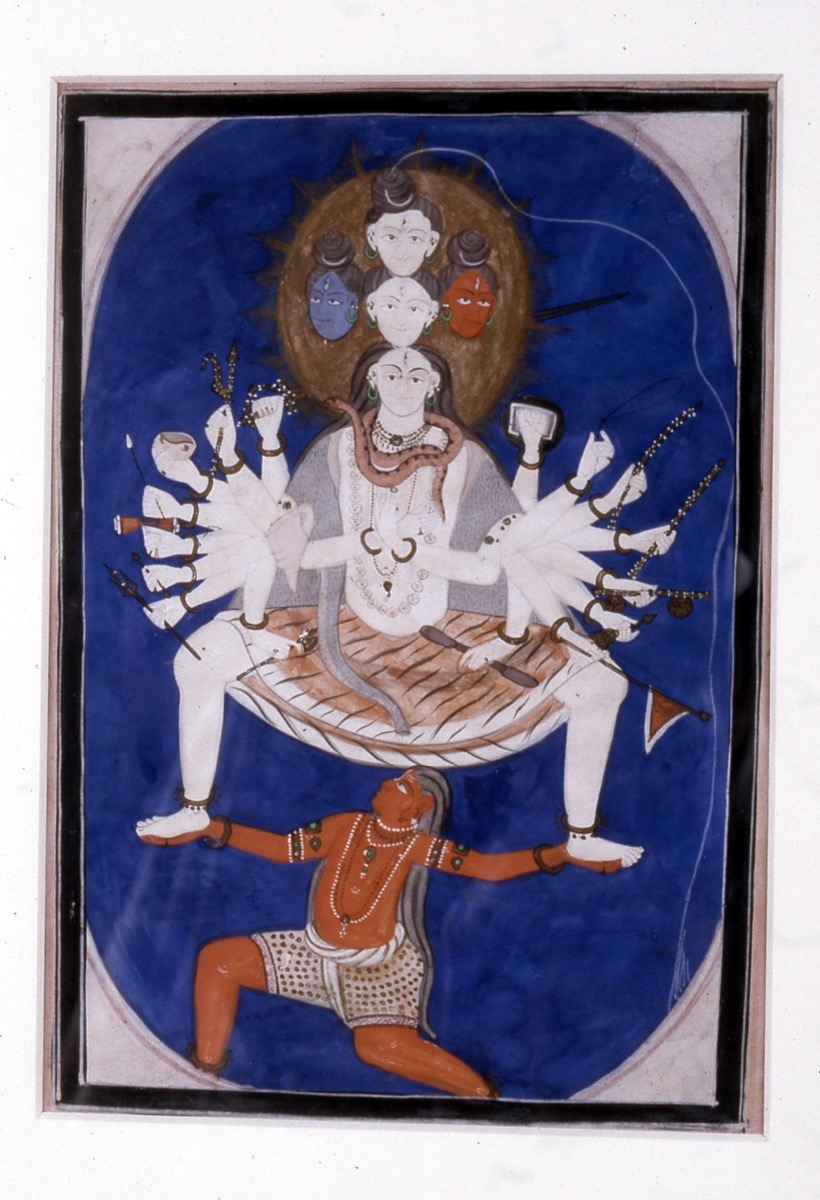
The Śiva Chālīsā (शिव चालीसा, “Forty Verses to Śiva”) is one of the most cherished devotional hymns in the Śaiva tradition of Hinduism. Comprising forty verses (chaupāī) framed by invocatory and concluding couplets (dohā), this prayer celebrates Lord Śiva — Mahādeva, the Great God — in his roles as the benevolent protector of the distressed, the cosmic destroyer and transformer, and the supreme ascetic who wears the crescent moon upon his brow. Recited by millions of devotees every Monday, during the sacred month of Śrāvaṇa, and on Mahāśivarātri (the Great Night of Śiva), the Śiva Chālīsā occupies a beloved place in North Indian worship alongside the great Sanskrit stotras such as the Śrī Rudram, the Śiva Tāṇḍava Stotram, and the Liṅgāṣṭakam.
Attribution and Origins
The Śiva Chālīsā is attributed to Ayodhyādāsa, a devotee-poet whose name appears in the concluding dohā of the hymn: “Kahe Ayodhyā āsa tumhārī” — “Ayodhyā[dāsa] places his hope in you.” Beyond this self-reference within the text, little is known about the historical identity of Ayodhyādāsa. Some editions also associate the text with Swāmī Śivānanda as an editor or compiler.
The Śiva Chālīsā is a product of the popular devotional tradition (loka-paramparā) of North India, composed in a blend of Awadhī and Braj Bhāṣā Hindi — the same literary milieu that produced the Hanumān Chālīsā of Tulasīdāsa and dozens of other chālīsā texts. Its theological content draws primarily from the Śiva Purāṇa, the Liṅga Purāṇa, and the epic narratives of the Mahābhārata and Rāmāyaṇa that describe Śiva’s divine exploits.
The closing dohā references the composition date using the Vikrama Saṃvat calendar: “Magasara chaṭhī hemanta ṛtu, saṃvata chausaṭha jāna” — indicating the text was completed on the sixth day of Mārgaśīrṣa (November-December) in Saṃvat 64, which scholars interpret as referring to a specific year in one of the regional Saṃvat eras.
Structure of the Śiva Chālīsā
Like all hymns in the chālīsā genre, the Śiva Chālīsā follows a precise structural framework:
1. Opening Dohā (Invocatory Couplet)
The hymn begins with a couplet invoking Lord Gaṇeśa, the son of Girijā (Pārvatī), who is the “root of all auspiciousness” (maṅgala mūla). This is consistent with Hindu liturgical convention, which prescribes beginning any sacred undertaking with a prayer to Gaṇeśa, the remover of obstacles:
श्री गणेश गिरिजा सुवन, मंगल मूल सुजान। कहत अयोध्यादास तुम, देहु अभय वरदान॥
Praise to Gaṇeśa, son of Girijā, the wise root of auspiciousness. Ayodhyādāsa says: grant me the boon of fearlessness.
2. Forty Chaupāī (Quatrains)
The body of the hymn consists of forty four-line verses in the chaupāī metre — a sixteen-syllable (sixteen-mātrā) metre that produces a natural, flowing rhythm ideal for congregational recitation. These verses move through several thematic sections: Śiva’s physical form and iconographic attributes, mythological episodes, the devotee’s personal plea, and the phala-śruti (fruits of recitation).
3. Closing Dohā (Concluding Couplets)
The hymn concludes with two dohā couplets that describe the benefits of daily recitation and note the date of composition.
Complete Text with Transliteration
Opening Dohā
श्री गणेश गिरिजा सुवन, मंगल मूल सुजान। कहत अयोध्यादास तुम, देहु अभय वरदान॥
Śrī Gaṇeśa Girijā suvana, maṅgala mūla sujāna. Kahata Ayodhyādāsa tuma, dehu abhaya varadāna.
Chaupāī 1—4: The Divine Form of Śiva
जय गिरिजापति दीन दयाला। सदा करत संतन प्रतिपाला॥ भाल चन्द्रमा सोहत नीके। कानन कुण्डल नाग फनी के॥
Jaya Girijāpati dīna dayālā. Sadā karata santana pratipālā. Bhāla candramā sohata nīke. Kānana kuṇḍala nāga phanī ke.
Victory to the Lord of Girijā (Pārvatī), compassionate to the distressed, who always nourishes and protects the saints. The crescent moon adorns his forehead beautifully, and serpent hoods serve as his ear-ornaments.
अंग गौर शिर गंग बहाये। मुण्डमाल तन छोर लगाये॥ वस्त्र खाल बाघम्बर सोहे। छवि को देख नाग मुनि मोहे॥
Aṅga gaura śira Gaṅga bahāye. Muṇḍamāla tana chora lagāye. Vastra khāla bāghambara sohe. Chavi ko dekha nāga muni mohe.
His body is fair-complexioned; the river Gaṅgā flows from his head. He wears a garland of skulls and smears his body with sacred ash. For garments he wears a tiger-skin, and seeing his splendour, even the Nāga sages are enchanted.
मैना मातु की हवै दुलारी। बाम अंग सोहत छवि न्यारी॥ कर त्रिशूल सोहत छवि भारी। करत सदा शत्रुन क्षयकारी॥
Mainā mātu kī havai dulārī. Bāma aṅga sohata chavi nyārī. Kara triśūla sohata chavi bhārī. Karata sadā śatruṇa kṣayakārī.
The beloved daughter of Mother Mainā (Pārvatī) graces his left side with her exquisite beauty. Holding the trident in his hand, resplendent in form, he forever destroys his enemies.
नन्दि गणेश सोहैं तहँ कैसे। सागर मध्य कमल है जैसे॥ कार्तिक श्याम और गणराऊ। या छवि को कहि जात न काऊ॥
Nandī Gaṇeśa sohaĩ tahaṃ kaise. Sāgara madhya kamala hai jaise. Kārtika śyāma aura Gaṇarāū. Yā chavi ko kahi jāta na kāū.
Nandī and Gaṇeśa beside him look like lotuses blooming in the midst of the ocean. With dark-complexioned Kārttikeya and Lord Gaṇeśa, nobody can describe the splendour of this divine assembly.
Chaupāī 5—8: Mythological Exploits
देवन जबहीं जाय पुकारा। तबहीं दुख प्रभु आप निवारा॥ किया उपद्रव तारक भारी। देवन सब मिलि तुम्हीं जुहारी॥
Devana jabahīṃ jāya pukārā. Tabahīṃ dukha Prabhu āpa nivārā. Kiyā upadrava Tāraka bhārī. Devana saba mili tumhīṃ juhārī.
Whenever the gods come crying out for help, the Lord himself removes their sorrows. When the demon Tāraka wrought great havoc, all the gods united and appealed to you.
तुरत षडानन आप पठायो। लव निमेष महँ मारि गिरायो॥ आप जलंधर असुर संहारा। सुयश तुम्हार विदित संसारा॥
Turata Ṣaḍānana āpa paṭhāyo. Lava nimeṣa mahaṃ māri girāyo. Āpa Jalaṃdhara asura saṃhārā. Suyaśa tumhāra vidita saṃsārā.
Immediately you dispatched the six-faced god (Kārttikeya), who slew Tāraka in an instant. You yourself destroyed the demon Jalandhara, and your glorious fame spread across the world.
त्रिपुरासुर सन युद्ध मचाई। सबहिं कृपा करि लीन्ह बचाई॥ किया तपहिं भागीरथ भारी। पुरव प्रतिज्ञा तासु पुरारी॥
Tripurāsura sana yuddha macāī. Sabahiṃ kṛpā kari līnha bacāī. Kiyā tapahiṃ Bhāgīratha bhārī. Purava pratijñā tāsu Purārī.
You waged war against the demon Tripurāsura and mercifully saved all the gods. King Bhagīratha undertook great penance, and you, Purārī (destroyer of Tripura), fulfilled his vow by receiving the Gaṅgā upon your matted locks.
दानिन महँ तुम सम कोउ नाहीं। सेवक स्तुति करत सदाहीं॥ वेद नाम महिमा तब गाई। अकथ अनादि भेद नहिं पाई॥
Dānina mahaṃ tuma sama kou nāhīṃ. Sevaka stuti karata sadāhīṃ. Veda nāma mahimā taba gāī. Akatha anādi bheda nahīṃ pāī.
Among the charitable, there is none equal to you. Your devotees sing your praises always. The Vedas have sung your name and glory, yet even they, oh Beginningless One, could not fathom your mystery.
Chaupāī 9—12: Nīlakaṇṭha and Rāma’s Devotion
प्रगट उदधि मंथन में ज्वाला। जरे सुरासुर भये बिहाला॥ कीन्ह दया तहँ करी सहाई। नीलकण्ठ तब नाम कहाई॥
Pragaṭa udadhi maṃthana meṃ jvālā. Jare surāsura bhaye bihālā. Kīnha dayā tahaṃ karī sahāī. Nīlakaṇṭha taba nāma kahāī.
During the churning of the ocean a flaming poison arose, scorching gods and demons alike with terror. Showing compassion, you came to their aid by drinking the poison, and from then you were called Nīlakaṇṭha — the Blue-Throated One.
पूजन रामचन्द्र जब कीन्हा। जीत के लंका विभीषण दीन्हा॥ सहस कमल में हो रहे धारी। कीन्ह परीक्षा तबहिं पुरारी॥
Pūjana Rāmacandra jaba kīnhā. Jīta ke Laṅkā Vibhīṣaṇa dīnhā. Sahasa kamala meṃ ho rahe dhārī. Kīnha parīkṣā tabahiṃ Purārī.
When Lord Rāmacandra worshipped you, he conquered Laṅkā and bestowed it upon Vibhīṣaṇa. Rāma was offering a thousand lotuses, and then you, Purārī, decided to test his devotion.
एक कमल प्रभु राखेउ जोई। कमल नयन पूजन चहन सोई॥ कठिन भक्ति देखी प्रभु शंकर। भय प्रसन्न दिये इच्छित वर॥
Eka kamala Prabhu rākheu joī. Kamala nayana pūjana cahana soī. Kaṭhina bhakti dekhī Prabhu Śaṃkara. Bhaya prasanna diye icchita vara.
The Lord hid one of those lotuses, so Rāma offered his own lotus-eye in its place. Seeing such steadfast devotion, Lord Śaṅkara was greatly delighted and granted Rāma his desired boons.
जय जय जय अनन्त अविनाशी। करत कृपा सब के घटवासी॥
Jaya jaya jaya ananta avināśī. Karata kṛpā saba ke ghaṭavāsī.
Victory, victory, victory to you, the Infinite and Imperishable One, who dwells in every heart and bestows grace upon all.
Chaupāī 13—16: The Devotee’s Plea
दुष्ट सकल नित मोहि सतावैं। भ्रमत रहे मोहि चैन न आवैं॥ त्राहि त्राहि मैं नाथ पुकारूँ। यहि अवसर मोहि आनि उबारो॥
Duṣṭa sakala nita mohi satāvaĩ. Bhramata rahe mohi caina na āvaĩ. Trāhi trāhi maiṃ nātha pukārūṃ. Yahi avasara mohi āni ubāro.
Evil forces trouble me every day; I wander restlessly and cannot find peace. “Save me, save me!” I cry out to you, Lord — at this very hour, come and rescue me.
लै त्रिशूल शत्रुन को मारो। संकट से मोहि आन उबारो॥ मातु पिता भ्राता सब कोई। संकट में पूछत नहिं कोई॥
Lai triśūla śatruṇa ko māro. Saṃkaṭa se mohi āna ubāro. Mātu pitā bhrātā saba koī. Saṃkaṭa meṃ pūchata nahīṃ koī.
Take up your trident and slay my enemies; deliver me from all adversities. I have mother, father, brothers — all — yet when trouble comes, none can save me.
स्वामी एक है आस तुम्हारी। आय हरहु अब संकट भारी॥ धन निर्धन को देत सदाहीं। जो कोई जाँचे वो फल पाहीं॥
Svāmī eka hai āsa tumhārī. Āya harahu aba saṃkaṭa bhārī. Dhana nirdhana ko deta sadāhīṃ. Jo koī jāṃce vo phala pāhīṃ.
Oh Master, you are my only hope — come now and remove my heavy burdens. You always bestow wealth upon the poor; whoever asks of you receives the fruit of devotion.
अस्तुति केहि विधि करूँ तुम्हारी। क्षमहु नाथ अब चूक हमारी॥ शंकर हो संकट के नाशन। मंगल कारण विघ्न विनाशन॥
Astuti kehi vidhi karūṃ tumhārī. Kṣamahu nātha aba cūka hamārī. Śaṃkara ho saṃkaṭa ke nāśana. Maṅgala kāraṇa vighna vināśana.
How can I adequately praise you? Forgive my failings, O Lord. You are Śaṅkara — the destroyer of distress, the cause of auspiciousness, the annihilator of obstacles.
Chaupāī 17—20: Salutations and Phala-Śruti
योगी यति मुनि ध्यान लगावैं। नारद शारद शीश नवावैं॥ नमो नमो जय नमो शिवाय। सुर ब्रह्मादिक पार न पाय॥
Yogī yati muni dhyāna lagāvaĩ. Nārada Śārada śīśa navāvaĩ. Namo namo jaya namo Śivāya. Sura Brahmādika pāra na pāya.
Yogis, ascetics, and sages meditate upon you; even Nārada and Sarasvatī bow their heads. Salutations, salutations, victory and salutations to Śiva — even the gods headed by Brahmā cannot fathom your depth.
जो यह पाठ करे मन लाई। ता पर होत हैं शम्भु सहाई॥ ऋणिया जो कोई हो अधिकारी। पाठ करे सो पावन हारी॥
Jo yaha pāṭha kare mana lāī. Tā para hota haiṃ Śambhu sahāī. Ṛṇiyā jo koī ho adhikārī. Pāṭha kare so pāvana hārī.
Whoever recites this prayer with a focused mind, Lord Śambhu surely comes to his aid. Whoever is burdened by debt and recites this text, that person gains purification and relief.
पुत्रहीन कर इच्छा कोई। निश्चय शिव प्रसाद तेहि होई॥ पण्डित त्रयोदशी को लावैं। ध्यान पूर्वक होम करावैं॥
Putrahīna kara icchā koī. Niścaya Śiva prasāda tehi hoī. Paṇḍita trayodaśī ko lāvaĩ. Dhyāna pūrvaka homa karāvaĩ.
If a childless person desires offspring, the grace of Śiva will certainly fulfil this wish. One should invite a paṇḍit on the Trayodaśī (thirteenth lunar day) and have a fire-offering performed with concentration.
त्रयोदशी व्रत करे हमेशा। तन नहिं ताके रहे कलेशा॥ धूप दीप नैवेद्य चढ़ावै। शंकर सन्मुख पाठ सुनावै॥
Trayodaśī vrata kare hameśā. Tana nahīṃ tāke rahe kaleśā. Dhūpa dīpa naivedya caḍhāvai. Śaṃkara sanmukha pāṭha sunāvai.
He who always observes the fast on Trayodaśī will have a body free from affliction. He who offers incense, lamps, and food-offerings and recites this prayer before Lord Śaṅkara…
जन्म जन्म के पाप नशावे। अन्तवास शिवपुर में पावे॥ कहे अयोध्या आस तुम्हारी। जानि सकल दुःख हरहु हमारी॥
Janma janma ke pāpa naśāve. Antavāsa Śivapura meṃ pāve. Kahe Ayodhyā āsa tumhārī. Jāni sakala duḥkha harahu hamārī.
…will have the sins of all his lifetimes destroyed and will find his final abode in Śivapura (the city of Śiva). Ayodhyā[dāsa] says: “My hope rests in you alone — knowing all, please remove our sorrows.”
Closing Dohā
नित नेम कर प्रातः ही, पाठ करौं चालीसा। तुम मेरी मनो कामना, पूर्ण करो जगदीश॥ मगसर छठि हेमन्त ऋतु, संवत चौसठ जान। अस्तुति चालीसा शिवहि, पूर्ण कीन्ह कल्याण॥
Nita nema kara prātaḥ hī, pāṭha karauṃ Chālīsā. Tuma merī mano kāmanā, pūrṇa karo Jagadīśa. Magasara chaṭhī hemanta ṛtu, saṃvata chausaṭha jāna. Astuti Chālīsā Śivahi, pūrṇa kīnha kalyāṇa.
Each day, rising early, I recite this Chālīsā as my regular observance. Fulfil my heart’s desires, O Lord of the Universe. On the sixth of Mārgaśīrṣa, in the winter season, Saṃvat sixty-four — this Chālīsā in praise of Śiva was completed for the welfare of all.
Śiva’s Attributes Celebrated in the Chālīsā
The Śiva Chālīsā presents a rich, multi-layered portrait of the deity that encompasses virtually every major aspect of Śiva as described in the Purāṇas.
The Ascetic with the Crescent Moon
The opening chaupāīs paint Śiva’s iconic visual form: the crescent moon (bhāla candramā) adorning his forehead, the serpent hoods (nāga phanī) serving as ear-ornaments, the sacred Gaṅgā flowing from his matted locks, the garland of skulls (muṇḍamāla), the body smeared with sacred ash (vibhūti), and the tiger-skin garment (bāghambara). This is the Śiva of a thousand paintings and sculptures — the great yogin who renounces all worldly finery yet possesses a beauty that enchants even the sages.
Girijāpati: Lord of the Mountain’s Daughter
The very first chaupāī addresses Śiva as Girijāpati — the husband of Girijā (Pārvatī, the “Mountain-Born”). The hymn places Pārvatī at Śiva’s left side (bāma aṅga) and celebrates his divine family: Nandī the bull, Gaṇeśa the elephant-headed son, and Kārttikeya (Skanda), the six-faced war-god. This vision of Śiva as the loving householder-deity balances the solitary ascetic image and reflects the Purāṇic ideal of Śiva as both vairāgī (renunciant) and gṛhastha (householder).
Nīlakaṇṭha: The Saviour of the Cosmos
One of the Chālīsā’s most powerful verses describes the churning of the cosmic ocean (samudra-manthana), when the deadly poison Hālāhala emerged and threatened to annihilate all creation. While gods and demons alike fled in terror, Śiva alone stepped forward and drank the poison, which turned his throat blue. This act of supreme self-sacrifice earned him the epithet Nīlakaṇṭha (Blue-Throated) and remains one of the most beloved narratives in Hindu mythology (Bhāgavata Purāṇa 8.7; Śiva Purāṇa, Rudra-saṃhitā 2.16).
The Slayer of Demons
The Chālīsā celebrates Śiva’s role as the protector of the gods by recounting three major demon-slaying episodes:
-
Tārakāsura: The demon who obtained a boon making him invincible except by a son of Śiva. Śiva dispatched his son Kārttikeya (Ṣaḍānana, the six-faced one), who slew Tāraka in an instant (Śiva Purāṇa, Kumāra-khaṇḍa).
-
Jalandhara: A powerful asura born from Śiva’s own wrath, who conquered all three worlds. Śiva himself destroyed Jalandhara after a protracted war (Padma Purāṇa; Śiva Purāṇa, Rudra-saṃhitā 3).
-
Tripurāsura: Three sons of Tārakāsura who built three flying cities (Tripura) of gold, silver, and iron. Śiva destroyed all three cities with a single arrow, earning the epithet Tripurārī — the enemy of Tripura (Matsya Purāṇa 129—140; Śiva Purāṇa, Rudra-saṃhitā 2.5).
Rāma’s Devotion to Śiva
A beautiful episode narrates how Lord Rāmacandra worshipped Śiva before the battle of Laṅkā (Rāmāyaṇa, Uttara-kāṇḍa tradition; Rāmacaritamānasa, Laṅkā-kāṇḍa). Rāma was offering a thousand lotuses, but Śiva secretly removed one to test his devotion. Discovering the missing lotus, Rāma prepared to offer his own lotus-like eye (kamala-nayana) as substitute. Moved by this supreme devotion, Śiva appeared and granted Rāma victory over Rāvaṇa. This story also appears in the Śiva Purāṇa and illustrates the mutual devotion between the two great deities of Hinduism.
When and How to Recite the Śiva Chālīsā
Auspicious Times for Recitation
The Śiva Chālīsā is most commonly recited at the following times:
-
Every Monday (Somavāra): Monday is Śiva’s day in the Hindu calendar. Devotees observe Monday fasts (Somavāra Vrata) and recite the Chālīsā as part of their morning or evening worship.
-
The Month of Śrāvaṇa (July-August): The entire monsoon month of Śrāvaṇa is sacred to Śiva. During this period, millions of devotees — including the Kāṃvaḍ Yātrā pilgrims who carry Gaṅgā water from Haridwāra to their local Śiva temples — recite the Chālīsā daily with heightened devotion.
-
Mahāśivarātri (the Great Night of Śiva): On the 14th night of the dark fortnight of Phālguna (February-March), devotees observe an all-night vigil, and the Śiva Chālīsā is recited along with the Rudra Abhiṣeka and other Śaiva liturgies.
-
Trayodaśī (13th lunar day): The Chālīsā itself prescribes Trayodaśī as a particularly auspicious day for recitation, fasting, and homa (fire-offering).
-
Pradoṣa Vrata: The evening of Trayodaśī, known as Pradoṣa, is another time when the Chālīsā is widely recited.
Method of Recitation
The traditional method involves:
- Purification: Bathing and wearing clean clothes before recitation.
- Āsana: Sitting before a Śivaliṅga or image of Śiva on a clean seat, facing east or north.
- Invocation: Lighting a lamp and incense (dhūpa-dīpa), offering water, flowers, bilva leaves, and food (naivedya) to Śiva.
- Recitation: Chanting the Chālīsā with a focused mind (mana lāī), ideally during the early morning Brāhma-muhūrta (4:00—5:00 AM) or during the evening sandhyā.
- Repetition: Many devotees recite the Chālīsā 1, 11, or 108 times for intensified spiritual effect.
Comparison with Other Śiva Stotras
The Śiva Chālīsā belongs to a rich family of hymns dedicated to Mahādeva:
| Text | Language | Attributed To | Focus |
|---|---|---|---|
| Śrī Rudram | Vedic Sanskrit | Kṛṣṇa Yajurveda | Cosmic Rudra; Vedic ritual |
| Śiva Tāṇḍava Stotram | Classical Sanskrit | Rāvaṇa | Śiva’s cosmic dance |
| Liṅgāṣṭakam | Sanskrit | Ādi Śaṅkarācārya | The Śivaliṅga |
| Rudraṣṭakam | Sanskrit | Tulasīdāsa | Śiva’s fearsome and benign forms |
| Śiva Pañcākṣara Stotram | Sanskrit | Ādi Śaṅkarācārya | The five-syllable mantra |
| Nirvāṇa Ṣaṭkam | Sanskrit | Ādi Śaṅkarācārya | Śiva as pure consciousness |
| Śiva Chālīsā | Awadhī Hindi | Ayodhyādāsa | Śiva’s attributes and devotee’s plea |
What distinguishes the Śiva Chālīsā from these Sanskrit compositions is its vernacular accessibility. While the Śrī Rudram requires years of Vedic training to chant correctly, and the Tāṇḍava Stotram demands facility with complex Sanskrit metres, the Chālīsā can be recited by any devotee regardless of formal education. This democratic character — shared with all chālīsā texts — made it the preferred prayer of the masses during the Bhakti era and continues to account for its enormous popularity today.
Spiritual Benefits and Theological Significance
The Promise of Śambhu’s Aid
The Chālīsā’s phala-śruti makes explicit promises: whoever recites this prayer with focused attention (mana lāī) will receive Śambhu’s direct aid (Śambhu sahāī). Debts are lifted, childless couples receive offspring, sins accumulated over countless births are destroyed, and the devotee ultimately attains Śivapura — the abode of Śiva, equivalent to mokṣa (liberation).
Śiva as Ghaṭavāsī: The Dweller in Every Heart
Perhaps the most philosophically significant verse is the one that hails Śiva as ananta avināśī (infinite and imperishable) and ghaṭavāsī (the one who dwells in every vessel/heart). This echoes the Upaniṣadic teaching that the Supreme Being is not distant but intimately present within every individual — “Īśāvāsyam idaṃ sarvam” (“All this is pervaded by the Lord,” Īśa Upaniṣad 1). The external Śiva of Kailāsa and the internal Śiva of the devotee’s heart are one and the same.
Surrender and Grace
The emotional core of the Chālīsā is the devotee’s cry for help (trāhi trāhi) — a raw, unadorned plea that strips away theological complexity and reveals the essence of bhakti: the helpless child calling upon the all-powerful parent. “My mother, father, brothers — none can help me in my hour of need,” the poet confesses. “You alone are my hope.” This theology of complete surrender (śaraṇāgati) connects the Śiva Chālīsā to the broader Bhakti tradition, where divine grace is freely given to those who abandon all pretence of self-sufficiency and throw themselves upon the mercy of God.
Conclusion
The Śiva Chālīsā is at once a devotional poem, a theological compendium, and a spiritual practice that has sustained millions of Śaiva devotees across the centuries. In its forty verses, it distils the vastness of Śiva — the cosmic Nīlakaṇṭha who saves creation, the loving Girijāpati surrounded by his divine family, the generous Lord who bestows wealth upon the poor — into a form that any devotee can carry in the heart and on the lips. Its message is ancient yet ever-new: call upon Mahādeva with sincerity, and Mahādeva will answer.