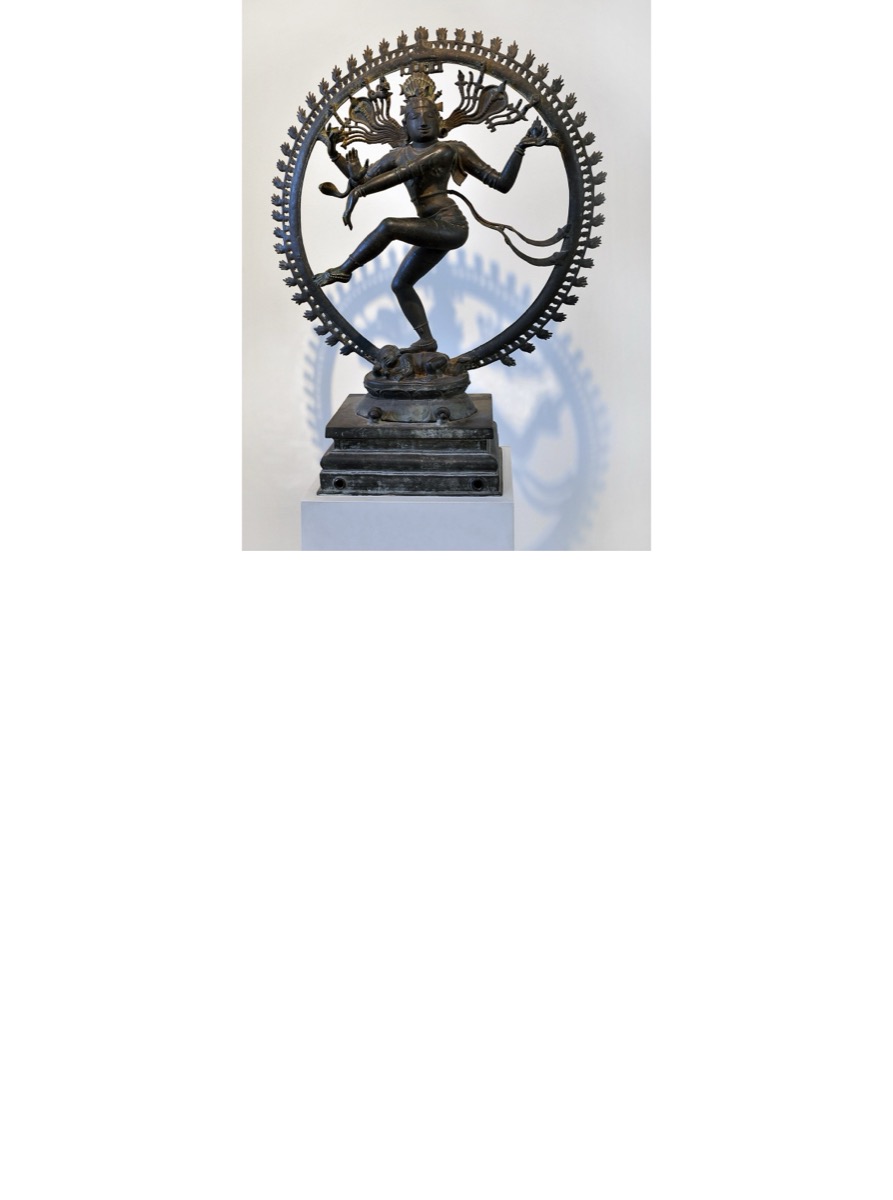
The Śiva Pañcākṣara Stotram (“Hymn of the Five Syllables of Śiva”) is one of the most beloved compositions attributed to Ādi Śaṅkarācārya (c. 788–820 CE), the great exponent of Advaita Vedānta. In five exquisitely crafted verses, the hymn meditates upon each syllable of the supreme Śaiva mantra — Om Namaḥ Śivāya (ॐ नमः शिवाय) — revealing the nature, attributes, and cosmic functions of Lord Śiva through the lens of each sacred letter: Na, Ma, Śi, Vā, and Ya.
The Pañcākṣara (“five-syllable”) mantra is regarded in Śaiva tradition as the most potent of all mantras, the very heart of the Vedas, and the direct verbal embodiment of Śiva Himself. The Śiva Purāṇa (Vidyeśvara Saṁhitā 10.1–15) declares it supreme among all mantras, and the Liṅga Purāṇa (1.85–86) affirms that liberation is attained through its recitation alone.
The Complete Stotra in Sanskrit
नागेन्द्रहाराय त्रिलोचनाय भस्माङ्गरागाय महेश्वराय। नित्याय शुद्धाय दिगम्बराय तस्मै नकाराय नमः शिवाय॥१॥
मन्दाकिनीसलिलचन्दनचर्चिताय नन्दीश्वरप्रमथनाथमहेश्वराय। मन्दारपुष्पबहुपुष्पसुपूजिताय तस्मै मकाराय नमः शिवाय॥२॥
शिवाय गौरीवदनाब्जबृन्द सूर्याय दक्षाध्वरनाशकाय। श्रीनीलकण्ठाय वृषध्वजाय तस्मै शिकाराय नमः शिवाय॥३॥
वसिष्ठकुम्भोद्भवगौतमार्य मुनीन्द्रदेवार्चितशेखराय। चन्द्रार्कवैश्वानरलोचनाय तस्मै वकाराय नमः शिवाय॥४॥
यज्ञस्वरूपाय जटाधराय पिनाकहस्ताय सनातनाय। दिव्याय देवाय दिगम्बराय तस्मै यकाराय नमः शिवाय॥५॥
Verse-by-Verse Translation and Commentary
Verse 1: Na-kāra (न) — The Syllable “Na”
नागेन्द्रहाराय त्रिलोचनाय भस्माङ्गरागाय महेश्वराय। नित्याय शुद्धाय दिगम्बराय तस्मै नकाराय नमः शिवाय॥
IAST: Nāgendrahārāya Trilocanāya Bhasmāṅgarāgāya Maheśvarāya | Nityāya Śuddhāya Digambarāya Tasmai Nakārāya Namaḥ Śivāya ||
Translation: “Salutations to Śiva, who is represented by the syllable ‘Na’ — He who wears the king of serpents as a garland, who has three eyes, whose body is adorned with sacred ash, who is the Great Lord, who is eternal, who is pure, and who is clad in the directions (space itself).”
Commentary: The first verse establishes Śiva’s iconic form. The nāgendra-hāra (serpent-garland) symbolises Śiva’s mastery over fear and death — Vāsuki, the king of serpents, rests peacefully on the neck of the one who has conquered time itself. The three eyes (trilocana) represent the sun, moon, and fire — the three sources of light that illumine the three worlds. The sacred ash (bhasma) smeared on His body signifies the ultimate truth that all material existence returns to ash, teaching the devotee non-attachment. The epithet Digambara (“sky-clad”) points to Śiva’s absolute freedom — He who is clothed by the directions themselves needs no covering, for He transcends all limitation.
The Śvetāśvatara Upaniṣad (3.2) similarly describes: “Rudra is truly one; there is no second… He who has eyes on all sides, faces on all sides… He, the creator of the gods.”
Verse 2: Ma-kāra (म) — The Syllable “Ma”
मन्दाकिनीसलिलचन्दनचर्चिताय नन्दीश्वरप्रमथनाथमहेश्वराय। मन्दारपुष्पबहुपुष्पसुपूजिताय तस्मै मकाराय नमः शिवाय॥
IAST: Mandākinīsalilacandanacarcitāya Nandīśvarapramathanāthamaheśvarāya | Mandārapuṣpabahupuṣpasupūjitāya Tasmai Makārāya Namaḥ Śivāya ||
Translation: “Salutations to Śiva, who is represented by the syllable ‘Ma’ — He who is anointed with the waters of the Mandākinī (heavenly Gaṅgā) and sandal paste, who is the Lord of Nandīśvara and the chief of the Pramathas, the Great Lord, and who is worshipped with Mandāra flowers and many other blooms.”
Commentary: This verse reveals Śiva’s relationship with His divine retinue and the cosmic river. The Mandākinī — the celestial Gaṅgā that descends through Śiva’s matted locks — represents the flow of divine grace from the transcendent to the worldly plane. Nandīśvara, Śiva’s bull-mount and eternal companion, symbolises dharma itself. The Pramathas are Śiva’s celestial attendants who dwell on Mount Kailāsa. The offering of Mandāra flowers (the celestial coral tree) and other blooms represents the devotee’s surrender of all that is beautiful and precious.
The Śiva Purāṇa (Vāyavīya Saṁhitā 1.30.62) elaborates: “Sandal paste, the waters of sacred rivers, and fragrant flowers — these are dear to Mahādeva, for they represent purity, grace, and devotion.”
Verse 3: Śi-kāra (शि) — The Syllable “Śi”
शिवाय गौरीवदनाब्जबृन्द सूर्याय दक्षाध्वरनाशकाय। श्रीनीलकण्ठाय वृषध्वजाय तस्मै शिकाराय नमः शिवाय॥
IAST: Śivāya Gaurīvadanābjabṛnda Sūryāya Dakṣādhvaranāśakāya | Śrīnīlakaṇṭhāya Vṛṣadhvajāya Tasmai Śikārāya Namaḥ Śivāya ||
Translation: “Salutations to Śiva, who is represented by the syllable ‘Śi’ — He who is auspicious, who is like the sun to the cluster of lotuses that are the faces of Gaurī, who destroyed the sacrifice of Dakṣa, who is the glorious blue-throated one, and whose banner bears the bull.”
Commentary: The syllable “Śi” is the very heart of the mantra, for Śiva means “the Auspicious One.” Śaṅkara employs a stunning poetic image: just as the sun causes lotuses to bloom, Śiva’s presence causes the lotus-face of Gaurī (Pārvatī) to radiate with joy. This verse also invokes two of Śiva’s most celebrated mythological acts: the destruction of Dakṣa’s sacrifice (when Dakṣa insulted Śiva and Satī), demonstrating that Śiva upholds dharmic honour; and the epithet Nīlakaṇṭha (“blue-throated”), recalling when Śiva drank the deadly Hālāhala poison during the churning of the cosmic ocean to save all creation, holding it in His throat — an act of supreme compassion that turned His throat eternally blue.
The Liṅga Purāṇa (1.99) states: “When all the worlds trembled before the poison, Hara alone stood firm, drinking it for the sake of all beings.”
Verse 4: Vā-kāra (वा) — The Syllable “Vā”
वसिष्ठकुम्भोद्भवगौतमार्य मुनीन्द्रदेवार्चितशेखराय। चन्द्रार्कवैश्वानरलोचनाय तस्मै वकाराय नमः शिवाय॥
IAST: Vasiṣṭhakumbhodbhavagautamārya Munīndradevarīcitaśekharāya | Candrārkavaiśvānaralocanāya Tasmai Vakārāya Namaḥ Śivāya ||
Translation: “Salutations to Śiva, who is represented by the syllable ‘Vā’ — He whose crest is worshipped by the foremost sages Vasiṣṭha, Agastya (the pot-born), Gautama, and other great munis and devas, and who has the moon, sun, and fire as His three eyes.”
Commentary: This verse establishes Śiva’s supremacy by naming the greatest ṛṣis who worship Him. Vasiṣṭha, one of the Saptarṣis (Seven Sages) and the author of the seventh Maṇḍala of the Ṛgveda; Kumbhodbhava (Agastya), born from a pot, who drank the ocean and conquered the Vindhya mountains; and Gautama, the great sage of the Nyāya school — all these luminaries bow before Śiva. The three eyes are once again invoked, but here specifically identified as Candra (moon — the left eye, representing coolness and grace), Arka (sun — the right eye, representing activity and knowledge), and Vaiśvānara (fire — the third eye on the forehead, representing destruction of ignorance).
The Śvetāśvatara Upaniṣad (4.18) affirms: “When there is no darkness, there is neither day nor night, neither being nor non-being — Śiva alone exists, the imperishable, the adorable light of Savitṛ.”
Verse 5: Ya-kāra (य) — The Syllable “Ya”
यज्ञस्वरूपाय जटाधराय पिनाकहस्ताय सनातनाय। दिव्याय देवाय दिगम्बराय तस्मै यकाराय नमः शिवाय॥
IAST: Yajñasvarūpāya Jaṭādharāya Pinākahastāya Sanātanāya | Divyāya Devāya Digambarāya Tasmai Yakārāya Namaḥ Śivāya ||
Translation: “Salutations to Śiva, who is represented by the syllable ‘Ya’ — He who is the very form of sacrifice (yajña), who bears matted locks, who holds the Pināka bow in His hand, who is eternal (Sanātana), who is divine, who is the luminous God, and who is sky-clad.”
Commentary: The final verse brings the stotra full circle. Identifying Śiva as Yajña-svarūpa (“the form of sacrifice itself”) is theologically profound — it means that all acts of worship, all ritual offerings, ultimately reach Śiva alone. The matted locks (jaṭā) represent ascetic renunciation and also cradle the river Gaṅgā. The Pināka bow is Śiva’s legendary weapon, wielded in His role as the destroyer of the three cities of the Asuras (Tripura-saṁhāra). The epithet Sanātana (“eternal”) affirms that Śiva exists beyond the cycles of creation and dissolution. The repetition of Digambara from the first verse creates a ring composition — a deliberate poetic structure indicating that the five syllables form a complete, self-contained cosmic circle.
The Pañcākṣara Mantra: Na-maḥ-Śi-vā-ya
The five syllables Na-Ma-Śi-Vā-Ya (नमःशिवाय) constitute the Pañcākṣara — literally, “the five letters.” When prefixed with Oṃ, it becomes the Ṣaḍakṣara (“six-syllable”) mantra: Oṃ Namaḥ Śivāya. The Śaiva Āgamas and Purāṇas ascribe extraordinary significance to these syllables:
- Na represents the concealing power (tirodhāna) — Śiva’s function of hiding the ultimate truth from the unprepared soul
- Ma represents mala (impurity) — the bondage of the soul that must be overcome
- Śi represents Śiva Himself — the supreme, auspicious reality
- Vā represents Śiva’s śakti (revealing grace) — the power that removes the veil of ignorance
- Ya represents the jīva (individual soul) — the seeker who, through the mantra, journeys from bondage to liberation
Thus, the mantra encodes the entire Śaiva soteriology: the soul (Ya), bound by impurity (Ma) and concealment (Na), is liberated through Śiva’s grace (Vā) and united with Śiva (Śi). The Śiva Purāṇa (Vidyeśvara Saṁhitā 10.12) states: “By the power of the five syllables, the bound soul is freed from the threefold impurity — āṇava (ego-limitation), kārma (karmic bondage), and māyīya (cosmic illusion).”
The Phala-śruti (Concluding Benediction)
The stotra traditionally concludes with a phala-śruti verse:
पञ्चाक्षरमिदं पुण्यं यः पठेच्छिवसन्निधौ। शिवलोकमवाप्नोति शिवेन सह मोदते॥
IAST: Pañcākṣaram idaṃ puṇyaṃ yaḥ paṭhec chivasannidhau | Śivalokam avāpnoti Śivena saha modate ||
Translation: “Whoever recites this sacred five-syllable hymn in the presence of Śiva attains the abode of Śiva and rejoices with Him.”
Theological Significance
In Advaita Vedānta
Although Śaṅkara is primarily associated with non-dual Advaita, his composition of the Pañcākṣara Stotram demonstrates his commitment to upāsanā (meditative devotion) as a preparatory practice for the seeker. In Advaita, the personal God (Śiva, Viṣṇu, or Devī) is understood as Brahman qualified by Māyā — the Absolute appearing in a form accessible to human devotion. By meditating on Śiva’s attributes through the five syllables, the seeker’s mind is purified and made ready for the final leap into the attributeless (nirguṇa) Brahman.
Śaṅkara writes in the Vivekacūḍāmaṇi (verse 6): “Among the things conducive to liberation, devotion alone is supreme. The seeking after one’s own real nature — that is called devotion.” The Pañcākṣara Stotram embodies this principle: through devoted meditation on Śiva’s names and forms, the devotee ultimately discovers the nameless, formless Self.
In Śaiva Siddhānta
In the southern Śaiva Siddhānta tradition, the Pañcākṣara is the mūla mantra (root mantra) of all Śaiva initiation. The Āgamic texts prescribe its use in dīkṣā (initiation), daily worship, and meditation. The Kāmika Āgama and Kāraṇa Āgama elaborate specific ritual procedures involving the five syllables, each associated with one of Śiva’s five cosmic functions (pañcakṛtya): creation (sṛṣṭi), preservation (sthiti), dissolution (saṁhāra), concealment (tirodhāna), and grace (anugraha).
In Vīraśaiva / Liṅgāyata Tradition
The Vīraśaiva tradition of Karnataka, founded by Basavaṇṇa (12th century), places the Pañcākṣara at the very centre of spiritual life. Every Liṅgāyata devotee wears an Iṣṭaliṅga (personal liṅga) on the body and chants the Pañcākṣara as the essential daily practice. Basavaṇṇa’s Vacana literature is suffused with references to the five syllables as the breath of spiritual life.
Recitation Practice
Traditional Method
The Pañcākṣara Stotram is traditionally recited in the following manner:
- Time: During the Śiva-pūjā, especially on Mondays, during Pradoṣa, and on Mahā Śivarātri
- Preparation: After bathing, apply vibhūti (sacred ash) with the chanting of “Namaḥ Śivāya”
- Posture: Seated facing east or north before a Śivaliṅga or image of Śiva
- Invocation: Begin with “Oṃ Namaḥ Śivāya” three times
- Recitation: Chant all five verses followed by the phala-śruti
- Japa: Follow with 108 repetitions of “Oṃ Namaḥ Śivāya” using a rudrākṣa mālā
Significance in Musical Tradition
The Pañcākṣara Stotram is widely set to music in the Carnatic tradition. The composition by the saint-composer Śyāma Śāstrī (1762–1827) in the rāga Śankarābharaṇam is among the most famous renditions. The stotra’s metre (anuṣṭubh for the main verses) lends itself naturally to melodic chanting, and its recitation is a standard part of Śaiva temple worship across India.
Mystical Dimensions
The five syllables are also correlated with the Pañcabhūtas (five great elements):
| Syllable | Element | Cosmic Function | Body Region |
|---|---|---|---|
| Na | Earth (Pṛthivī) | Concealment | Feet to knees |
| Ma | Water (Āpas) | Impurity/bondage | Knees to navel |
| Śi | Fire (Agni) | Supreme Śiva | Navel to heart |
| Vā | Air (Vāyu) | Grace/revelation | Heart to brow |
| Ya | Space (Ākāśa) | Soul | Brow to crown |
This correlation with the elements and body regions forms the basis of the Nyāsa practice, in which the devotee ritually “places” each syllable on different parts of the body, thereby transforming the body itself into a living temple of Śiva.
The Stotra in Living Tradition
The Śiva Pañcākṣara Stotram remains one of the most frequently chanted hymns in Hindu worship today. In the great Śiva temples of South India — Cidambaram, Tiruvannamalai, Chidambaram, and Rameshwaram — it is recited daily during the abhiṣeka (sacred bathing) of the Śivaliṅga. During Mahā Śivarātri, the night-long vigil is punctuated by collective chanting of the Pañcākṣara Stotram, with each verse marking one of the four yāma (watches) of the night.
Śaṅkara’s genius in this composition lies in its seeming simplicity: five short verses, each ending with the refrain “Tasmai [syllable]-kārāya Namaḥ Śivāya.” Yet within this simple structure, he has encoded the entire theology of Śaiva worship — Śiva’s cosmic form, His divine relationships, His mythological acts, His worship by the greatest sages, and His identity as the eternal reality beyond all form. The devotee who chants these verses with understanding and devotion traverses, syllable by syllable, the entire path from worldly existence to divine union.