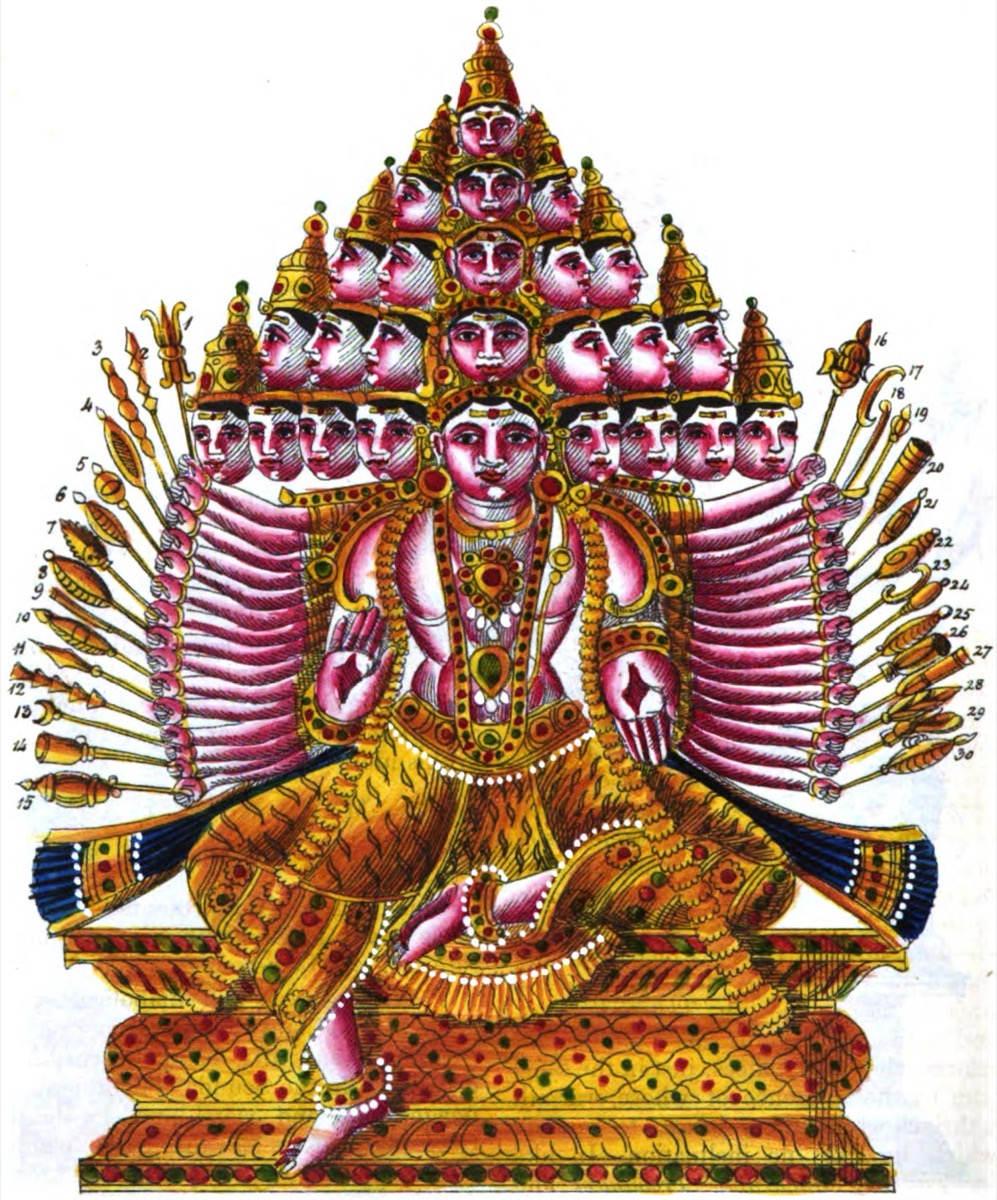
The Śivāṣṭakam (शिवाष्टकम्, “Eight Verses on Śiva”), popularly known by its opening words Prabhuṃ Prāṇanātham, is one of the most widely recited devotional hymns in the Śaiva tradition. Composed of eight majestic Sanskrit verses, each concluding with the refrain “Śivaṃ Śaṅkaraṃ Śambhu-mīśānam-īḍe” (“I praise Śiva, Śaṅkara, Śambhu, the great Lord Īśāna”), this stotra paints a comprehensive portrait of Lord Śiva’s transcendent and immanent nature — from his terrifying cosmic form adorned with skulls and serpents to his serene aspect as the essence of the Vedas and the unchanging Absolute.
Unlike many Śaiva stotras that focus on a single aspect of Mahādeva, the Śivāṣṭakam traverses the full spectrum of Śiva’s personality: his role as Prabhu (the sovereign lord), Viśvanātha (lord of the universe), Bhūteśvara (lord of all beings and elements), the ascetic dwelling beneath the banyan tree, the Ardhanaareśvara sharing half his body with Pārvatī, and the supreme Parabrahman venerated by Brahmā and all the gods. This remarkable breadth has made the Śivāṣṭakam a favourite in temples, homes, and musical concerts across India.
Authorship and Dating
The Śivāṣṭakam belongs to the vast corpus of traditional Śaiva hymns whose precise authorship remains uncertain. Unlike the Rudrāṣṭakam, which is firmly attributed to Gosvāmī Tulasīdāsa, or the Liṅgāṣṭakam, traditionally credited to Ādi Śaṅkarācārya, the Śivāṣṭakam is generally classified as a paramparā stotra — a hymn preserved and transmitted through the Śaiva devotional tradition without a definitively established author.
Some commentators attribute it to Ādi Śaṅkarācārya based on its sophisticated theological content and its presence alongside other Śaṅkara-attributed works in stotra collections. However, the hymn’s style — with its vivid, almost cinematic descriptions of Śiva’s form and attributes — differs somewhat from the philosophical density typical of confirmed Śaṅkara compositions like the Nirvaṇaṣaṭkam or Dakṣiṇāmūrtistotram. What is certain is that the Śivāṣṭakam has been part of the living Śaiva liturgical tradition for centuries and occupies a prominent place in temple recitation, especially at Kāśī Viśvanātha, Kedāranātha, and other major Śiva shrines.
The Complete Hymn with Verse-by-Verse Meaning
Verse 1
प्रभुं प्राणनाथं विभुं विश्वनाथं जगन्नाथ नाथं सदानन्द भाजाम्। भवद्भव्य भूतेश्वरं भूतनाथं शिवं शङ्करं शम्भु मीशानमीडे॥
Prabhuṃ prāṇanāthaṃ vibhuṃ viśvanāthaṃ jagannātha-nāthaṃ sadānanda-bhājām | Bhavadbhavya-bhūteśvaraṃ bhūtanāthaṃ śivaṃ śaṅkaraṃ śambhu-mīśānam-īḍe ||
Meaning: I praise Him who is the sovereign Lord (Prabhu), the Lord of life-breath (Prāṇanātha), the all-pervading one (Vibhu), the Lord of the universe (Viśvanātha), the Lord of even the Lord of the world (Jagannātha-nātha), the abode of eternal bliss (Sadānanda-bhājām), the resplendent Lord of all beings and elements (Bhūteśvara), the master of all creatures (Bhūtanātha) — I praise Śiva, Śaṅkara, the great Lord Śambhu Īśāna.
The opening verse establishes Śiva’s supreme sovereignty through an ascending hierarchy of divine titles. The phrase Jagannātha-nāthaṃ (“the Lord of the Lord of the world”) is particularly striking — it declares Śiva as the supreme deity even above all other divine rulers. The term Prāṇanātha (“Lord of the vital breath”) echoes the Praśna Upaniṣad’s (2.13) teaching that Prāṇa itself bows to the Supreme Being.
Verse 2
गले रुण्डमालं तनौ सर्पजालं महाकाल कालं गणेशादि पालम्। जटाजूट गङ्गोत्तरङ्गैर्विशालं शिवं शङ्करं शम्भु मीशानमीडे॥
Gaḻe ruṇḍamālaṃ tanau sarpajālaṃ mahākāla-kālaṃ gaṇeśādi-pālam | Jaṭājūṭa-gaṅgottaraṅgair-viśālaṃ śivaṃ śaṅkaraṃ śambhu-mīśānam-īḍe ||
Meaning: I praise Him who wears a garland of skulls (ruṇḍamālā) around his neck, whose body is adorned with a network of serpents, who is the Death of even Mahākāla (Death itself), the protector of Gaṇeśa and other deities, whose matted locks appear vast and magnificent with the surging waves of the Gaṅgā — I praise Śiva, Śaṅkara, the great Lord Śambhu Īśāna.
This verse presents Śiva in his fearsome Bhairava aspect. The ruṇḍamālā (skull garland) signifies his mastery over death and the transience of the physical body. The serpents coiled around his body represent the kuṇḍalinī śakti and his dominion over fear itself — for the serpent, universally feared, serves as Śiva’s ornament. The phrase Mahākāla-kālaṃ (“the Death of Death”) is a powerful theological assertion found also in the Śvetāśvatara Upaniṣad (3.2): Śiva transcends even the cosmic principle of time and dissolution. The Gaṅgā flowing from his jaṭājūṭa (matted locks) refers to the Purāṇic narrative where Śiva received the descending Gaṅgā in his hair to protect the earth from her torrential force (Bhāgavata Purāṇa 9.9).
Verse 3
मुदामाकरं मण्डनं मण्डयन्तं महा मण्डलं भस्म भूषाधरं तम्। अनादिं ह्यपारं महा मोहमारं शिवं शङ्करं शम्भु मीशानमीडे॥
Mudāmākaraṃ maṇḍanaṃ maṇḍayantaṃ mahā-maṇḍalaṃ bhasma-bhūṣādharaṃ tam | Anādiṃ hyapāraṃ mahā-moha-māraṃ śivaṃ śaṅkaraṃ śambhu-mīśānam-īḍe ||
Meaning: I praise Him who is the mine of bliss (mudāmākara), who adorns and beautifies the great cosmic sphere, who wears sacred ash (bhasma) as his ornament, who is without beginning (anādi) and without end (apāra), the destroyer of the great delusion (mahā-moha) — I praise Śiva, Śaṅkara, the great Lord Śambhu Īśāna.
The sacred ash (bhasma or vibhūti) is Śiva’s most distinctive ornament, symbolising the ultimate reality: all material creation is eventually reduced to ash, and only the eternal Ātman endures. The Bṛhadāraṇyaka Upaniṣad’s “neti neti” (not this, not this) finds its visual expression in Śiva’s ash-smeared body — a constant reminder of the illusory nature of the material world. The epithet Mahā-moha-māra (“destroyer of the great delusion”) directly references Śiva’s role as the bestower of viveka (discriminative wisdom) that liberates the soul from māyā.
Verse 4
वटाधो निवासं महाट्टाट्टहासं महापाप नाशं सदा सुप्रकाशम्। गिरीशं गणेशं सुरेशं महेशं शिवं शङ्करं शम्भु मीशानमीडे॥
Vaṭādho-nivāsaṃ mahāṭṭāṭṭahāsaṃ mahāpāpa-nāśaṃ sadā suprakāśam | Girīśaṃ gaṇeśaṃ sureśaṃ maheśaṃ śivaṃ śaṅkaraṃ śambhu-mīśānam-īḍe ||
Meaning: I praise Him who dwells beneath the banyan tree (vaṭa), whose laughter is a great, thunderous roar (aṭṭāṭṭahāsa), who destroys the greatest sins, who is ever radiant with self-luminous splendour, the Lord of the mountains (Girīśa), the Lord of the gaṇas (Gaṇeśa), the Lord of the gods (Sureśa), the great Lord (Maheśa) — I praise Śiva, Śaṅkara, the great Lord Śambhu Īśāna.
The image of Śiva dwelling beneath the vaṭa (banyan) tree is the iconic Dakṣiṇāmūrti form — Śiva as the supreme guru who teaches through silence. The Dakṣiṇāmūrti Upaniṣad describes how the four Sanakādi sages approached Śiva under the banyan tree, and He taught them the highest truth of Brahman through cin-mudrā (the gesture of consciousness). The aṭṭāṭṭahāsa (great laughter) refers to the Tāṇḍava aspect and recalls the Śiva Purāṇa’s description of Śiva’s cosmic laughter that shakes the three worlds. The four titles — Girīśa, Gaṇeśa, Sureśa, Maheśa — establish a cascading hierarchy of sovereignty.
Verse 5
गिरीन्द्रात्मजा सङ्गृहीतार्धदेहं गिरौ संस्थितं सर्वदापन्न गेहम्। परब्रह्म ब्रह्मादिभिर्वन्द्यमानं शिवं शङ्करं शम्भु मीशानमीडे॥
Girīndrātmajā-saṅgṛhītārdhadēhaṃ girau saṃsthitaṃ sarvadāpanna-gēham | Parabrahma brahmādibhir-vandyamānaṃ śivaṃ śaṅkaraṃ śambhu-mīśānam-īḍe ||
Meaning: I praise Him who has given half his body to the daughter of the king of mountains (Pārvatī), who resides on the mountain (Kailāsa), who is always the refuge for the distressed, who is the supreme Brahman (Parabrahman) venerated by Brahmā and all the gods — I praise Śiva, Śaṅkara, the great Lord Śambhu Īśāna.
This verse introduces the profoundly significant Ardhanārīśvara concept — Śiva sharing half his body with Pārvatī (here called Girīndrātmajā, “daughter of the king of mountains,” i.e., Himālaya). The Ardhanārīśvara form symbolises the inseparability of Puruṣa and Prakṛti, consciousness and energy, the masculine and feminine principles of the cosmos. The Liṅga Purāṇa (1.70) explains: “Without Śakti, Śiva is a corpse (śava); without Śiva, Śakti has no substratum.” The phrase Parabrahma brahmādibhir-vandyamānaṃ directly asserts Śiva’s identity with the Absolute Brahman of the Upaniṣads — the one before whom even Brahmā, the creator, bows in reverence.
Verse 6
कपालं त्रिशूलं कराभ्यां दधानं पदाम्भोज नम्राय कामं ददानम्। बलीवर्धयानं सुराणां प्रधानं शिवं शङ्करं शम्भु मीशानमीडे॥
Kapālaṃ triśūlaṃ karābhyāṃ dadhānaṃ padāmbhoja-namrāya kāmaṃ dadānam | Balīvardha-yānaṃ surāṇāṃ pradhānaṃ śivaṃ śaṅkaraṃ śambhu-mīśānam-īḍe ||
Meaning: I praise Him who holds a skull (kapāla) and a trident (triśūla) in his hands, who grants all desires to those who bow at his lotus feet, whose vehicle is the bull (Nandi), who is the foremost among the gods — I praise Śiva, Śaṅkara, the great Lord Śambhu Īśāna.
The kapāla (skull bowl) and triśūla (trident) are Śiva’s quintessential attributes. The trident represents his mastery over the three guṇas (sattva, rajas, tamas), the three worlds (bhūḥ, bhuvaḥ, svaḥ), and the three aspects of time (past, present, future). The Balīvardha (bull, i.e., Nandi) serves as Śiva’s mount and eternal companion — Nandi symbolises dharma itself, standing on four legs of truth, purity, compassion, and charity (Kūrma Purāṇa 2.39). The paradox of verse 6 is exquisite: the same deity who holds the skull of renunciation (vairāgya) also fulfils all wishes (kāmaṃ dadānam) of his devotees — he is simultaneously the supreme renunciate and the supreme wish-fulfiller.
Verse 7
शरच्चन्द्र गात्रं गणानन्दपात्रं त्रिनेत्रं पवित्रं धनेशस्य मित्रम्। अपर्णा कलत्रं सदा सच्चरित्रं शिवं शङ्करं शम्भु मीशानमीडे॥
Śarachchandra-gātraṃ gaṇānandapātraṃ trinetraṃ pavitraṃ dhaneśasya mitram | Aparṇā-kalatraṃ sadā saccharitraṃ śivaṃ śaṅkaraṃ śambhu-mīśānam-īḍe ||
Meaning: I praise Him whose body is radiant like the autumn moon (śaratchandra), who is the vessel of bliss for the gaṇas, who has three eyes (trinetra), who is supremely pure (pavitra), who is a friend of Kubera (Dhaneśa, the lord of wealth), whose consort is Aparṇā (Pārvatī), whose character is eternally righteous (saccharitra) — I praise Śiva, Śaṅkara, the great Lord Śambhu Īśāna.
The comparison of Śiva’s body to the autumn moon (śaratchandra) evokes the clear, cool, and resplendent luminosity of the autumnal full moon — the most beautiful moon of the year in Indian literary convention. Pārvatī is here called Aparṇā (“she who fasted without even a leaf”), a name referring to her severe austerities to win Śiva as her husband, during which she renounced even leaves (parṇa) as sustenance. Śiva’s friendship with Kubera is well attested in the Purāṇas: Kubera’s city Alakāpurī is located near Mount Kailāsa, and both are described as intimate companions in the Śiva Purāṇa (Rudra Saṃhitā, Kumāra Khaṇḍa).
Verse 8
हरं सर्पहारं चिता भूविहारं भवं वेदसारं सदा निर्विकारम्। श्मशाने वसन्तं मनोजं दहन्तं शिवं शङ्करं शम्भु मीशानमीडे॥
Haraṃ sarpahāraṃ chitā-bhūvihāraṃ bhavaṃ vedasāraṃ sadā nirvikāram | Śmaśāne vasantaṃ manojaṃ dahantaṃ śivaṃ śaṅkaraṃ śambhu-mīśānam-īḍe ||
Meaning: I praise Him who is Hara (the remover of sins), who wears serpents as garlands, who roams the cremation grounds (chitābhūmi), who is the source of all existence (Bhava), who is the essence of the Vedas (Vedasāra), who is forever unchanged (Nirvikāra), who dwells in cremation grounds (śmaśāna), who burned Kāmadeva (the god of desire, Manoja) — I praise Śiva, Śaṅkara, the great Lord Śambhu Īśāna.
The concluding verse brings together Śiva’s most paradoxical and profound aspects. He is Vedasāra — the quintessence of all Vedic knowledge — yet he haunts the cremation grounds, the places most avoided by conventional society. He is Nirvikāra — absolutely unchanging and imperturbable — yet he actively destroys Kāma (desire) to liberate his devotees. The burning of Kāmadeva (also called Manoja, “born of the mind”) by Śiva’s third eye is narrated in the Śiva Purāṇa (Rudra Saṃhitā 3.1-3): when Kāma attempted to disturb Śiva’s meditation at the behest of the gods, Śiva opened his third eye and reduced him to ashes. This act symbolises the yogic destruction of desire as the prerequisite for spiritual liberation. The śmaśāna-vāsa (dwelling in cremation grounds) is a powerful Tāntric symbol: Śiva is present in the most feared and impure places, teaching that the Absolute pervades all reality without distinction.
The Refrain: Śivaṃ Śaṅkaraṃ Śambhu-mīśānam-īḍe
The unifying refrain of each verse — “Śivaṃ Śaṅkaraṃ Śambhu-mīśānam-īḍe” — invokes five of Śiva’s most important names:
- Śiva (शिव) — “the Auspicious One,” pointing to his ultimate nature as the source of all that is good, beautiful, and true
- Śaṅkara (शङ्कर) — “the one who brings welfare/bliss,” the bestower of spiritual peace and liberation
- Śambhu (शम्भु) — “the source of happiness,” or “born of peace (śam)”
- Īśāna (ईशान) — “the Ruler,” one of the five faces of Sadāśiva representing the upward-facing (ūrdhva-mukha) aspect, associated with the sky, ākāśa, and transcendence
- Īḍe (ईडे) — “I praise,” the devotee’s act of adoration
The five names correspond to the Pañcabrahmā (five aspects of Brahman) enumerated in the Taittirīya Āraṇyaka (10.43-47): Sadyojāta, Vāmadeva, Aghora, Tatpuruṣa, and Īśāna. By reciting these names in each verse, the devotee symbolically circumambulates all five faces of Sadāśiva.
Comparison with the Rudrāṣṭakam and Liṅgāṣṭakam
The Śivāṣṭakam belongs to the same aṣṭaka genre as two other beloved Śiva hymns, but each occupies a distinct theological and devotional space:
| Aspect | Śivāṣṭakam | Rudrāṣṭakam | Liṅgāṣṭakam |
|---|---|---|---|
| Author | Traditional (uncertain) | Gosvāmī Tulasīdāsa | Attributed to Ādi Śaṅkarācārya |
| Focus | Śiva’s comprehensive attributes | Śiva as Rudra — the cosmic destroyer and liberator | The Śiva Liṅga as symbol of the formless Absolute |
| Refrain | Śivaṃ Śaṅkaraṃ Śambhu-mīśānam-īḍe | (varies per verse) | Tat praṇamāmi Sadāśiva-liṅgam |
| Theological emphasis | Personal deity with form and attributes | Nirguṇa-saguṇa synthesis | From saguṇa worship to nirguṇa realisation |
| Mood (rasa) | Adbhuta (wonder) and Vīra (heroic) | Śānta (peace) and Bhakti (devotion) | Bhakti (devotion) with philosophical depth |
| Key imagery | Skulls, serpents, Gaṅgā, cremation grounds, trident | Cosmic form, Veda-svarūpa, Nirguṇa Brahman | Liṅga worship, twelve Jyotirliṅgas, ritual bathing |
| Sectarian context | Śaiva universal | Rāmaite-Śaiva (Tulasīdāsa tradition) | Advaita-Śaiva (Śaṅkara tradition) |
The Śivāṣṭakam is arguably the most vivid and visually descriptive of the three, painting Śiva’s form with almost cinematic detail. Where the Rudrāṣṭakam tends toward philosophical abstraction and the Liṅgāṣṭakam focuses on ritual symbolism, the Śivāṣṭakam brings Śiva to life as a living, breathing deity — roaring with cosmic laughter, wandering cremation grounds, holding his trident and skull, with the Gaṅgā cascading from his matted locks.
Śiva’s Attributes as Described in the Hymn
The Śivāṣṭakam systematically catalogues Śiva’s key attributes across its eight verses:
Physical form and adornments:
- Ruṇḍamālā — garland of skulls (verse 2)
- Sarpajāla — network of serpents on the body (verse 2)
- Jaṭājūṭa — matted locks with the Gaṅgā (verse 2)
- Bhasma-bhūṣā — sacred ash as ornament (verse 3)
- Kapāla — skull bowl (verse 6)
- Triśūla — trident (verse 6)
- Śaratchandra-gātra — body radiant as the autumn moon (verse 7)
- Trinetra — three eyes (verse 7)
Cosmic roles:
- Prabhu, Vibhu, Viśvanātha — sovereign lord of the universe (verse 1)
- Mahākāla-kāla — conqueror of Death itself (verse 2)
- Girīśa, Gaṇeśa, Sureśa, Maheśa — lord of mountains, gaṇas, gods, and all (verse 4)
- Parabrahma — the supreme Brahman (verse 5)
- Vedasāra — the essence of the Vedas (verse 8)
Relationships:
- Ardhanārīśvara — half-body shared with Pārvatī (verse 5)
- Dhaneśasya mitra — friend of Kubera (verse 7)
- Aparṇā-kalatra — Pārvatī as consort (verse 7)
Spiritual functions:
- Mahāpāpa-nāśa — destroyer of great sins (verse 4)
- Mahā-moha-māra — destroyer of delusion (verse 3)
- Kāmaṃ dadāna — granter of desires to devotees (verse 6)
- Manoja-dahana — burner of Kāmadeva (verse 8)
Recitation Practices and Auspicious Occasions
The Śivāṣṭakam is traditionally recited in the following contexts:
Daily worship (Nitya Pāṭha):
- During the morning Śiva pūjā, after lighting the lamp and offering incense
- As part of the Śiva Pañcāyatana Pūjā in Smārta households
- During the evening sandhyā (twilight worship) on Mondays
Special occasions:
- Mahā Śivarātri — recited during the all-night vigil, ideally in each of the four yāma (watches of the night)
- Pradoṣa Trayodaśī — the thirteenth day of each lunar fortnight, especially the twilight hour
- Somavāra Vrata — Monday fasting dedicated to Śiva, with 11 or 16 consecutive Mondays
- Śrāvaṇa Māsa — the sacred month of Śrāvaṇa (July-August), especially during Kāvad Yātrā
Recitation guidelines:
- Prepare the space — sit before a Śiva Liṅga or image, light a lamp with ghee or sesame oil
- Apply vibhūti — mark the tripuṇḍra (three horizontal lines of sacred ash) on the forehead
- Begin with Oṃ — chant Oṃ Namaḥ Śivāya three times before beginning the stotra
- Recite with devotion — chant each verse slowly and clearly, contemplating the meaning of each epithet
- Offer bilva leaves — place one bilva (Aegle marmelos) leaf on the Liṅga after each verse
- Conclude with prostration — perform sāṣṭāṅga praṇāma (full-body prostration) after the final verse
Musical Renditions and Performance Traditions
The Śivāṣṭakam has a rich tradition of musical rendition, owing to its flowing metre and devotional fervour:
Classical renditions: In the Carnatic music tradition, the Śivāṣṭakam is often set to rāgas associated with Śiva worship — particularly Rāga Bhairaví (the “morning rāga” associated with Bhairava), Rāga Śaṅkarābharaṇam (named after Śaṅkara himself), and Rāga Toḍi. In the Hindustānī tradition, Rāga Bhairav and Rāga Malkauns (associated with Śiva’s third eye) are common choices.
Temple traditions: At the Kāśī Viśvanātha temple in Vārāṇasī, the Śivāṣṭakam is part of the evening āratī repertoire. At Somanātha and other Jyotirliṅga temples, it is recited during the mahārudrābhiṣeka ceremony alongside the Śrī Rudram and other Śaiva stotras.
Popular devotional music: The hymn has been rendered by numerous devotional singers, including renditions in traditional bhajana style with call-and-response patterns. Its refrain (Śivaṃ Śaṅkaraṃ Śambhu-mīśānam-īḍe) lends itself naturally to congregational chanting, with the assembly joining in the refrain while a lead singer renders the verse.
Meditative chanting: Some traditions recommend chanting the Śivāṣṭakam 108 times as a mantra sādhana (spiritual practice), using a rudrākṣa mālā (rosary of rudrākṣa beads). Each round of eight verses constitutes one recitation; the practitioner moves one bead after completing all eight verses.
The Śivāṣṭakam in the Broader Śaiva Devotional Corpus
The aṣṭaka form — a devotional composition of eight verses — has been a favourite structure in Sanskrit hymnody for over a millennium. The number eight holds deep significance in Śiva worship: Śiva is Aṣṭamūrti (the eight-formed one), manifesting as the five elements (earth, water, fire, air, ether), plus the sun, moon, and the sacrificing priest (hotṛ). This eightfold manifestation is celebrated in the Śiva Purāṇa (Vidyeśvara Saṃhitā) and forms the basis of the Aṣṭamūrti Pūjā.
Other important aṣṭaka compositions dedicated to Śiva include:
- Kālabhairavāṣṭakam — eight verses to Kālabhairava, attributed to Ādi Śaṅkarācārya
- Subrahmanyāṣṭakam — eight verses to Śiva’s son Kārtikeya
- Dakṣiṇāmūrtyaṣṭakam — eight verses to Śiva as the supreme guru
- Candraśekharāṣṭakam — eight verses to Śiva as the moon-crested one
Together, these hymns constitute a comprehensive aṣṭaka cycle that illuminates every facet of Mahādeva’s infinite nature.
Spiritual Significance and Phala (Fruit) of Recitation
Traditional commentators identify the following spiritual benefits of regular Śivāṣṭakam recitation:
- Pāpa-nāśana — destruction of accumulated sins (sañcita karma), as Śiva is praised as Mahāpāpa-nāśa in verse 4
- Moha-nivṛtti — removal of spiritual delusion (māyā), following from verse 3’s Mahā-moha-māra
- Kāma-pūrti — fulfilment of righteous desires, as Śiva grants wishes to his devotees (verse 6)
- Śiva-sāyujya — ultimate union with Śiva, the highest goal of Śaiva soteriology
The Śivāṣṭakam thus serves not merely as a prayer but as a complete meditation on the nature of Śiva — from his terrifying external form to his transcendent inner reality as the unchanging Absolute. Each recitation is an act of smaraṇa (remembrance) that gradually transforms the devotee’s consciousness, leading from the vision of Śiva’s cosmic form to the realisation that Śiva is none other than the ātman — the innermost Self of all beings.
As the Śvetāśvatara Upaniṣad (3.11) declares: “He who is the origin and the dissolution of all beings, the Lord of all, the God of gods, the supreme controller — may He endow us with clear understanding.” The Śivāṣṭakam is a poetic flowering of this Upaniṣadic prayer, bringing the philosophy of Śiva as Parabrahman to life through the language of devotion.