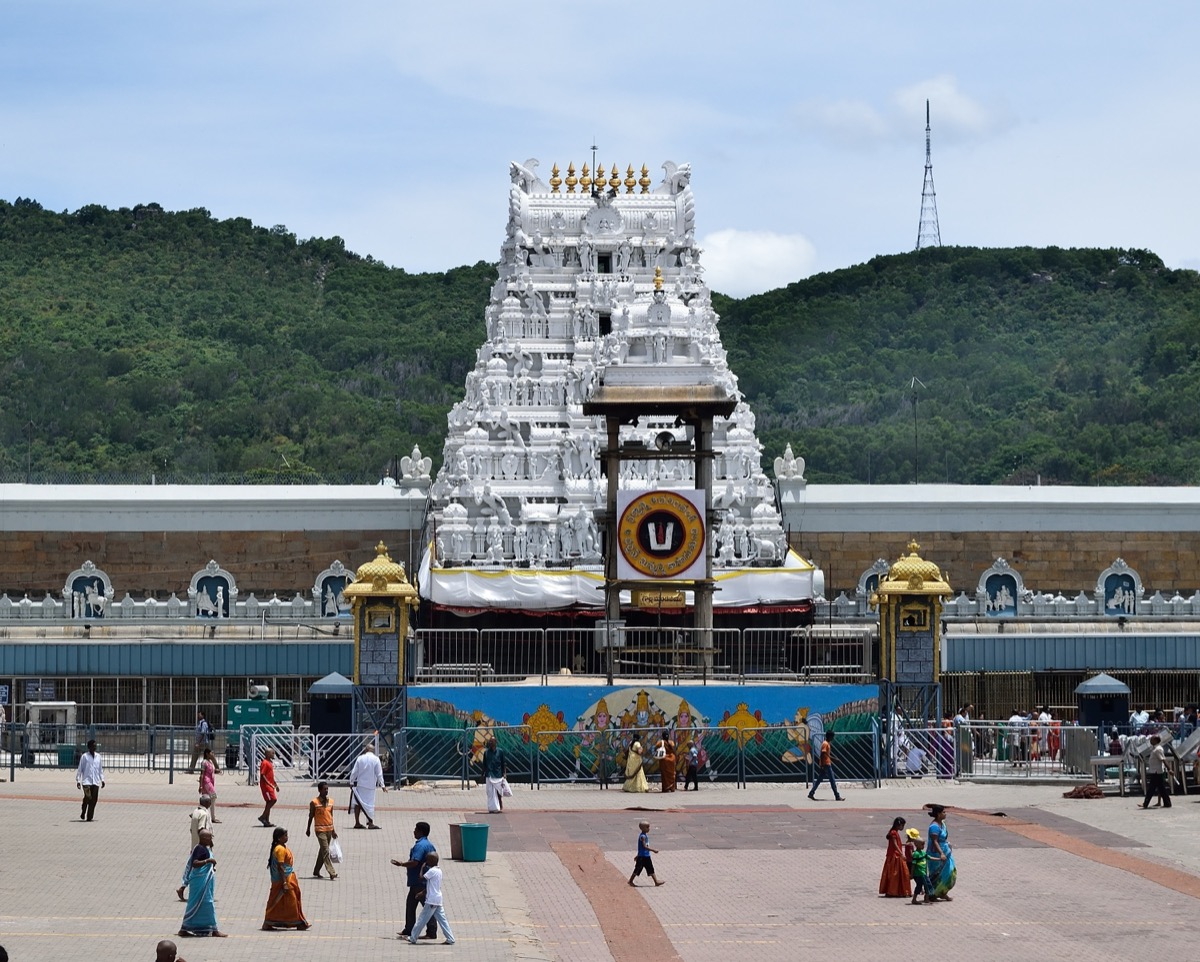
The Venkatēśvara Suprabhātam (वेङ्कटेश्वर सुप्रभातम्, “The Auspicious Dawn of Lord Venkatēśvara”) is among the most beloved and widely recited devotional hymns in South Indian Vaishnavism. Composed in the 15th century by the Shrī Vaishnava scholar Prativādi Bhayaṅkaram Aṇṇaṅgarāchārya, this hymn is sung every day without interruption at the Tirumala Venkatēśvara Temple in Andhra Pradesh, beginning at 3:00 AM — making it one of the earliest and most enduring liturgical traditions in all of Hinduism.
The word suprabhātam means “auspicious morning” or “good dawn” (su = auspicious, prabhāta = dawn). The hymn is essentially an awakening prayer — a poetic and theological act of rousing the Lord from his divine sleep to bless the world with a new day.
The Author: Prativādi Bhayaṅkaram Aṇṇaṅgarāchārya
Prativādi Bhayaṅkaram Aṇṇaṅgarāchārya (also known as Annangarachariar) was a distinguished scholar in the Shrī Vaishnava tradition, belonging to the lineage of Rāmānujāchārya. He lived in the 15th century CE and was renowned for his poetic mastery and deep devotion to Lord Venkatēśvara.
The title “Prativādi Bhayaṅkaram” literally means “Terror to Opponents in Debate” — a testimony to his formidable skill in philosophical disputation. Despite this fearsome scholarly reputation, his devotional compositions reveal a heart of tender bhakti (loving devotion). The Suprabhātam is his most celebrated work, though he also composed the Shrī Venkatēśa Stotram, Shrī Venkatēśa Prapatti, and Shrī Venkatēśa Maṅgalāśāsanam — all of which together form the complete four-part Suprabhātam cycle.
The Four Sections
The complete Venkatēśvara Suprabhātam consists of four distinct sections, each serving a unique liturgical and devotional purpose:
1. Suprabhātam (29 verses) — The Dawn Awakening
The opening section is the suprabhātam proper — the gentle, loving act of waking the Lord. Each verse begins or ends with the refrain “suprabhātam” and describes the signs of approaching dawn:
kausalyā suprajā rāma pūrvā sandhyā pravartate | uttiṣṭha naraśārdūla kartavyaṁ daivamāhnikam ||
“O Rāma, noble son of Kausalyā, the eastern dawn is breaking. Arise, O tiger among men! The daily divine duties await.”
This opening verse is remarkable for addressing Lord Venkatēśvara as Rāma — affirming the Vaishnava teaching that all avatāras are manifestations of the one Supreme Lord. The subsequent verses paint vivid images of the dawn:
- The Gaṅgā and Yamunā arriving as puṇya-nadī (sacred rivers) to offer morning ablutions
- The Garuḍa standing ready for the Lord’s service
- Lakshmi (Shrī) and Bhū Devī (the Earth Goddess) awaiting the Lord’s awakening
- Sages performing Vedic chants at the temple gates
- Celestial musicians (Gandharvas and Kinnaras) singing the Lord’s praises
- The conch and temple bells sounding to herald the new day
2. Stotram (11 verses) — Hymn of Praise
The second section is a stotram — a formal hymn of praise that extols the divine attributes and forms of Lord Venkatēśvara:
- His form adorned with the Kaustubha gem and Śrīvatsa mark
- His identity as the Lord of Śesha, the cosmic serpent
- His role as the saviour who descends in various avatāras
- His abode atop the seven hills (Saptagiri) of Tirumala
- His grace towards all beings, regardless of caste or station
The Stotram places Venkatēśvara within the full panorama of Vaishnava theology, connecting the local temple deity with the cosmic Nārāyaṇa of the Upanishads and Purāṇas.
3. Prapatti (14 verses) — The Surrender
The third section is a prapatti — a formal act of surrender (śaraṇāgati) at the feet of the Lord. This is the theological heart of the Suprabhātam, reflecting the central doctrine of Shrī Vaishnavism:
The devotee declares:
- Complete helplessness without the Lord’s grace
- Acknowledgment that no personal merit can earn salvation
- Total dependence on Venkatēśvara’s compassion (dayā)
- Surrender of the self — body, mind, and possessions — to the Lord
This section echoes the Gadya Traya of Rāmānujāchārya, where the great āchārya performed his own act of prapatti before Lord Ranganātha. Aṇṇaṅgarāchārya’s prapatti at Tirumala extends this tradition to the hilltop deity.
4. Maṅgalāśāsanam (14 verses) — Benediction
The final section is a maṅgalāśāsanam — an “auspicious blessing” offered to the Lord. This uniquely Shrī Vaishnava concept, rooted in the tradition of the Āḻvārs (the twelve Tamil poet-saints), reverses the normal direction of blessing: instead of the Lord blessing the devotee, the devotee blesses the Lord with wishes for his wellbeing.
This apparent paradox expresses the deepest bhakti: the devotee’s love for God is so overwhelming that they cannot help but wish for the Lord’s own happiness and safety. The Maṅgalāśāsanam invokes blessings upon:
- The Lord’s divine form and ornaments
- The temple and the sacred hill of Tirumala
- The consorts Shrī and Bhū Devī
- The eternal continuity of the Lord’s worship
Daily Recitation at Tirumala
The Suprabhātam is performed at Tirumala with extraordinary ritual precision every single day, without exception. The temple’s daily cycle begins:
- 2:30 AM: Temple priests prepare for the awakening ceremony
- 3:00 AM: The Suprabhātam recitation begins at the closed doors of the inner sanctum (garbhagṛha)
- 3:30 AM: The doors of the sanctum are opened (Viśvarūpa Darśana) — the first glimpse of the deity for the day
- 3:30-4:00 AM: The remaining three sections (Stotram, Prapatti, Maṅgalāśāsanam) are recited
This tradition has continued unbroken for over 500 years, making it one of the longest-running daily liturgical performances in the world. Even during the COVID-19 pandemic, when the temple was closed to visitors, the Suprabhātam continued to be performed by the priests.
The Tirumala Tirupati Devasthanams (TTD) has also broadcast the Suprabhātam on All India Radio since 1963, making it the familiar morning sound in millions of South Indian households.
Musical Tradition
The Suprabhātam is traditionally rendered in a specific melodic pattern (rāga) that has been passed down through generations of temple musicians. While not composed in a formal Carnatic rāga structure, the Suprabhātam has a distinctive musical identity:
- The opening section uses a gentle, meditative melody suited to the pre-dawn hours
- The Stotram employs a more expansive and majestic musical line
- The Prapatti is rendered in a tone of humility and emotional intensity
- The Maṅgalāśāsanam returns to a celebratory, auspicious mood
The most famous recorded version is by the legendary Carnatic vocalist M.S. Subbulakshmi (1916-2004), whose rendering became so iconic that it is often considered inseparable from the hymn itself. Her recording, made in the 1960s, remains one of the best-selling devotional albums in Indian history.
Theological Significance
The Lord Who Sleeps
The concept of suprabhātam — waking the Lord — raises a profound theological question: does the omniscient, ever-awake Supreme Being truly sleep? In Shrī Vaishnava theology, the Lord’s “sleep” at Tirumala is an act of divine grace (līlā). By allowing himself to be woken, fed, bathed, and adorned by his devotees, the Lord creates an intimate relationship in which the devotee becomes essential to God’s daily life. This is the doctrine of saulabhya — the Lord’s astonishing accessibility and simplicity.
Tirumala as Vaikuṇṭha on Earth
The Suprabhātam consistently describes Tirumala not as an ordinary hill but as Vaikuṇṭha — the eternal abode of Vishnu — descended to earth. The seven hills are identified with the seven-hooded Ādiśeṣa (the cosmic serpent on whom Vishnu reclines). This theological geography transforms the morning awakening from a local ritual into a cosmic event: it is the Supreme Lord of the universe being woken in his eternal abode.
Bhakti as Service
The Suprabhātam embodies the kaiṅkarya ideal of Shrī Vaishnavism — the understanding that the highest spiritual attainment is not merger with the Absolute but eternal loving service to the Lord. The act of waking God, praising him, surrendering to him, and blessing him constitutes a complete cycle of devotional service that begins each day anew.
The Suprabhātam Beyond Tirumala
While the Venkatēśvara Suprabhātam is inseparable from Tirumala, its influence has spread far beyond the temple:
- Domestic worship: Millions of Hindu households across South India begin their day with a recording of the Suprabhātam, often played at dawn
- Other Suprabhātams: The success of this composition inspired similar suprabhātam hymns for other deities — the Shrī Rāma Suprabhātam, Śiva Suprabhātam, and Ganesha Suprabhātam
- Cultural icon: The opening verse (kausalyā suprajā rāma) is one of the most recognized Sanskrit verses in India, known even to those unfamiliar with the rest of the hymn
Tirumala Temple: The Context
The Tirumala Venkatēśvara Temple is the most visited religious site in the world, with an estimated 50,000 to 100,000 pilgrims daily. The deity, known by many names — Bālaji, Shrīnivāsa, Govinda, Veṅkaṭēśa — is believed to have manifested on the seven hills of Tirumala during the present Kali Yuga to be accessible to all devotees.
The Suprabhātam is thus not merely a hymn but the opening act of the world’s largest daily gathering of devotees — a five-century-old tradition that connects the pre-dawn stillness of a South Indian hilltop to the eternal life of the Supreme Lord.
As the hymn declares in its most famous verse:
“Śrīmad Veṅkaṭa-śaileśa, Śrīnivāsa, dayānidhe — suprabhātam! O Lord of the Venkaṭa Hill, O Śrīnivāsa, O Ocean of Compassion — may this dawn be auspicious for you!”