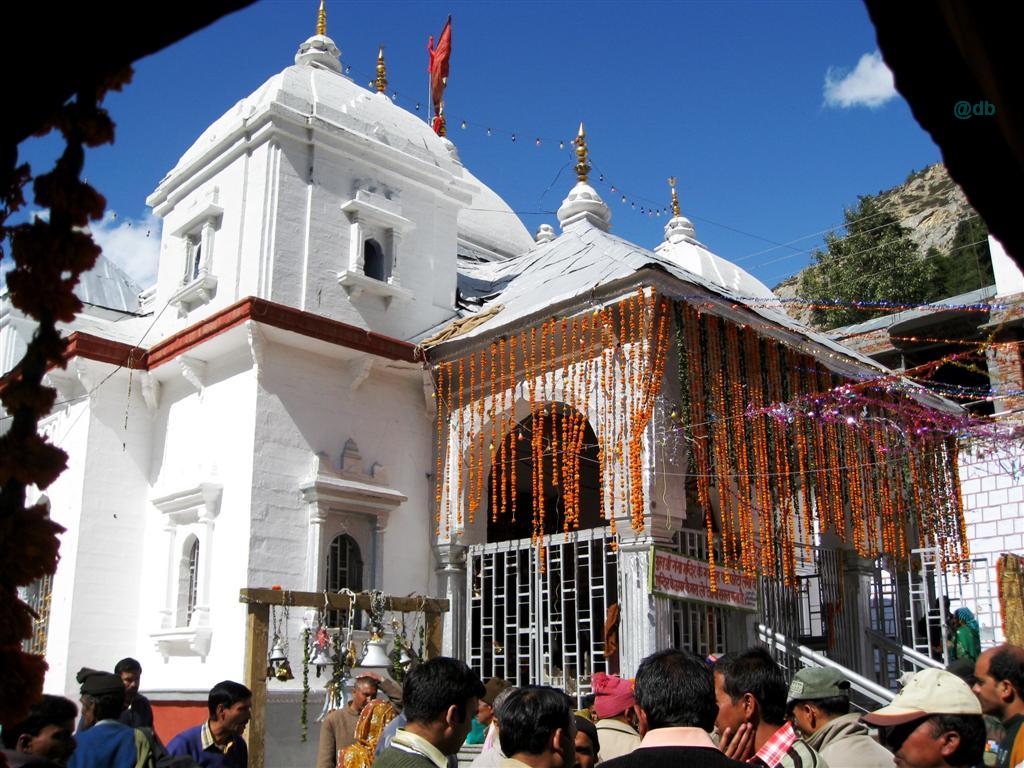
Nestled on the banks of the Bhāgīrathī river at an altitude of 3,100 metres (10,200 feet) in the Greater Himalayan Range, Gaṅgotrī (गंगोत्री) is one of the most sacred pilgrimage sites in Hinduism. It marks the spot where, according to ancient scripture, the celestial river Gaṅgā descended from heaven to earth — flowing through the matted locks of Lord Śiva — after King Bhagīratha’s millennia-long penance. As one of the four sites in the Char Dhām Yātrā of Uttarakhand, Gaṅgotrī draws hundreds of thousands of pilgrims each year who seek spiritual purification in the icy waters of the Bhāgīrathī.
The Legend of Bhagīratha’s Penance
The mythology of Gaṅgotrī is inseparable from the story of King Bhagīratha (भगीरथ), a legendary ruler of the Ikṣvāku dynasty and an ancestor of Lord Rāma. The narrative, recounted in the Vālmīki Rāmāyaṇa (Bāla Kāṇḍa, chapters 38-44) and elaborated in the Skanda Purāṇa, ranks among the most beloved tales in Hindu literature.
King Sagara, Bhagīratha’s great-grandfather, once performed the Aśvamedha sacrifice, but the sacrificial horse was stolen by Indra and hidden in the subterranean realm of Pātāla, near the hermitage of the sage Kapila. Sagara’s 60,000 sons discovered the horse and, disturbing the sage’s meditation, were instantly reduced to ash by the fire of Kapila’s gaze. Without proper funeral rites, their souls could not attain liberation.
The responsibility of performing these rites passed through generations until it reached Bhagīratha. Recognising that only the sacred waters of the heavenly Gaṅgā could liberate his ancestors, Bhagīratha renounced his throne and undertook a severe penance in the Himalayas. He meditated for a thousand years, first appeasing Lord Brahmā, who agreed to release the Gaṅgā from heaven. But the goddess Gaṅgā warned that the force of her descent would shatter the earth — no one except the great god Śiva could sustain the impact of her fall.
Bhagīratha then performed another thousand years of austerity at Kailāsa, propitiating Lord Śiva. Pleased by his devotion, Śiva agreed to receive Gaṅgā upon his head. The mighty torrent crashed upon Śiva’s jaṭā (matted hair), where it wandered for a thousand years before a single stream was released to flow down to the plains. This stream — the Bhāgīrathī — is named in honour of Bhagīratha’s extraordinary effort, a feat so monumental that the Hindi expression Bhagīratha prayatna (“Bhagiratha’s labour”) remains a proverb for any supremely difficult endeavour.
According to the Rāmāyaṇa, as Gaṅgā flowed towards Pātāla, she flooded the hermitage of Sage Jahnu, who swallowed the river in anger. Only after Bhagīratha’s entreaties did Jahnu release Gaṅgā through his ear — earning her the epithet Jāhnavī (“daughter of Jahnu”). Finally, at Sāgar Island (present-day Gangā Sāgar in West Bengal), the holy waters reached the ashes of Sagara’s 60,000 sons and liberated their souls.
The Gaṅgotrī Temple
The present-day Gaṅgotrī Temple stands on the left bank of the Bhāgīrathī river. It is a white granite structure approximately 20 feet in height, built in the Nāgara style of North Indian temple architecture.
Construction and restoration
The original temple was built in the early 18th century by Amara Siṃha Thāpā (Amar Singh Thapa), a Nepalese Gorkha general. Following the devastating 1803 Garhwal earthquake that destroyed much of the region’s infrastructure, Thāpā arranged funds for reconstruction and built the temple in white granite with śikharas (tower spires) reflecting the Nepali-Katyūrī architectural style. He also constructed shelters for pilgrims along the route.
In the early 20th century, Mahārājā Madho Singh II of Jaipur undertook a comprehensive renovation of the temple, giving it a more refined Nāgara appearance. This restoration is the form substantially preserved today.
The temple deity
The temple enshrines a silver image of Goddess Gaṅgā as the presiding deity. The ritual duties are supervised by the Semwal family of pujārīs, who hail from Mukhbā (also called Mukhimath) village near Harsil. These priests maintain an unbroken hereditary tradition of worship at the shrine.
The Submerged Śivaliṅga
One of Gaṅgotrī’s most remarkable sacred features is a naturally formed Śivaliṅga submerged in the Bhāgīrathī river near the temple. According to tradition, this is the very rock upon which Lord Śiva sat in meditation when he received the torrential descent of Gaṅgā in his matted locks.
During the winter months, as the river’s water level drops significantly, the submerged Śivaliṅga becomes clearly visible — a sight that devotees regard as profoundly auspicious. The natural appearance and disappearance of the liṅga with the seasons reinforces the sense of the divine manifesting through nature at this sacred site.
Gaumukh: The Glacial Source
While Gaṅgotrī is revered as the spiritual origin of the Gaṅgā, the actual physical source lies 19 kilometres upstream at Gaumukh (गौमुख, “cow’s mouth”), the terminus of the Gaṅgotrī Glacier. The glacier’s snout, which resembles the mouth of a cow, is the precise point from which the Bhāgīrathī river emerges as meltwater.
The Gaṅgotrī Glacier is one of the largest glaciers in the Himalayas, stretching approximately 30 kilometres in length and 2 to 4 kilometres in width, with a volume exceeding 27 cubic kilometres. It is flanked by some of the most dramatic peaks of the Gaṅgotrī Group — Chaukhambā (7,138 m), Śivaliṅg (6,543 m), Thalaya Sāgar (6,904 m), Meru (6,660 m), and Bhāgīrathī peaks. Beyond Gaumukh lies the alpine meadow of Tapovan, a site traditionally associated with the austerities of ancient ṛṣis.
Pilgrims who trek from Gaṅgotrī to Gaumukh pass through Devgaḍh, Chīrbāsā, and Bhojvāsā, traversing increasingly rugged Himalayan terrain. A bath in the freezing glacial waters at Gaumukh is considered an act of supreme spiritual merit.
It is said that when the Gaṅgotrī Temple was first constructed in the 18th century, the Gaumukh glacier terminus was much closer to the present-day temple site. Its retreat over the intervening centuries stands as a vivid reminder of environmental change in the Himalayas.
The Char Dhām Yātrā
Gaṅgotrī holds a central position in the Choṭā Char Dhām pilgrimage circuit of Uttarakhand, which comprises four sacred sites:
- Yamunōtrī — source of the Yamunā river, dedicated to the goddess Yamunā
- Gaṅgotrī — source of the Gaṅgā river, dedicated to the goddess Gaṅgā
- Kedāranātha — dedicated to Lord Śiva as Jyotirlinga
- Badrīnātha — dedicated to Lord Viṣṇu
The yātrā traditionally proceeds from west to east, beginning at Yamunōtrī and concluding at Badrīnātha. Gaṅgotrī is the second stop on this circuit. Hindu tradition holds that completing the Char Dhām Yātrā at least once in a lifetime washes away accumulated sins and accelerates the soul’s progress toward mokṣa (liberation).
Gaṅgotrī is also connected to the Pāṇḍavas of the Mahābhārata. According to local tradition, the five Pāṇḍava brothers performed the great Deva Yajña at this very site to atone for the deaths of their kinsmen in the Kurukṣetra war. Hindus further believe that performing ancestral rites (pitṛ tarpaṇa) on the banks of the Bhāgīrathī at Gaṅgotrī frees the spirit of the ancestor from the cycle of rebirth.
Seasonal Opening and Closing
Due to the extreme Himalayan altitude, the Gaṅgotrī Temple follows a strict seasonal calendar:
- Opening (Akṣaya Tṛtīyā): The temple doors are ceremonially opened on the auspicious day of Akṣaya Tṛtīyā, typically in late April or early May. The goddess’s silver idol is carried back from Mukhbā village in a grand procession accompanied by Vedic chanting and music.
- Closing (Dīpāvalī): The temple closes on the day of Dīwālī, usually in late October or November. The deity is then transported to Mukhbā village near Harsil, where worship continues through the harsh winter months.
During the winter closure, the temple and the entire Gaṅgotrī region are buried under heavy snow, rendering the area inaccessible by road.
Sacred Sites Around Gaṅgotrī
The Gaṅgotrī area is rich with subsidiary sacred sites:
- Bhāgīrathī Śilā: A stone near the river where King Bhagīratha is believed to have performed his penance. Pilgrims offer prayers here before entering the main temple.
- Gaurikuṇḍ and Sūryakuṇḍ: Twin natural pools near the temple, associated with the goddess Pārvatī (Gaurī) and the Sun god (Sūrya) respectively.
- Pāṇḍava Gufā: A cave near Gaṅgotrī where the Pāṇḍavas are said to have rested during their journey.
- Bhairava Ghāṭī: A narrow gorge named after Bhairava (a fierce manifestation of Śiva), marking a sacred boundary of the pilgrimage zone.
Gaṅgotrī National Park
Established in 1989, the Gaṅgotrī National Park covers 2,390 square kilometres in the upper catchment of the Bhāgīrathī basin. It encompasses the Gaṅgotrī Glacier and surrounding high-altitude ecosystems, forming one of India’s most important protected wilderness areas.
The park is home to remarkable biodiversity including the elusive snow leopard (with a population estimated at 38-40 individuals), Himalayan black bear, brown bear, musk deer, blue sheep (bharal), and Himalayan tahr. Over 150 bird species have been documented, including the Himalayan monal, koklass pheasant, and Himalayan snowcock.
The park’s forests of bhojpatra (Himalayan birch), blue pine, spruce, and fir transition into alpine meadows and glacial moraines at higher elevations, creating a landscape of extraordinary natural beauty.
Environmental Concerns: Glacier Retreat
The Gaṅgotrī Glacier has been retreating at an alarming rate since measurements began in 1780. Data compiled by NASA, the United States Geological Survey (USGS), and the National Snow and Ice Data Center (NSIDC) reveal the scale of the crisis:
- Over the 61-year period from 1936 to 1996, the glacier retreated a total of 1,147 metres, averaging 19 metres per year.
- In the 25 years following, the retreat accelerated to 34 metres per year, with a loss of over 850 metres.
- Between 1996 and 1999 alone, the glacier retreated 76 metres (approximately 25 metres per year).
This retreat is attributed primarily to global warming and changing precipitation patterns. The thinning of the Gaṅgotrī Glacier threatens not only the spiritual significance of Gaumukh as the source of the Gaṅgā but also the water security of the hundreds of millions of people downstream who depend on the Gaṅgā basin for agriculture, drinking water, and daily life.
Conservation efforts include restricting the number of trekkers to Gaumukh, banning camping beyond Bhojvāsā, and establishing the Gaṅgotrī National Park as a protected buffer zone. Yet the fundamental challenge — global climate change — requires action far beyond the local level.
Scriptural References
The sanctity of Gaṅgotrī and the descent of Gaṅgā are affirmed across multiple Hindu scriptures:
- Vālmīki Rāmāyaṇa (Bāla Kāṇḍa, chapters 38-44): Contains the definitive narration of Bhagīratha’s penance, Śiva receiving Gaṅgā, and the river’s journey to Pātāla.
- Skanda Purāṇa (Kāśī Khaṇḍa and Gaṅgā Māhātmya): Elaborates the spiritual merit of bathing in the Gaṅgā at its source and describes the sacred geography of the Gaṅgotrī region.
- Nārada Purāṇa: Recounts King Bhagīratha’s dialogue with Yama regarding righteousness and the future liberation of his ancestors through the descent of Gaṅgā.
- Mahābhārata (Vana Parva): References the Pāṇḍavas’ journey through the Himalayas and their connection to the sacred sites of the Bhāgīrathī valley.
The Skanda Purāṇa declares:
Gaṅgā Gaṅgeti yo brūyāt yojanānāṃ śatairapi | mucyate sarvapāpebhyo viṣṇulokaṃ sa gacchati ||
“Whoever utters ‘Gaṅgā! Gaṅgā!’ even from a distance of hundreds of yojanas is freed from all sins and attains the abode of Viṣṇu.”
For the devout Hindu, Gaṅgotrī represents the most intimate meeting point of heaven and earth — the place where the celestial river first touched mortal soil, purifying the world by its very descent. To stand at Gaṅgotrī, to feel the icy spray of the Bhāgīrathī on one’s face, and to gaze upon the snow-clad peaks from which the river emerges is to witness Bhagīratha’s labour made eternal — a reminder that even the most impossible endeavour, sustained by unwavering devotion, can move heaven itself.